How Can AI Help Businesses Cut Costs in 2026?
Table of Contents
Subscribe To Our Newsletter
In a Nutshell
- AI helps businesses cut costs in 2026 by reducing manual labor, speeding up workflows, and preventing operational delays.
- Predictive analytics lowers waste across inventory, logistics, staffing, and finance.
- UAE customers now expect AI-powered speed, personalization, and 24/7 service, making manual processes unsustainable.
- Automation eliminates repetitive tasks, reduces error-related losses, and shortens processing time.
- AI strengthens decision-making with real-time insights, improving planning accuracy and resource allocation.
- Major savings come from support automation, finance automation, supply-chain optimization, HR screening, and predictive maintenance.
- Companies using AI handle higher workloads without increasing headcount costs.
- Early adopters gain a competitive cost advantage, while delayed adoption keeps operating expenses high.
Businesses entering 2026 are operating in a tougher environment than before. Operational costs are higher, hiring is more expensive, and economic uncertainty is pushing companies to rethink how their teams work.
Many organizations are dealing with the same challenge: they must increase output, maintain accuracy, and serve customers faster, all while managing tighter budgets. As a result, AI is being used less as an experimental technology and more as a practical tool for everyday operations.
Companies are adopting it to streamline repetitive tasks, improve planning, and remove inefficiencies that slow down teams. This shift is driven by simple economics – how AI helps businesses cut costs is now directly linked to reducing errors, preventing delays, and keeping processes consistent.
Businesses are also seeing the AI financial impact on businesses in measurable ways. Automated workflows shorten cycle times, predictive tools minimize waste, and intelligent systems support better decision-making.

Instead of adding more staff or expanding manual processes, companies are turning to AI to reduce operational costs in a stable, scalable manner. This blog explores the specific ways AI supports cost reduction in 2026 and how businesses can use it to operate more efficiently without compromising quality.
Why Cost Optimization Is a Priority for 2026?
Businesses are entering 2026 with tighter budgets, higher operating costs, and more pressure to deliver results with smaller teams. Labor expenses continue to rise, hybrid work has added new coordination challenges, and most industries are still adjusting to rapid digital adoption. Leaders now have to find practical ways to do more with the same or fewer-resources.
Several factors are pushing companies to make cost optimization a priority:
- Operational costs are increasing, especially in labor-heavy functions.
- Hybrid work setups demand clearer workflows and better coordination.
- Technology upgrades require teams to modernize outdated processes.
- Market competition forces businesses to improve efficiency to stay relevant.
Because of this environment, organizations are focusing on four core areas:
- Automation to remove steps that slow teams down.
- Predictive decision-making to avoid preventable delays and extra spend.
- Reducing redundant manual tasks that consume hours without adding value.
- Faster execution cycles to improve output without increasing costs.
As these pressures grow, AI in business operations 2026 is becoming a practical tool for cutting waste, improving accuracy, and keeping daily operations more cost-efficient.
Stop Cost Leakages Before They Grow! Take Control of Operational Spending Early.
Identify high-expense workflows and learn how AI can reduce them in measurable ways.
The Core Role of AI in Cost Reduction
AI plays a key role in reducing costs by helping businesses run more efficiently and eliminate unnecessary effort. Instead of relying on manual workflows, companies can shift routine tasks to automation and focus their teams on work that actually drives value.
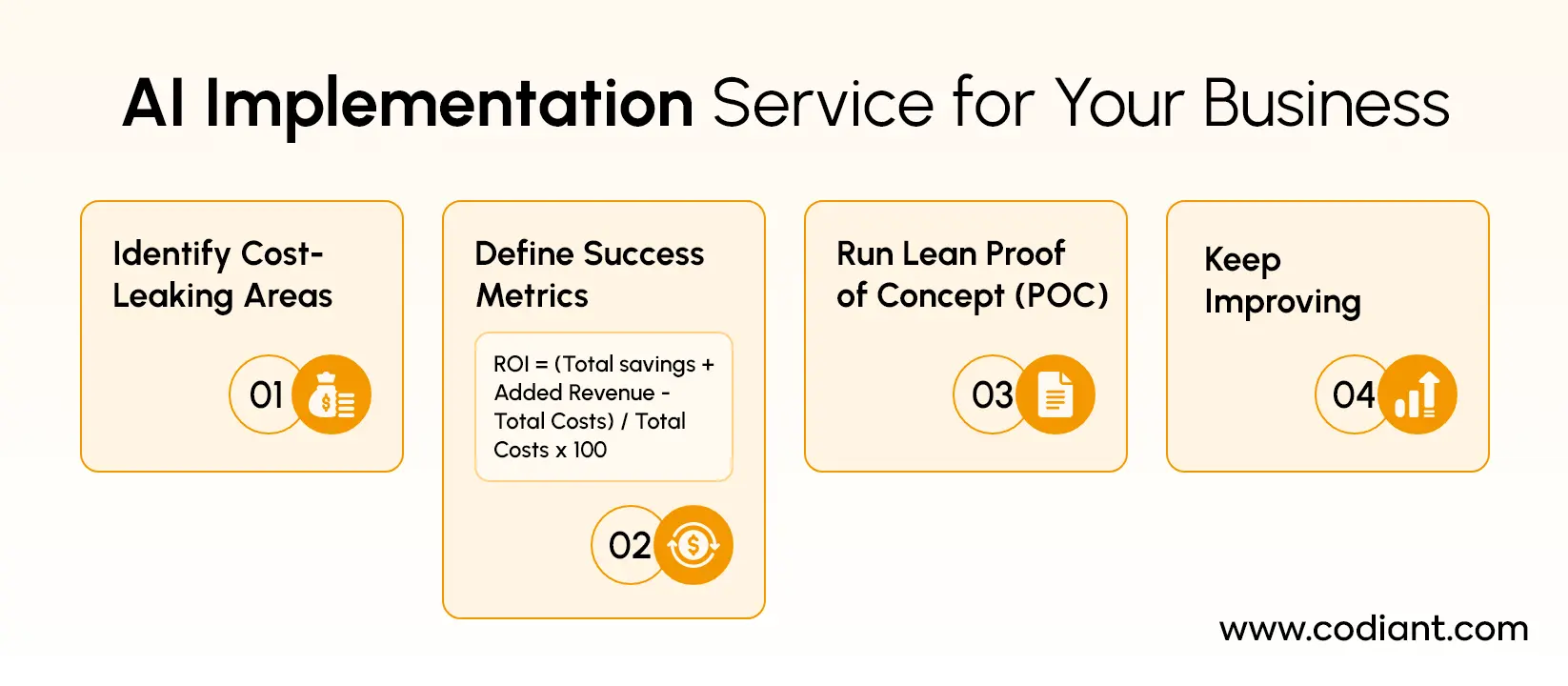
Here’s how AI supports cost reduction at the core level:
- AI for workflow automation: Handles repetitive tasks, reduces manual errors, and speeds up daily operations.
- AI-driven digital transformation: Modernizes outdated processes, shortens cycle times, and removes bottlenecks that usually increase operational expenses.
- AI tools for business optimization: Analyze patterns, spot inefficiencies, and recommend cost-saving actions with real-time insights.
Together, these capabilities don’t just cut costs – they make businesses more productive, agile, and financially efficient in the long run.
Also read: How a Voice AI Agent Can Help You Get More Appointments and Leads
12 Powerful Ways AI Helps Businesses Cut Costs in 2026
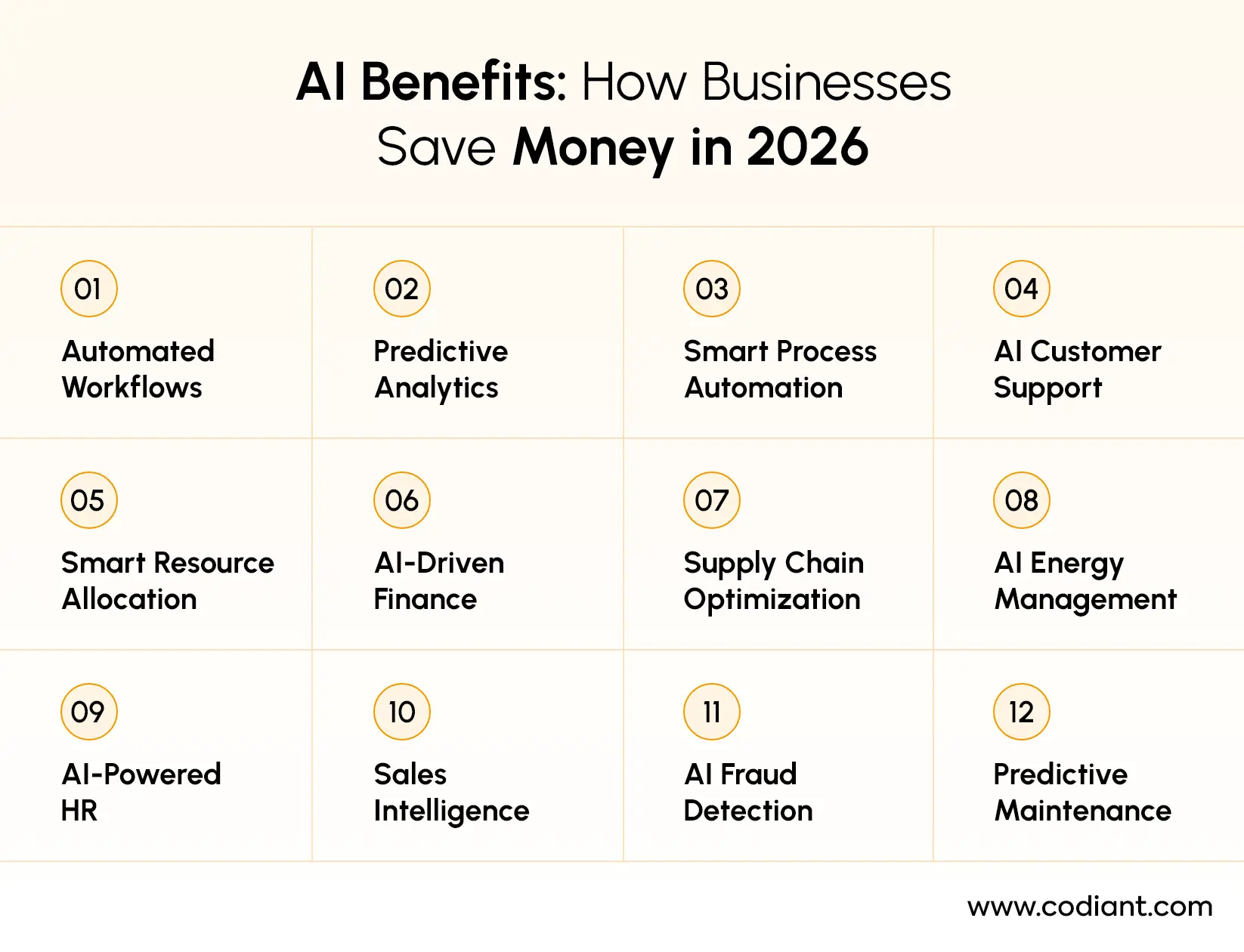
AI is helping companies streamline operations, eliminate inefficiencies, and make smarter decisions. These cost-saving applications show how businesses in 2026 are reducing expenses with practical, real-world AI adoption.
1. AI Automated Workflows Reduce Manual Labor Costs
AI to reduce labor costs continues to be one of the biggest advantages of automation in 2026. Instead of relying on large teams to complete repeated operational tasks, AI systems now execute them continuously and with fewer errors.
Where businesses save money:
- Data entry, ticket sorting, and admin tasks handled automatically
- Fewer overtime hours and temporary staff requirements
- Teams shift to higher-value work instead of routine manual effort
This creates a workforce that delivers more output without increasing headcount costs.
2. AI-Powered Predictive Analytics Prevents Costly Delays
Companies use AI tools for business optimization to anticipate issues before they occur. Predictive analytics studies patterns across demand, procurement, logistics, and budget cycles.
Key forecasting areas:
- Inventory requirements
- Expected order volumes
- Staffing levels for peak/low periods
- Delivery delays and route disruptions
- Cash flow and budget fluctuations
With early visibility, businesses avoid last-minute expenses, stock-outs, and inefficient operational decisions.
3. Intelligent Process Automation Cuts Operational Waste
AI-powered process automation blends machine learning with RPA to handle tasks that need interpretation, verification, or context-areas where traditional automation was weak.
Cost-saving impacts:
- Automated document reading and verification
- Zero duplication of work between departments
- Shorter turnaround times for approvals
- Lower human-error–related losses
By removing wasteful steps from workflows, AI automation for cost savings becomes measurable across everyday operations.
4. AI for Customer Support Reduces Call Center Expenses
Many support queries don’t need a human agent. AI-powered chatbots, voice bots, and self-service portals now handle the bulk of routine interactions.
Where costs drop:
- Fewer support agents needed for repetitive tickets
- Lower training and staffing expenses
- Reduced call volumes and wait times
- Higher first-contact resolution through instant responses
Support teams focus only on complex cases, reducing the overall cost per ticket handled.
5. AI-Based Resource Allocation Optimizes Workforce & Capacity Planning
For industries with fluctuating workloads-manufacturing, retail, logistics-AI for business efficiency helps allocate resources more precisely.
AI improves:
- Shift planning and workforce distribution
- Equipment and machine usage
- Allocation of vehicles, assets, and inventory
- Seasonal staffing requirements
This prevents overstaffing on slow days and understaffing during peaks, both of which are expensive mistakes.
6. AI in Finance Reduces Errors, Fraud & Processing Time
Finance teams gain substantial savings when routine financial processes are automated. AI improves accuracy and accelerates workflows.
Major areas of impact:
- Automated invoice scanning and approvals
- AP/AR processing with fewer delays
- Real-time fraud detection and anomaly alerts
- Cash flow forecasting for better budget control
The reduction in errors, late payments, and fraudulent transactions delivers strong financial gains.
7. AI for Supply Chain Optimization Cuts Inventory & Logistics Costs
Supply chain inefficiencies are costly, especially for global enterprises. AI helps reduce operational waste through accurate predictions and real-time optimization.
Where AI helps:
- Inventory right-sizing to avoid overstocking
- Route optimization to reduce fuel and transport costs
- Early detection of shipment delays
- Better supplier and procurement planning
This leads to smoother operations with fewer emergency shipments or last-minute costs.
8. AI-Driven Energy & Facility Management Reduces Utility Costs
Energy consumption is a major expense for offices, factories, and retail stores. AI monitors usage patterns and optimizes consumption automatically.
Smart cost-saving examples:
- Automated HVAC and lighting control
- Real-time anomaly detection for energy leaks
- Predictive insights to reduce unnecessary usage
- Smart sensors that adjust facilities based on occupancy
These practices also support ESG compliance, which is a growing requirement in 2026.
9. AI in HR Reduces Hiring, Training & Retention Costs
HR teams spend heavily on screening, interviewing, onboarding, and managing employee performance. AI for workflow automation helps streamline these processes.
AI supports HR by:
- Screening resumes and shortlisting candidates faster
- Predicting attrition and identifying performance risks
- Matching employees to roles based on skills
- Automating onboarding and documentation
This reduces hiring cycles, lowers recruitment costs, and helps retain high-performing staff.
10. AI for Sales & Marketing Reduces CAC and Improves Conversions
Sales and marketing teams manage large budgets, and even minor efficiency improvements lead to major savings. AI helps teams target, acquire, and retain customers more cost-effectively.
Cost-saving improvements:
- Personalized recommendations that improve conversion rates
- Automated customer segmentation
- AI-led lead scoring to prioritize high-quality prospects
- Early churn alerts for retention planning
With better targeting and reduced wasted spend, customer acquisition cost (CAC) comes down significantly.
11. AI Fraud Detection Protects Revenue & Reduces Chargebacks
Fraud impacts industries like fintech, insurance, eCommerce, and banking. AI detects suspicious patterns faster and more accurately than manual review.
AI reduces losses by:
- Flagging high-risk transactions instantly
- Blocking fraudulent payment attempts
- Identifying policy misuse or suspicious claims
- Preventing account takeovers
Lower fraud incidents mean lower chargebacks, fewer penalties, and stronger revenue protection.
12. AI Maintenance Intelligence Reduces Downtime Costs
In manufacturing, transportation, retail operations, and utilities, equipment downtime translates to significant financial loss. AI-based predictive maintenance helps avoid unexpected breakdowns.
Maintenance savings come from:
- Predicting equipment failures early
- Monitoring asset health in real time
- Optimizing service schedules
- Avoiding expensive emergency repairs
This not only protects assets but also keeps production and service delivery running smoothly.
Real-World Examples: Cost Savings Achieved With AI
The financial impact of AI is no longer theoretical. Companies across sectors are using data-driven automation to trim everyday operational expenses and redirect resources toward higher-value work. Below are a few clear examples of how AI is creating measurable savings.
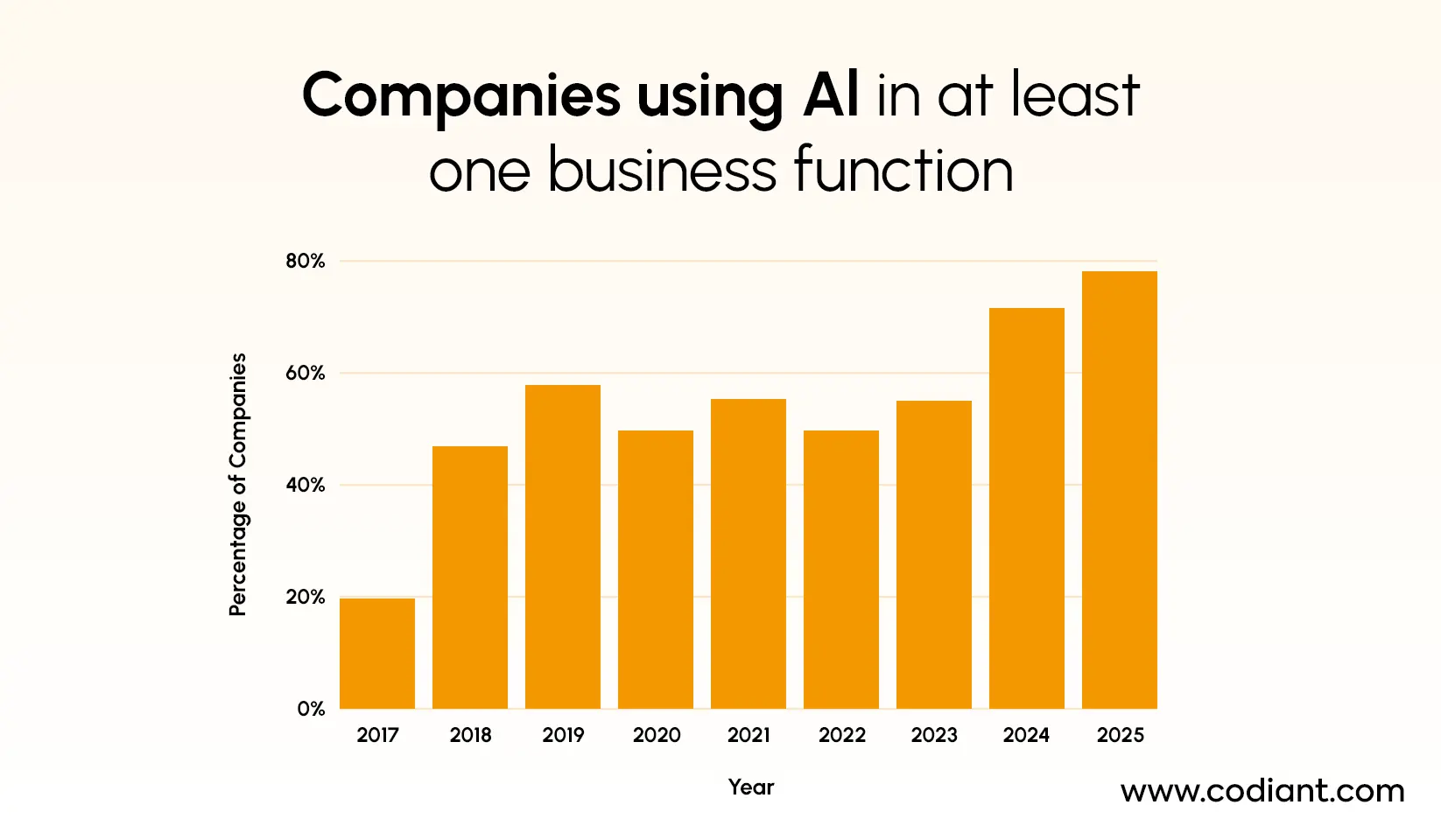
Retail: Leaner Inventory + Lower Carrying Costs
Leading eCommerce and retail brands are using AI demand forecasting to keep stock levels aligned with actual buying patterns. The result:
- 15–20% reduction in overstocking
- 12% drop in urgent procurement costs
Better forecasting means fewer locked-up funds and more efficient warehouse operations.
Logistics: Reduced Fuel Spend and Downtime
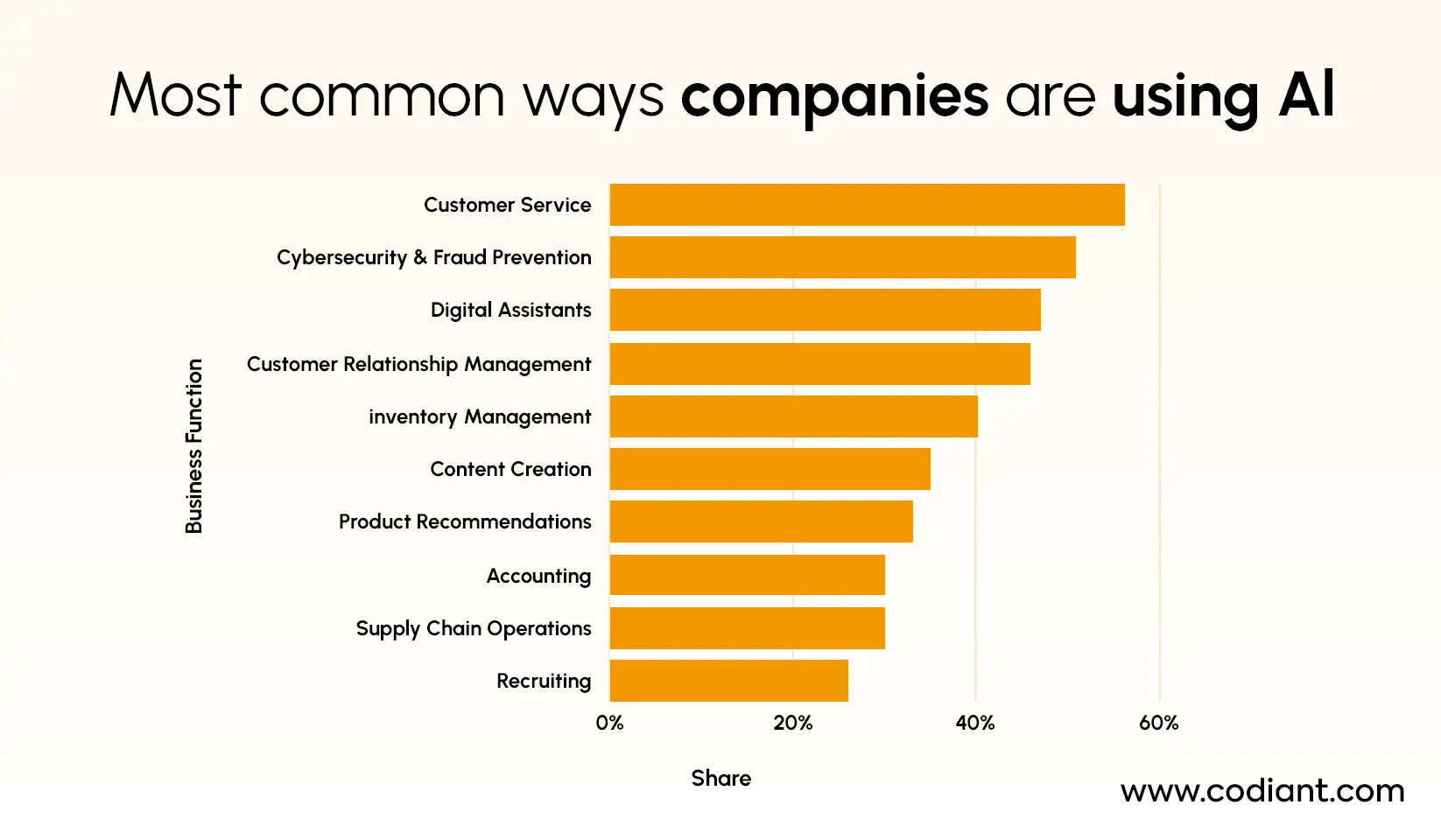
A mid-size delivery fleet that moved to AI route planning and predictive maintenance saw:
- 30% lower vehicle downtime
- 22% reduction in fuel usage
Smarter routing and early maintenance alerts helped eliminate unnecessary miles and unplanned breakdowns.
Banking: Faster Processing + Lower Fraud Losses
Banks relying on automated verification and real-time fraud checks have reported:
- 25% fewer manual processing hours for loan and KYC workflows
- 40% reduction in undetected fraudulent transactions
AI helps teams catch inconsistencies early and process documents with greater accuracy.
Healthcare & Manufacturing: Fewer Errors and Avoided Failures
A multi-specialty hospital using AI triage tools saw 20% fewer support tickets for scheduling and billing queries.
A manufacturing plant using machine-health monitoring avoided major breakdowns, saving up to 18% in annual repair costs.
Across sectors, the trend remains consistent: better predictions, fewer errors, and smoother operations – all translating into direct cost savings.
See Where You’re Losing Money
Get a clear view of avoidable costs AI can eliminate in your operations.
How AI Strengthens ROI & Financial Performance?
AI is becoming one of the most reliable ways for companies to improve financial performance without expanding their teams or infrastructure. Its impact shows up in clear, measurable outcomes that directly influence profitability.
Higher productivity with the same resources.
AI takes over repetitive tasks, allowing teams to focus on work that drives revenue. As manual effort reduces, output increases-creating a visible lift in the AI financial impact on businesses.
Lower operational overheads.
From reducing data entry errors to optimizing spending patterns across departments, AI helps businesses run leaner. It identifies inefficiencies that often go unnoticed in daily operations and cuts down rework, waste, and unnecessary costs.
Faster, more accurate workflows.
AI speeds up processes that used to slow teams down-approvals, reporting, forecasting, and customer support. Automated workflows deliver consistent accuracy, reduce delays, and move projects forward without repeated follow-ups.
More output without increasing headcount.
This is where the real AI ROI for enterprises becomes clear. Companies can handle higher workloads, deliver results faster, and maintain quality- all with their existing workforce.
Together, these improvements create a long-term financial advantage: stronger margins, predictable savings, and a more efficient operational model built for 2026 and beyond.
Challenges Businesses Face When Implementing AI
Businesses often run into practical hurdles when they begin adopting AI. The most common challenges include:
- Poor data quality and structure: Many companies don’t have organized, consistent, or complete data, making it difficult for AI systems to deliver reliable outputs.
- Legacy systems that don’t integrate well: Older CRMs, ERPs, and custom tools are not built for modern AI workflows, leading to costly workarounds or system upgrades.
- Internal resistance to new workflows: Employees may feel uncertain about new processes or worry about how automation will change their responsibilities, slowing down adoption.
- Underestimated training needs: Teams need time and hands-on support to learn new tools, interpret results, and adjust daily operations.
- High initial setup effort: From data preparation to infrastructure alignment, the early stages require careful planning and clear ownership.
These challenges don’t stop adoption, but they highlight the need for structured execution and realistic expectations.
A Practical Roadmap to Implement AI for Cost Savings
Implementing AI becomes far more effective when businesses follow a clear, structured plan. Here is a simple roadmap that helps companies reduce costs without disrupting existing operations.
- Identify high-cost processes: List the tasks that consume the most time, labor, or operational effort. These become your priority areas for automation and optimization.
- Perform a data readiness check: Assess whether your data is clean, organized, and accessible. Strong data foundations are essential for reliable insights and smooth AI-driven digital transformation.
- Build a cost-focused automation strategy: Define what you want to achieve, estimate the expected savings, and map the specific workflows that should be automated or improved.
- Select the right AI tools: Choose solutions that integrate easily with current systems and deliver measurable improvements in AI for business efficiency.
- Start small with high-impact workflows: Begin with a limited set of processes that can show quick, visible results. These early wins help teams trust the approach.
- Scale across departments: Once the initial phase delivers consistent value, expand automation to more areas, creating a connected AI ecosystem that steadily reduces operational costs.
Related reading: How AI Helps eCommerce Businesses Scale Faster: 10+ Proven Strategies
The Future: How AI Will Transform Cost Structures in 2026–2030
Between 2026 and 2030, businesses will shift from basic automation to fully intelligent, self-managed systems. The next wave of cost-saving AI technologies will focus on removing manual oversight, reducing process delays, and tightening operational control.
Many companies will move toward autonomous enterprises where core workflows such as customer support, finance, scheduling, and asset monitoring run with minimal human intervention. AI co-pilots will become standard across teams, guiding employees with real-time recommendations, improving decision accuracy, and shortening execution time.
Hype automation will expand this impact by connecting multiple tools into a single end-to-end automated workflow, eliminating duplication and reducing overhead. Finance departments will rely on auto-reconciled systems that match transactions, identify errors, and update reports instantly.
Supply chains will become self-optimizing, with AI forecasting demand, adjusting inventory, and selecting the most cost-efficient routes without waiting for manual approvals.
Overall, AI will gradually shift businesses from reactive operations to predictive, self-adjusting systems – helping companies control costs more consistently and operate with greater stability.
How Codiant Can Help Businesses Unlock AI-Driven Cost Savings?
Codiant helps companies turn high-cost, manual processes into streamlined, automated workflows that deliver measurable savings.
Our approach focuses on identifying where money is being lost – slow operations, repetitive work, support overload, or inefficient planning – and applying the right AI solutions to fix them.
Where Codiant Creates Impact:
- Automating routine workflows to reduce labor and processing time
- Deploying AI chatbots and voice bots to cut customer support costs
- Using predictive analytics for demand planning, inventory control, and resource allocation
- Building hyper automation pipelines that connect fragmented systems
- Implementing anomaly detection and financial automation to reduce errors and leakage
Beyond development, Codiant helps with strategy, data readiness, solution design, and continuous optimization – ensuring your AI investment leads to long-term efficiency.
If your goal is to reduce operational costs, modernize workflows, or prepare for an AI-first 2026, Codiant can guide the entire journey and deliver results that directly improve your bottom line.
Conclusion
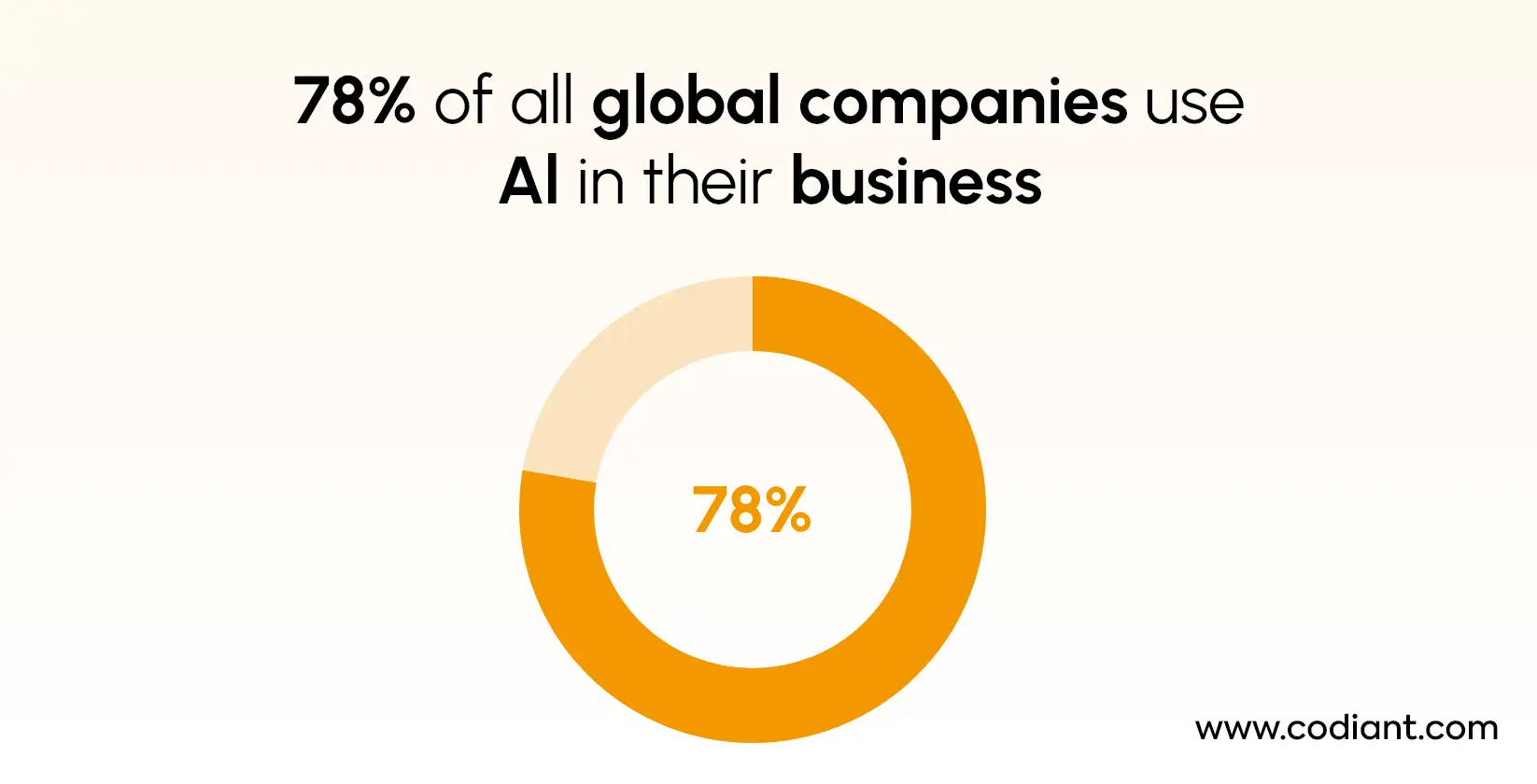
As we move into 2026, AI is no longer optional – it’s a practical tool that directly improves productivity, reduces operational waste, and helps businesses work smarter with fewer resources.
The companies already using AI to improve productivity are seeing faster workflows, stronger output, and measurable savings across departments. Those waiting on adoption risk higher operating costs and slower decision-making compared to competitors.
If you’re exploring how AI helps businesses cut costs and want to identify the highest-impact opportunities for your organization, now is the right time to take the next step. Start evaluating your AI roadmap today and move toward a more efficient, cost-focused future.
See Where AI Can Save You Money
Get a quick assessment to spot automation gaps and eliminate unnecessary operational spending.
The Author

Frequently Asked Questions
AI lowers costs by automating manual tasks, reducing errors, improving resource allocation, and streamlining operations. It helps businesses work faster, avoid waste, and make better decisions with fewer inputs.
AI can automate data entry, customer support, scheduling, inventory management, reporting, invoice processing, lead qualification, and routine administrative workflows—reducing repetitive work and cutting unnecessary operational costs.
Yes. AI handles repetitive, time-consuming tasks so teams can focus on higher-value work. This reduces overtime, dependence on manual labor, and the need for additional staffing for routine activities.
Absolutely. AI tools help small businesses automate daily tasks, cut manual errors, speed up service delivery, and maintain productivity without increasing team size or operational spending.
Retail, logistics, healthcare, finance, manufacturing, and customer service-heavy industries gain the most, as AI improves forecasting, reduces manual work, optimizes resources, and eliminates unnecessary operational expenses.
Yes. AI offers long-term savings through higher productivity, fewer errors, lower staffing needs, better planning, and reduced downtime. Businesses typically see measurable ROI within months of adoption.
AI speeds up routine tasks, eliminates manual data handling, automates decision-making, and provides quick insights. This reduces workload pressure and allows teams to focus on meaningful, higher-impact projects.
Companies can measure ROI by comparing cost savings, time saved, productivity gains, reduced errors, and improved output before and after AI implementation. Clear metrics show the financial impact.
AI reduces labor hours, automates workflows, minimizes errors, improves forecasting, streamlines supply chains, and boosts resource utilization—helping businesses achieve more with fewer operational expenses.
AI automates repetitive tasks like reporting, documentation, scheduling, and customer queries. This reduces manual workload, lowers labor costs, and ensures operations run more efficiently with fewer mistakes.
Yes. AI supports employees by handling repetitive tasks, not replacing them. It shifts teams toward strategic work, improves job performance, and reduces pressure from routine manual work.
Workflow automation, predictive analytics, customer support AI, supply chain optimization, and financial automation deliver the strongest cost savings by removing inefficiencies and improving decision-making speed.
They track reduced operational costs, increased productivity, fewer errors, lower staffing needs, improved speed, and better resource utilization. These measurable gains clearly show AI’s financial value.
Featured Blogs
Read our thoughts and insights on the latest tech and business trends
How to Hire AI Developers for Automation & Smart Applications- A Complete Guide for 2026
- January 29, 2026
- Staff Augmentation
In a Nutshell AI hiring in 2026 is a business decision, not just a technical one. Most AI failures happen due to wrong hiring models and unclear scope, not bad ideas. Successful automation starts by... Read more

How Much Does It Cost to Build an eCommerce Platform in Australia?
- January 27, 2026
- E-commerce
In a Nutshell eCommerce development costs in Australia typically start from AUD $10,000–$25,000 for basic stores, while advanced or enterprise platforms can range from AUD $80,000 to $250,000+ depending on complexity. Shopify offers a lower... Read more

How Long Does It Take to Develop an App in 2026?
- January 21, 2026
- Mobile App Development
In a Nutshell App development timelines depend more on scope clarity than technology speed. Simple apps take 2–4 months; complex platforms often require 9–12+ months. MVPs typically launch within 6–16 weeks when features remain tightly... Read more