How AI Is Transforming Transport & Logistics Operations in Real Time
Table of Contents
Subscribe To Our Newsletter
Summarize with AI
Not enough time? get the key points instantly.
In a Nutshell:
- AI in transport & logistics is enabling faster, smarter decision-making across fleets, warehouses, and supply chains.
- Real-time logistics optimization improves route planning, dispatching, and delivery efficiency as conditions change.
- AI-driven forecasting and inventory planning help companies prevent stockouts, reduce waste, and stay prepared for demand shifts.
- Artificial intelligence in supply chain visibility provides live tracking, delay prediction, and proactive risk alerts.
- AI strengthens security through fraud detection, route monitoring, and real-time loss prevention.
- The future of logistics will be shaped by autonomous vehicles, drone deliveries, and advanced AI transport solutions managing operations end-to-end.
Transport and logistics teams today work under constant pressure. Deliveries are expected to arrive faster, customers want live updates and even a short delay can affect cost, trust and service quality. Operations that once relied on fixed schedules now have to adjust throughout the day.
A traffic jam, a sudden weather change, a warehouse backlog, or an unexpected surge in orders can disrupt the entire flow. Managing these moving parts manually becomes difficult when decisions need to happen in real time.
This is where AI in the transport and logistics industry is making a clear impact. Companies are using it to improve route decisions, reduce delivery delays, and respond faster when disruptions occur. AI systems can also help predict problems early, improve fleet utilization, and bring greater accuracy to daily planning.
With artificial intelligence in supply chain processes, logistics operations are becoming more efficient, better connected and easier to control as conditions change minute by minute.
Why Real-Time Operations Matter in Modern Logistics?
Logistics doesn’t pause. Trucks keep moving, warehouses keep shipping and customer expectations keep rising. That’s why real-time operations have become one of the biggest priorities for transport and logistics companies today.
Real-time logistics simply means managing deliveries and supply chain activity as things happen not after the fact. Instead of reacting to delays at the end of the day, teams need to respond in the moment. A vehicle gets stuck in traffic? A warehouse faces a sudden backlog? An urgent order comes in? Decisions have to be made immediately.
And the cost of waiting is high.
In logistics, every minute matters. Delays don’t just affect one shipment they create a ripple effect across routes, fleets, staffing and customer commitments.
The problem is that manual planning can’t keep up with this pace. Traditional systems struggle when conditions change constantly, such as-
- Traffic congestion disrupting delivery schedules
- Fuel cost spikes impacting transport budgets
- Late deliveries leading to service complaints
- Poor fleet utilization wasting time and capacity
- Limited visibility across shipments and operations
This is exactly why real-time logistics optimization is becoming essential. Companies need smarter ways to stay flexible, reduce disruptions & keep goods moving smoothly even when the unexpected happens.
See AI in Your Logistics Workflow
Discover where AI can reduce delivery delays, improve tracking, and simplify daily logistics operations.
The Role of AI in Transport & Logistics Today
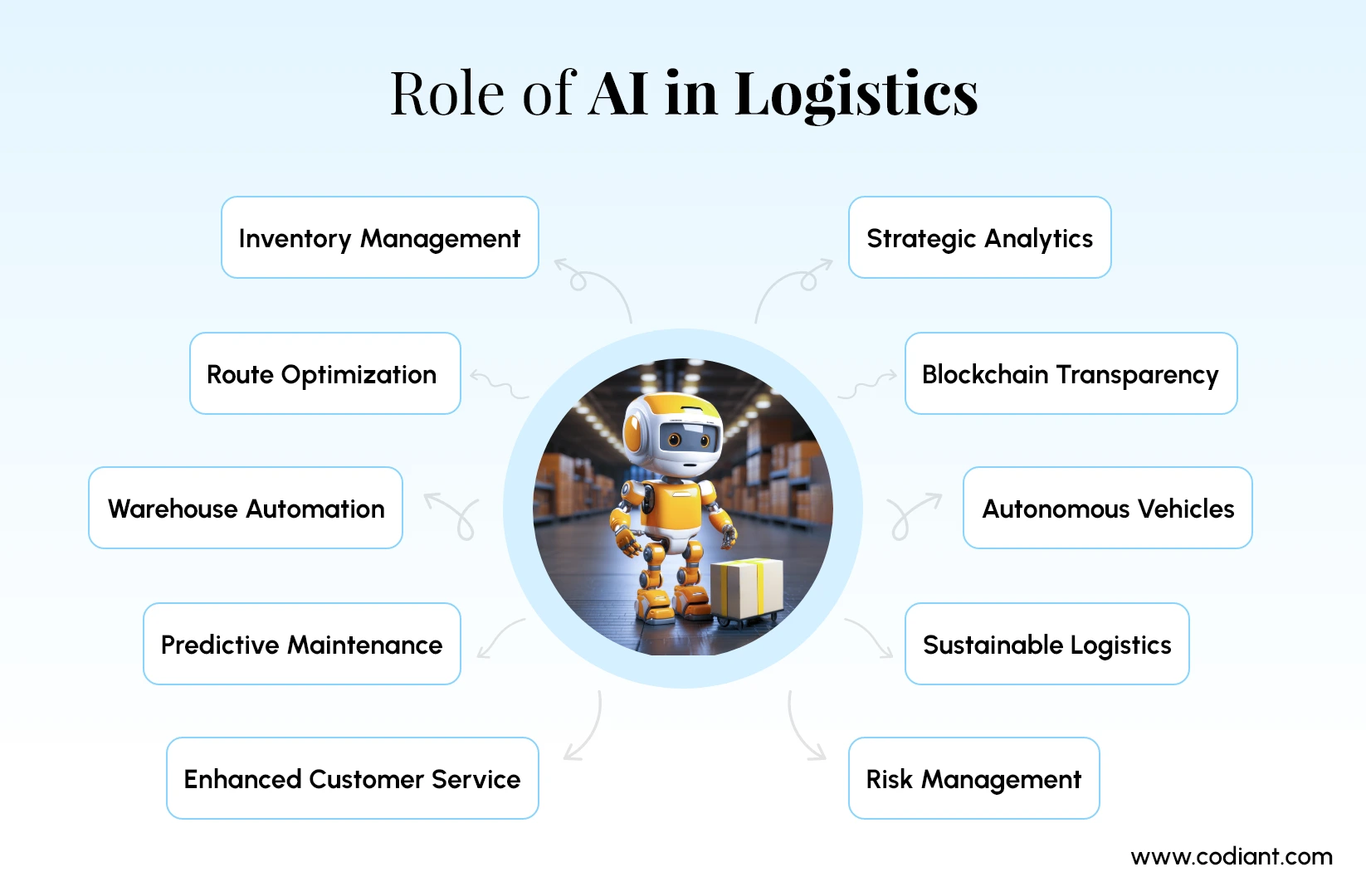
Transport and logistics operations generate massive amounts of data every day from vehicle locations and delivery schedules to warehouse activity and customer orders. The challenge is turning all of that moving information into fast, useful decisions. This is where AI has become a core part of modern logistics.
At its simplest, AI logistics technology works by collecting real-time inputs from sources like GPS tracking, vehicle sensors, shipment records, traffic conditions & even weather updates. Instead of treating each delivery as a separate task, AI looks at the full picture, learns patterns over time & helps teams make better decisions faster.
For example, AI can detect which routes are likely to get delayed, which shipments need priority handling, or where warehouse bottlenecks may occur. It can process thousands of variables instantly something manual planning simply cannot do at scale.
Today, AI in transport and logistics is being applied across the entire operational chain, including:
- Dispatch systems that assign deliveries more efficiently
- Warehousing tools that improve picking, packing & inventory flow
- Demand forecasting models that help companies plan ahead
- Freight tracking platforms that provide more accurate delivery updates
- Customer service automation that answers queries and shares real-time shipment status
As logistics becomes more time-sensitive and complex, AI is no longer experimental. It is becoming the backbone that helps operations stay responsive, efficient & reliable in real-world conditions.
Real-Time Route Optimization and Smart Dispatching
If there’s one thing logistics teams know for sure, it’s this- the plan rarely stays the plan.
A route that looks perfect at 9 AM can fall apart by noon because of traffic jams, road closures, unexpected delays, or last-minute delivery changes. That’s why real-time route optimization has become one of the biggest areas where AI is making an immediate impact.
With AI transport solutions, companies don’t have to rely on static routes or manual dispatch decisions. AI systems continuously process live data vehicle locations, traffic conditions, delivery time windows, weather updates & fuel usage to recommend the best possible route in that moment.
And the key here is speed.
If a driver hits congestion or a route becomes unavailable, AI can reroute instantly instead of waiting for a dispatcher to step in. Some systems can even reshuffle delivery sequences mid-day to keep operations running smoothly.
Smart dispatching works the same way. Instead of assigning jobs based only on fixed schedules, AI helps match deliveries to the nearest available vehicle, balance workloads across the fleet & reduce unnecessary miles.
The result? Faster deliveries, lower fuel costs & fewer stressful surprises for drivers. Customers also benefit from more accurate ETAs and fewer delays.
This is exactly how large-scale networks like Amazon keep deliveries moving efficiently and how platforms like Uber Freight reduce empty trips while improving turnaround time.
Predictive Maintenance for Fleet and Vehicles
Fleet breakdowns don’t just slow things down they throw entire delivery schedules off track. A truck that stops unexpectedly can lead to missed deadlines, unhappy customers & expensive emergency repairs.
That’s why predictive maintenance has become one of the most practical ways AI is improving logistics today.
Modern vehicles already produce a constant stream of sensor data, including:
- Engine performance and temperature
- Brake wear and tire pressure
- Fuel efficiency changes
- Battery health and system alerts
On its own, this data is overwhelming. But with AI logistics solutions, it becomes a real advantage.
AI systems analyze these signals in real time and detect early warning signs that humans often miss like small vibration changes or gradual drops in performance. Instead of reacting after a breakdown happens, teams can step in before the problem becomes serious.
This shift from “fixing” to “preventing” creates major operational benefits:
- Fewer unexpected failures on the road
- Lower repair costs by avoiding major damage
- Higher fleet uptime, with vehicles spending more time delivering and less time in the workshop
For logistics companies running large fleets, predictive maintenance is not just a tech upgrade. It’s a smarter way to keep operations moving, reduce disruptions, and stay reliable even under tight delivery timelines, especially when supported by advanced solutions built by AI developers.
Read More: How Much Does It Cost to Develop a Logistics and Transportation Mobile App?
Warehouse Automation and AI-Driven Inventory Management
Warehouses today are no longer just storage spaces. They’ve become the control centers of modern logistics, and AI powered solutions by advanced LLM capabilities is turning them into intelligent hubs that can respond in real time.
In traditional warehouse setups, teams often rely on manual scanning, fixed inventory rules & human decision-making to manage thousands of moving items. That approach works, but it slows down quickly when order volumes increase or demand shifts unexpectedly.
With AI in logistics operations, warehouses can run faster, smarter, and with far fewer bottlenecks.
AI is now being used to improve key warehouse tasks, such as-
- Smart picking and packing, where systems guide workers or robots to the fastest picking routes
- Automated storage decisions, ensuring items are placed where retrieval will be quickest
- Inventory forecasting, predicting which products will move faster based on demand trends
- Robotics coordination, where AI helps machines work efficiently without collisions or delays
The real-time advantages are hard to ignore-
- Faster order fulfillment during peak demand
- Reduced human errors in sorting and packaging
- Better use of warehouse space, even with high inventory loads
Instead of reacting late, AI-powered warehouses stay one step ahead helping logistics teams meet delivery expectations without adding extra complexity on the ground.
AI in Supply Chain Visibility and Shipment Tracking
In logistics, visibility is everything. Businesses don’t just want to ship goods they want to know exactly where those goods are, what condition they’re in & when they will arrive.
Without real-time visibility, supply chains become harder to control. Small delays turn into missed commitments & customers lose trust quickly.
That’s why artificial intelligence in supply chain tracking has become so valuable.
AI helps logistics teams move beyond basic tracking updates by offering deeper, real-time insights, including-
- Live shipment tracking across routes, ports & warehouses
- Delay prediction, based on traffic, weather & historical patterns
- Risk alerts, such as route disruptions or unusual stoppages
- Automated ETA updates, so customers and teams always stay informed
A big part of this comes from the combination of IoT and AI. Sensors on vehicles and packages feed continuous data into AI systems, which then convert it into actionable insights.
Many companies now rely on real-time dashboards that provide full shipment visibility from supplier to final delivery making logistics more predictable, responsive & easier to manage at scale.
Build Smarter Transport Systems with AI
Turn real-time fleet data into faster routes, lower costs, and better customer delivery experiences.
Demand Forecasting and Smarter Logistics Planning
Logistics doesn’t start when a truck hits the road. It starts much earlier with planning. And one of the hardest parts of planning is knowing what demand will look like tomorrow, next week, or next season.
This is where AI is making logistics far more predictable.
With AI solutions for logistics companies, businesses can forecast demand using real-time and historical data instead of guesswork. AI models analyze patterns that are easy to miss manually, including-
- Seasonal spikes during holidays or sales periods
- Sudden market shifts caused by economic or regional changes
- Customer buying behavior and repeat ordering trends
- Inventory movement across warehouses and locations
This kind of forecasting helps companies prepare before problems appear.
For example, AI can signal when a product is likely to surge in demand, allowing teams to stock up early. It can also prevent unnecessary over-ordering when demand is expected to slow down.
The operational benefits are clear-
- Avoid overstocking that ties up warehouse space and cash
- Prevent stockouts that lead to missed deliveries and lost customers
- Improve fleet planning by aligning vehicles and drivers with expected volume
Instead of reacting late, logistics teams can plan with confidence and stay ready for demand changes in real time.
Fraud Detection and Security in Logistics Operations
Logistics networks move valuable goods every day which also makes them vulnerable to fraud, theft & operational misuse. As supply chains become more complex, security can no longer rely only on manual checks.
That’s where AI logistics technology plays an important role.
AI systems can monitor logistics activity continuously and flag unusual patterns early, such as-
- Fake delivery claims or false “package not received” reports
- Route deviations that may indicate driver misuse or risk events
- Cargo theft attempts during transit or warehouse handoffs
- Unsafe or abnormal driver behavior, like harsh braking or repeated stops
What makes AI especially useful here is speed. Instead of discovering issues after losses occur, AI can trigger real-time alerts while shipments are still in motion.
For logistics companies, this reduces financial loss, improves accountability & builds stronger trust across partners, drivers & customers.
AI-Powered Customer Experience in Transport Services
Transport and logistics isn’t only about moving goods. It’s also about trust. Customers want reliability, transparency & clear communication especially when deliveries are time-sensitive.
That’s why AI is reshaping the customer experience in a big way.
With AI in transport & logistics, companies can provide smarter, more responsive service through-
- Automated shipment updates that keep customers informed without manual effort
- AI chatbots that answer delivery questions instantly
- More accurate delivery windows based on real-time driver and route data
- Personalized notifications tailored to customer preferences
Instead of vague tracking like “out for delivery,” AI enables updates that feel specific and useful, such as-
“Your package will arrive in 18 minutes.”
These improvements reduce support calls, increase customer satisfaction & help logistics brands deliver not just parcels but confidence.
Sustainability and Fuel Optimization Through AI
Sustainability has become a major priority in logistics & AI is helping companies reduce environmental impact without slowing down operations.
Fuel usage, inefficient routing & empty vehicle trips are some of the biggest contributors to emissions in transport. AI helps solve these challenges through smarter decisions in real time, which is why many businesses are turning to the best logistics app development companies to build efficient, AI-powered solutions.
With real-time logistics optimization, businesses can-
- Plan routes that reduce unnecessary miles and fuel burn
- Balance loads better so fewer trips are needed overall
- Monitor fuel consumption patterns across fleets
- Identify inefficiencies like idling, detours, or underutilized vehicles
Even small improvements in routing and fleet usage can lead to significant emission reductions at scale.
Many logistics companies are now using AI not only to cut costs, but also to meet ESG goals and build greener, more responsible supply chains.
In short, AI is making logistics faster and cleaner at the same time.
Real-World Examples of AI Transforming Logistics
AI is not just a future concept in logistics it is already being used by some of the world’s biggest transport and supply chain companies. These real-world examples show how AI logistics solutions are helping businesses run faster, smarter & with more control.
Here are a few well-known leaders applying AI at scale:
- Amazon uses AI-powered warehouse robotics and delivery optimization to manage millions of orders while improving speed and accuracy.
- DHL applies predictive analytics and smart routing systems to reduce delays and improve last-mile efficiency.
- FedEx uses AI for shipment tracking, automation & real-time visibility across global delivery networks.
- Maersk relies on AI-driven freight planning and risk forecasting to manage complex international shipping operations.
- Uber Freight uses real-time dispatching and AI-based matching to connect loads with drivers more efficiently and reduce empty miles.
What these examples have in common is simple- AI is helping logistics companies respond faster, reduce operational waste & stay reliable even when conditions change daily.
Challenges of Implementing AI in Logistics Operations
While AI brings clear benefits, adoption is not instant. Implementing AI successfully requires more than adding new software it often means upgrading the foundation of logistics operations.
Some common challenges include:
- Poor data quality, where incomplete or inconsistent data limits AI accuracy
- High integration complexity, especially when connecting AI tools with existing systems
- Legacy infrastructure, which many logistics companies still depend on
- Workforce training, since teams need time to adapt to AI-supported workflows
- Cybersecurity risks, as connected supply chains create new digital vulnerabilities
That’s why AI in logistics operations works best when paired with the right strategy, clean data pipelines, and strong operational readiness. Companies that invest in infrastructure early see much smoother results over time, especially when supported by scalable enterprise software development solutions in Seattle that align with evolving business needs and technology ecosystems.
The Future of AI in Transport & Logistics
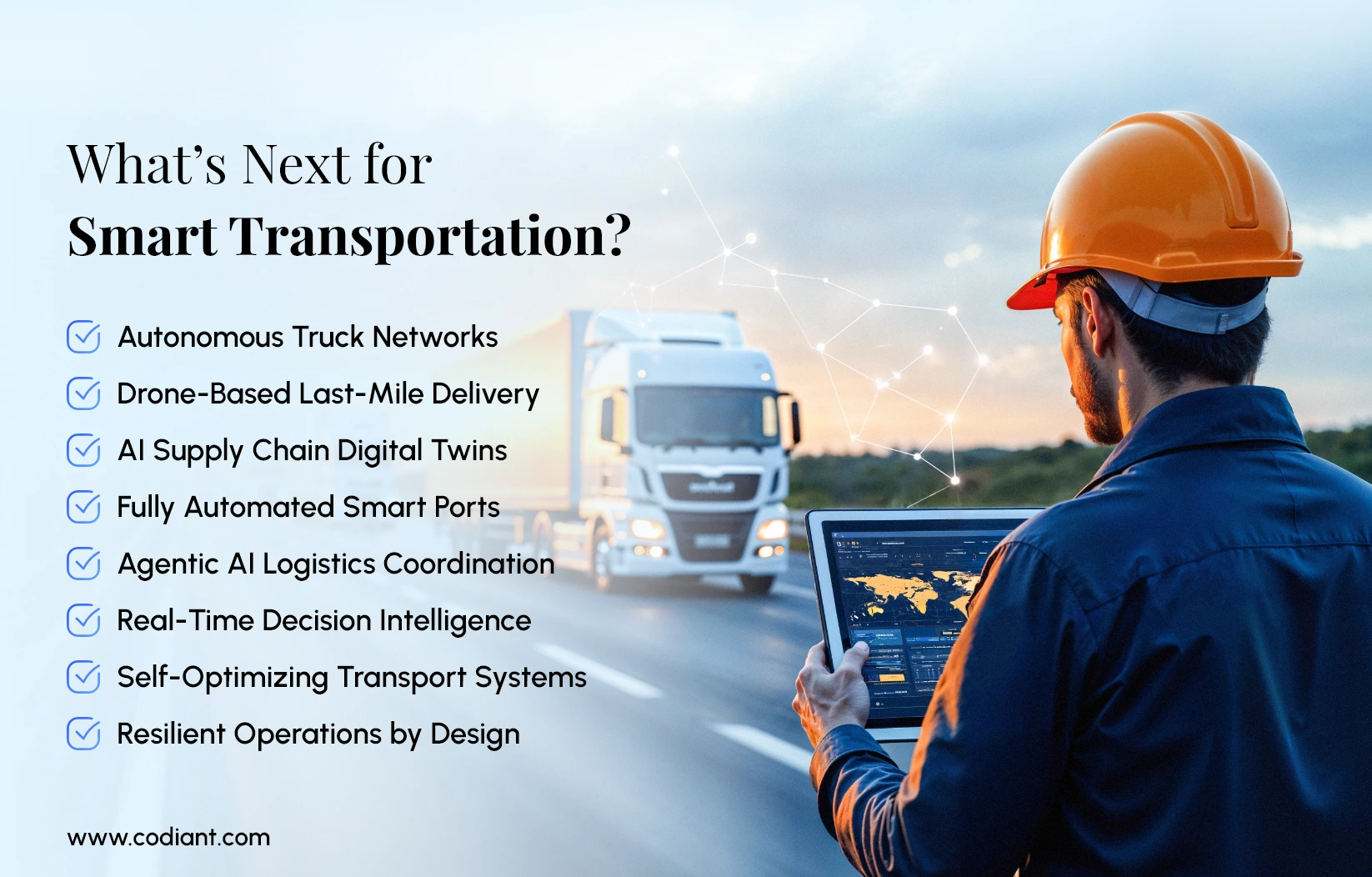
The next wave of innovation in logistics will go beyond optimization it will reshape how transport systems operate end-to-end.
In the coming years, AI transport solutions will drive major advancements such as-
- Autonomous trucks that reduce dependence on manual driving
- Drone deliveries for faster last-mile logistics in high-demand zones
- AI-powered supply chain twins that simulate operations before decisions are made
- Fully automated smart ports that manage freight flow with minimal human delay
- Agentic AI systems that coordinate dispatch, warehousing & planning automatically
Logistics is moving toward a future where decisions happen instantly, systems self-adjust & operations become more resilient by design.
Read More: How to Build an On-demand Delivery App?
Conclusion
AI is no longer optional in transport and logistics. As customer expectations rise and supply chains become more complex, companies need faster decision-making, stronger visibility & real-time responsiveness.
From route optimization and warehouse automation to predictive maintenance and demand forecasting, AI is improving every layer of logistics operations. And with real-time logistics optimization becoming the new standard, businesses that adopt AI gain speed, accuracy, cost savings & long-term resilience.
The logistics companies leading today are not just moving goods they are building smarter networks powered by intelligence and automation.
Logistics leaders who invest in AI today will define the supply chains of tomorrow.
If you’re exploring AI solutions for logistics companies, now is the time to evaluate your operations, identify high-impact use cases & start building the foundation for real-time transformation.
Ready to Upgrade Your Logistics Operations?
Explore AI solutions that help logistics teams automate planning, tracking, and decision-making in real time.
The Author

Frequently Asked Questions
AI helps logistics teams make faster decisions by tracking vehicles, predicting delays, managing deliveries & improving planning instantly. It reduces manual work and keeps operations smooth every day.
AI can solve problems like late deliveries, traffic delays, route changes, fuel waste, missed shipments & warehouse inefficiencies. It gives quick alerts and helps teams respond immediately.
AI tracks fleet movement live and suggests the best routes based on traffic, weather & delivery schedules. It helps drivers avoid delays and complete more trips efficiently.
AI improves delivery speed, reduces fuel costs, prevents downtime, boosts customer satisfaction & helps manage fleets better. It also supports smarter planning and real-time visibility.
Yes, AI tools are now affordable and scalable. Small and mid-sized companies can use AI for tracking, route planning & automation without needing huge budgets or large teams.
Modern logistics uses machine learning, predictive analytics, computer vision, AI-powered tracking systems, automation tools & smart route engines to improve speed, accuracy & operational control.
Featured Blogs
Read our thoughts and insights on the latest tech and business trends

Conversational AI in Healthcare: Benefits and Use Cases
- July 29, 2026
- Healthcare
Conversational AI in healthcare uses artificial intelligence to help patients, care teams, and administrative staff communicate through chat, voice, or messaging interfaces: answering routine questions, scheduling appointments, sending medication reminders, and reducing repetitive administrative work.... Read more

Top 7 ReactJS Development Companies in USA for 2026
- July 27, 2026
- Technology
React JS development companies design, build and maintain interactive web applications using the React library, typically combining frontend engineering with UI/UX design, API integration, testing and long-term support. The seven best React JS development companies... Read more
How Much Does AI Chatbot Development Cost in 2026? A Complete Business Guide
- July 24, 2026
- AI Chatbot Development
AI chatbot development costs in 2026 can range from approximately $15,000 for a focused AI chatbot MVP to $300,000 or more for an enterprise conversational AI platform. The final cost depends on the chatbot’s intelligence,... Read more