5 iOS App Development Trends Every Developer Must Know
Table of Contents
Subscribe To Our Newsletter

Summarize with AI
Not enough time? get the key points instantly.
There’s a strong case to be made that Apple iPhones and iOS apps have become the center of the world, displacing all the rivals on the line. That’s because of its meticulous craftsmanship with upcoming iPhone 7 features and carefully integrated software and/or Apps that are currently the greatest force that is changing the technology landscape.
Even if the businesses or enterprises have nothing to do with the emerging app development trends, they are strongly influenced by anything that originates from Apple.
Businesses that want to surge in an incessantly speeding market have to adapt and take the leap forward by embracing what’s trending inn, or otherwise, eventually, the business will steep aside.
So, here Codiant brings to you the most talked upon and trending iOS app development trends that you’d immediately embrace to step ahead of the game.
Swift 3.0 Programming- A Mainstay
Swift is an all new proprietary programming language and an innovative set of coding methodologies and frameworks from Apple that can co-exist with but is significantly better than Objective-C, a dearest language for iOS Apps.
Swift is becoming a leader and a reason to an evolution of more fitting iPhone, Mac and iPad apps. Swift is designed to provide seamless compatibility with Cocoa and Objective-C. It is comparatively more robust language than Python.
iBeacon and Geolocation
Create more powerful m-commerce and e-commerce apps through iBeacon. The Apple’s beacon technologies are most sharpened, simple and secure technology for the payment process. It will help to personalize services outstandingly, especially when aligned with innovations like Siri improvements in iOS 11. The transportation services, the banking sector, sports stadiums, Airports, etc. are integrating iBeacons to share information and connect with Apple devices.
Wearables and IoT
IoT and wearable technologies are the new trends in iOS app development. In fact, IoT’s future is shaped by wearables. According to erricson, 74 percent believe multiple wearables and sensors will help them interact with other devices and physical things around them, whilst 1 in 3 smartphone users believes they will wear at least 5 wearables beyond 2020. 6 out of 10 smartphone users are confident that wearables will have uses beyond health and wellness. While, Two in five users of wearables say they feel naked when not wearing their device, with a quarter even sleeping with it on.
Augmented Reality
AR is certainly on the horizon and we have already seen a tremendous growth in this lane. The Mobile App gaming industry is skyrocketing after being fueled by Augmented Reality, thus allowing the iOS app developers to integrate AR amply for 3D gaming app development.
Cloud-based App Development
The cloud envelopes everything; unsurprisingly, many startups today are relying entirely on cloud solutions to run their businesses. Plug into the cloud based app development that will enable you to smart sync across multiple devices and free up the space on your device hence reducing the app size.
There are many other mobile app (iOS) technology trends, of course, but these five represent the largest changes. App Developers would be wise to take note, make improvements and advance toward the future.
Featured Blogs
Read our thoughts and insights on the latest tech and business trends

How Much Does It Cost to Build an MVP in 2026? A Complete Pricing Guide
- September 10, 2026
- Digital Transformation
MVP development cost typically ranges from $5,000 for a basic web-based product to $150,000 or more for a complex, cross-platform solution. A custom MVP with user accounts, a backend, essential integrations and a polished interface... Read more
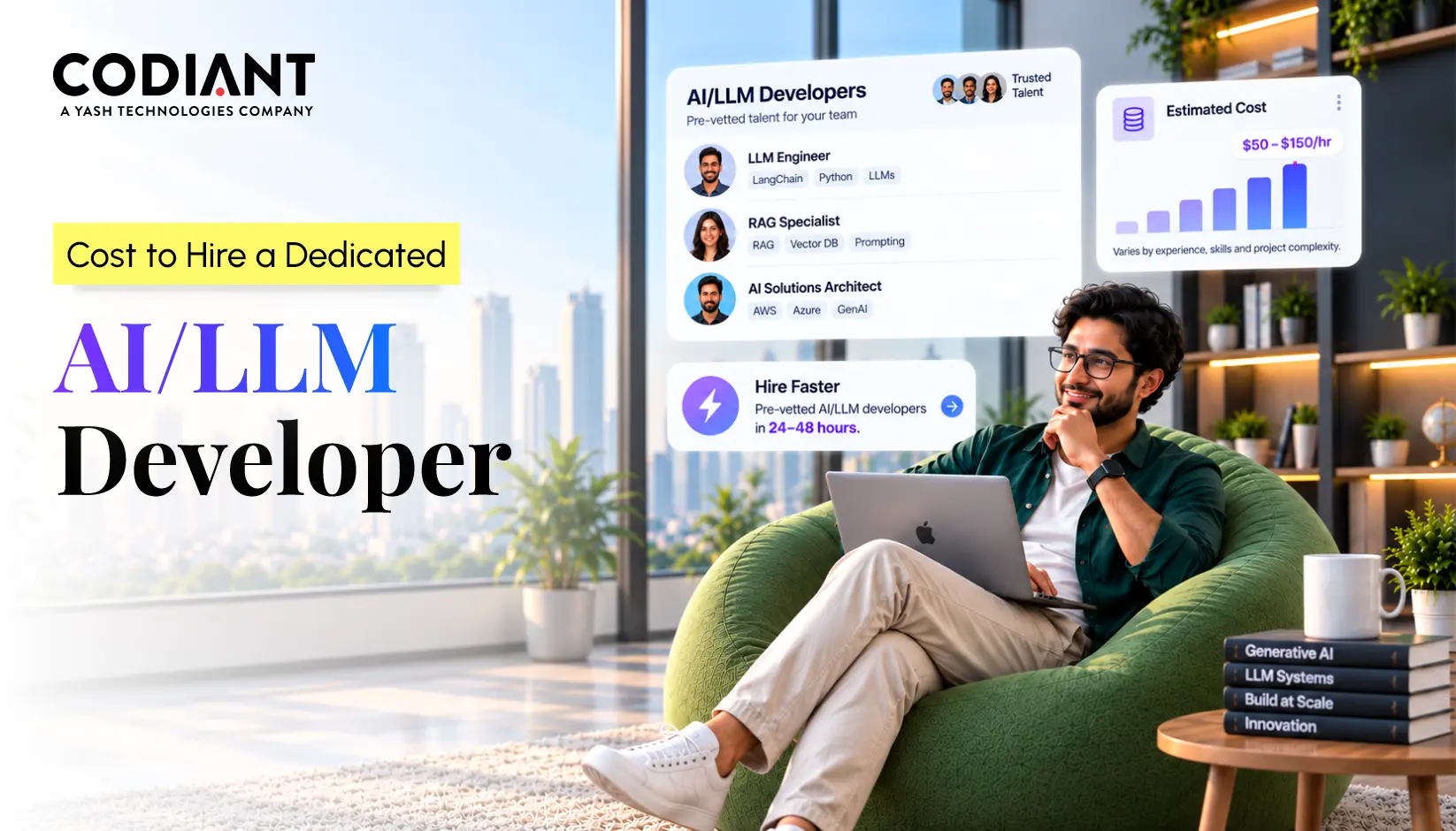
How Much Does It Cost to Hire a Dedicated AI/LLM Developer in 2026?
- September 8, 2026
- Artificial Intelligence Staff Augmentation
Hiring a dedicated AI or large language model (LLM) developer typically costs $35–$60 per hour for general AI engineering and $50–$200 per hour for specialised machine learning work, with enterprise pricing rising for advanced RAG,... Read more
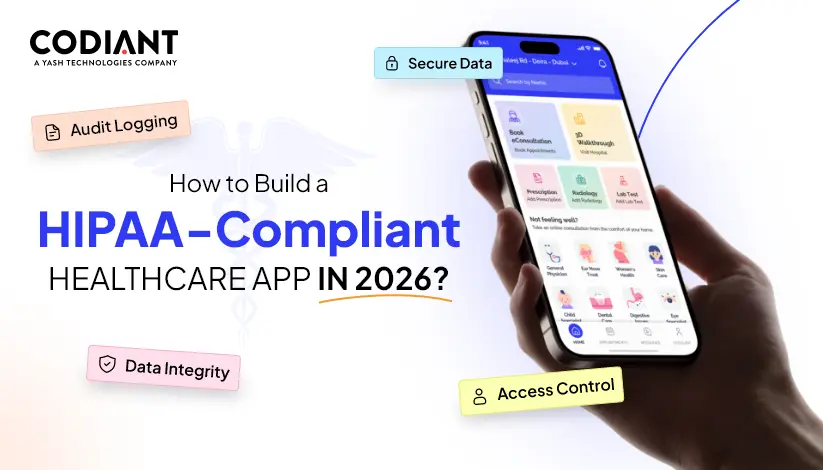
HIPAA-Compliant App Development in 2026: How to Build Securely and Avoid Preventable Fines
- September 4, 2026
- Mobile App Development
HIPAA-compliant app development in 2026 requires six foundations: complete ePHI mapping, documented risk analysis, role-based access, encryption, signed business associate agreements, and continuous security monitoring. This matters most to healthcare CTOs, product leaders, and compliance... Read more