How AI Helps eCommerce Businesses Scale Faster: 10+ Proven Strategies
Table of Contents
Subscribe To Our Newsletter
Running an eCommerce business today means managing more products, more customers, and more data than most teams can handle manually. As order volumes rise, tasks like customer support, inventory planning, product discovery, and marketing start slowing down growth. This is where AI now plays a practical role: it helps online stores work faster, reduce errors, and make decisions based on data instead of guesswork.
AI systems are already reshaping everyday eCommerce operations-automating repetitive tasks, improving search and recommendations, forecasting demand, and creating more relevant shopping experiences. Industry reports show steady year-on-year growth in AI adoption, with retail and eCommerce being among the top contributors.
In this blog, you’ll find 10+ proven strategies that show how AI in eCommerce scaling actually works, how AI for eCommerce personalization improves conversions, and how smarter, AI-driven customer experience tools help businesses grow without increasing workload.
How AI Automates Product Content for Online Stores?
Scaling an eCommerce business becomes difficult when teams struggle to produce consistent, SEO-friendly product content for hundreds or thousands of SKUs. This is why Codiant built AI Product Details, an AI-powered Shopify app designed to automate every part of product content creation.
Instead of spending hours writing or rewriting titles, descriptions, tags, and metadata, merchants can generate fully optimized content in seconds using advanced AI models fine-tuned for eCommerce SEO.
Core Features of AI Product Details
- AI Content Generation Preferences Panel
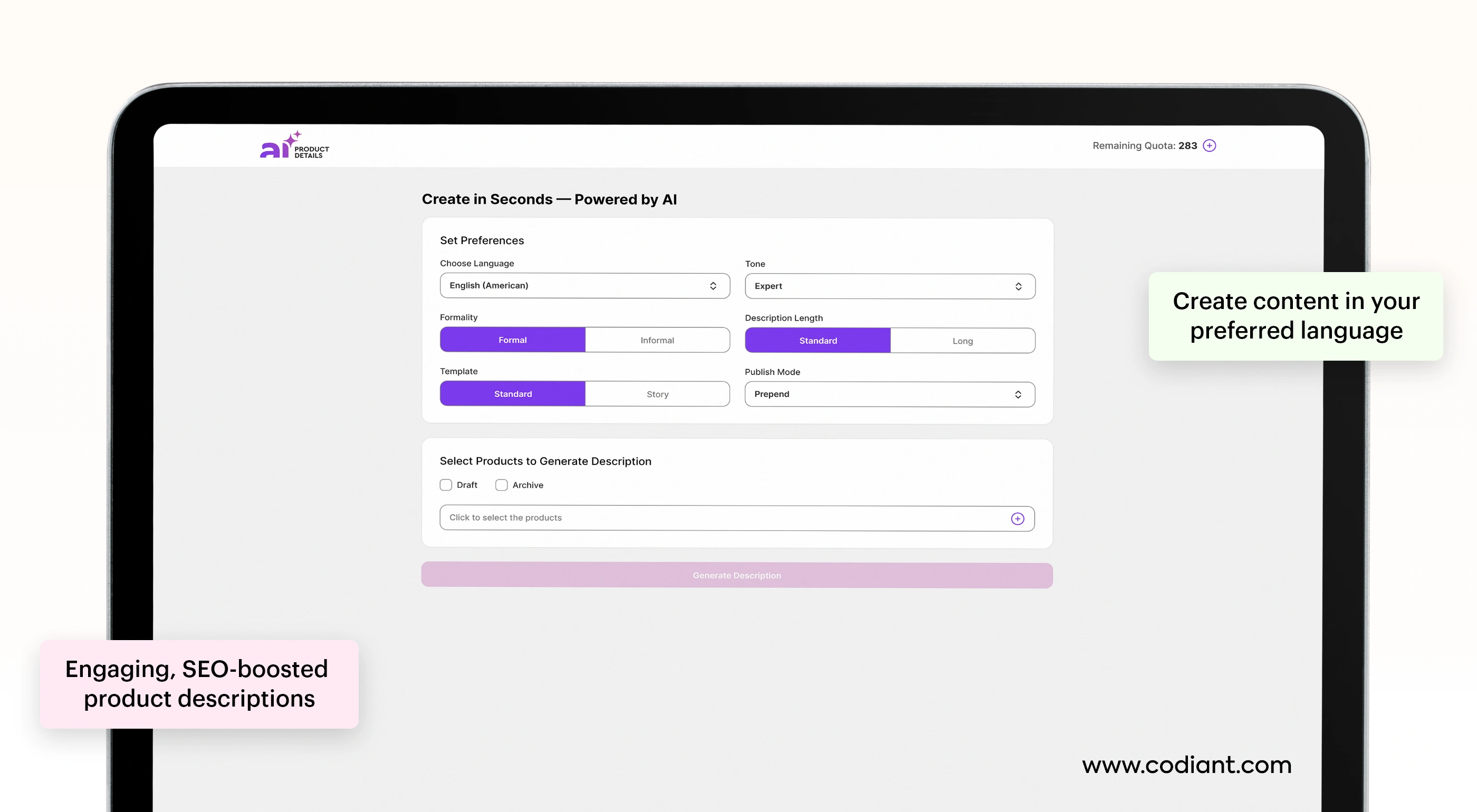
Set language, tone, formality, and description length to generate brand-aligned product content instantly.
- Product Selection Modal – AI Description Generator
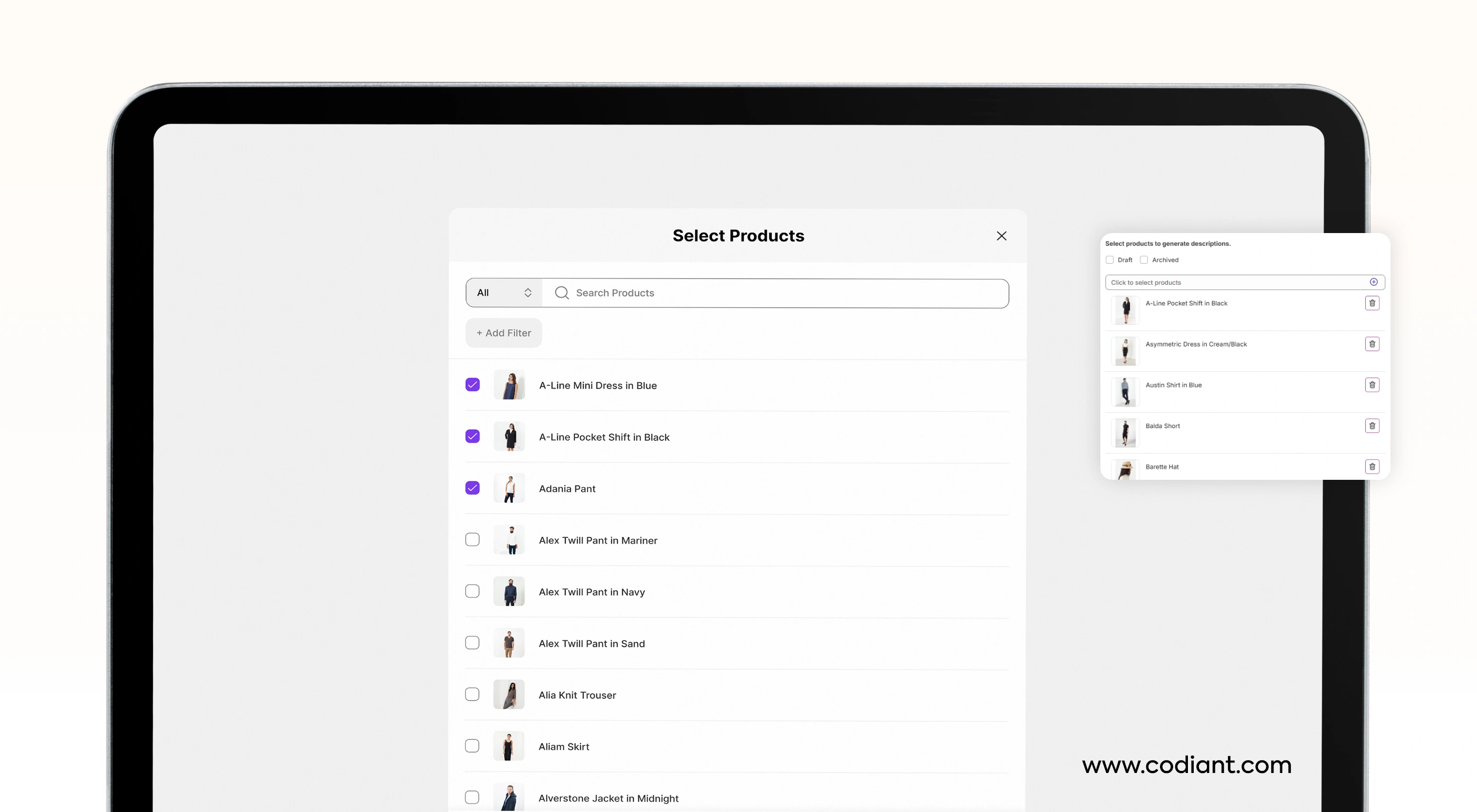
Select single or multiple products effortlessly, enabling bulk AI description generation for large catalogs.
- AI Content Generation Dashboard – SEO Description Management
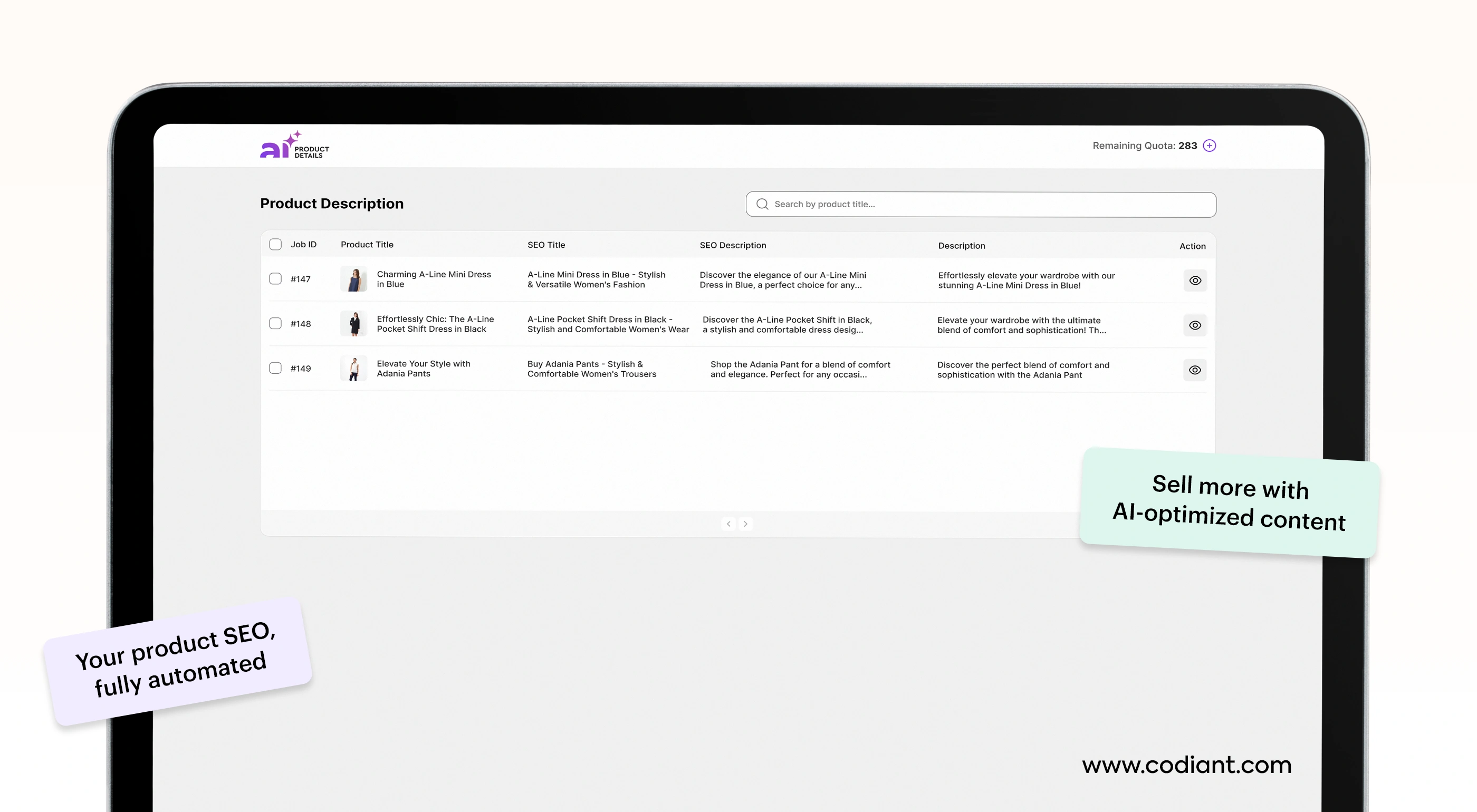
View AI-generated SEO titles and descriptions together, making content review and optimization extremely simple.
- Content Editing & SEO Optimization Panel
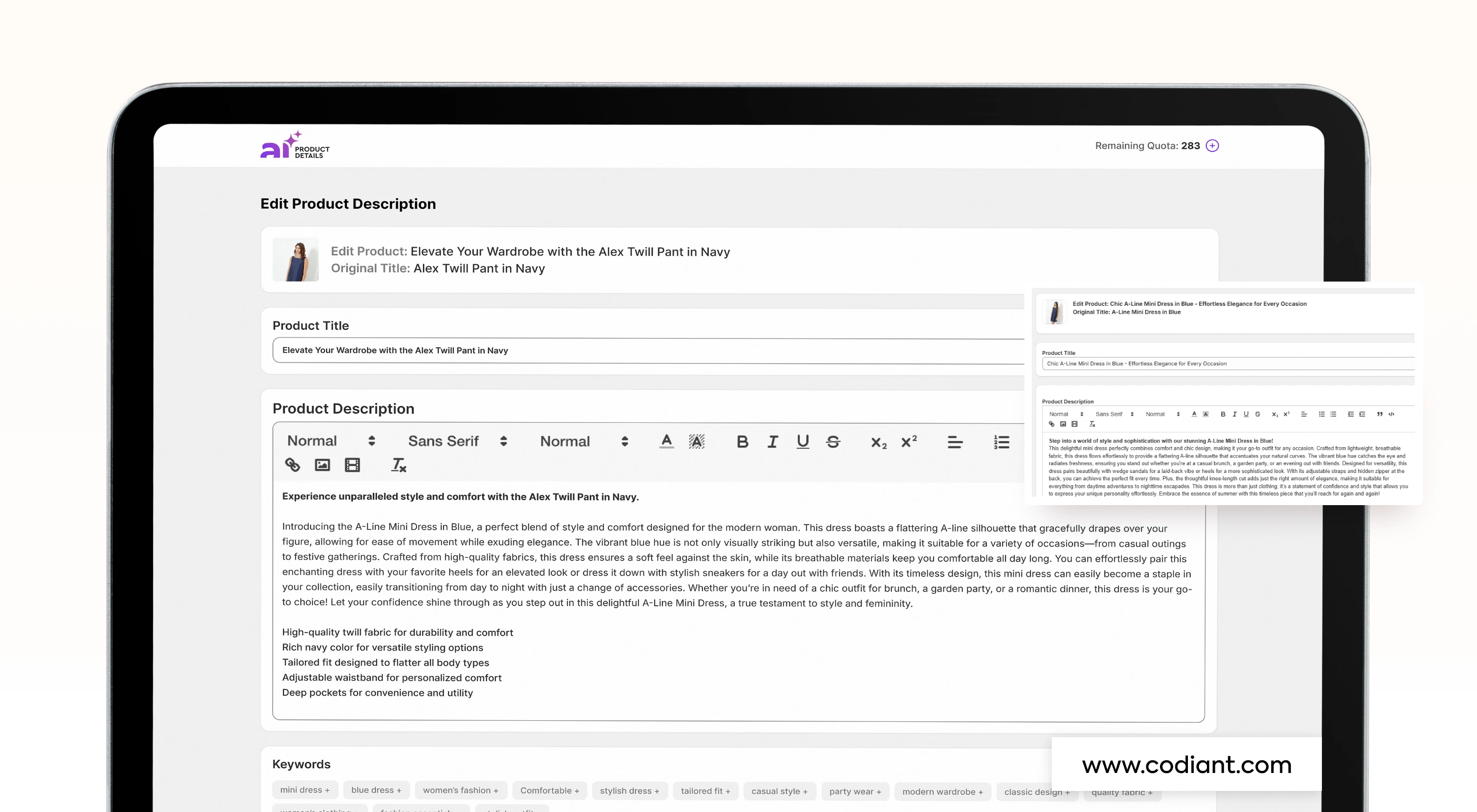
Add keywords and refine SEO metadata to improve discoverability and ranking for each product.
- Live Product Page Preview – AI-Optimized Content Applied
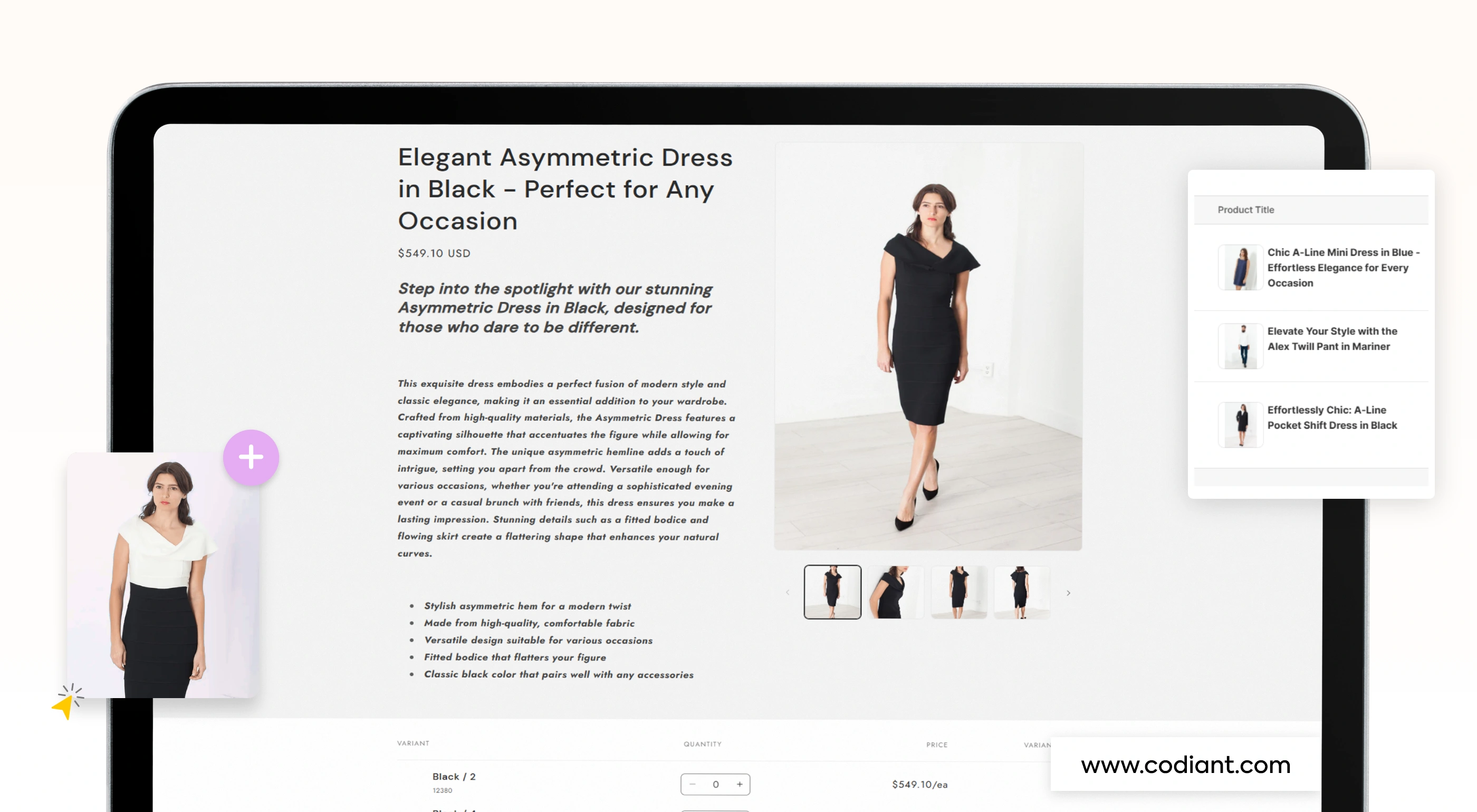
Preview AI-generated content on the actual product page before publishing for perfect visual alignment.
- AI-Generated Product Description – Live Storefront View
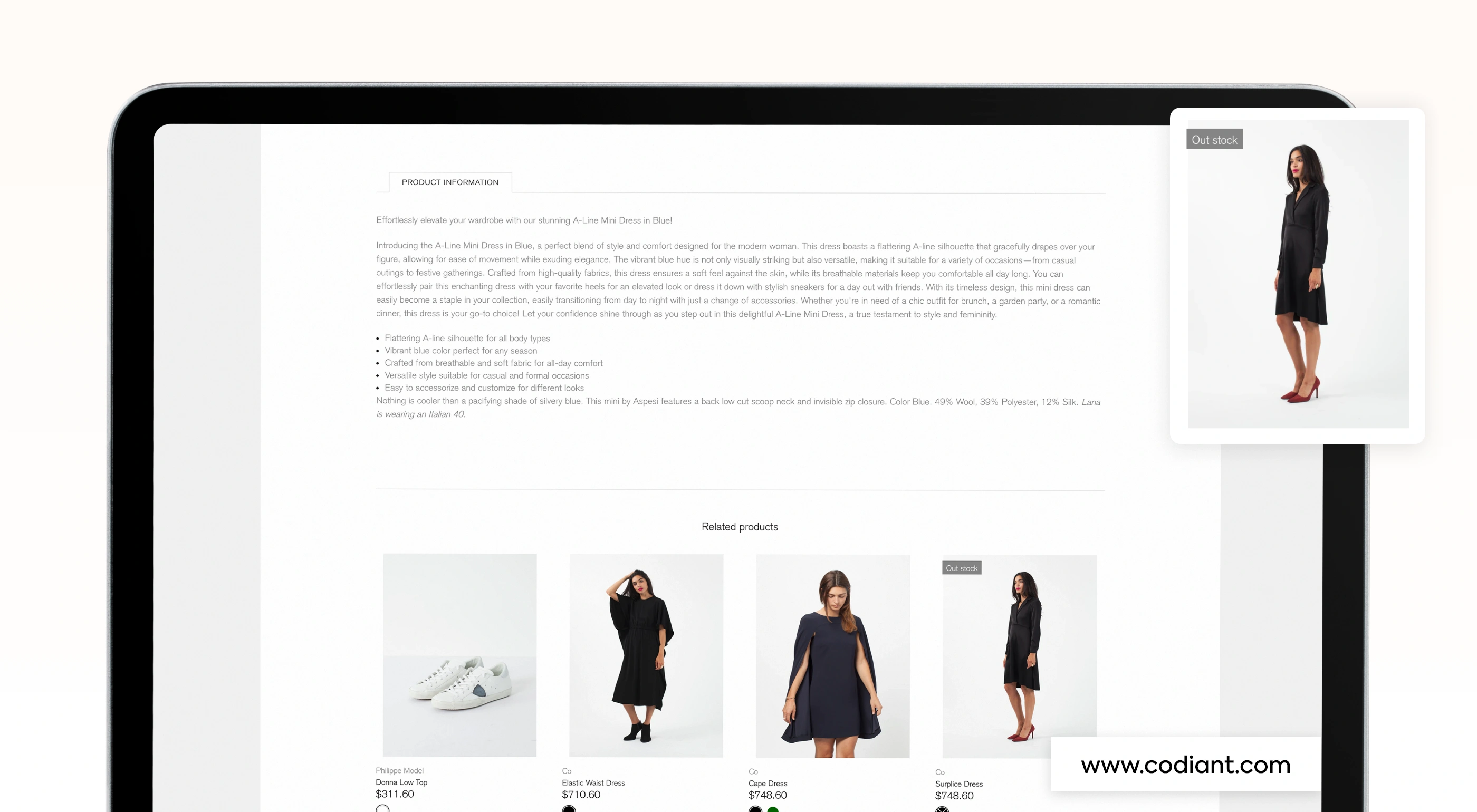
See the complete AI-generated description displayed live, creating polished, conversion-ready product pages instantly.
What Makes AI Product Details Valuable for Growing Online Stores?
- Instant SEO product content: Generates product titles, descriptions, tags, and meta fields automatically.
- Webhook automation: New product added → SEO content generated instantly without manual effort.
- Bulk content generation: Update hundreds or thousands of listings at once.
- Tone & brand voice customization: Every description matches the exact style shoppers expect.
- Multilingual content: Create product listings for global store expansion.
- Direct Shopify publishing: Review, edit, preview, and push updates in real time.
Whether you’re launching new products daily or managing a large catalog, AI Product Details removes the content bottleneck – giving teams more time to focus on sales, marketing, and growth.
In short: AI Product Details helps eCommerce brands save time, improve SEO rankings, and maintain consistent product content at scale – making it a perfect foundation before implementing the AI strategies in this guide.
Build Product Pages That Convert on Their Own
AI creates accurate, optimized product content while your team focuses on growth.
Best AI Strategies to Make Online Stores Grow Faster
Here are 10+ proven AI strategies that help online stores grow faster and scale smoothly:
Strategy 1: AI-Powered Personalization Engines
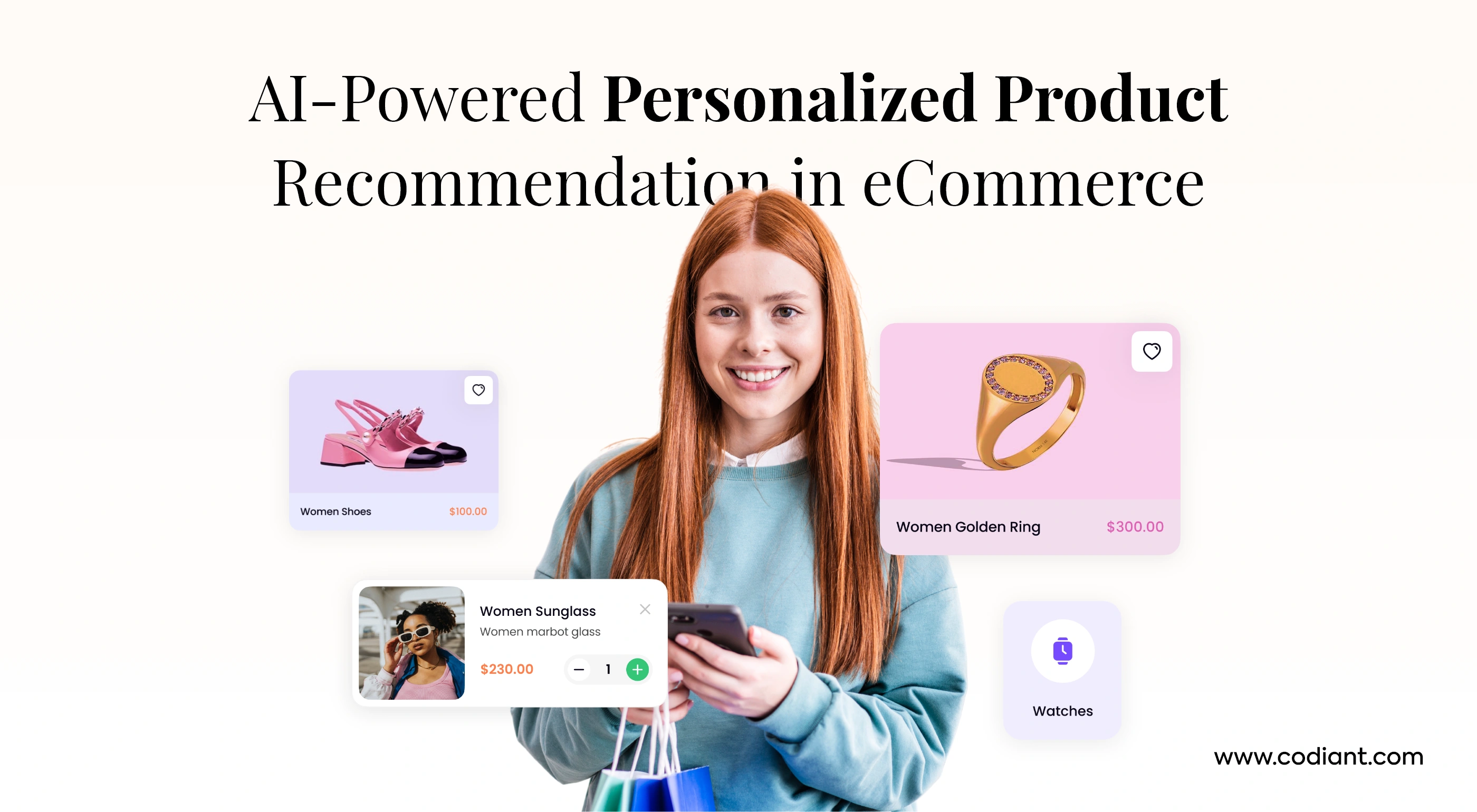
Personalization is one of the biggest reasons why eCommerce brands using AI scale faster than those relying on traditional static experiences. Shoppers today expect online stores to “understand” what they want-without making them search too hard for it.
In today’s competitive retail landscape, delivering personalized experiences isn’t just a nice-to-have it’s essential. This is where AI-powered tools shine, analyzing browsing patterns, purchase history, demographics, on-site behavior, and countless subtle signals to craft interactions that feel uniquely tailored to each shopper. By leveraging Conversational AI in Retail, businesses can engage customers in real time, anticipate needs, and guide them seamlessly through their buying journey, ultimately driving loyalty and boosting sales.
AI doesn’t guess. It learns. It detects patterns in real time, predicts intent, and adjusts the shopping journey for every visitor. This ability to offer a tailored experience at scale is what makes AI for eCommerce personalization so powerful.
AI-Powered Product Recommendations
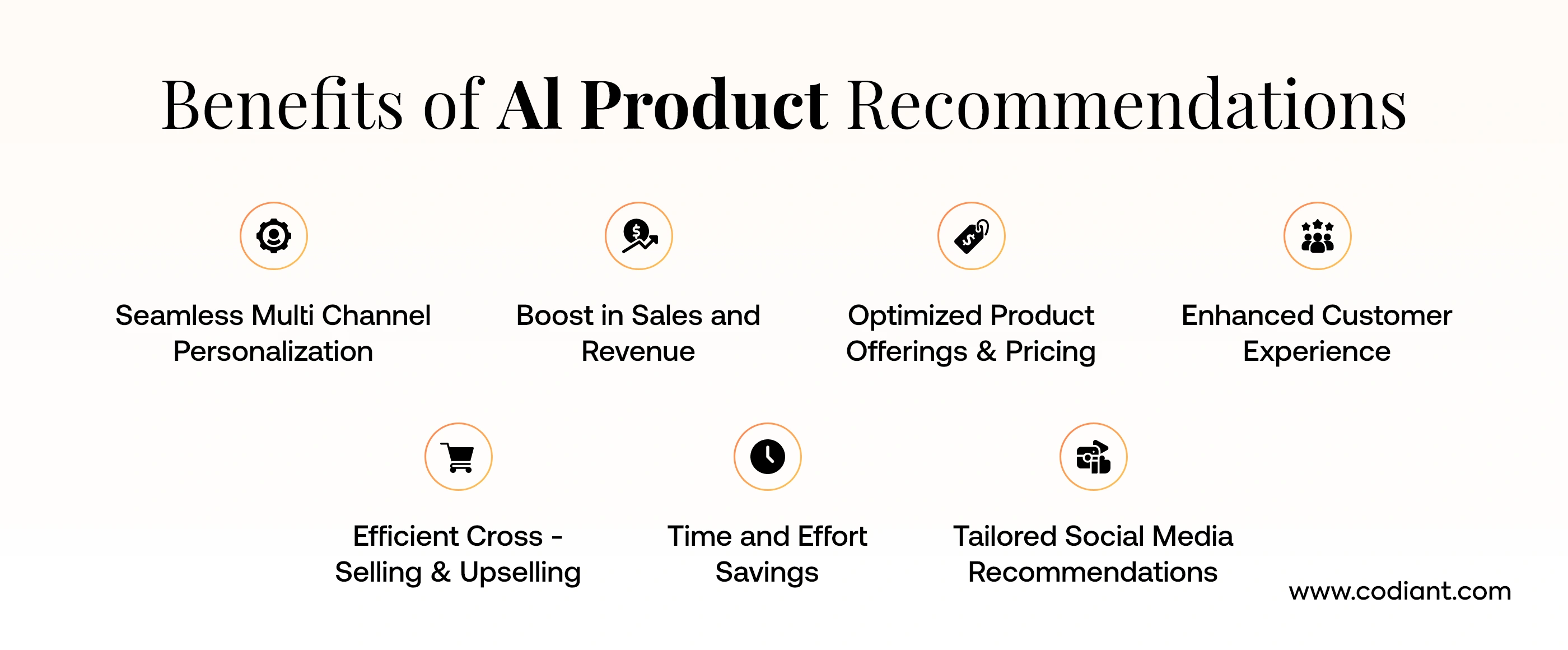
Product recommendations are one of the first and most effective ways to increase conversions using AI. Instead of generic “recommended for you” sections, AI creates personalized product suggestions based on:
- Recent browsing behavior
- Items added or removed from cart
- Products frequently bought together
- Similar user profiles
- Seasonality and trends
Amazon is the most popular example. More than 35% of its sales come from AI-driven recommendation engines. When a shopper views a product, Amazon instantly shows “Customers also bought,” “Similar items,” and “Inspired by browsing history.” Each block is powered by machine learning models analyzing millions of data points.
AI recommendations help buyers discover products faster, reduce decision fatigue, and increase the likelihood of purchase. For online stores using Shopify, built-in tools like Shopify Magic and third-party AI plugins can automate recommendation logic without needing a data science team.
Behavior-Based Segmentation
Traditional segmentation splits customers into broad buckets-age, gender, or location. AI goes much deeper.
Behavior-based segmentation groups shoppers by how they interact with your store, such as:
- Pages viewed
- Time spent on products
- Scrolling patterns
- Frequency of visits
- Discount sensitivity
- Device preference
- Engagement with ads or emails
Machine learning identifies micro-patterns that humans would never notice. For example, AI can detect that a segment of users tends to buy only on weekends or that a customer group returns to the same category every few days. This helps you target them with precise offers and content.
This level of segmentation improves targeting accuracy and increases sales without increasing ad spend. It also creates a more AI-driven customer experience, where users feel like the store understands their preferences.
Personalized Homepage, Search, and Email Content
Every shopper should see a different version of your store based on who they are and what they need. AI enables dynamic personalization across key touchpoints:
- Personalized Homepage
Instead of a single static homepage, AI can show:
- Trending items based on user interest
- Recently viewed products
- Location-based recommendations
- Category suggestions based on browsing history
For example, if someone often browses sports shoes, their homepage may highlight new sneaker launches or exclusive deals on sports gear.
- Personalized Search Results
AI doesn’t just find keywords-it understands intent. Search becomes smarter with:
- Auto-suggestions based on previous searches
- Filters auto-adjusted to match user behavior
- Personalized ranking of search results
This drastically reduces bounce rates by helping customers find what they want faster.
- Personalized Emails
Instead of mass mailing the same newsletter, AI generates content based on:
- Products the shopper viewed
- Categories they love
- Price points they prefer
- Cart activity
- Expected reorder cycles
Netflix is a great example. It uses AI to personalize email subject lines, thumbnails, and the order of recommended content-based on what each user is likely to watch next. The same approach works for eCommerce: when emails match individual interests, open rates and conversions shoot up.

Dynamic Pricing and Offers
AI also helps adjust prices and discounts in real time. It analyzes:
- Competitor pricing
- Inventory levels
- Purchase intent
- Seasonality
- Customer browsing patterns
If a user repeatedly checks a product but hasn’t bought it, AI may trigger a small personalized discount. Or if demand for an item spikes, AI can automatically increase its price or limit offers. This ensures margins are protected while sales continue to grow.
Dynamic pricing is one of the strongest levers to increase profitability without hurting customer satisfaction. It works 24/7 and reacts instantly-something manual teams cannot do at scale.
Personalized Landing Pages
Personalized landing pages help increase conversions from ads and email campaigns. AI can adjust:
- Product collections shown
- Headlines and messages
- Recommended items
- Offers or bundles
- Layout and design elements
A visitor from Instagram may see a trend-focused landing page, while someone coming from Google Shopping might land on a product comparison page. This improves relevance, reduces drop-offs, and boosts conversions.
Shopify stores can use AI landing page builders that auto-optimize layouts for every user based on behavior patterns.
Why AI Personalization Matters
AI personalization isn’t about adding flashy features. It’s about reducing friction and making shoppers feel understood. When users see products they actually care about, when prices match their expectations, and when emails reflect their interests, they are more likely to return and buy again.
This is why AI-driven customer experience has become the backbone of modern eCommerce growth. It brings the in-store “personal attention” experience to digital platforms-and it does it for millions of customers at once.
Strategy 2: Intelligent Search & Product Discovery
When customers can find what they want quickly, they buy faster-and they come back more often. This is where AI-powered search and discovery systems become a major growth driver for online stores. Instead of relying on simple keyword matches, modern eCommerce search engines use machine learning to understand intent, context, and behavior. This improves product discovery, reduces drop-offs, and creates a smoother shopping experience.
Here’s how AI transforms search into a revenue-driving feature:
Natural Language Search
Shoppers don’t search using perfect keywords anymore. They type real sentences like “black running shoes under 2000” or “a gift for my sister who likes skincare.” AI understands these natural phrases and provides accurate results instantly. This reduces friction, helps customers find products in fewer steps, and boosts conversions-making it essential for AI for eCommerce growth.
Image Search (“Snap & Shop”)
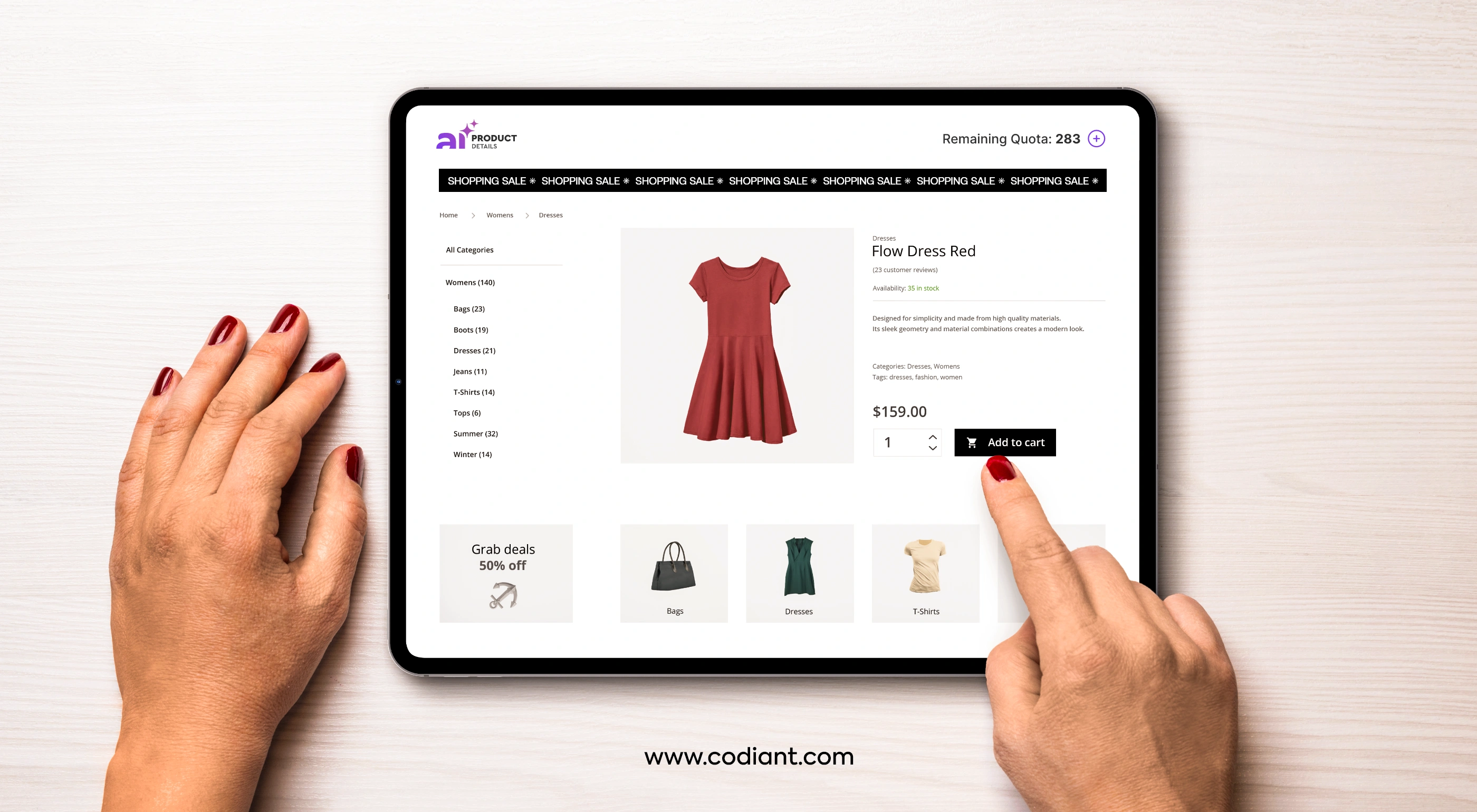
AI image recognition lets customers upload a photo and find visually similar products. This works well for fashion, accessories, furniture, and home décor. Customers who can’t describe an item simply upload an image and shop within seconds. It increases engagement and directly improves product discovery for stores using modern AI tools for online stores.
Voice Search
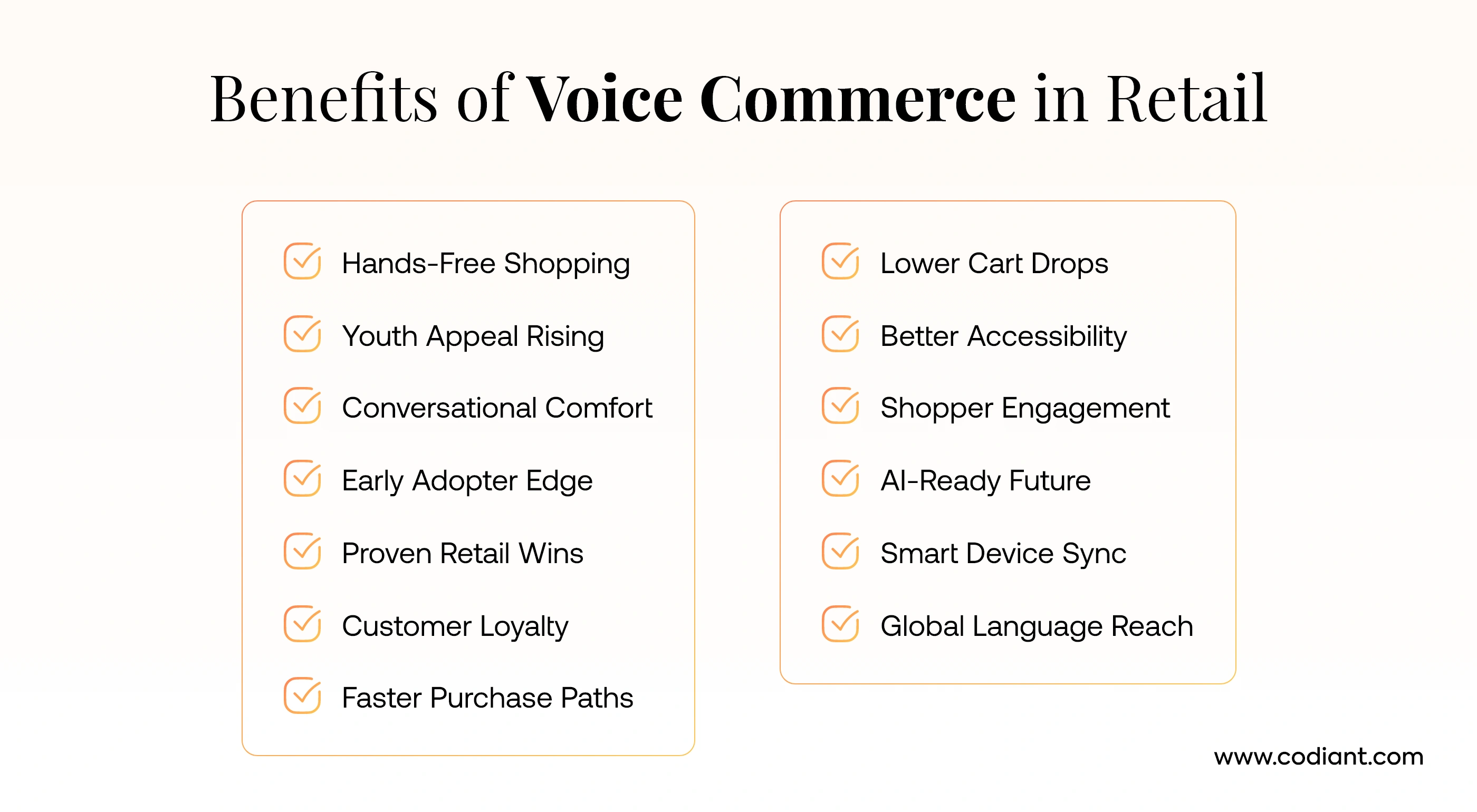
With smart speakers and voice assistants everywhere, more shoppers are speaking their queries. AI-driven voice search understands accents, slang, and casual phrases.
Customers can ask:
- “Show me waterproof hiking shoes”
- “Find a floral dress for summer”
This improves accessibility and supports hands-free shopping-an important part of AI in eCommerce scaling.
Semantic Search
Semantic search goes beyond keywords. It understands meaning. If someone types “sofa for small spaces,” AI connects the query to compact couches, loveseats, and foldable seating. This helps customers see better options, not just literal matches, improving user satisfaction and reducing bounce rates.
Auto-Correct & Auto-Suggest
Typing mistakes are common-especially on mobile. AI corrects spelling errors (“nikes shoes” → “Nike shoes”) and suggests popular terms as users’ type. This reduces search frustration and keeps shoppers engaged instead of leaving the site.
Personalized Search Results
AI analyzes browsing history, past purchases, preferences, and behavior to show customized results to each shopper. Two customers can search the same term and get completely different product listings based on what they are more likely to buy. This level of personalization increases relevance, improves conversions, and strengthens repeat purchase behavior-core goals of eCommerce AI strategies.
How can AI improve customer experience in eCommerce?
AI improves customer experience by making product discovery faster, smarter, and more intuitive. It understands natural language, recognizes images, predicts user intent, and personalizes search results.
This reduces friction, cuts down the number of steps needed to find products, and helps customers feel understood. When shoppers easily locate what they want, they stay longer, purchase more, and return more often—directly contributing to eCommerce growth.
Strategy 3: AI Chatbots & Voice Agents for eCommerce
AI chatbots and voice agents have become one of the most reliable ways for online stores to engage customers, resolve queries, and drive sales without adding more support staff. As eCommerce traffic grows across time zones, brands need a support system that doesn’t sleep. That’s exactly where AI chatbots for eCommerce make a difference. They respond instantly, guide shoppers at every step, and help reduce friction during buying decisions-all of which directly contribute to faster scaling.
24×7 AI Chat Support
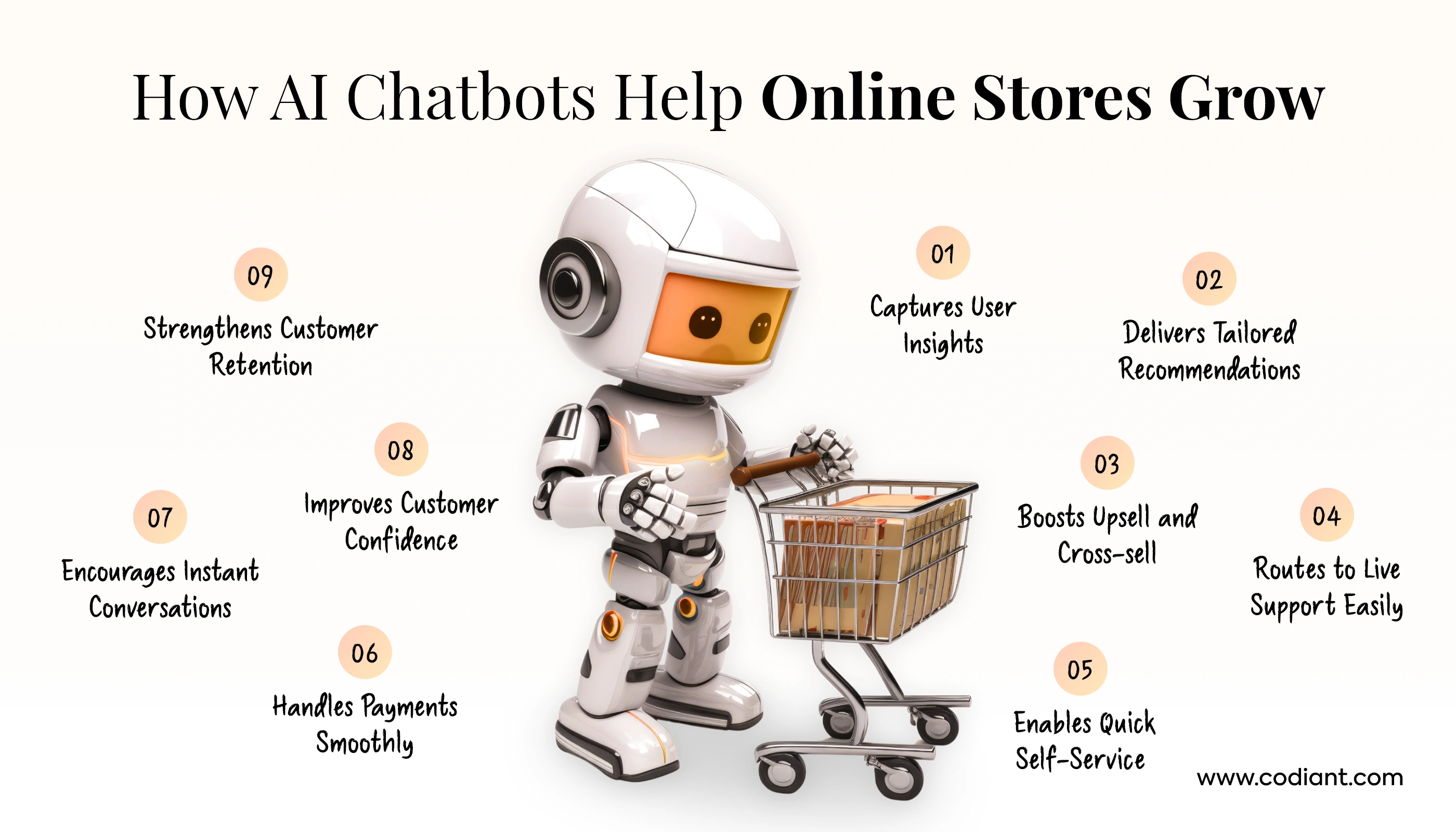
Customers now expect immediate responses. Traditional support teams struggle with peak-hour surges, holidays, and late-night requests. AI chatbots solve this with round-the-clock availability.
They can answer product questions, handle returns, track orders, manage shipping queries, and guide customers through checkout. Most shoppers drop off when they wait too long for help. Instant answers keep them in the buying journey longer and improve conversions.
This always-on model also reduces dependency on large customer support teams, allowing businesses to scale traffic and order volume without increasing operational costs.
Conversational Commerce
AI chatbots are no longer simple FAQ bots. They now help customers shop directly inside the conversation. Modern solutions such as Skara AI agents go beyond scripted responses. They function as autonomous commerce assistants, handling product discovery, guiding purchase decisions, managing post-purchase queries, and even triggering workflows across CRM and order systems without manual intervention. This experience is called conversational commerce, where the bot becomes a virtual salesperson.
A chatbot can:
- Ask what the customer is looking for
- Recommend products based on preferences
- Share reviews, ratings, and comparisons
- Show available sizes, colors, or variants
- Add items to cart
This reduces decision fatigue and makes the buying process smoother. Customers often buy faster when guided in a conversational flow instead of browsing hundreds of pages.
Automated Product Discovery
Many customers don’t know exactly what they want. They only have a need or a description. AI chatbots use natural language understanding (NLU) to identify that need and recommend products accordingly.
For example:
- “I want a dress for a beach trip.”
- “I need running shoes for everyday use.”
- “Show me something similar to this product.”
The bot can pull up relevant items instantly. This helps customers discover more products, reduces bounce rates, and increases average order value. In short, better product discovery means better revenue.
Abandoned Cart Recovery
Cart abandonment is one of the biggest revenue leaks in eCommerce. AI chatbots can recover a significant portion of these missed sales.
They automatically:
- Remind customers about pending items
- Share limited-time offers
- Answer doubts that caused hesitation
- Help complete checkout
Instead of generic emails that often get ignored, chat-based reminders feel more personal and move customers back into the purchasing flow.
Voice Assistants for Order Tracking
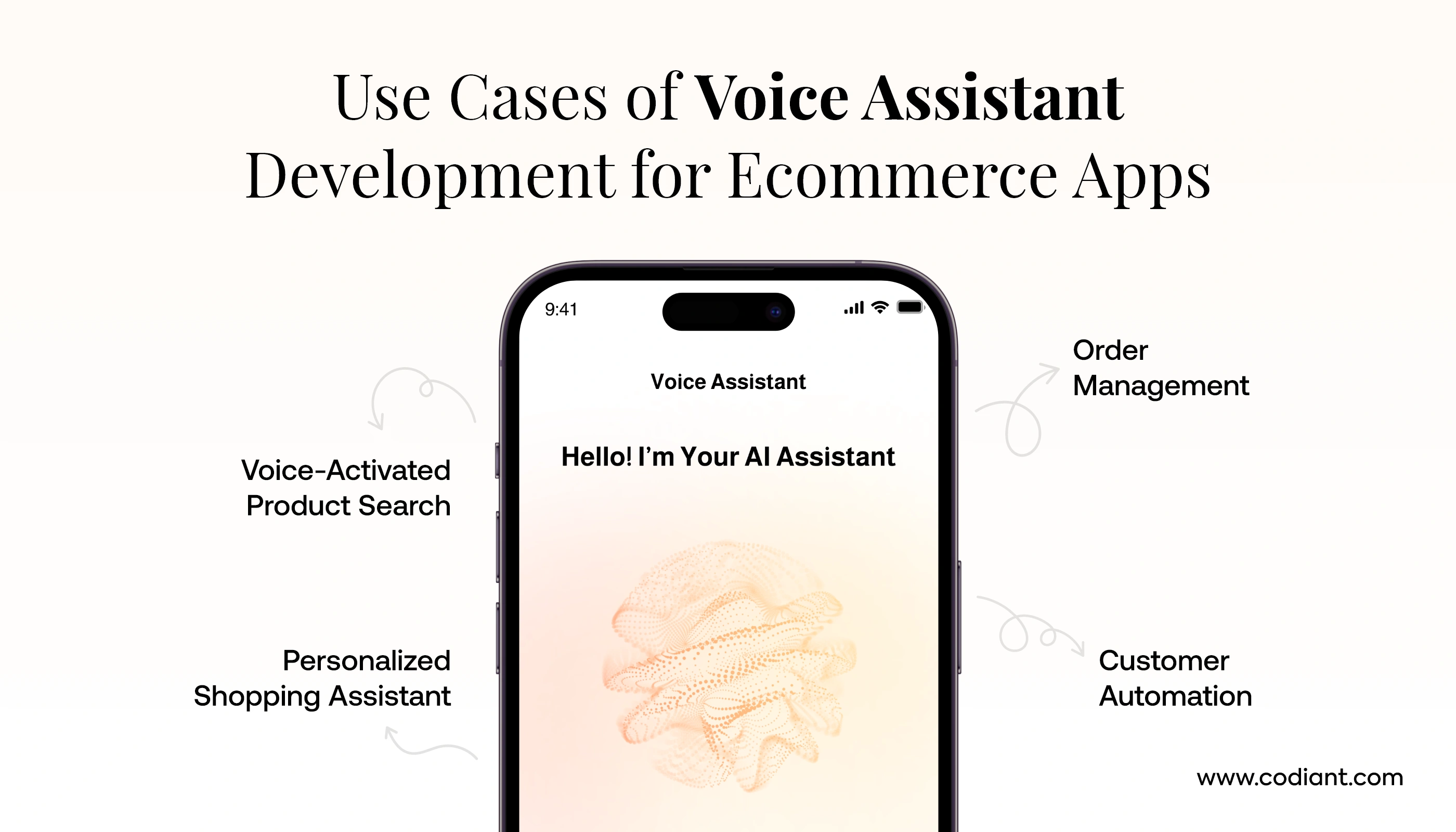
Voice assistants make the post-purchase experience simpler. Customers can ask questions like:
- “Where is my order?”
- “When will my package arrive?”
- “Can I change the delivery address?”
The voice agent pulls data from the system and provides real-time updates. This improves the AI-driven customer experience by reducing stress, wait time, and dependency on human teams. Faster resolutions also lead to better retention.
Multilingual Support
eCommerce stores serve diverse audiences. AI chatbots break language barriers by supporting multiple languages. This helps:
- Increase reach in new regions
- Serve non-English-speaking customers
- Build trust with international buyers
Brands expanding globally see immediate value, as multilingual chat support reduces confusion and improves the overall shopping experience.
Strategy 4: Predictive Analytics for Demand Forecasting
Scaling an eCommerce business becomes tough when you can’t predict what customers will buy next. Too many brands still depend on guesswork or rough spreadsheets. This leads to inconsistent sales and constant inventory problems. This is where machine learning in eCommerce changes everything.
AI Predicts What Customers Will Buy Next
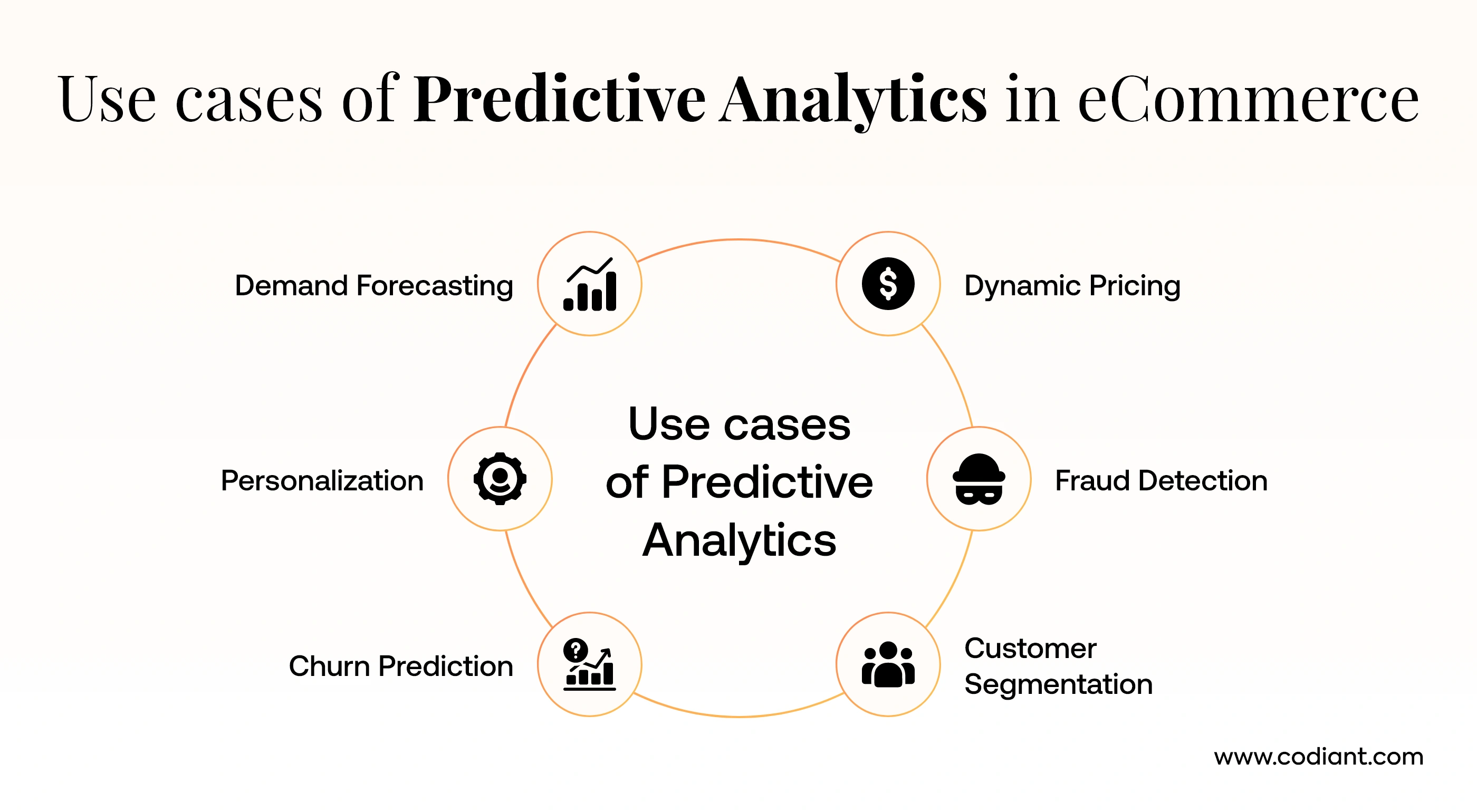
AI studies years of sales data, browsing behavior, seasonal trends, social signals, and even holidays or weather patterns. Based on all this, it tells you:
- Which products will sell the most?
- When demand will rise
- How much stock you actually need
- Which categories are slowing down?
You no longer rely on assumptions. You get clear, data-backed forecasts that help you prepare ahead.
No More Overstock or Stockouts
One of the biggest advantages of predictive analytics is inventory accuracy.
Overstock hurts because you’re stuck with products that don’t sell. Stockouts hurt because customers immediately switch to competitors.
AI helps prevent both by maintaining the right balance.
With AI inventory management solutions, your system can:
- Auto-reorder at the right time
- Maintain ideal stock levels
- Identify fast-moving vs slow-moving products
- Stop you from over-purchasing
This leads to better cash flow and fewer losses.
Better Planning for Seasons & Trends
Demand isn’t the same throughout the year. Festivals, holidays, sales events, paydays, and even the weather affect buying behavior.
AI models learn from past spikes and dips to prepare accurate demand predictions for:
- Black Friday
- Diwali
- Christmas
- Summer/winter sales
- Back-to-school seasons
This helps you plan inventory months in advance instead of scrambling at the last minute.
Smarter Decisions, Higher Profits
Predictive analytics also reveals customer patterns:
- Regions with highest demand
- Popular sizes or colors
- Devices customers use
- Items often bought together
This makes your marketing more focused and reduces wasted ad spend.
When you forecast better, operations also become smoother. You avoid emergency supplier orders, extra warehouse handling, and rushed shipping arrangements. All of this reduces costs and boosts your profit margins.
A Must-Have for Fast-Growing eCommerce Brands
Predictive analytics shifts you from reactive to proactive. Instead of constantly firefighting inventory issues, your business becomes organized, predictable, and growth-ready.
This is why demand forecasting is now considered one of the most powerful AI inventory management solutions for fast-scaling online stores. It helps you stock smart, sell more, and deliver a reliable customer experience-every single time.
Strategy 5: AI Inventory Management & Smart Warehousing
Inventory is one of the most complex moving parts in any eCommerce business. As stores scale, managing thousands of SKUs across multiple warehouses, channels, regions, and suppliers becomes overwhelming. Stockouts, overstocking, delayed shipments, incorrect forecasting, fulfillment errors, and misaligned supply chains all directly hit margins. This is where AI inventory management solutions and smart warehousing systems step in as true game changers.
Artificial intelligence brings accuracy, automation, and real-time decision-making into inventory operations-exactly what rapidly growing eCommerce brands need to scale without operational chaos. From predicting demand to streamlining fulfillment, AI ensures inventory flows smoothly across the entire value chain.
Let’s break down how AI transforms inventory and warehouse operations to support faster eCommerce scaling.
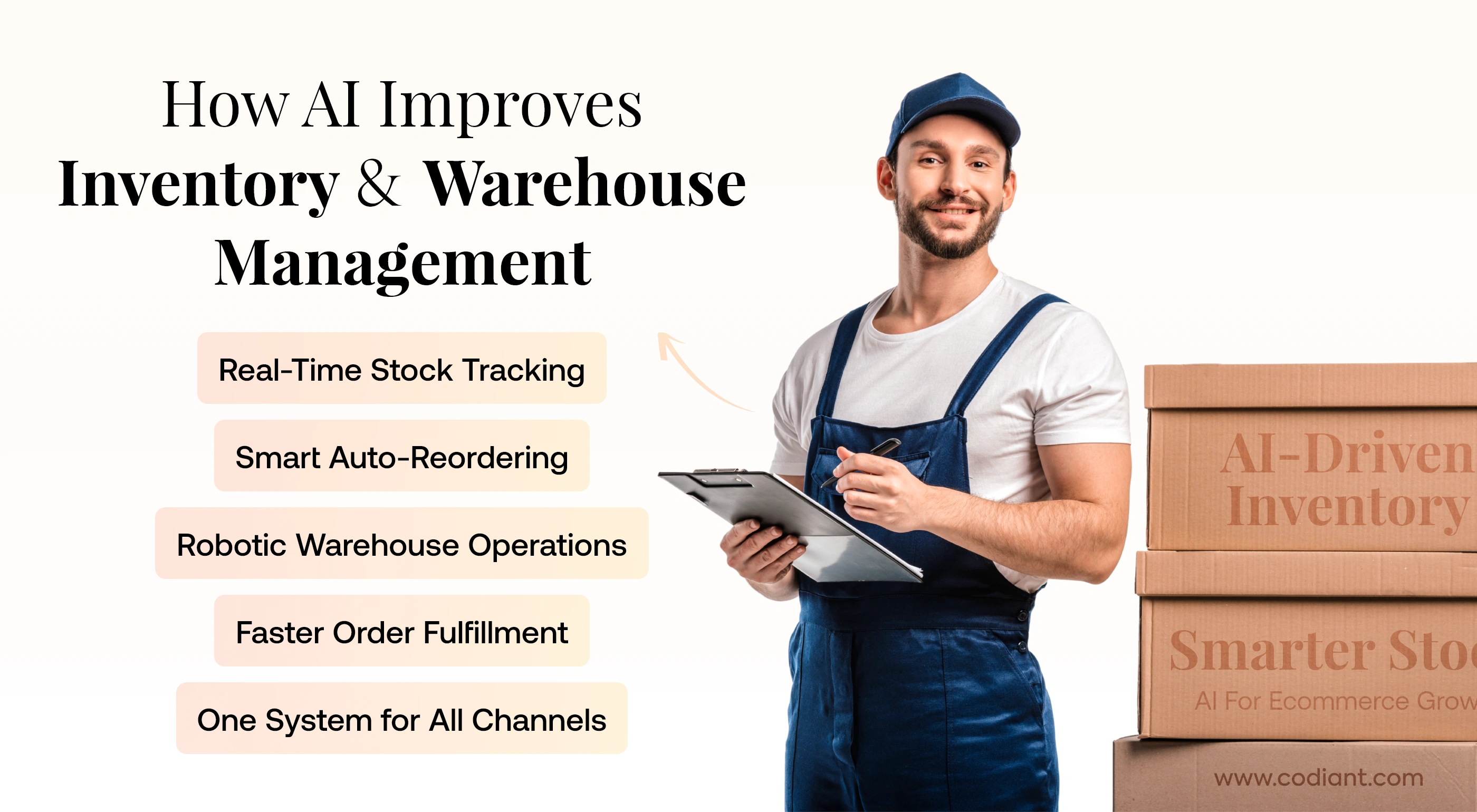
1. Real-Time Stock Visibility Across Channels
Most eCommerce brands struggle because their stock data lives in silos-website, offline store, Amazon, Flipkart, warehouses, and third-party logistics (3PLs). AI fixes this by creating a unified, real-time inventory view, no matter where the stock sits.
With sensors, IoT devices, RFID tags, and AI-powered dashboards:
- Stock levels are updated instantly the moment an item is picked, packed, or shipped.
- Teams know exactly how many units are available, reserved, or in transit.
- AI identifies discrepancies caused by human errors or delayed syncing.
- Brands avoid embarrassing situations like selling out-of-stock items.
This helps businesses scale faster because teams can make faster decisions, avoid backorders, and maintain better customer trust.
2. Automated Reordering and Procurement
AI doesn’t just show what’s happening-it predicts what will happen next.
Using machine learning in eCommerce, AI analyzes:
- Past sales trends
- Seasonal spikes
- Current demand
- Marketing campaigns
- Inventory turnover rates
- Supplier lead times
- Regional buying patterns
Based on these signals, the system automatically triggers reorders before stock levels hit critical limits. No more manual calculations. No guesswork. No risk of stockouts during high-demand events like festivals, flash sales, or influencer campaigns.
AI can also recommend:
- How much to reorder
- Which supplier offers the fastest turnaround
- Whether to shift stock between warehouses based on demand
This reduces dead stock, prevents over-purchasing, and keeps the supply chain running smoothly.
3. Warehouse Robotics for Faster Operations
The rise of AI-powered warehouse robotics is reshaping modern fulfillment centers.
Examples include:
- Automated Guided Vehicles (AGVs)
- Robotic picking arms
- AI-driven conveyor sorting
- Autonomous forklifts
- Smart shelves that update stock in real time
Robots powered by AI algorithms can identify the quickest picking routes, reduce human errors, speed up the picking/packing process, and run 24×7 without fatigue.
For scaling eCommerce businesses, this means:
- Faster order processing
- Higher fulfillment accuracy
- Lower labor dependence
- Ability to scale during peak seasons without hiring hundreds of temp staff
Amazon, Alibaba, and Flipkart use warehouse robots to handle millions of daily orders-and now AI makes similar capabilities accessible even for mid-sized stores.
4. AI-Optimized Fulfillment Workflows
AI enhances every step of the fulfillment process:
- Intelligent slotting places fast-moving items closer to packing stations
- AI predicts which orders should be bundled or shipped separately
- Smart packing recommendations reduce shipping costs
- Route optimization ensures faster delivery
- AI predicts return likelihood and adjusts routing accordingly
Fulfillment becomes faster, cleaner, and cheaper-critical advantages for large-order-volume eCommerce businesses.
5. Seamless Integrations with Marketplaces & ERPs
AI systems integrate effortlessly with:
- Amazon, eBay, Noon, Flipkart
- Shopify, WooCommerce, BigCommerce
- ERPs like SAP, Oracle, Odoo
- 3PL and courier platforms
This ensures a centralized inventory brain that syncs data across every platform in real time. When a product sells on Amazon, the website stock updates instantly. When inventory hits a threshold, the AI system notifies the warehouse or reorders automatically. When a product performs better on a specific channel, AI reallocates inventory for maximum profitability.
This multi-channel harmony removes chaos and helps brands scale confidently.
How This Helps Ecommerce Businesses Scale Faster?
AI inventory management and smart warehousing eliminate operational bottlenecks-the biggest barriers to growth. Brands can sell more without increasing manpower, reduce errors, maintain stock accuracy, and guarantee faster delivery. Ultimately, AI enables lean operations, lower costs, and higher customer satisfaction, giving eCommerce companies the foundation, they need to scale rapidly and sustainably.
Strategy 6: AI for eCommerce Marketing Automation
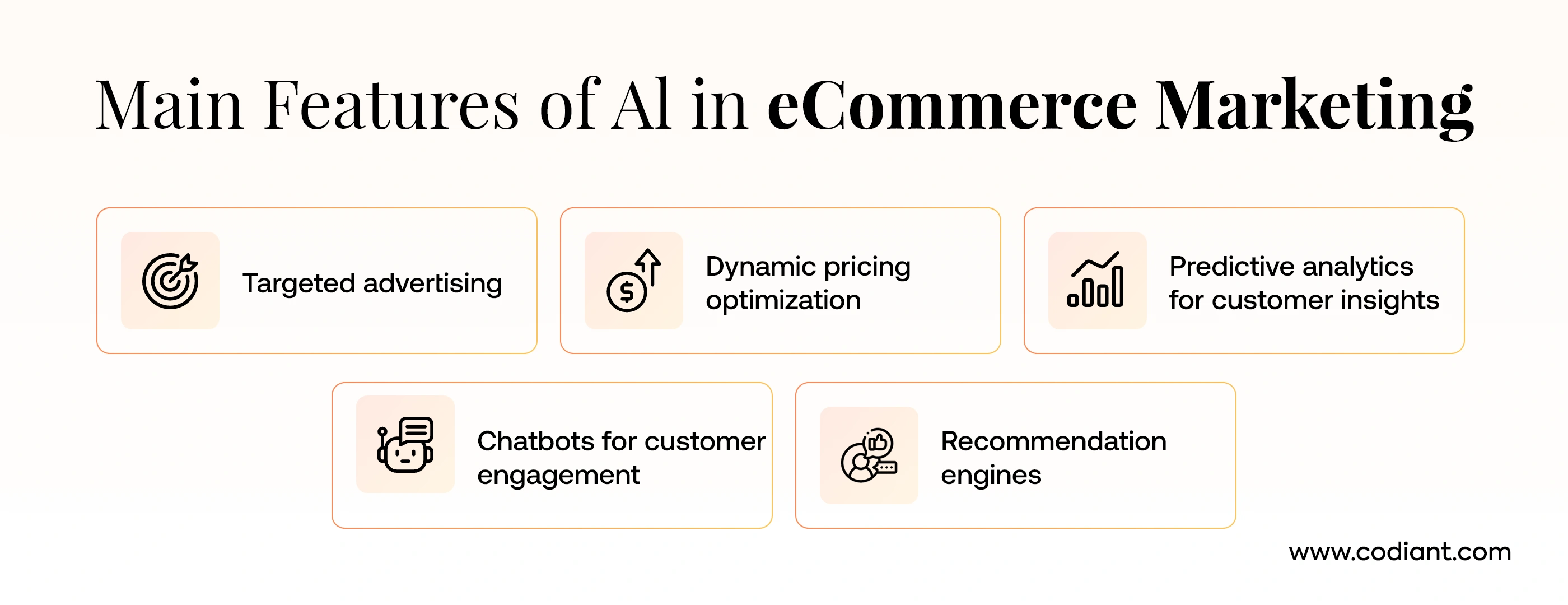
Marketing in eCommerce moves fast. Customers jump from one platform to another, price sensitivity changes by the minute, and ad costs rise every quarter. Keeping up with this pace manually is almost impossible. That’s where AI for eCommerce marketing becomes one of the biggest growth drivers. It removes guesswork, reduces campaign waste, and helps you reach the right customers at the right moment with the right message.
AI marketing automation is not about replacing marketers-it’s about giving them sharper tools and real-time intelligence. Let’s break down the ways AI helps eCommerce brands scale faster through smarter, automated marketing workflows.
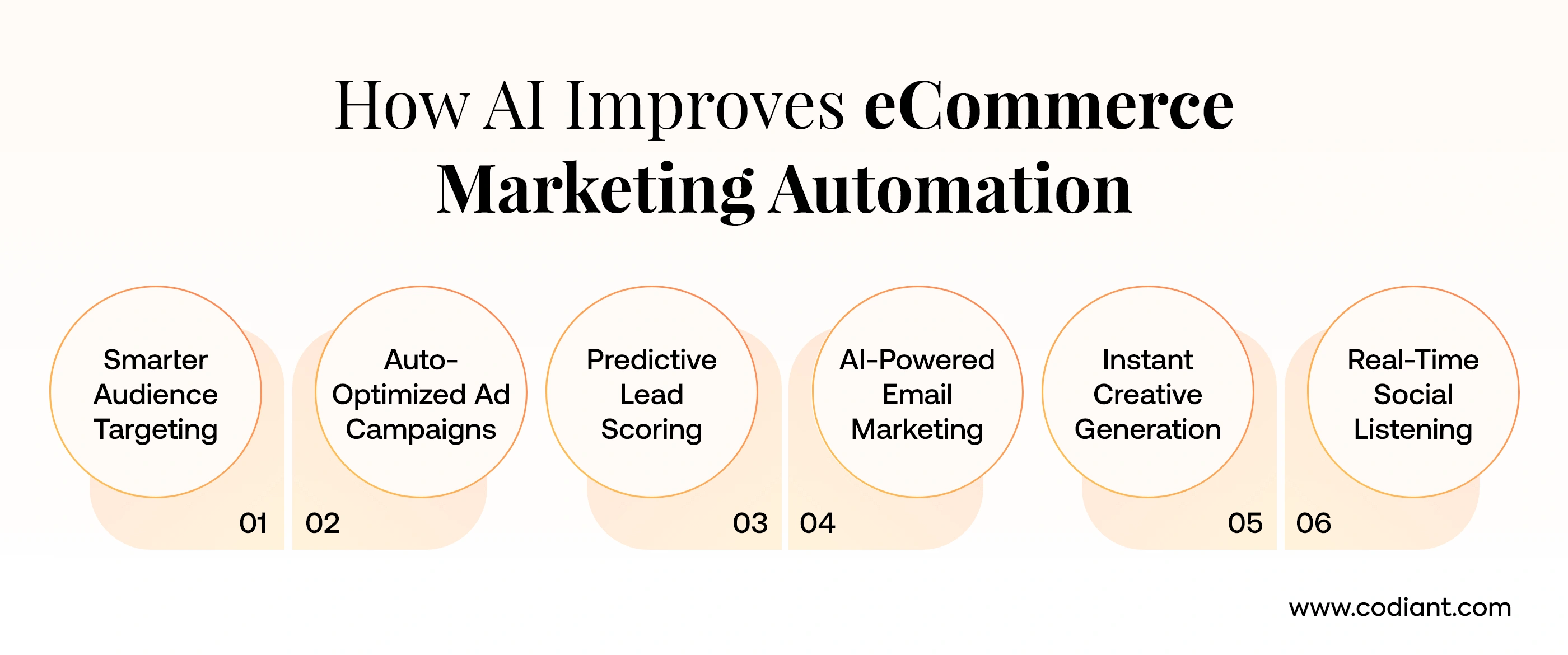
1. Dynamic Audience Targeting
Traditional audience targeting relies on demographics and high-level interest categories. AI goes several steps deeper by analyzing:
- Browsing patterns
- Purchase intent signals
- Real-time engagement
- Cart activity
- Seasonality
- Customer lifetime value potential
With these insights, AI creates micro-segments that humans would never manually identify. These segments update continuously as customer behavior changes. For example, AI may automatically detect a new group-“high-intent shoppers who viewed product bundles twice in 48 hours”-and trigger personalized ads or limited-time offers.
This level of precision significantly boosts ROAS because campaigns are shown only to users who are actively moving through the buying journey.
2. AI-Led Ad Optimization
Running ads manually requires constant monitoring-bids, budgets, keywords, creatives, and placements all need adjustment. AI tools automate this in real time.
AI-powered ad engines can:
- Predict which ad sets will perform best
- Automatically reallocate budget
- Adjust bids based on probability of purchase
- A/B test creatives without human intervention
- Pause underperforming segments
- Identify the cheapest traffic sources per audience
Platforms like Meta Advantage+ Shopping or Google Performance Max already rely heavily on AI to optimize campaigns. eCommerce brands that lean into these systems see faster scaling because AI removes inefficiencies and focuses spend where it creates the most impact.
This is one of the strongest examples of AI for boosting eCommerce sales.
3. Predictive Lead Scoring
Every visitor is not equally valuable. AI analyzes thousands of signals-click behavior, engagement time, device type, traffic source, frequency of visits-to predict which users are most likely to convert.
eCommerce platforms can use predictive scoring to:
- Prioritize high-intent shoppers with stronger offers
- Trigger abandoned cart sequences earlier
- Send VIP-level discounts to high-value prospects
- Identify customers at risk of churn
This ensures marketing budgets are invested in people who provide maximum ROI.
4. AI Email Automation
Email remains one of the highest-converting channels for eCommerce. AI takes it to the next level by:
- Predicting the best send time for each user
- Personalizing product suggestions inside emails
- Writing subject lines optimized for open rates
- Generating content variations based on past behavior
- Triggering lifecycle campaigns automatically
Examples include:
- “Back-in-stock” alerts based on past views
- “Complete the look” recommendations
- Win-back sequences triggered by inactivity
- AI-generated newsletters with auto-curated products
The result is higher engagement, fewer unsubscribes, and more repeat purchases.
5. AI-Based Creative Generation
Creatives often slow down marketing teams. AI tools now generate:
- Product banners
- Lifestyle visuals
- Ad copy
- Video snippets
- Promotional graphics
- A/B variations of headlines and CTAs
This dramatically reduces content production time.
For example, AI tools like Adobe Firefly or Canva Magic can instantly create multiple brand-consistent designs for seasonal campaigns or product launches. This helps eCommerce brands stay agile and respond quickly to trends.
6. Social Listening Tools
AI-powered social listening tracks:
- Trending topics
- Customer sentiment
- Competitor mentions
- Product feedback
- Viral content patterns
- Influencer signals
Instead of reacting after a trend peaks, AI alerts you early so you can ride the momentum. It can also identify unhappy customers, influencer opportunities, or rising demand for specific products.
This insight is essential for data-driven decision-making across marketing, product, and CX teams.
What Are the Best Ways to Use AI for Ecommerce Marketing and Sales?
The best ways to use AI for eCommerce marketing include personalized targeting, automated ad optimization, predictive lead scoring, AI-driven email journeys, automated content creation, and real-time social listening.
These tools help brands reduce manual workload, reach audiences more accurately, and increase conversions with smarter, intent-based experiences.
AI allows marketers to scale campaigns faster, eliminate wasted ad spend, and keep engagement consistent across every customer touchpoint.
Let AI Multiply Your Marketing Impact
AI improves targeting, automates repetitive tasks, and boosts conversions without increasing your team’s workload.
Strategy 7: AI-Based Fraud Detection & Security
Fraud is one of the biggest threats to any growing eCommerce business. Fake orders, stolen cards, refund abuse, and bots can quietly eat into profits. AI development solutions helps prevent all of this by monitoring transactions in real time and spotting risk before it becomes a loss.
Fraud Scoring That Works in Seconds
AI reviews every order using hundreds of signals-location, device type, payment behavior, IP reputation, and more. It then assigns a risk score. Low-risk orders move fast. High-risk orders get flagged instantly. This cuts down chargebacks and saves teams from reviewing safe orders manually.
Smart Detection of Suspicious Patterns
Fraudsters leave patterns behind:
- Repeated checkout attempts
- Unusual order values
- Mismatched addresses
- Multiple failed payments
- Bots testing card numbers
AI recognizes these patterns faster than any human can and blocks the activity before money leaves your account.
Secure Checkout Without Extra Friction
Customers hate slow or complicated checkouts. AI keeps the process smooth by:
- Filtering bots
- Detecting stolen card attempts
- Triggering extra checks only when needed
Genuine buyers enjoy a clean, uninterrupted checkout while suspicious activity gets stopped automatically.
Strong Identity Verification
AI can verify a customer’s identity using document scans, biometrics, or behavioral signals (how someone types or moves the mouse). This prevents fake accounts, unauthorized logins, repeat refund scams, and account takeovers.
Why This Matters for Scaling?
AI-based fraud protection saves money, protects customer data, and builds long-term trust. Customers feel safe shopping with you, and your team spends less time chasing disputes or dealing with chargebacks. When fraud goes down, margins improve – and growth becomes easier.
Strategy 8: AI Automation for Operations
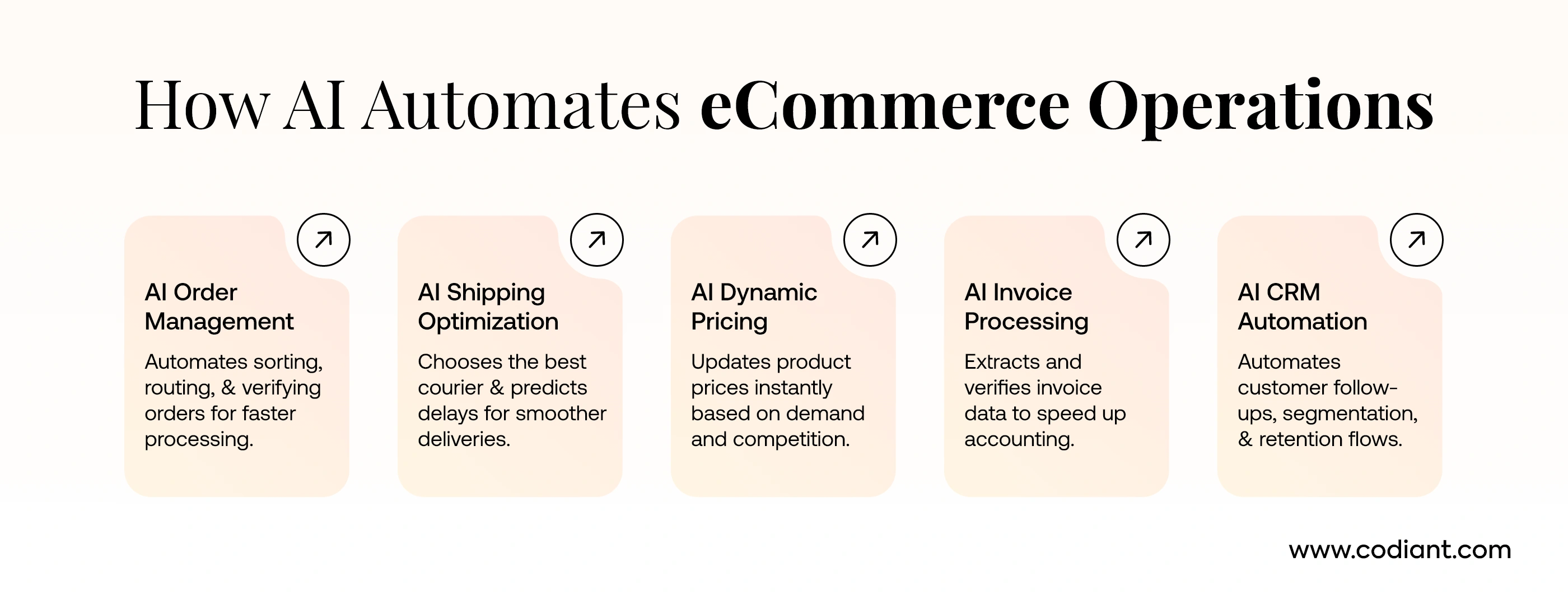
AI helps eCommerce brands scale by automating routine tasks that slow teams down. With the right eCommerce automation AI tools, businesses can run smoother operations, reduce human errors, and speed up order fulfillment.
Below is a clean breakdown of operational areas AI can automate.
1. AI for Order Management
AI systems streamline the entire order lifecycle-from purchase to dispatch. They can:
- Automatically sort orders based on priority
- Detect COD vs prepaid and route them accordingly
- Update stock levels in real time
- Flag suspicious orders
- Assign orders to the nearest warehouse
This cuts processing time and allows teams to handle large volumes without manually checking every step.
2. AI for Shipping Optimization
Shipping is one of the most time-consuming parts of eCommerce scaling. AI helps by:
- Selecting the best courier for each shipment
- Predicting delays based on weather, distance, or past courier performance
- Suggesting alternate routes
- Improving delivery ETA accuracy
- Auto-generating labels and tracking updates
Faster and more reliable shipping improves customer satisfaction and reduces returns.
3. AI for Price Adjustments
AI-driven pricing engines monitor:
- Competitor prices
- Demand trends
- Seasonality
- Stock availability
- Customer behavior
Based on this data, AI adjusts prices dynamically. This ensures your products stay competitive while protecting margins. Instead of manual monitoring, the system runs 24/7 and updates prices in real time.
4. AI for Invoice Processing
Invoice handling usually requires manual entry, verification, and matching. AI automates these steps by:
- Extracting data from invoices
- Validating tax, totals, and vendor details
- Detecting mismatches
- Posting entries into accounting systems
- Flagging anomalies for review
This eliminates data-entry errors and speeds up monthly reconciliation.
5. AI for CRM Automation
AI-powered CRM solutions and tools manage customer-related tasks such as:
- Customer segmentation
- Predicting purchase behavior
- Triggering automated follow-up flows
- Identifying high-value customers
- Sending reminders and retention offers
This keeps your brand connected with customers without manual effort.
Strategy 9: AI for Product Content Creation
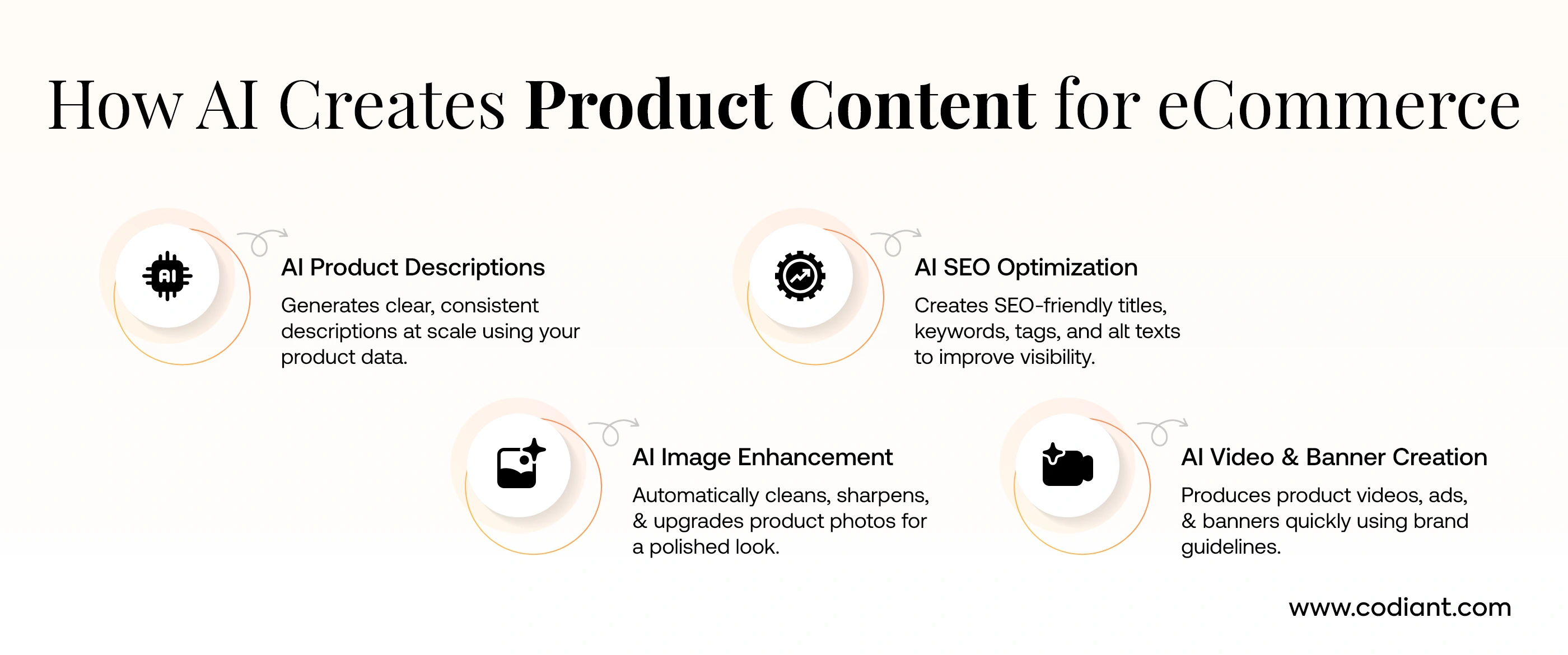
Content creation is one of the biggest bottlenecks in eCommerce. Every product needs clear descriptions, optimized images, accurate tags, SEO-friendly keywords, and sometimes even short videos or banners. Doing this manually-especially when you have hundreds or thousands of SKUs-slows down scaling. This is where AI steps in with efficiency, speed, and consistency.
AI in content creation has become a core part of modern eCommerce AI strategies because it removes repetitive work and ensures every product is presented in a polished, conversion-ready format.
Below are the key ways AI simplifies and accelerates content production for online stores.
1. Automated Product Descriptions
AI can generate high-quality product descriptions using minimal input-such as bullet points, product specs, or even a product image. Tools like Shopify Magic, Jasper, and Codiant’s in-house AI writing tools allow teams to create descriptions at scale without losing brand voice.
The biggest advantage is consistency. AI ensures every product follows a uniform structure, tone, and format, which builds trust for shoppers browsing large catalogs.
You can also create multiple versions-short, detailed, SEO-focused, or benefits-driven-based on your platform’s needs. For scaling brands, this automation saves hours of manual writing and helps increase product publishing speed.
2. AI Image Enhancement
Visual appeal has a direct impact on conversions. AI tools can automatically clean backgrounds, adjust lighting, improve sharpness, remove imperfections, and even generate lifestyle versions of product photos.
Platforms like Adobe Firefly, Codiant AI Image Tools, and various Shopify apps make it easy to bring studio-quality visuals without expensive photoshoots.
This not only improves the overall aesthetic of your catalog but also makes your listings more competitive against bigger brands. With AI handling enhancement tasks, product teams can upload better-quality visuals in minutes instead of relying on external editing teams.
3. AI SEO Optimization
Strong SEO is essential for product visibility-both on search engines and inside marketplace search bars. AI helps by auto-generating:
- SEO-ready titles
- Keyword-rich descriptions
- Meta tags
- Optimized alt texts
- Category-specific keywords
Tools like Shopify Magic and Jasper integrate SEO suggestions directly into the writing workflow, helping you target relevant keywords without guesswork. Codiant’s SEO AI tools can analyze product data and competitor listings to recommend the keywords that have the highest-ranking potential.
This makes SEO optimization faster, more accurate, and far more scalable for large catalogs.
4. AI Video & Banner Generation
Short videos, motion banners, and product reels help boost engagement and conversions. Instead of outsourcing creative work, eCommerce brands can use AI to generate:
- Product highlight videos
- Carousel ads
- Social media promo banners
- Feature explanation clips
- Animated product showcase reels
AI tools can create visuals using product photos, specs, or brand guidelines-making content generation quick and repeatable. This is especially useful during holidays, sale seasons, and launches when teams need fast creative versions.
AI-driven content creation is one of the most practical AI tools for online stores, especially for brands dealing with large catalogs. By automating descriptions, enhancing images, optimizing SEO, and generating visuals, eCommerce companies can speed up product publishing, maintain brand consistency, and improve their overall online presence.
This strategy doesn’t just save time-it directly boosts discoverability and helps online retailers scale faster with less manual effort.
Strategy 10: AI for Customer Retention & Loyalty
Customer retention is where most eCommerce brands win or lose. While new customer acquisition gets most of the attention, the truth is simple-your repeat buyers are the engine that keeps your growth stable and predictable.
AI helps you strengthen this engine by identifying who is likely to churn, what offers actually drive return visits, and which customer segments deserve more attention. Instead of guesswork, AI gives you clear, data-backed actions that improve loyalty and lifetime value.
1. AI Churn Prediction
Every online store deals with silent churn-the customers who stop buying and slowly disappear. Traditionally, you only notice their absence months later, when the damage to revenue is already done. AI changes this completely.
Machine learning systems analyze browsing behavior, purchase gaps, drop-offs, average order value, past engagement, support interactions, and even email response patterns. From this, it predicts which customers are likely to churn in the next 30, 60, or 90 days.
This early warning allows you to intervene with the right retention action: a personalised reminder, small incentive, product recommendation, or simple check-in message. Over time, these proactive nudges reduce churn and bring predictable repeat sales.
2. AI-Led Loyalty Program Triggers
Most loyalty programs fail because they rely on generic point systems that don’t motivate customers. AI fixes this by automating personalized triggers based on user behavior.
Instead of sending the same “Get 20 points” message to everyone, AI identifies key moments where a loyalty message will perform better-right after a customer leaves a positive review, completes a milestone purchase, visits a product multiple times, or shares your brand on social media.
You can also automate bonus point triggers, birthday rewards, early access, VIP tier upgrades, and reactivation bonuses based on customer activity. This creates a loyalty experience that feels natural and personal, instead of forced.
3. Personalized Retention Offers
Retention improves significantly when customers receive offers tailored to their habits rather than blanket discounts. AI analyses past purchase patterns, preferred categories, average spend, browsing history, and price sensitivity to generate hyper-relevant offers.
For example:
- A discount on refills for someone who buys consumables
- A “Buy Again” reminder for long-term customers
- A product bundle tailored to recently browsed items
- A small reward for customers who haven’t purchased in 45 days
Customers respond better because the offer matches their intent instead of distracting them with unrelated discounts. This approach increases conversions and protects profit margins.
4. Predictive Lifetime Value (LTV) Modeling
Not every customer contributes equally to your revenue. Some buyers are one-time purchasers, while others become long-term loyalists. AI helps you understand the difference early. Predictive LTV modeling segments customers into high-value, mid-value, and low-value groups based on their likelihood to purchase again. This helps you:
- Allocate marketing budgets efficiently
- Prioritize retention for your most valuable customers
- Avoid overspending on low-intent buyers
- Build targeted loyalty experiences
By predicting future value, AI helps you focus on relationships that create long-term growth instead of short-term wins.
Strategy 11: AI for Pricing & Revenue Optimization
Pricing is one of the biggest levers for increasing eCommerce revenue. But setting the right price isn’t easy when demand shifts every hour, competitors change their offers constantly, and customers are sensitive to even small price differences. This is where AI steps in and makes pricing smarter, faster, and far more accurate. With real-time data and predictive insights, AI helps eCommerce businesses optimize prices in a way that maximizes revenue without hurting customer experience.
1. Dynamic Pricing That Adapts Automatically
AI looks at demand, seasonality, inventory levels, customer behavior, and competitor prices to recommend the best possible selling price at any moment. Instead of fixed pricing, AI adjusts prices in real time.
For example:
- Prices go up when demand increases
- Prices drop when inventory is high or interest is low
This helps you improve margins while staying competitive.
Did You Know?
Amazon: A pioneer in this field, Amazon changes the prices of millions of products approximately 2.5 million times daily using AI algorithms. This dynamic pricing strategy is estimated to have boosted Amazon’s profits/revenue by around 25%.
2. Competitive Price Monitoring Without Manual Work
Most eCommerce brands don’t have time to track what competitors are charging every hour. AI tools automate this. They scan thousands of product pages, analyze pricing shifts, and tell you when to raise or lower your price. This prevents margin losses and keeps your store visible in price-sensitive categories.
With automated alerts and analytics, your pricing decisions become faster and more confident.
3. Price Elasticity Modeling to Predict Customer Response
Not every customer reacts the same way to a price change. AI studies how shoppers behave at different price points and predicts how much demand will change if the price goes up or down. This gives you clarity on:
- How much discount is effective
- When to increase prices without affecting sales
- Which customer segments are sensitive to price
As a result, you can choose pricing strategies that maximize conversions without guessing.
4. Automated Discounts Based on Real Insights
AI doesn’t just auto-apply discounts it creates smarter discounting strategies. It analyzes user behavior, cart activity, buying patterns, and product lifecycle to decide the right type of offer.
Examples:
- Extra discount for high-intent shoppers
- Lower discount for customers likely to buy anyway
- Special offers triggered by low inventory turnover
This reduces unnecessary discounting and protects your margins.
Why This Strategy Helps You Scale?
AI pricing optimization gives your eCommerce business a sharper competitive edge. Instead of reacting to the market, you stay ahead of it. You make decisions based on real data, not assumptions. And you unlock higher revenue without increasing ad spend which is exactly what brands need to scale faster.
Strategy 12: AI-Powered Logistics Optimization
As eCommerce demand increases, the pressure to deliver orders quickly, accurately, and affordably becomes much harder to manage with manual processes alone. This is where AI steps in. It brings intelligence, speed, and automation to every stage of logistics, helping businesses fulfill orders efficiently while keeping customers consistently satisfied.
Here’s how AI transforms logistics into a growth engine:
1. Route Optimization
AI analyzes traffic patterns, delivery history, road conditions, weather changes, and peak-hour trends to find the best possible route for every order.
Unlike manual routing, AI recalculates routes in real time, ensuring drivers always take the fastest path. The result is shorter delivery times, fewer fuel expenses, and a more predictable shipping process – especially during high-demand seasons.
2. Delivery ETA Prediction
Customers want accurate timelines, not broad delivery windows. AI models compare shipping data, driver performance, past delivery records, and regional delays to predict ETAs with better accuracy. As the system learns over time, its forecasts improve.
This directly enhances customer satisfaction because people trust brands that deliver when they promise.
3. Carrier Selection
Every shipment is different some require speed, others emphasize cost or reliability. AI evaluates each order and recommends the best carrier based on performance data, shipping rates, and previous delivery success.
Instead of relying on guesswork, businesses get automated, data-backed decisions that reduce shipping costs and improve fulfillment quality.
4. Real-Time Tracking
AI enhances tracking by combining data from GPS devices, carrier APIs, and warehouse systems into a single dashboard.
Rather than reacting to delays, businesses can identify issues early and notify customers proactively. Real-time visibility also reduces support requests since customers can track their orders independently.
5. Returns Automation
Returns often clog operations. AI automates return approvals, identifies refund eligibility, assigns pickup slots, and chooses the fastest reverse logistics route. It can also detect fraud patterns. This speeds up the customer experience and helps businesses recover inventory faster.
How This Helps Businesses Scale?
When logistics is optimized, everything else improves. AI lowers delivery costs, increases shipping speed, reduces errors, and minimizes customer complaints.
This builds a smoother buying experience and strengthens customer loyalty. For growing eCommerce brands, AI-powered logistics isn’t just an operational upgrade – it’s a competitive advantage that supports sustainable, scalable growth.
Step-by-Step Roadmap to Implement AI in eCommerce
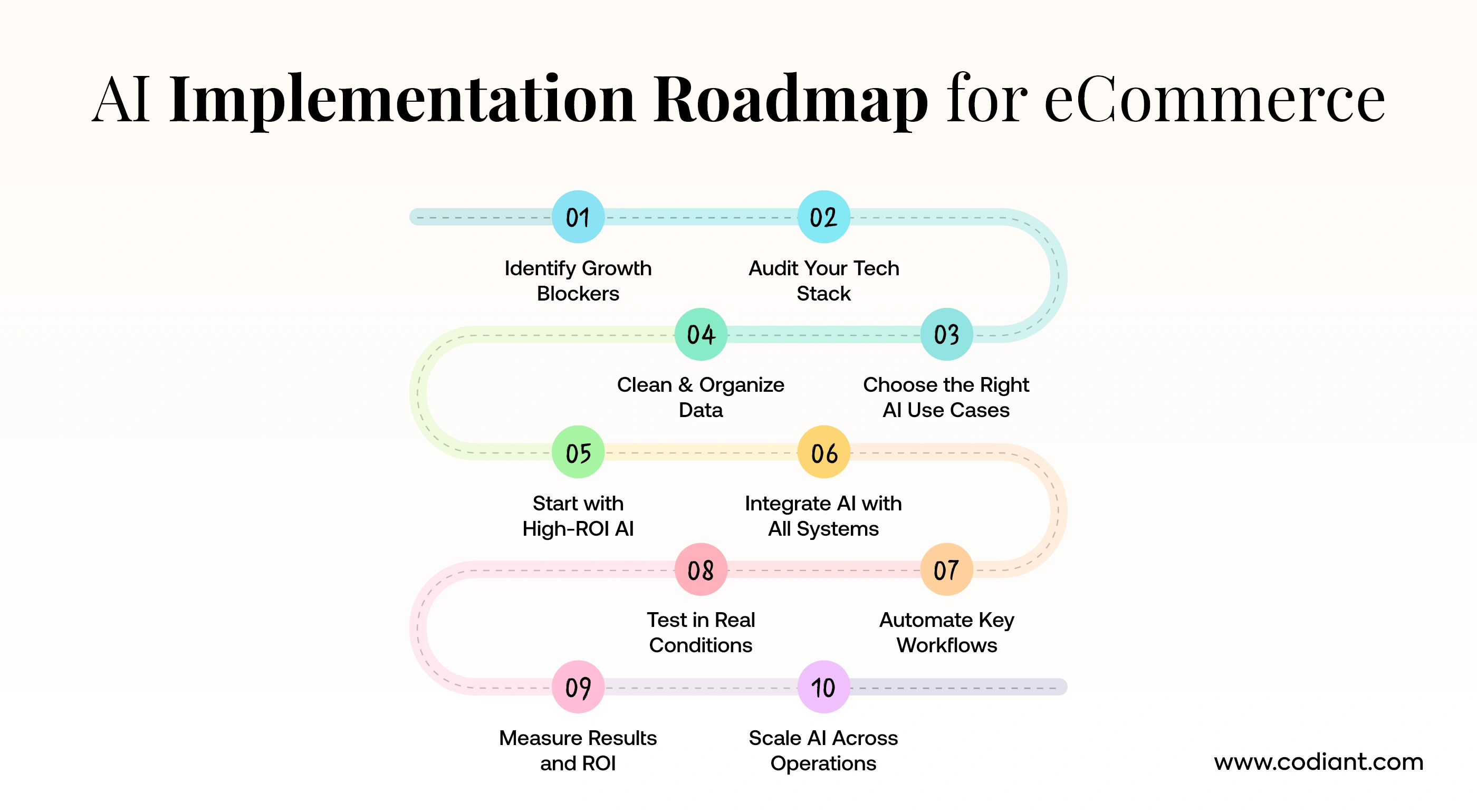
A successful AI transformation needs a clear roadmap. Here is a practical, sequential plan for achieving AI for eCommerce growth and long-term scalability.
1. Identify Scaling Bottlenecks
Start by mapping the biggest challenges slowing you down—poor product discovery, high support load, inaccurate demand planning, low conversions, or rising marketing costs. These pain points guide where AI should be applied first.
2. Audit Your Current Tech Stack
Evaluate your eCommerce platform, CRM, ERP, WMS, and marketing tools. Check if they support AI plugins, APIs, or data integration. A stable tech foundation is essential before adding automation.
3. Define AI Use Cases That Fit Your Business
Choose the AI capabilities that solve your exact problems—AI search, personalized recommendations, chatbots, predictive inventory, dynamic pricing, or automated marketing.
4. Prepare and Clean Customer Data
AI learns from your data. Standardize product catalog data, remove duplicates, unify customer profiles, fix broken tags, and organize attributes so your models can generate accurate predictions.
5. Prioritize High-Impact AI First
Start with AI use cases that deliver quick ROI: personalized recommendations, AI chatbots, automated email flows, predictive analytics, or AI-led search enhancements.
6. Integrate AI with Existing Systems
Ensure your AI tools connect with your CRM, ERP, warehouse systems, payment stack, and marketing automation tools. Smooth integration accelerates AI in eCommerce scaling.
7. Automate Operational Workflows
Automate repetitive tasks like order updates, routing, inventory alerts, abandoned cart follow-ups, product tagging, and campaign scheduling.
8. Test AI Models in Real Scenarios
Monitor chatbot accuracy, recommendation relevance, and forecasting precision. Adjust models when accuracy drops.
9. Track Performance and ROI
Measure conversion rates, retention, inventory turnover, support resolution time, and revenue uplift to ensure AI is improving outcomes.
10. Refine, Scale, and Expand AI Adoption
Once stable, scale AI across more functions—logistics, pricing, loyalty, and customer experience—to continuously grow your eCommerce business.
Conclusion
AI has become the fastest and most reliable way for eCommerce businesses to scale without increasing operational pressure. From personalization and smarter product discovery to automated marketing, inventory forecasting, and 24/7 customer support, AI helps online stores work faster, sell smarter, and improve customer experience at every touchpoint.
By integrating the right AI tools and focusing on data-driven decisions, eCommerce brands can boost conversions, reduce costs, and build stronger customer relationships. If you’re planning to transform your online store with automation, intelligence, and growth-focused AI capabilities, Codiant can help you implement the right strategy.
Supercharge Your eCommerce Growth with AI
Transform your store with AI-driven personalization, automation, and predictive insights that accelerate revenue.
The Author

Frequently Asked Questions
AI helps online stores grow by automating repetitive tasks, improving product discovery, personalizing customer experiences, and predicting what customers will buy next. It also reduces manual work in marketing, support, and inventory, allowing businesses to scale without increasing workload.
Useful AI tools include product recommendation engines, AI chatbots, predictive analytics tools, automated email marketing platforms, inventory forecasting systems, and AI-powered search tools. These tools improve sales, customer engagement, and operational efficiency.
AI improves customer experience by showing personalized product suggestions, offering 24/7 chatbot support, delivering faster search results, and tailoring content based on user behavior. This helps customers find what they need quickly and enjoy a smoother shopping journey.
AI can optimize ads, personalize emails, predict customer behavior, automate upselling, and analyze which marketing channels work best. It helps brands send the right message to the right customer at the right time, increasing sales with less effort.
Personalized recommendations, AI-driven email campaigns, predictive churn alerts, dynamic pricing, and intelligent search features help boost conversions and keep customers returning. AI tailors every touchpoint to the customer’s preferences.
The most impactful strategies include AI-led personalization, automated inventory management, predictive analytics, smart search, chatbot support, and automated marketing. These reduce costs, increase efficiency, and directly support growth.
AI enhances product discovery using intelligent search, personalized suggestions, visual search, and auto-suggestions. These help customers quickly find relevant products, reducing frustration and lowering bounce rates.
AI can automate order processing, customer service, pricing updates, email campaigns, fraud detection, inventory alerts, shipping updates, and product recommendations. This frees up time and reduces errors.
AI chatbots and voice agents answer questions instantly, recommend products, assist in checkout, recover abandoned carts, and provide order tracking. They help customers make faster decisions and reduce support workload.
All eCommerce businesses benefit, but AI is especially helpful for stores with large inventories, high traffic, frequent customer questions, or complex logistics. Fashion, electronics, beauty, grocery, and multi-category stores gain the most value.
Featured Blogs
Read our thoughts and insights on the latest tech and business trends
List of Top AI Agent Development Companies in the USA (2026 Guide)
- March 5, 2026
- AI Agent
In a Nutshell AI agents are the next evolution of automation, going beyond chatbots to perform real business tasks. They can understand intent, connect with tools, and execute multi-step workflows across teams. Businesses are increasingly... Read more

Hire Custom Software Developers in UAE for Secure and Scalable Enterprise Solutions
- February 27, 2026
- Digital Transformation Staff Augmentation
In a Nutshell UAE enterprises are shifting toward custom software because off-the-shelf tools fail to meet complex workflows and regional compliance needs. Custom enterprise software includes ERP modernization, automation systems, secure portals, analytics dashboards, and... Read more

Top 20+ PHP Development Companies in United States (2026)
- February 24, 2026
- Web Development
PHP is one of the most reliable and popular programming languages in the world used for developing dynamic, customizable, secure and affordable web applications. In 2026, SaaS, eCommerce, healthcare, fintech and logistics companies along with Enterprise... Read more