Mobile App Personalization Using AI- Benefits, Use Cases & Implementation
Table of Contents
Subscribe To Our Newsletter
Summarize with AI
Not enough time? get the key points instantly.
In a Nutshell:
- AI helps mobile apps understand users and personalize experiences effectively.
- Apps learn from user behavior, improving recommendations over time automatically.
- Personalized content increases engagement, making users spend more time inside.
- AI driven apps improve retention by offering relevant and tailored experiences.
- Recommendation engines suggest products, content, or actions based on preferences.
- Real time data processing enables instant updates and dynamic app interactions.
- AI powered features reduce friction and simplify overall user journeys significantly.
- Businesses gain insights into user behavior and optimize app performance better.
- Personalization boosts conversions by showing relevant offers and recommendations timely.
- AI transforms mobile apps into intelligent systems that continuously learn.
Scroll through any successful mobile app and something becomes clear- no two users are facing the same interface. What you see, what you’re recommended and even the way the app acts is more and more customized to your tastes. This shift isn’t accidental. It’s driven by AI personalization in mobile apps, a technology slowly rewriting user experience across industries.
More than just predicting what you’re likely to binge next on a streaming platform, or tailoring eCommerce apps around products you didn’t even think you needed, AI is transforming mobile apps from static interfaces into dynamic and intelligent systems.
This is not just about convenience for business, but retention, engagement and revenue. Users want apps to “get” them. If they don’t, they leave.
In this blog, we will explore how AI is helping mobile personalization, the actual value it provides, practical use cases and how businesses can adopt it successfully.
What Is AI Personalization in Mobile Apps?
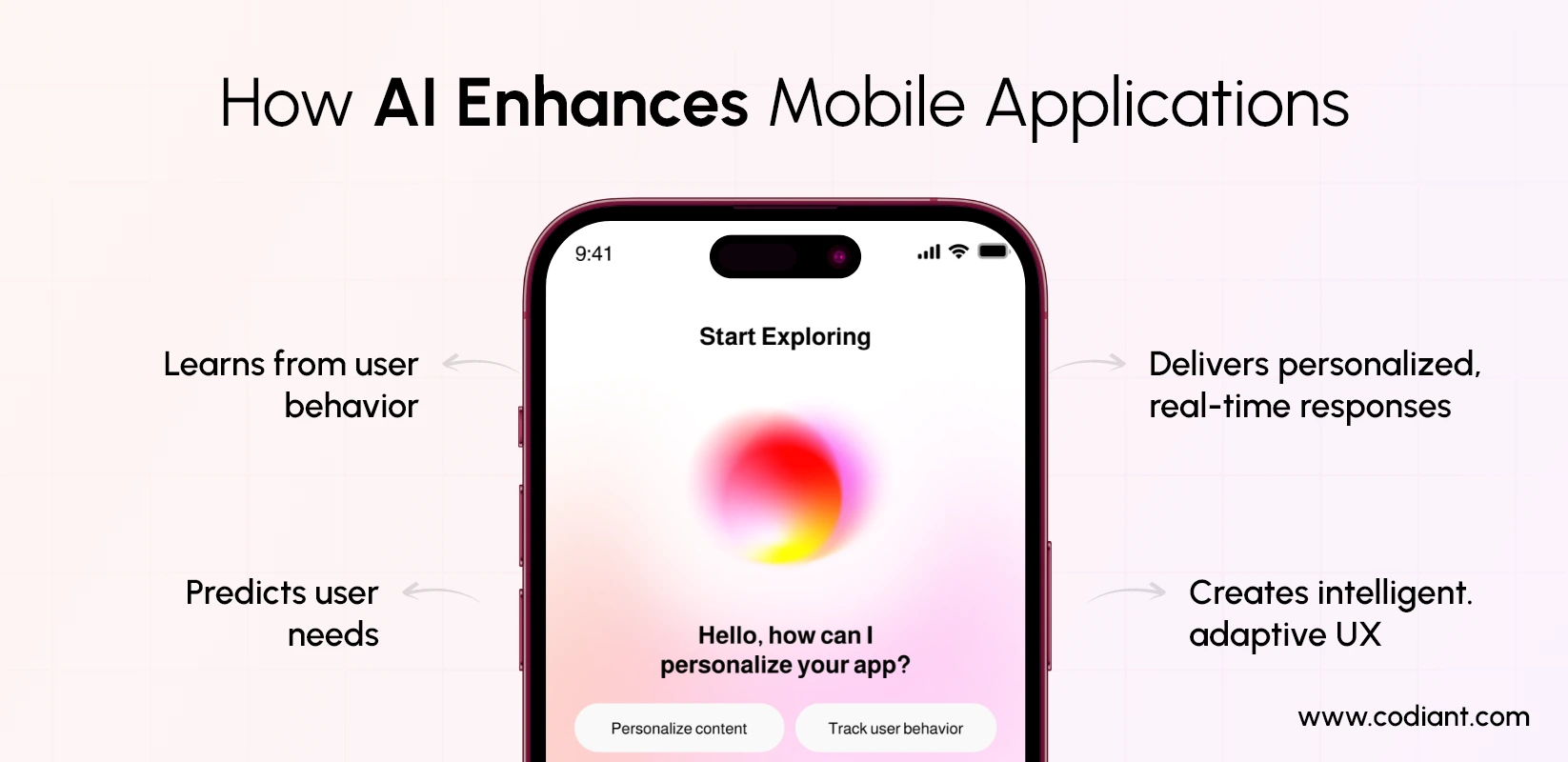
At its core, AI personalization in mobile apps refers to the use of machine learning algorithms and data analytics to tailor app experiences based on individual user behavior, preferences & interactions.
Instead of offering the same interface to every user, AI analyzes patterns such as-
- Browsing behavior
- Purchase history
- Time spent on features
- Search queries
- Interaction frequency
Using this data, apps dynamically adjust-
- Content recommendations
- UI layouts
- Notifications
- Offers and pricing
- Feature visibility
This creates a personalized mobile app experience powered by AI, where the app evolves with the user over time.
Did You Know?
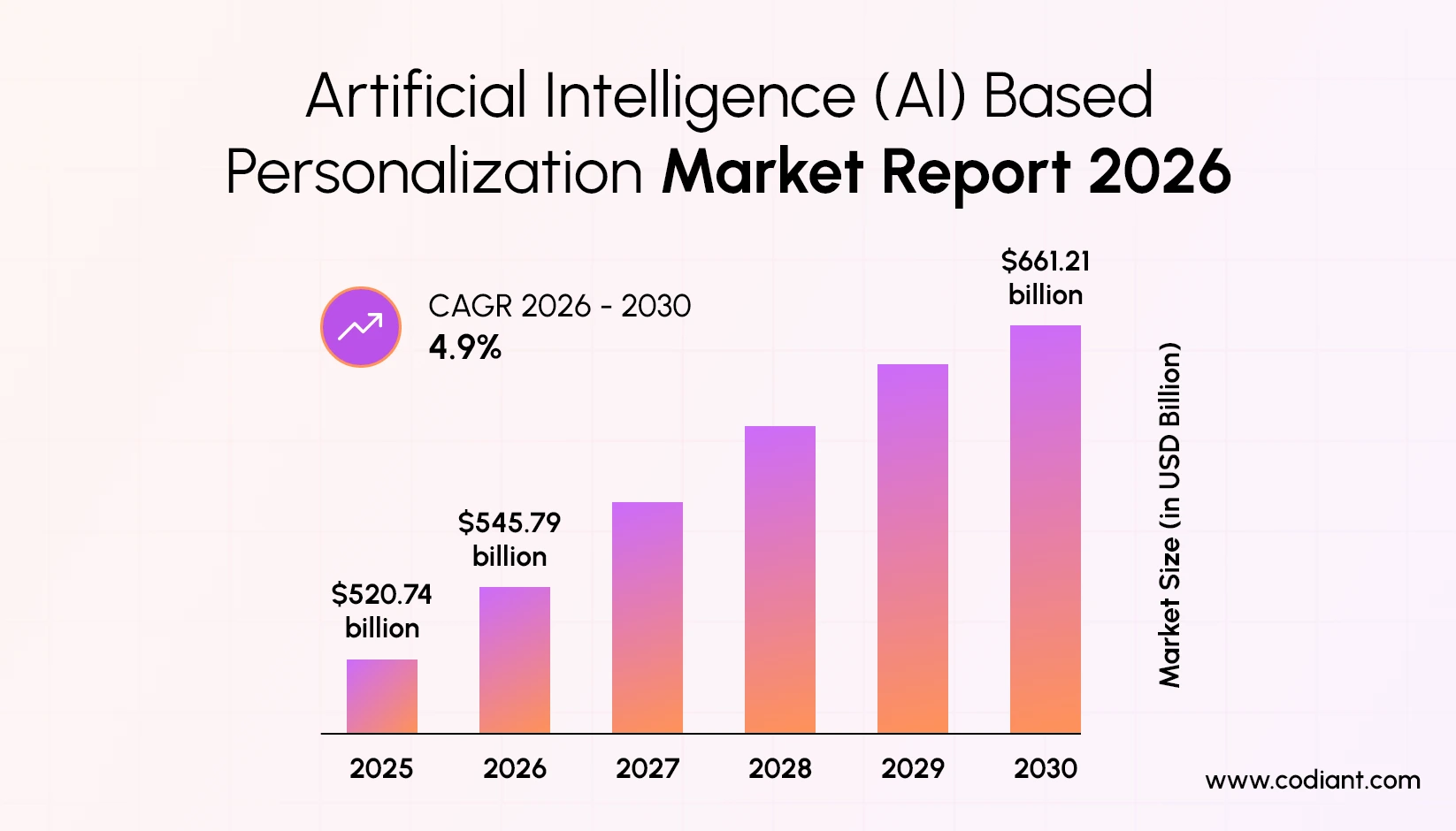
The AI personalization market is expected to grow from $520.74 billion in 2025 to $545.79 billion in 2026, showing how rapidly businesses are adopting smarter, user-focused experiences.
Source – Read here
Turn Your App into a Personalization Engine
Deliver smarter experiences using AI-driven insights, real-time recommendations, and behavior-based user engagement strategies today.
How AI Enables Mobile App Personalization?
AI doesn’t just “guess” user preferences it learns, adapts & evolves with every interaction. Unlike traditional rule-based systems that rely on predefined logic, AI continuously processes user data to understand patterns, predict intent & deliver highly relevant experiences.
Every tap, scroll, search & purchase becomes a data point. Over time, this creates a behavioral blueprint of each user, allowing mobile apps to shift from generic interfaces to deeply personalized ecosystems.
Behind this transformation lies a combination of advanced technologies working together-
- Machine Learning Models
The major part of AI personalization in the mobile apps is driven through machine learning. This is where the machine learning and big data world comes in: these models analyze historical user input to figure out some patterns and predict future behaviors.
So if a user regularly search for fitness products, the system realize this behavior and adjust towards showing more similar items through out their application experience. The model learns from new data points and makes better recommendations over time.
This is the distinguishing features that allows apps to transition from reactively responding to proactively suggesting.
- AI User Behavior Analytics
Understanding how users interact with an app is critical for personalization. AI user behavior analytics apps track actions such as clicks, session duration, navigation paths & feature usage.
But it goes deeper than simple tracking. AI identifies-
- Where users drop off
- Which features they ignore
- What drives repeated engagement
These insights allow apps to dynamically adjust experiences—for instance, simplifying navigation for users who struggle to complete actions or highlighting features they are most likely to use.
- Natural Language Processing (NLP)
Natural Language Processing enables apps to understand and respond to human language in a meaningful way.
In mobile apps, NLP powers-
- Chatbots that provide contextual support
- Voice assistants that understand intent
- Search functions that interpret user queries accurately
Instead of relying on exact keywords, NLP allows apps to understand the intent behind the input, making interactions more conversational and personalized.
- Recommendation Engines
One of the most visible applications of AI is the AI recommendation engine in mobile apps. These systems suggest content, products, or actions tailored to each user.
They typically use a combination of-
- Collaborative filtering (similar users, similar preferences)
- Content-based filtering (based on past interactions)
- Hybrid models for higher accuracy
For example, an eCommerce app might recommend products based on both your browsing history and what users with similar behavior patterns have purchased.
This is the core of AI recommendation system development, driving higher engagement and conversions.
- Real-Time Data Processing
Modern personalization isn’t static—it happens in real time.
AI systems process user data instantly, allowing apps to-
- Update recommendations dynamically
- Trigger personalized notifications
- Adjust UI elements based on behavior
For instance, if a user suddenly starts exploring travel content, the app can immediately adapt by showcasing travel deals or related features.
This real-time adaptability is what makes modern apps feel responsive and context-aware.
Bringing It All Together
Together, these technologies form an intelligent and seamless in-store experience. Machine Learning predictive behavior, analytics measure interaction, NLP grasp intent and recommendation engines deliver relevance & real-time processing for instant adaption.
That’s the reason why today’s apps seem quite intuitive they aren’t just static platforms. These being continuously learning systems, they get better with every user interaction, thereby personalized mobile app experience powered by AI. that becomes tailor-made for each consumer.
Read More: How Much Does It Cost to Develop an App in 2026?
Key Benefits of AI Personalization in Mobile Apps
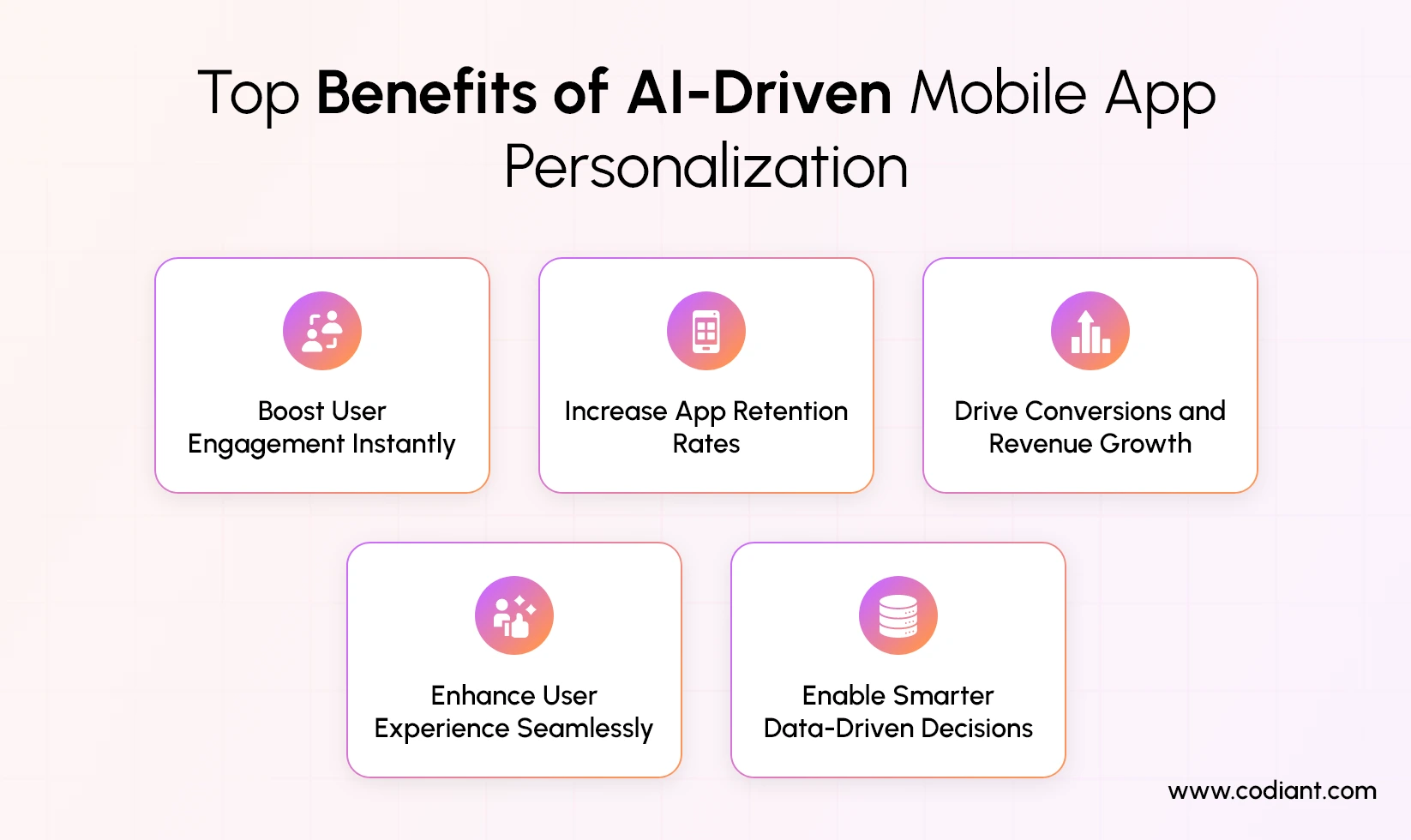
- Higher User Engagement
Personalized content keeps users interested. When users see relevant suggestions, they spend more time in the app.
This directly supports AI-driven user engagement in mobile apps, increasing session duration and interaction frequency.
- Improved User Retention
Users are more likely to return to apps that feel tailored to them.
A generic app is replaceable. A personalized app becomes part of a user’s routine.
- Increased Conversions and Revenue
AI personalization directly impacts buying decisions-
- Relevant product recommendations
- Timely offers
- Personalized pricing strategies
This is why AI mobile app personalization solutions are widely used in eCommerce and fintech.
- Better User Experience (UX)
AI reduces friction by-
- Showing relevant features first
- Simplifying navigation
- Eliminating unnecessary steps
This creates a seamless, intuitive user journey.
- Data-Driven Decision Making
AI provides actionable insights-
- What users prefer
- Where they drop off
- Which features perform best
This helps businesses continuously optimize their apps.
Real-World Use Cases of AI Mobile App Personalization
Let’s explore practical mobile app AI personalization examples across industries.
- eCommerce Apps
AI powers-
- Product recommendations
- Dynamic pricing
- Personalized homepages
Apps like Amazon use AI recommendation system development to suggest items based on browsing and purchase history.
- Streaming & Entertainment Apps
Platforms like Netflix and Spotify-
- Recommend shows and music
- Curate playlists
- Personalize thumbnails
These apps rely heavily on AI recommendation engines in mobile apps.
- Healthcare & Fitness Apps
AI personalization helps-
- Suggest workout plans
- Track health patterns
- Provide diet recommendations
Apps like fitness trackers use AI user behavior analytics apps to improve health outcomes.
- Fintech Apps
AI enhances-
- Spending insights
- Investment recommendations
- Fraud detection
Personalized financial advice improves user trust and engagement.
- Travel & Hospitality Apps
AI enables-
- Destination recommendations
- Dynamic pricing
- Personalized itineraries
This improves booking rates and customer satisfaction.
- Social Media Platforms
AI personalizes-
- News feeds
- Content suggestions
- Ads
This is one of the most advanced applications of AI powered mobile app features.
Build Mobile Apps Users Keep Coming Back To
Leverage AI-powered personalization to boost retention, increase engagement, and create experiences users genuinely value daily.
Core Technologies Behind Mobile App Personalization
To build effective personalization, businesses rely on a combination of mobile app personalization technology-
- Machine Learning & Deep Learning
For predictive analytics and pattern recognition.
- Big Data Analytics
To process massive volumes of user data.
- Cloud Computing
Enables scalability and real-time processing.
- AI APIs & SDKs
Pre-built tools for faster implementation.
- Edge Computing
Supports real-time personalization without latency.
Together, these technologies create scalable and intelligent personalization systems.
Read More: How to Choose the Right AI Solutions for Your Existing App
How to Implement AI Personalization in Mobile Apps
Implementing AI isn’t just about adding algorithms it requires a structured approach.
Step 1- Define Personalization Goals
Start with clarity-
- Increase engagement?
- Improve retention?
- Boost conversions?
Your goal determines the type of personalization.
Step 2- Collect and Structure Data
Data is the foundation of AI.
Focus on-
- User behavior data
- Transaction data
- Demographic data
Ensure compliance with privacy regulations.
Step 3- Choose the Right AI Models
Depending on your use case-
- Recommendation systems
- Predictive analytics models
- NLP-based systems
This is where AI recommendation system development plays a key role.
Step 4- Integrate AI into the App
Embed AI into-
- UI/UX
- Backend systems
- Notification engines
Ensure seamless integration without affecting performance.
Step 5- Test and Optimize
AI models improve over time.
Continuously-
- Monitor performance
- Refine algorithms
- Update datasets
Step 6- Scale with Cloud Infrastructure
Use cloud platforms to-
- Handle large datasets
- Ensure real-time processing
- Maintain scalability
Challenges in AI Mobile App Personalization
Despite its benefits, implementing AI comes with challenges-
- Data Privacy Concerns
Users are increasingly sensitive about how their data is used.
- Data Quality Issues
Poor data leads to inaccurate personalization.
- High Development Costs
AI implementation requires expertise and infrastructure.
- Integration Complexity
Existing apps may need restructuring to support AI.
- Model Bias
AI systems can unintentionally reinforce biases.
Addressing these challenges is critical for successful implementation.
Future of AI Personalization in Mobile Apps
The future of AI-driven user engagement in mobile apps is evolving rapidly.
Key trends include-
- Hyper-personalization in real time
- Voice and conversational interfaces
- Emotion-aware AI systems
- Predictive user journeys
- Context-aware experiences
Apps will move from reactive personalization to proactive personalization anticipating user needs before they arise.
Why Businesses Should Invest in AI Personalization
Mobile apps are no longer just tools they are digital experiences.
Businesses that invest in AI mobile app personalization solutions can-
- Build stronger user relationships
- Increase lifetime value (LTV)
- Differentiate from competitors
- Improve operational efficiency
In a competitive market, personalization is no longer optional it’s expected.
How Codiant Helps Build Personalized Mobile Apps?
Building intelligent, scalable personalization systems requires both technical expertise and strategic execution.
At Codiant, we help businesses design and develop AI-powered mobile app features that deliver real business impact-
- Custom AI recommendation engine mobile apps tailored to your industry
- Advanced AI user behavior analytics apps for deep insights
- Scalable mobile app personalization technology built on cloud and AI frameworks
- End-to-end AI recommendation system development from strategy to deployment
Whether you’re building a new app or upgrading an existing one, we ensure your app delivers a truly personalized user experience that drives engagement and growth.
Conclusion
AI personalization is transforming mobile apps from static platforms into intelligent ecosystems that adapt, learn & evolve with users.
Businesses are not only enhancing UX by adopting AI personalization in mobile apps, they are forming stronger relationships while boosting engagement & driving tangible growth.
The question is no longer whether to adopt AI personalization but how quickly you can implement it to stay ahead.
Upgrade Your App with Intelligent AI Features
Transform static apps into adaptive platforms using advanced recommendation engines and real-time personalization technology solutions.
The Author

Frequently Asked Questions
AI personalization improves engagement, retention, conversions & user experience by delivering relevant content, recommendations & interactions tailored to individual users.
AI tracks user interactions, analyzes patterns using machine learning models & predicts preferences to deliver personalized content, features & recommendations in real time.
Industries like eCommerce, healthcare, fintech, travel, media & social platforms widely use AI personalization to enhance user experience and drive engagement.
It depends on the app’s architecture. With proper data infrastructure and APIs, AI personalization can be integrated gradually without rebuilding the entire system.
Technologies include machine learning, deep learning, big data analytics, NLP, cloud computing & AI frameworks like TensorFlow, PyTorch & recommendation algorithms.
Featured Blogs
Read our thoughts and insights on the latest tech and business trends
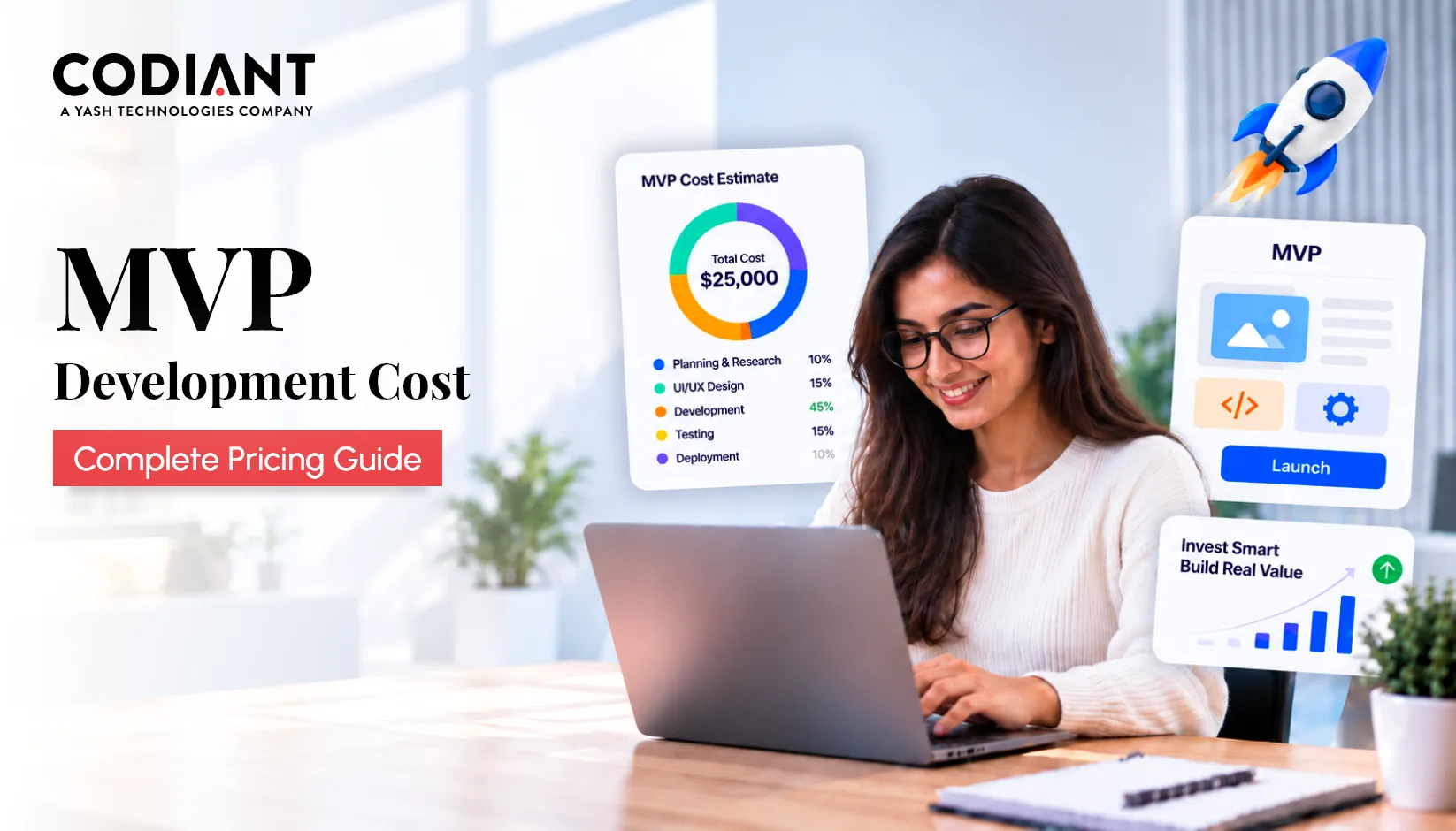
How Much Does It Cost to Build an MVP in 2026? A Complete Pricing Guide
- September 10, 2026
- Digital Transformation
MVP development cost typically ranges from $5,000 for a basic web-based product to $150,000 or more for a complex, cross-platform solution. A custom MVP with user accounts, a backend, essential integrations and a polished interface... Read more
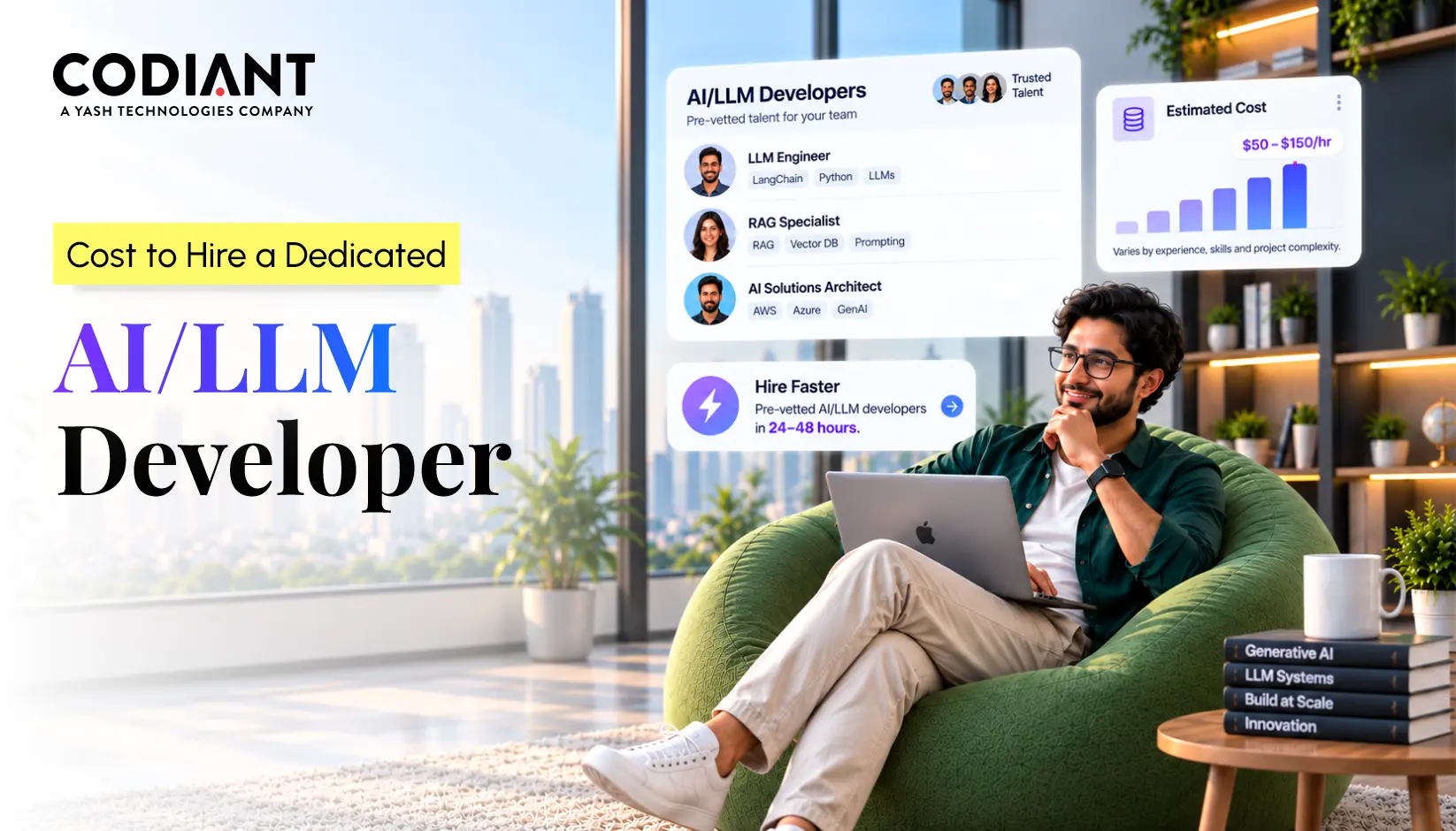
How Much Does It Cost to Hire a Dedicated AI/LLM Developer in 2026?
- September 8, 2026
- Artificial Intelligence Staff Augmentation
Hiring a dedicated AI or large language model (LLM) developer typically costs $35–$60 per hour for general AI engineering and $50–$200 per hour for specialised machine learning work, with enterprise pricing rising for advanced RAG,... Read more

HIPAA-Compliant App Development in 2026: How to Build Securely and Avoid Preventable Fines
- September 4, 2026
- Mobile App Development
HIPAA-compliant app development in 2026 requires six foundations: complete ePHI mapping, documented risk analysis, role-based access, encryption, signed business associate agreements, and continuous security monitoring. This matters most to healthcare CTOs, product leaders, and compliance... Read more