
RenoAI – AI-Powered Interior Design Visualization Platform
RenoAI is an AI-powered interior visualization tool designed to transform spaces from a single image, generating instant visual variations to help designers and homeowners make faster decisions.
Book a Demo
About the project
RenoAI is a market-ready AI-powered interior visualization platform that transforms real room or space images into multiple styled design concepts. It enables designers, architects, contractors and homeowners to explore renovation ideas instantly, reducing dependency on manual mockups. The platform accelerates decision-making and simplifies early-stage design communication.
Challenge
Interior design visualization remains time-intensive, relying heavily on manual rendering, mood boards, and client imagination. Existing tools lack speed, realism, and flexibility. Codiant identified a gap where designers needed faster ways to present ideas, while homeowners struggled to confidently visualize outcomes before committing to renovation decisions.
Approach
Codiant’s product, design, and AI teams collaborated to transform this gap into a scalable solution through structured research and iterative development. The focus was on simplifying input workflows, enabling rapid design generation, and ensuring visual consistency. Agile sprints helped refine feature priorities, resulting in a responsive platform aligned with real-world design use cases.
Discovery phase
The discovery phase focused on understanding how designers pitch concepts and how homeowners interpret visual ideas. Key workflows were mapped around image input, style selection, and output comparison. Early insights emphasized the need for speed, simplicity, and multiple design outputs from a single input image.
Market Research
The global interior design software market is projected to exceed $10.5 billion by 2030, driven by increasing demand for digital visualization and AI-assisted design tools.
The Gap
Existing tools offer either slow manual rendering or limited visualization flexibility. RenoAI bridges this gap by delivering fast, AI-generated design variations directly from real images, enabling instant, realistic concept exploration.
Audience Struggles
Delayed Client Approvals: 68% of projects slowed due to unclear visual communication during early design stages.
Time-Intensive Concept Creation: 72% of designers spent over 5 hours creating initial design mockups manually.
Low Visualization Confidence: 64% of homeowners hesitated decisions due to inability to visualize final outcomes clearly.
User Insights
| Tasks | Emotions | Challenges | Opportunities |
|---|---|---|---|
| Concept Visualization | 😕 Uncertain | Clients struggle to imagine final designs from verbal explanations or static mood boards. | AI-generated visuals instantly turn ideas into realistic design concepts for clear understanding. |
| Client Pitching | 😓 Pressure | Designers spend hours preparing presentations without guarantee of client approval or alignment. | Instant design variations improve pitching speed and increase client confidence during discussions. |
| Style Exploration | 😵 Confusion | Choosing the right design style becomes difficult without seeing multiple real-world variations. | Multiple style outputs allow quick comparison and better decision-making for users. |
| Design Iteration | 😩 Frustration | Reworking concepts repeatedly consumes time and delays project timelines significantly. | Fast AI iterations enable quick refinements without restarting the entire design process. |
| Decision Making | 🤔 Doubt | Homeowners hesitate to proceed without visual clarity of final renovation outcomes. | Before-after comparisons provide clarity, reducing hesitation and accelerating decisions. |
| Material Visualization | 😬 Hesitation | Users find it difficult to visualize how materials and finishes will look together. | Material-guided inputs help simulate realistic combinations for confident design choices. |
| Project Alignment | 😟 Misalignment | Designers and clients often misinterpret expectations, leading to rework and dissatisfaction. | Visual-first communication ensures both parties align early in the design process. |
Opportunity
Interior visualization tools lacked speed, realism, and usability, limiting early design exploration. RenoAI addressed this gap by offering a unified AI platform that enables instant concept generation, reducing effort, cost, and decision delays.
Execution Timeline
1. Research & Discovery
2. Structure & Concept
2 Weeks3. Design & Prototyping
3 Weeks4. Development & Testing
5 WeeksResearch Phase
Extensive market and user research validated the need for faster visualization workflows across both designers and homeowners. Existing solutions were either complex or time-consuming, creating adoption barriers. Insights highlighted demand for instant outputs, minimal input effort, and flexible style exploration. Cost sensitivity and ease of use emerged as key drivers for product direction and feature prioritization.
Visual Research
Competitive analysis revealed cluttered interfaces and fragmented workflows across design tools. RenoAI prioritized a simplified, input-to-output experience with minimal friction. The focus remained on reducing cognitive load while enabling fast visual feedback. This led to a clean interaction model centered on image upload, style selection, and instant generation.
User Persona Development

Jackson Reed
34
Interior Designer
Austin, USA
Persona Snapshot:
A client-focused designer aiming to present visual concepts quickly and secure faster approvals without spending hours on manual design preparation.
Goals:
Reduce time spent on creating initial design concepts and presentations
Improve client approval rates through clear visual communication
Handle multiple projects efficiently without compromising design quality
Challenges:
Manual rendering and mood boards slow down early-stage design workflows
Clients struggle to visualize concepts, leading to delays and rework
Limited time to explore multiple design variations for each project
How RenoAI Helps:
- Instant design generation → Faster concept creation and improved project turnaround
- Multiple style variations → Higher client engagement and quicker approvals
- Before-after visualization → Better clarity leading to confident decision-making

Amelia Grant
29
Homeowner & Working Professional
San Diego, USA
Persona Snapshot:
A time-constrained homeowner seeking quick, reliable ways to visualize renovation ideas before investing in design services or execution.
Goals:
Make confident renovation decisions without multiple designer consultations
Explore design styles quickly before committing budget and timelines
Avoid costly mistakes by visualizing outcomes in advance
Challenges:
Difficulty imagining how spaces will look after renovation changes
Overwhelmed by too many design choices without clear visual direction
Hesitation in decision-making leading to delayed project execution
How RenoAI Helps:
- Real-space visualization → Clear understanding of outcomes before spending money
- Style-based design outputs → Faster exploration and confident style selection
- Quick design generation → Reduced delays and faster renovation decisions
Ideation
Persona insights revealed a consistent need for faster visual communication and reduced dependency on manual design workflows. The ideation process focused on simplifying how users convert real spaces into design concepts. Core UX goals centered on speed, minimal input effort, and clear decision-making. Concepts evolved around real scenarios where designers needed instant outputs and homeowners required visual clarity. Early sketches emphasized reducing steps, ensuring a direct path from image upload to generated results.
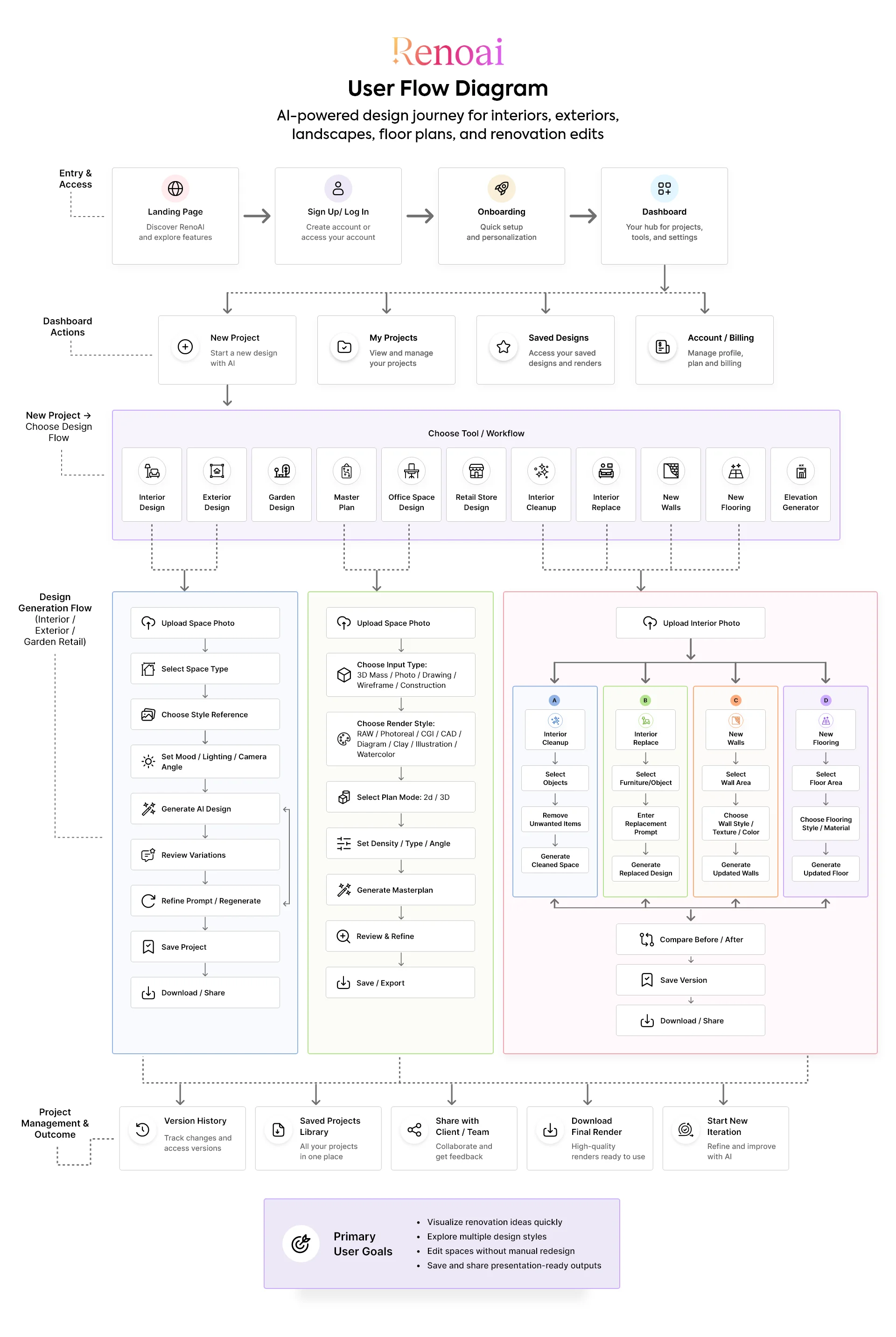
User flow
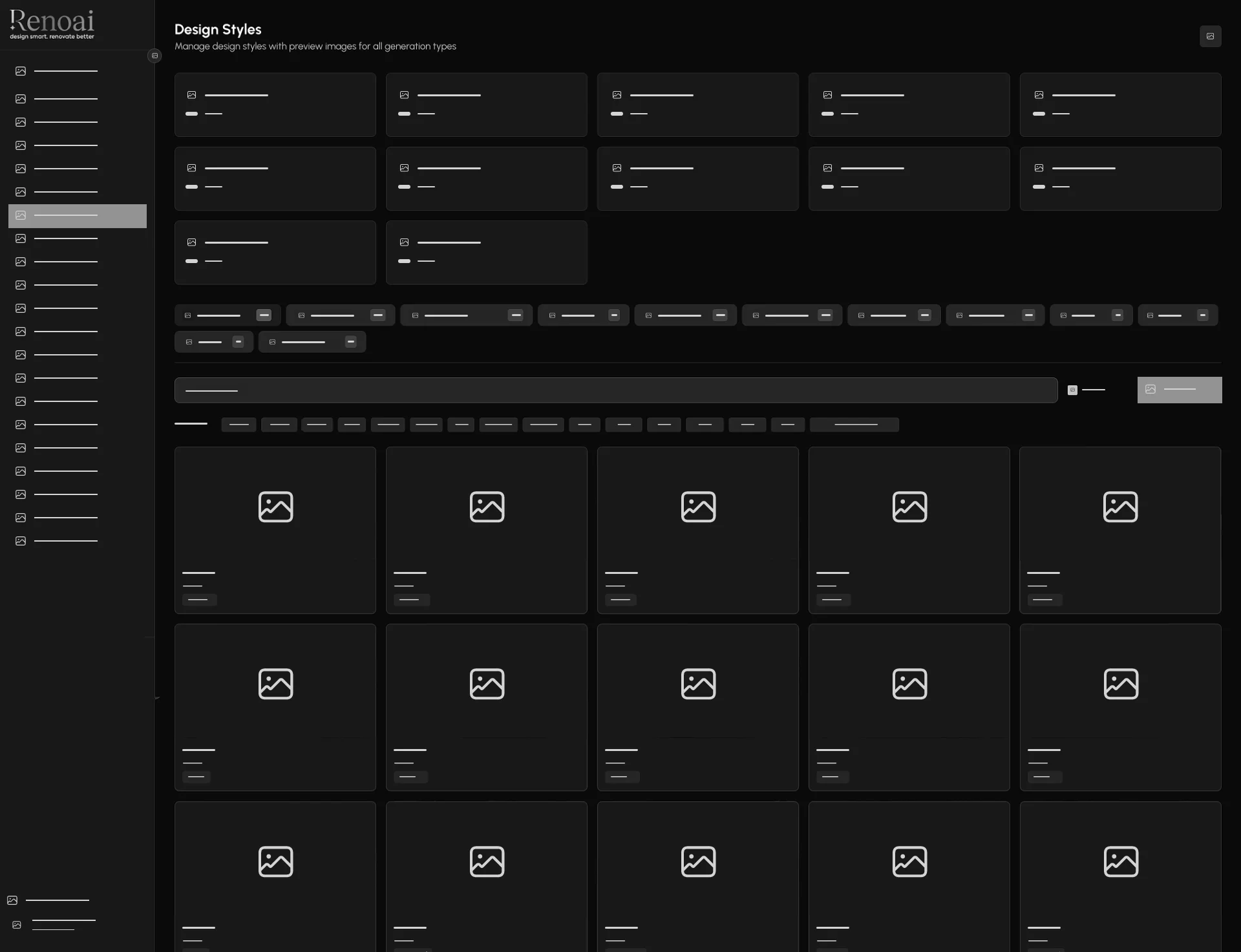
Wireframing
Feature concepts
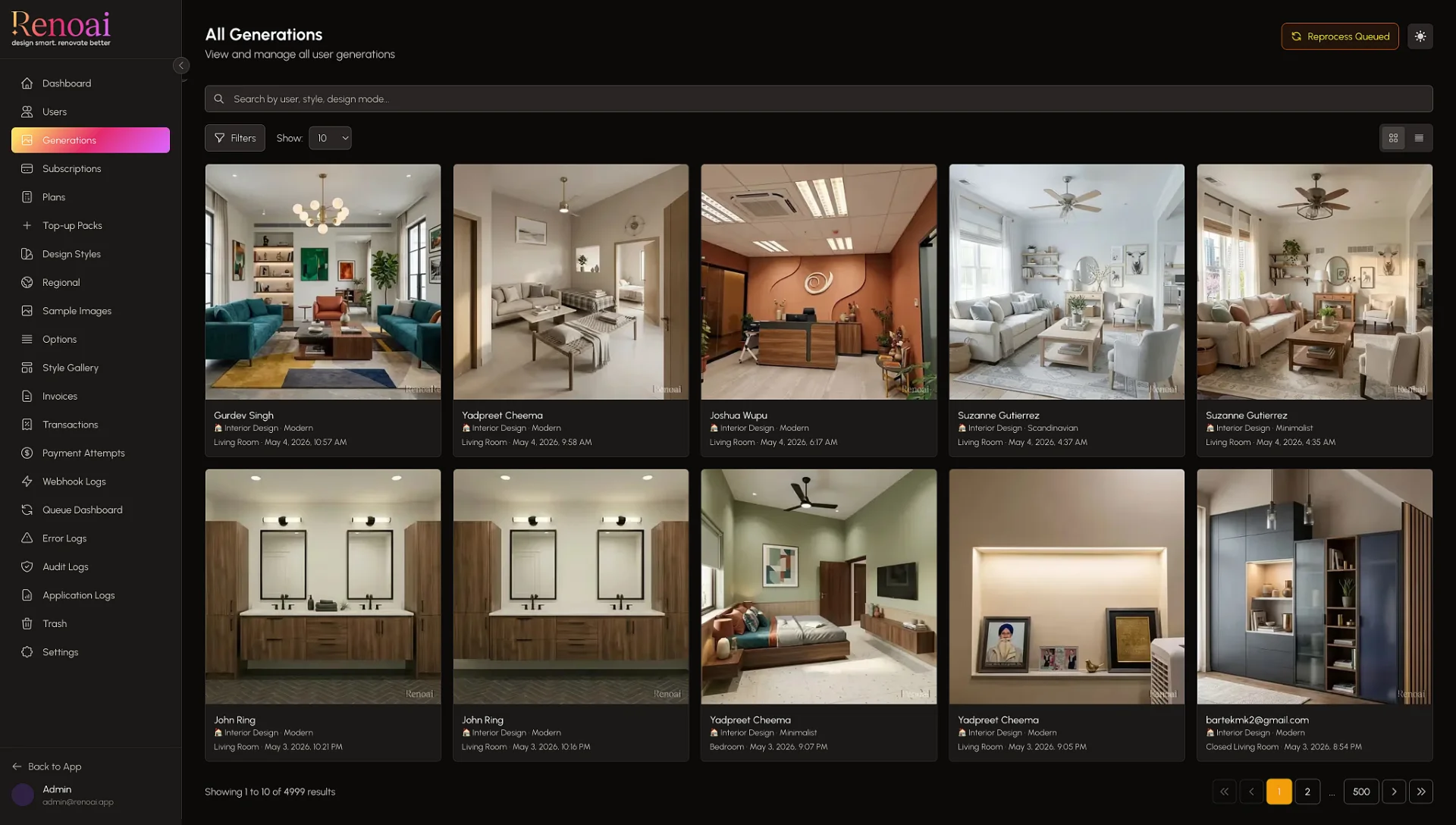
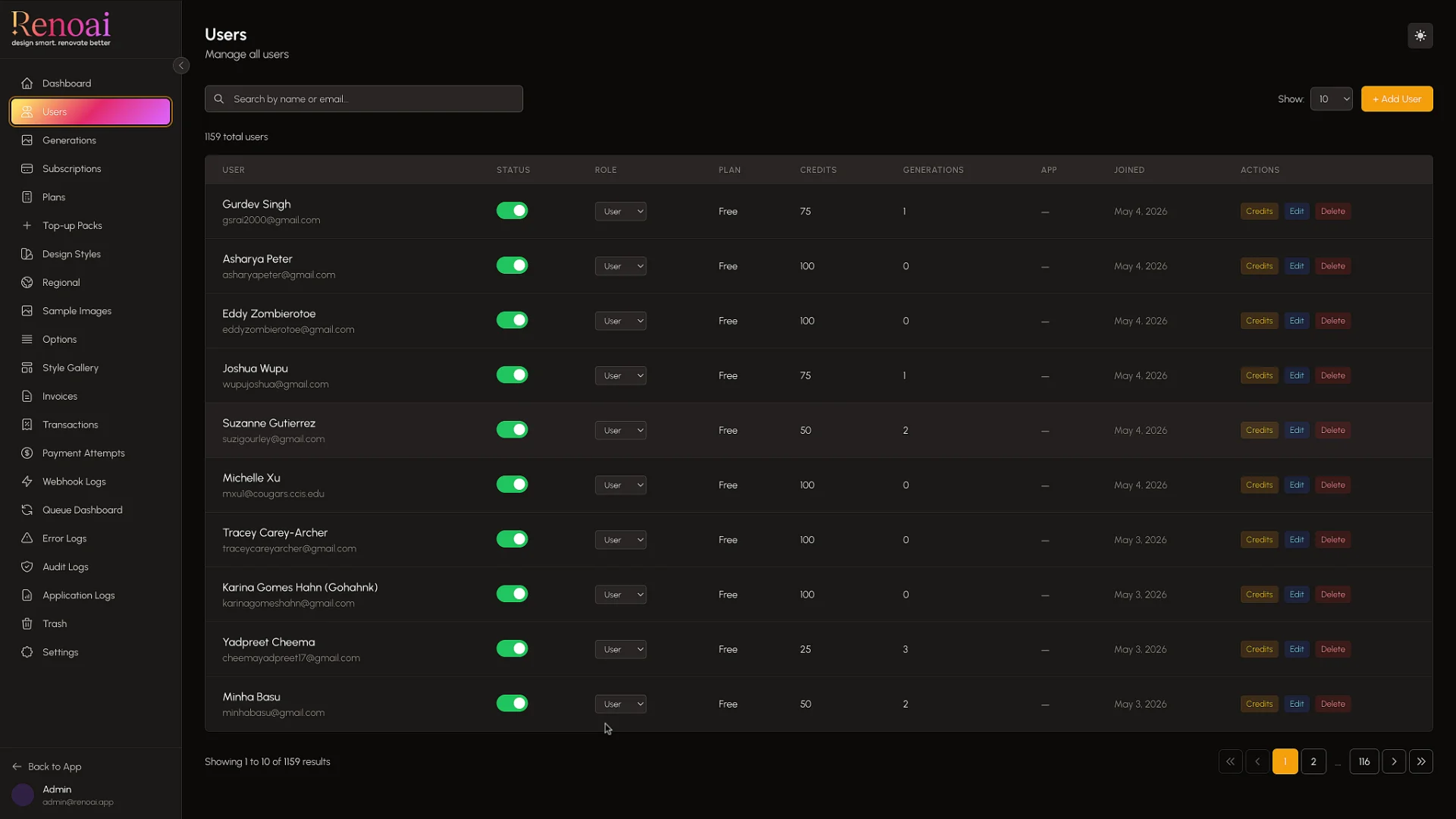
1. Space Image Upload
Upload real space photos to generate AI-based interior design variations instantly.
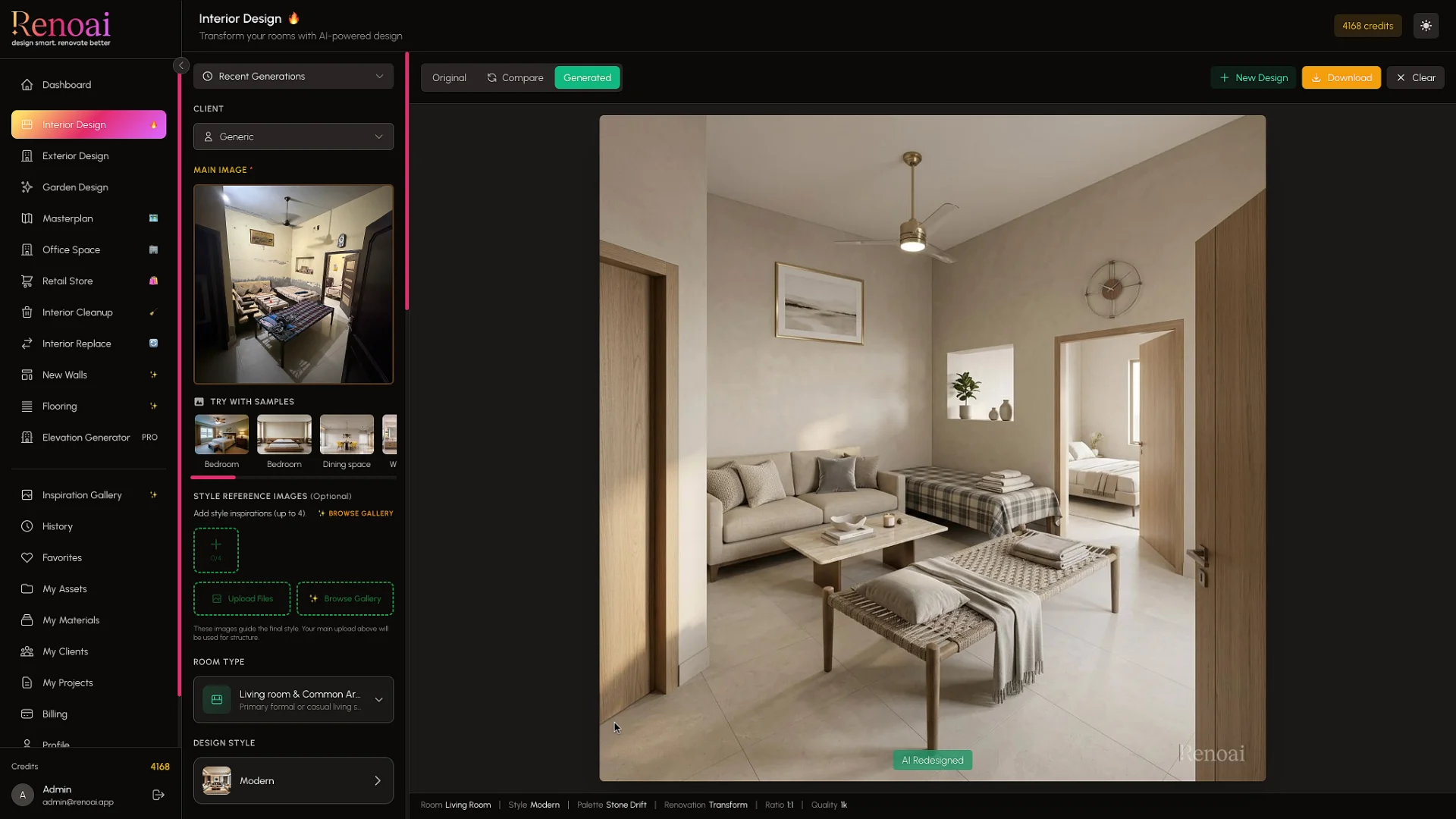
2. AI Design Generation
Generate multiple design concepts from a single uploaded space image.
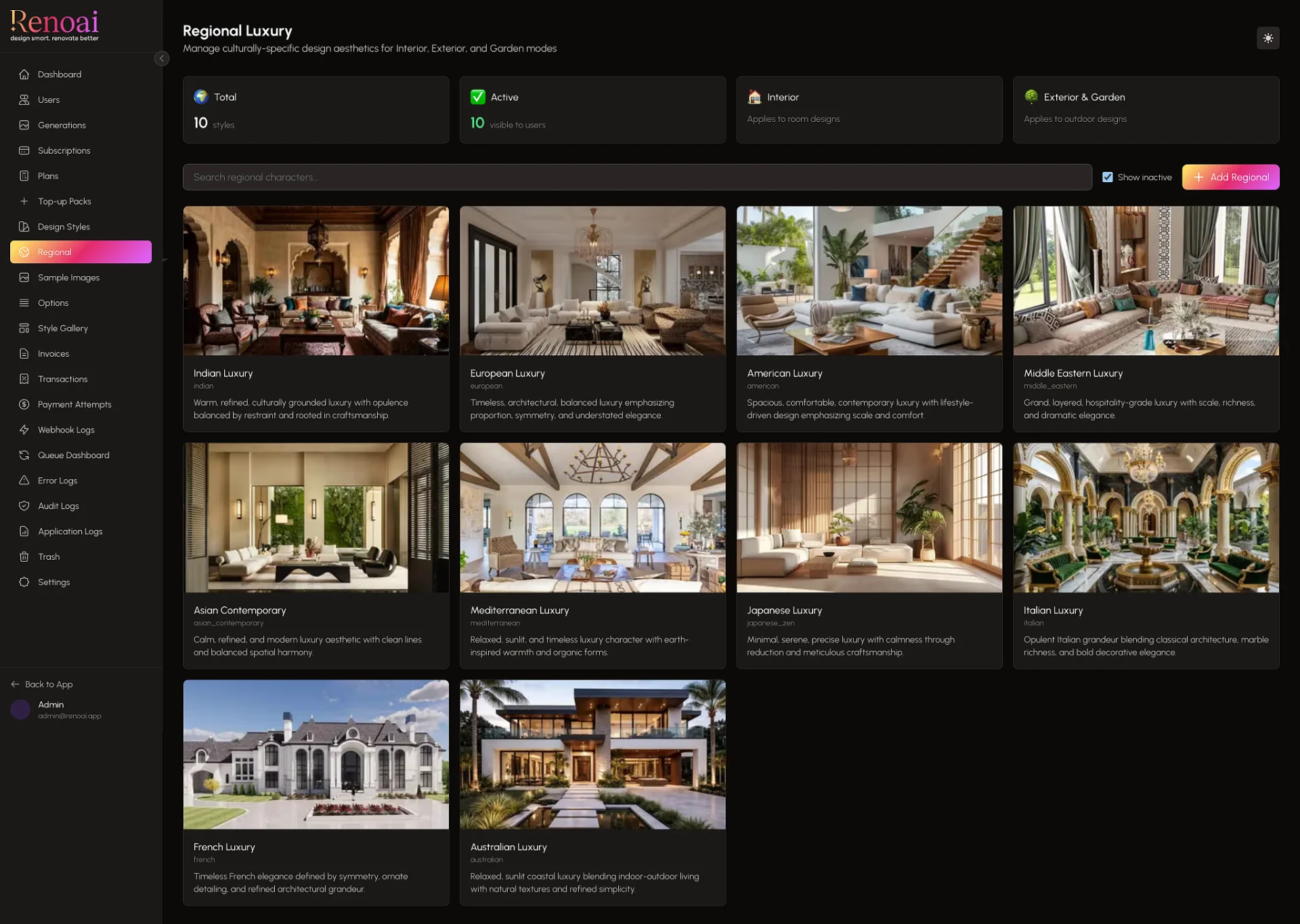
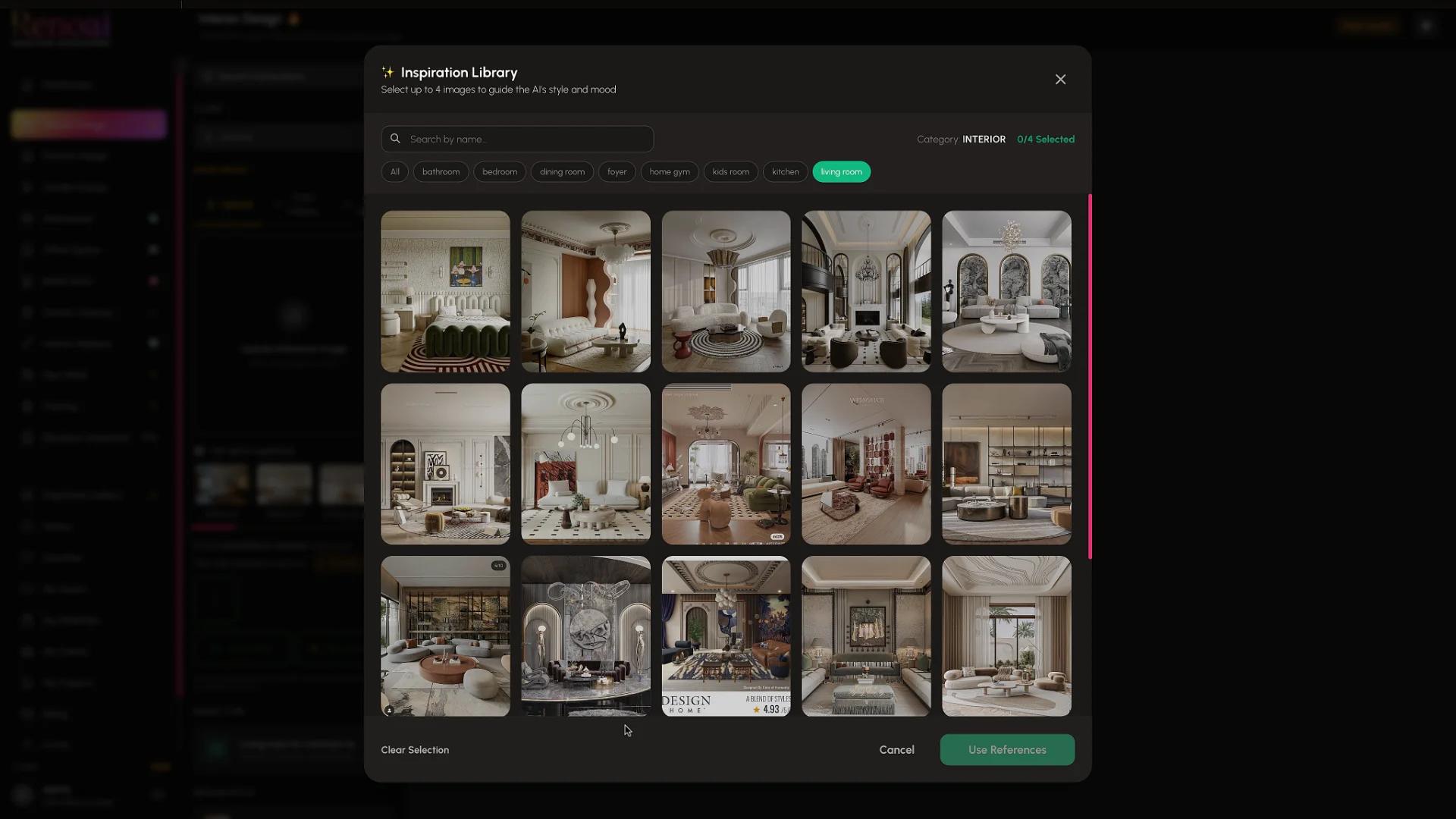
3. Multiple Style Selection
Choose from various predefined interior, exterior, or retail styles before generating design outputs.
4. Fast Rendering Engine
AI generates design concepts quickly, typically within seconds after input submission.
5. Before and After Comparison
Compare original space image with generated design outputs for better clarity.
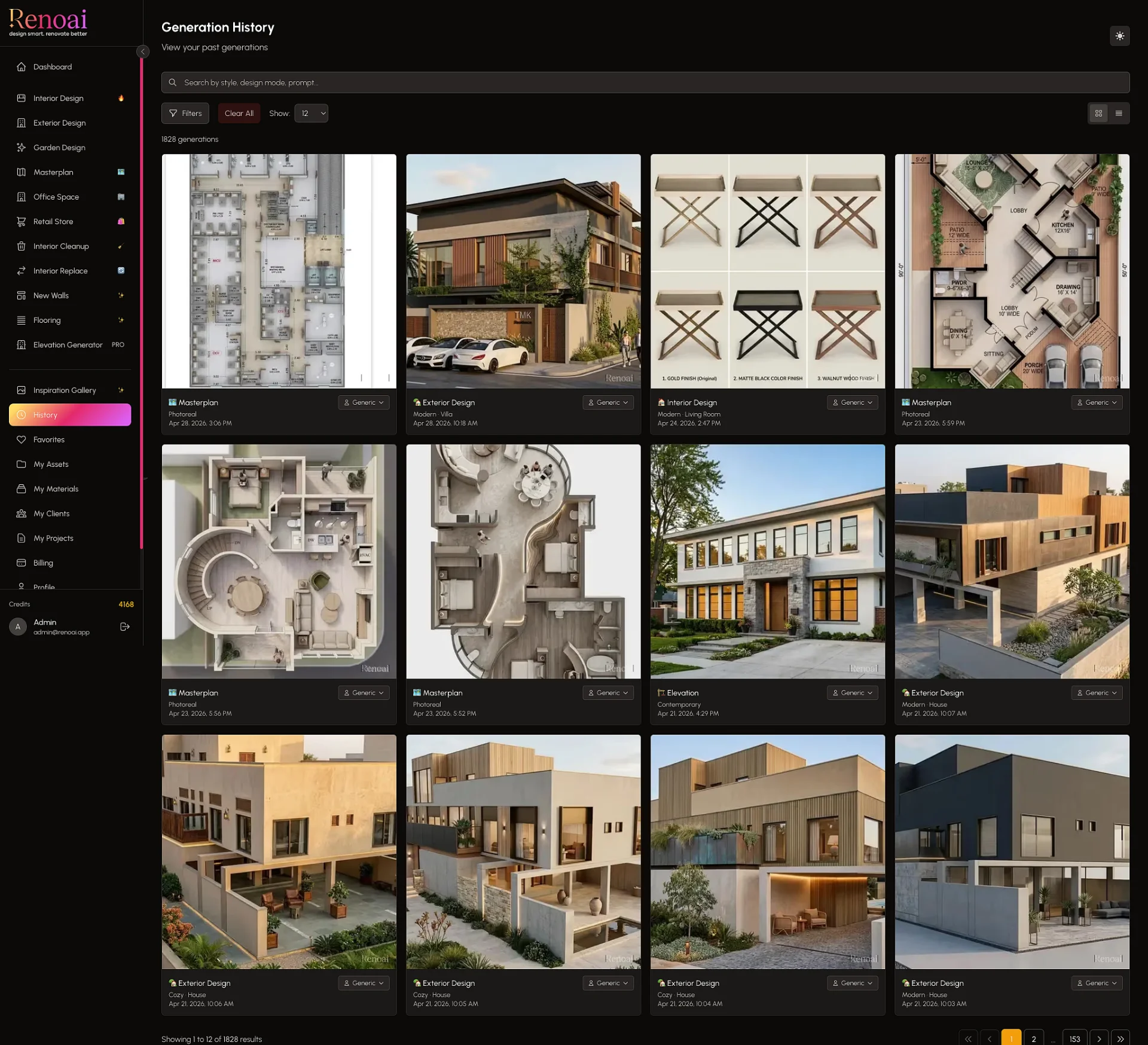
6. Design History Access
Access previously generated designs anytime through saved history within the platform.
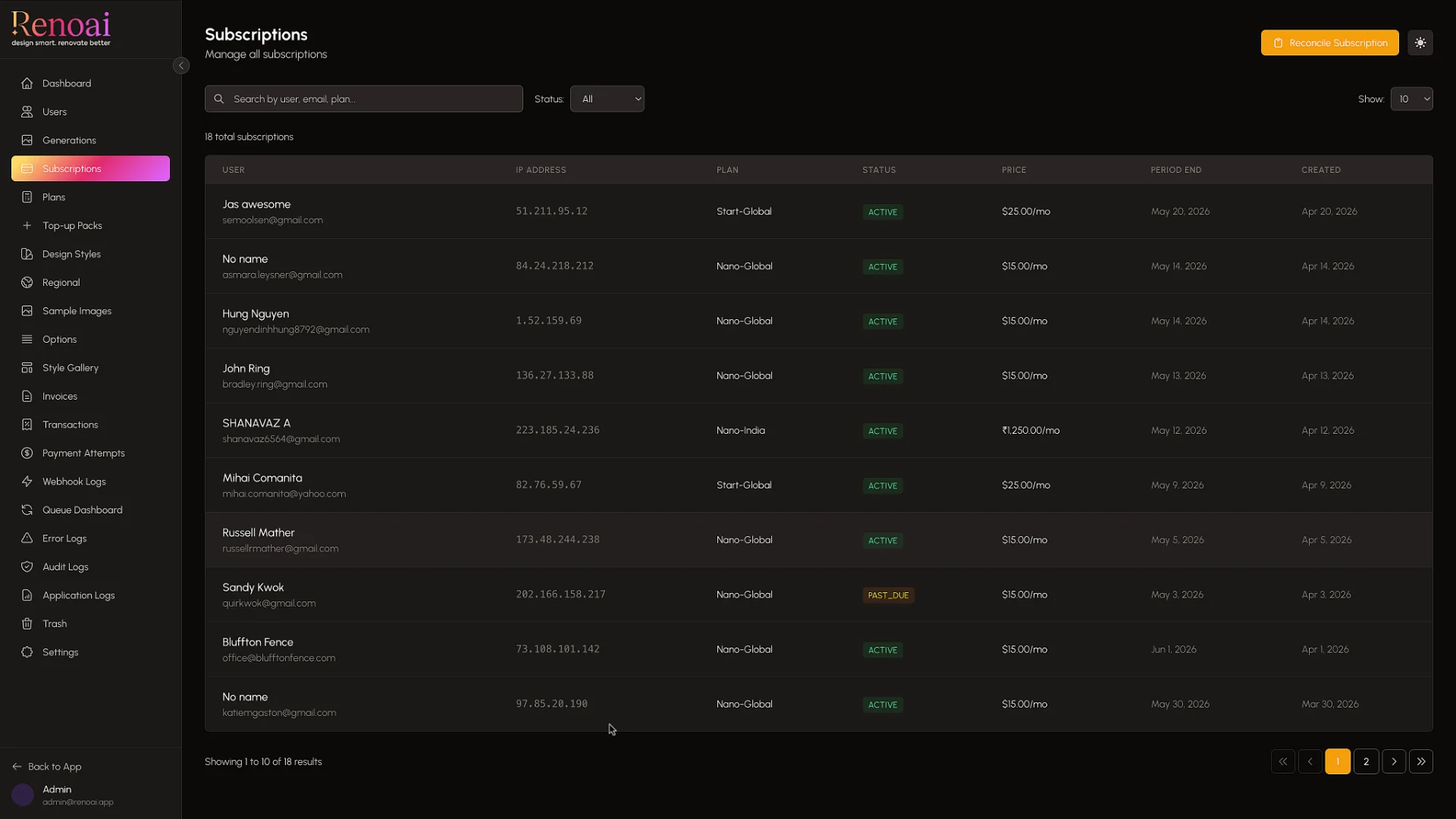
7. Credit-Based Usage System
Each design generation consumes credits, with free credits available for new users.
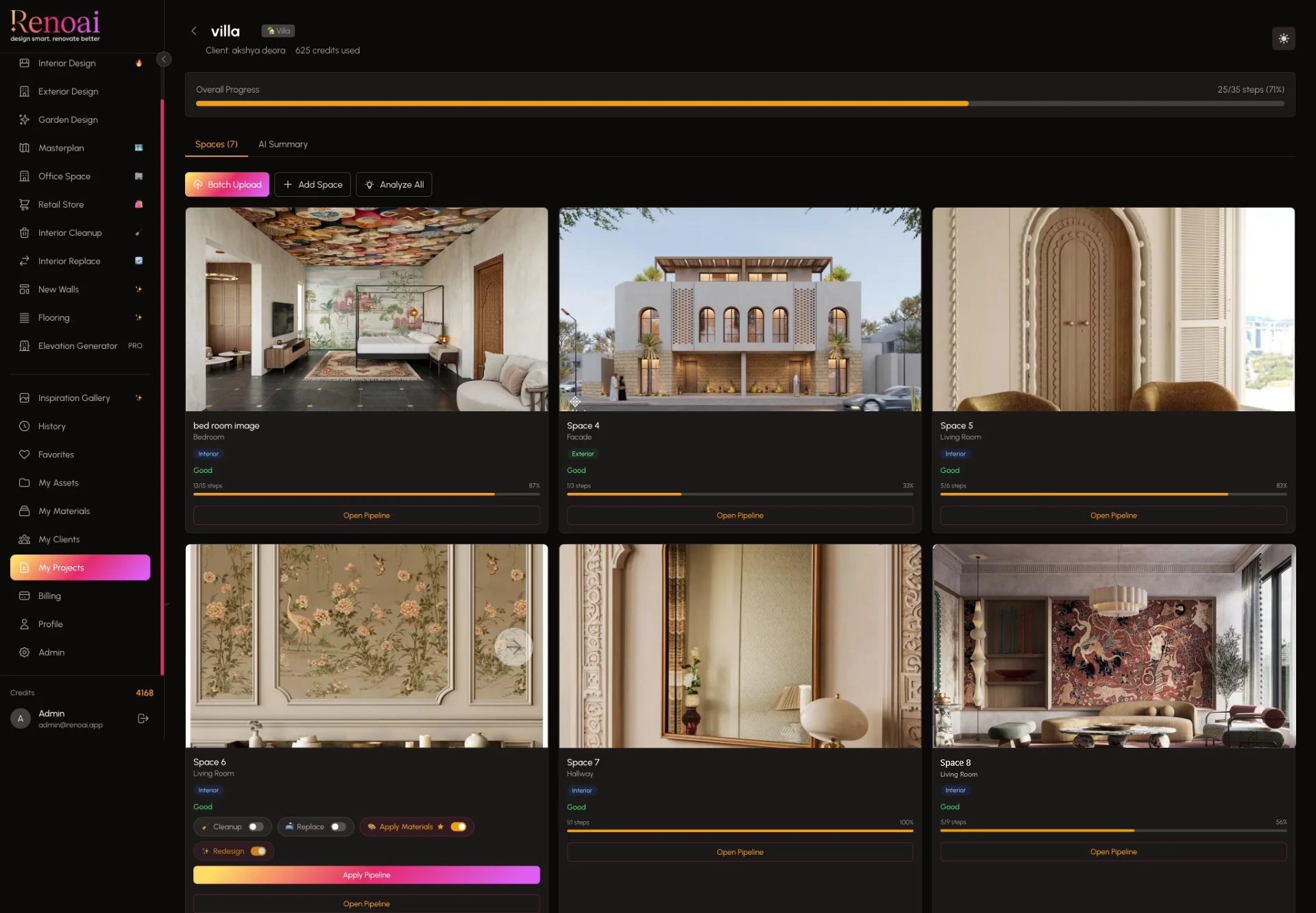
8. Material Input Guidance
Define materials for walls, flooring, and furniture to influence generated design results.
9. Multi-Space Support
Supports generating designs for different spaces like interior, exterior, retail spaces, and floorplans.
10. Instant Design Variations
Create multiple variations quickly to explore different looks without repeating uploads.
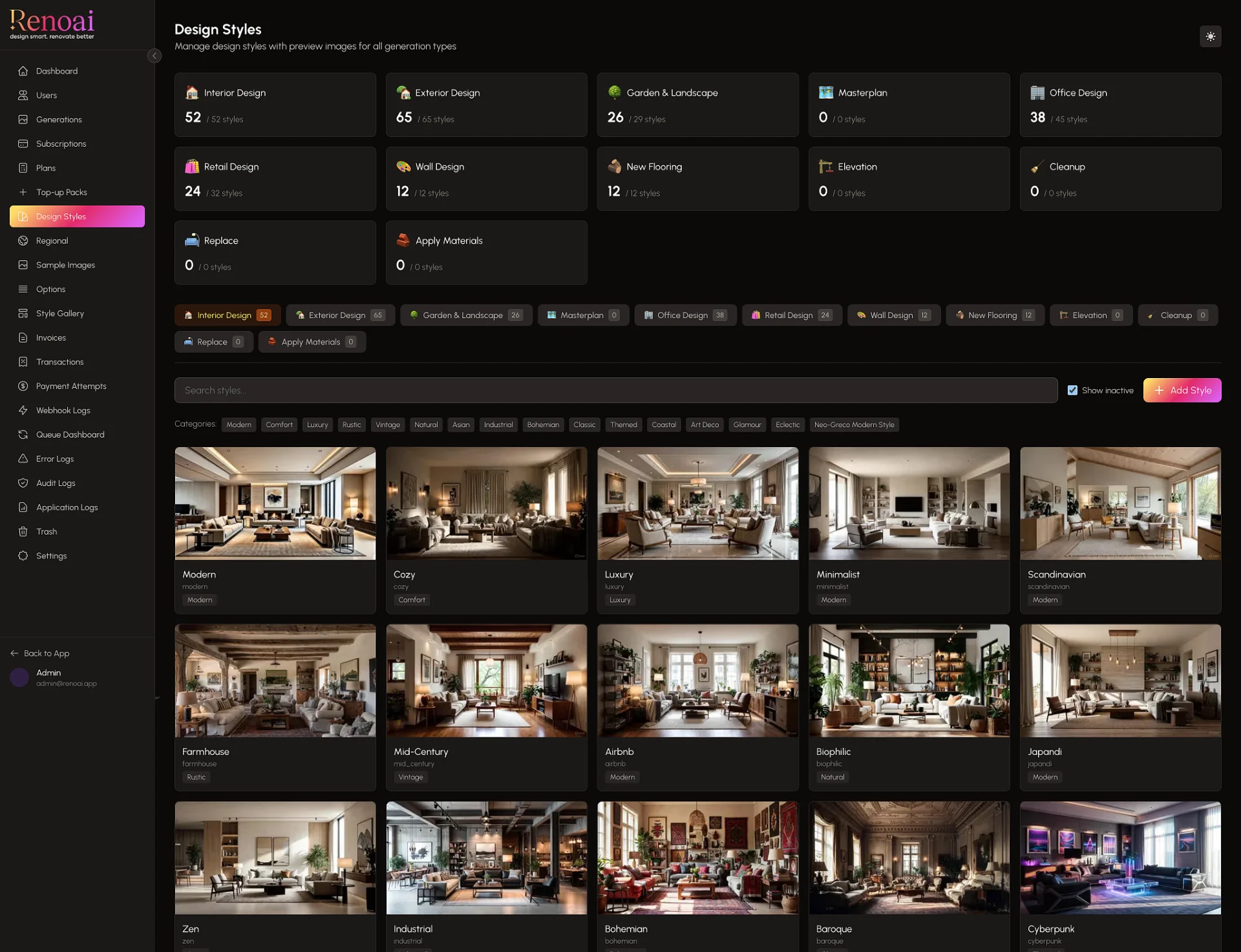
High fidelity designs
Development
We have used the most suitable technologies that would meet the requirements of this product. We have chosen this tech stack on the basis of scalability and efficiency.
 React JS
 Next.js
 PostgreSQL
 Figma
Figma
 Illustrator
 Photoshop
 Node.js
 AWS
AWS
 Google Gemini
 Razorpay
 SendGrid
The result
RenoAI was successfully delivered as a scalable, market-ready AI visualization platform that streamlined early-stage interior design workflows. The solution enabled users to convert real space images into multiple design concepts within seconds, significantly reducing dependency on manual rendering and design preparation.
From a business standpoint, RenoAI improved design iteration speed by over 70%, allowing designers to handle more client projects within the same timeframe. Client approval cycles were shortened by nearly 50%, driven by clearer visual communication and faster concept presentation. For homeowners, decision-making time reduced substantially, minimizing delays in renovation planning.
The platform also lowered operational effort by eliminating repetitive design tasks, leading to improved productivity and faster turnaround across projects. Its intuitive workflow ensured quicker onboarding, enabling users to start generating outputs with minimal learning curve.
Overall, RenoAI delivered a high-impact solution that combined speed, clarity, and scalability, positioning it as a practical tool for modern design visualization needs.