
RembrAI – An AI-Powered Contextual Memory Recall Platform
RembrAI is an AI-powered memory platform that captures, organizes, and retrieves information across chats, notes, and workflows, helping users stay organized, recall context instantly, and work efficiently.
Book a Demo
About the project
RembrAI is an AI-powered memory intelligence platform designed to capture, organize, and retrieve important conversations, ideas, and knowledge in real time. It transforms scattered information into structured, searchable insights, helping professionals make faster decisions, maintain context, and never lose critical details across meetings, projects, and workflows within growing digital environments.
Challenge
Modern users relied on multiple disconnected tools to store information, leading to fragmentation and poor recall. Existing solutions focused on storage rather than retrieval. Codiant identified a gap in building a system that could intelligently connect, understand, and surface information when needed, without requiring manual structuring or constant user effort.
Approach
Codiant’s teams aligned product, UX, and engineering efforts around real user behavior. Research insights guided feature prioritization toward seamless capture and natural recall. The solution avoided rigid categorization, focusing instead on contextual understanding. Agile development cycles ensured rapid validation, continuous refinement, and delivery of a scalable, user-centric memory system.
Discovery phase
User analysis revealed that saving information was not the issue—retrieving it was. Users frequently lost track of stored content due to lack of context, highlighting the need for a recall-first system.
Market Research
The global productivity software market is expected to surpass $100 billion, driven by increasing digital workload and fragmented information ecosystems.
The Gap
Existing tools enabled storage but failed to support contextual retrieval. Users still depended on memory to locate saved content. RembrAI addressed this by enabling intent-based recall, eliminating the need for manual organization and bridging the gap between saving and remembering.
Audience Struggles
Tool Fragmentation: 70% of users relied on 4–6 apps daily for storing information.
Low Recall Efficiency: 60% of saved content remained unused or forgotten.
Cognitive Overload: 75% of professionals reported difficulty managing scattered digital inputs.
User Insights
| Tasks | Emotions | Challenges | Opportunities |
|---|---|---|---|
| Information Capture | 😵 Overload | Users capture ideas across apps but lose track due to scattered storage and no unified system. | AI-driven capture centralizes inputs from notes, screenshots, and links into one structured memory layer. |
| Idea Recall | 🤔 Frustration | Users remember saving something but struggle to retrieve it due to lack of context or search clarity. | Natural language recall enables users to retrieve information based on intent, not exact keywords. |
| Task Remembering | 😓 Anxiety | Important tasks and reminders lose meaning over time, causing missed follow-ups and incomplete workflows. | Context-linked memory ensures tasks remain connected to purpose, improving clarity and follow-through. |
| Content Saving | 😐 Indifference | Saved content like posts, links, and references is rarely revisited due to poor organization. | Smart indexing surfaces saved content when relevant, increasing reuse and value extraction. |
| Multi-App Switching | 😩 Fatigue | Constant switching between apps for notes, reminders, and files creates inefficiency and mental drain. | Unified memory hub reduces dependency on multiple tools and streamlines daily workflows. |
| Information Search | 😤 Effort | Users spend excessive time searching across apps, folders, and chats to find stored information. | AI-powered search retrieves results instantly using contextual understanding instead of manual filtering. |
| Knowledge Retention | 😟 Concern | Valuable insights and ideas get lost over time due to lack of structured recall systems. | Persistent memory layer helps retain and resurface knowledge when needed for decision-making. |
| Daily Workflow Management | 😣 Stress | Managing scattered inputs leads to disorganized workflows and reduced productivity. | Context-aware organization aligns information with workflows, improving efficiency and decision speed. |
Opportunity
Modern professionals are overwhelmed by fragmented information spread across chats, emails, notes, screenshots, and reminders. Existing tools store data but fail to preserve context or make retrieval effortless, leading to missed follow-ups and constant mental overload.
A product like Rembr.ai solves this by integrating directly with everyday platforms like WhatsApp, where most real conversations and decisions happen. Instead of switching apps, users can capture, recall, and retrieve information within their natural workflow. By turning WhatsApp into an intelligent memory interface, Rembr.ai connects scattered inputs, understands context, and delivers the right information exactly when it’s needed- reducing friction and improving execution speed.
Execution Timeline
1. Research & Discovery
2. Structure & Concept
2 Weeks3. Design & Prototyping
3 Weeks4. Development & Testing
3 WeeksResearch Phase
Research focused on understanding how users interact with information daily—how they capture, forget, and attempt to retrieve it. Insights revealed that while users saved content frequently, retrieval remained inefficient due to lack of context. Adoption barriers included tool fatigue, fragmented workflows, and the effort required to organize information manually across multiple platforms.
Visual Research
Competitive analysis showed that most tools relied on rigid structures like folders and tags, increasing cognitive load. Users preferred intuitive systems aligned with natural thinking patterns. The design direction focused on reducing friction, enabling seamless capture, and allowing users to retrieve information through intent rather than structured navigation or predefined categorization.
User Persona Development

Ethan Miller
32
Product Manager
San Francisco, USA
Persona Snapshot:
A fast-paced professional managing multiple streams of information, seeking a smarter way to retain and retrieve critical insights without workflow disruption.
Goals:
Reduce time spent searching for saved information
Improve productivity through faster recall and decision-making
Streamline daily workflows across tools
Challenges:
Information scattered across notes, emails, and apps
Difficulty recalling saved ideas without exact references
Mental fatigue caused by constant context switching
How RembrAI Helps:
- RembrAI keeps all your information in one place, so you don’t have to switch between tools.
- It remembers context, helping you find things faster and make quicker decisions.
- It makes capturing ideas easy, so you stay consistent without extra effort.

Sophia Carter
28
Content Strategist
New York, USA
Persona Snapshot:
A creative professional handling constant ideas and references, seeking a reliable system to capture and revisit content without losing context.
Goals:
Capture ideas instantly without interrupting creative flow
Reuse saved content for campaigns and strategy planning
Reduce time spent searching across platforms
Challenges:
Ideas scattered across screenshots, notes, and saved links
Difficulty revisiting past inspiration when needed
Loss of valuable content due to poor recall systems
How RembrAI Helps:
- RembrAI lets you capture ideas in any format, without breaking your flow.
- It stores everything with context, so it actually makes sense later.
- It helps you find things faster, making planning and work easier.
Ideation
Ideation was driven by real user behaviour frequent information capture without effective recall. Persona insights highlighted the gap between saving and retrieving content. The core UX goal was to simplify memory interactions by eliminating dependency on folders and tags. Concepts evolved around natural recall patterns, ensuring users could retrieve information the way they think. Early sketches focused on reducing steps between capture and recall, creating a seamless, low-friction experience.
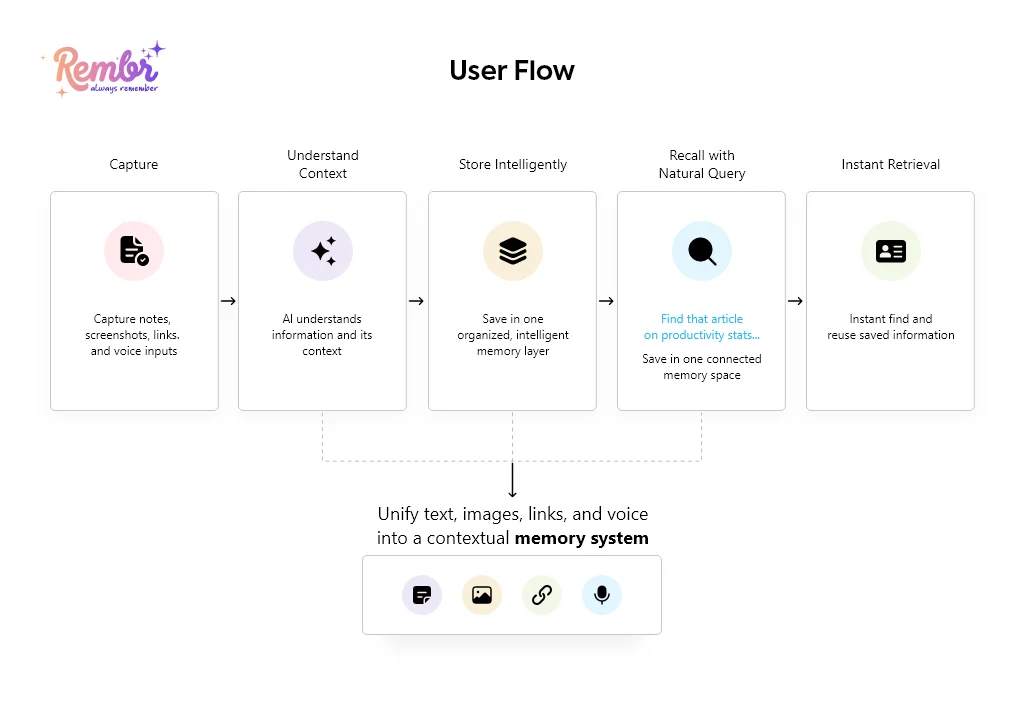
User flow
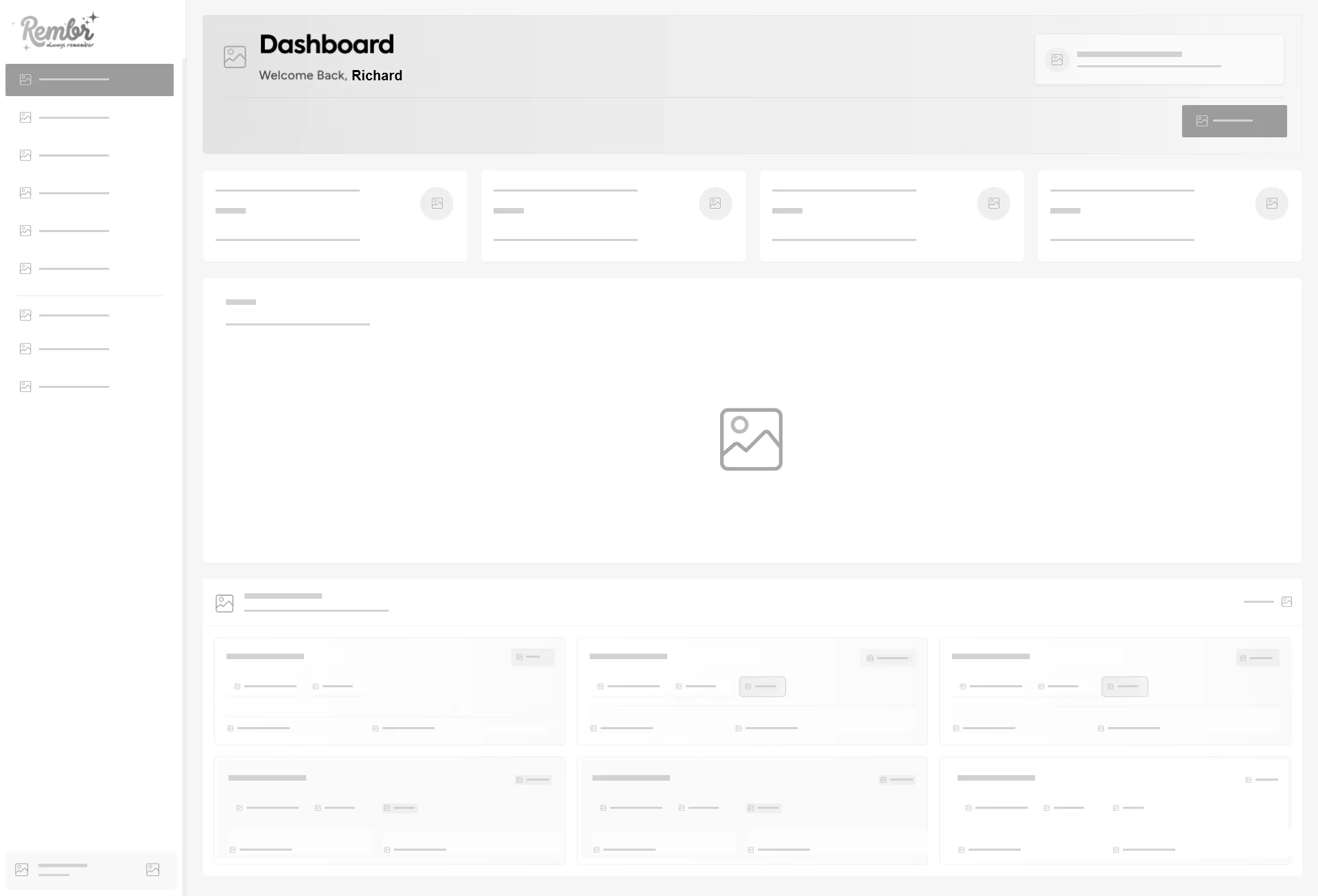
Wireframing
Feature concepts
1. Universal Input Capture
Capture notes, screenshots, links, and voice inputs into one unified memory system.
2. Context-Aware Storage
AI understands context behind saved information, making future retrieval more meaningful and accurate.
3. Natural Language Search
Search saved content using everyday language without needing exact keywords or file names.
4. Voice Note Capture
Record thoughts instantly using voice input, reducing friction in capturing ideas on-the-go.
5. Screenshot Saving System
Store screenshots with contextual understanding, enabling easy retrieval without manual naming or tagging.
6. Link Saving and Retrieval
Save important links and revisit them later using context-based recall instead search.
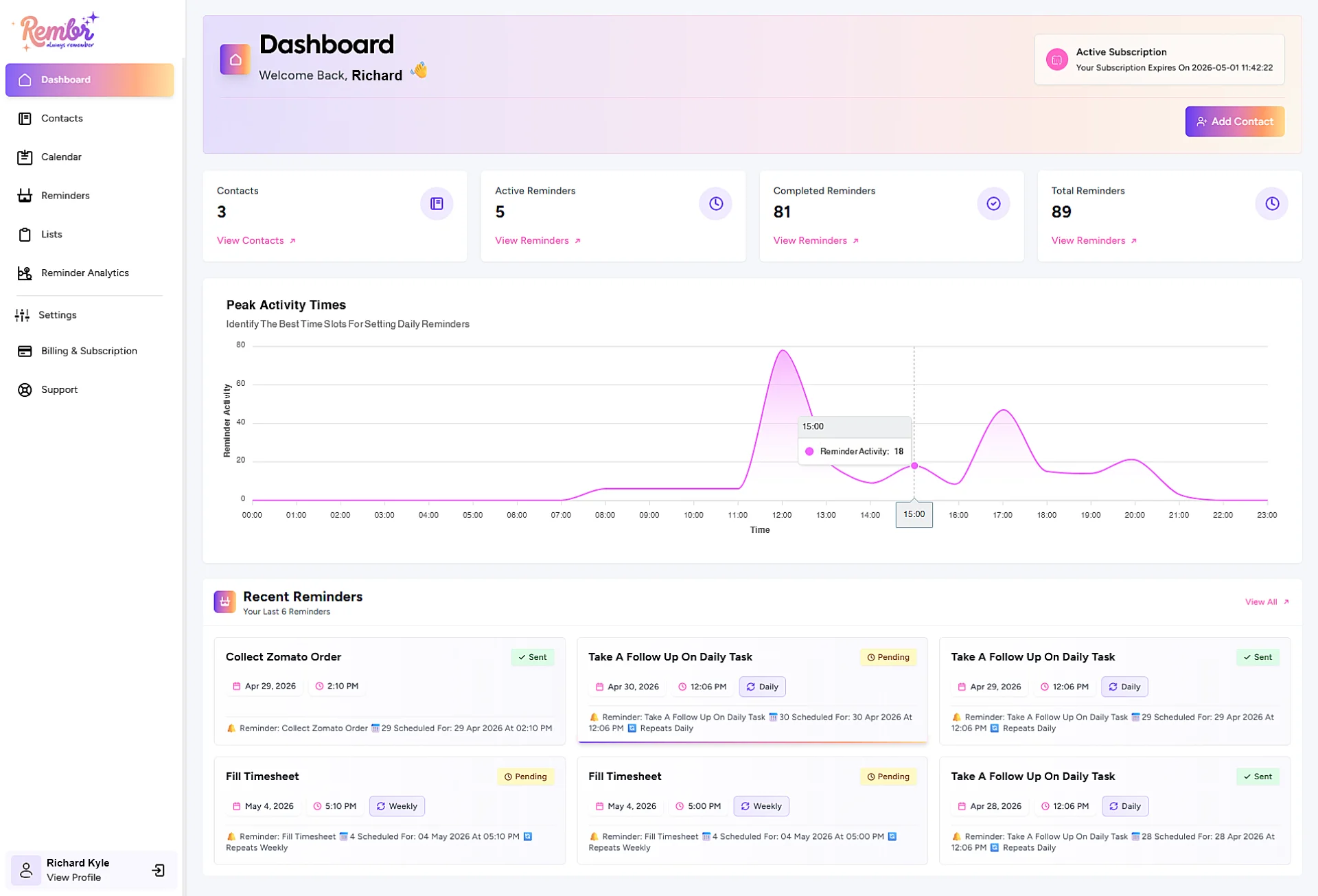
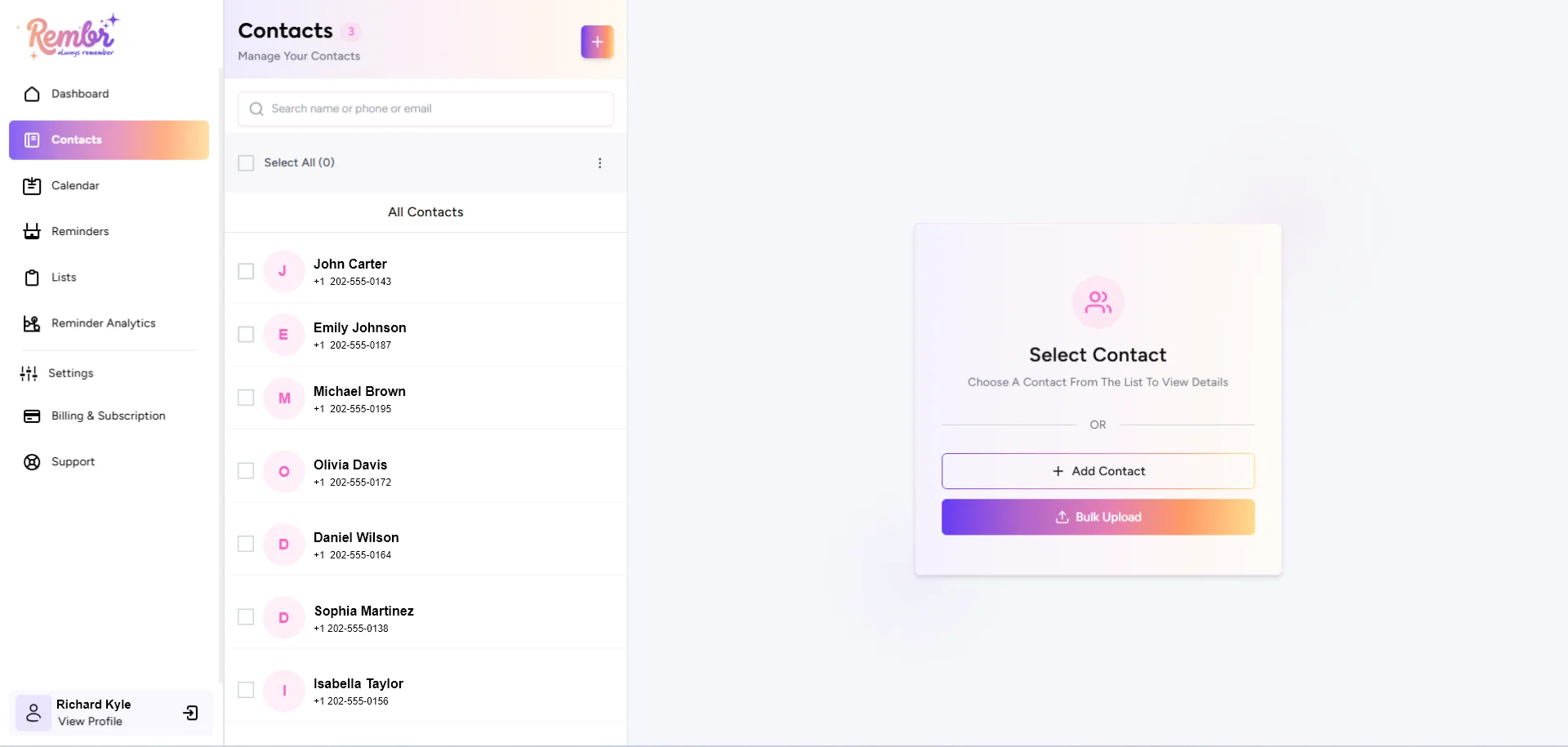
7. Unified Memory Dashboard
Access all saved information across formats from a single centralized and structured interface.
8. Instant Recall Engine
Retrieve information instantly based on intent without navigating folders or multiple applications.
9. Cross-Format Memory Handling
Handle text, images, links, and voice seamlessly within one integrated memory environment.
10. Reduced Cognitive Load Experience
Offloads memory tasks, helping users focus more on execution rather than remembering.
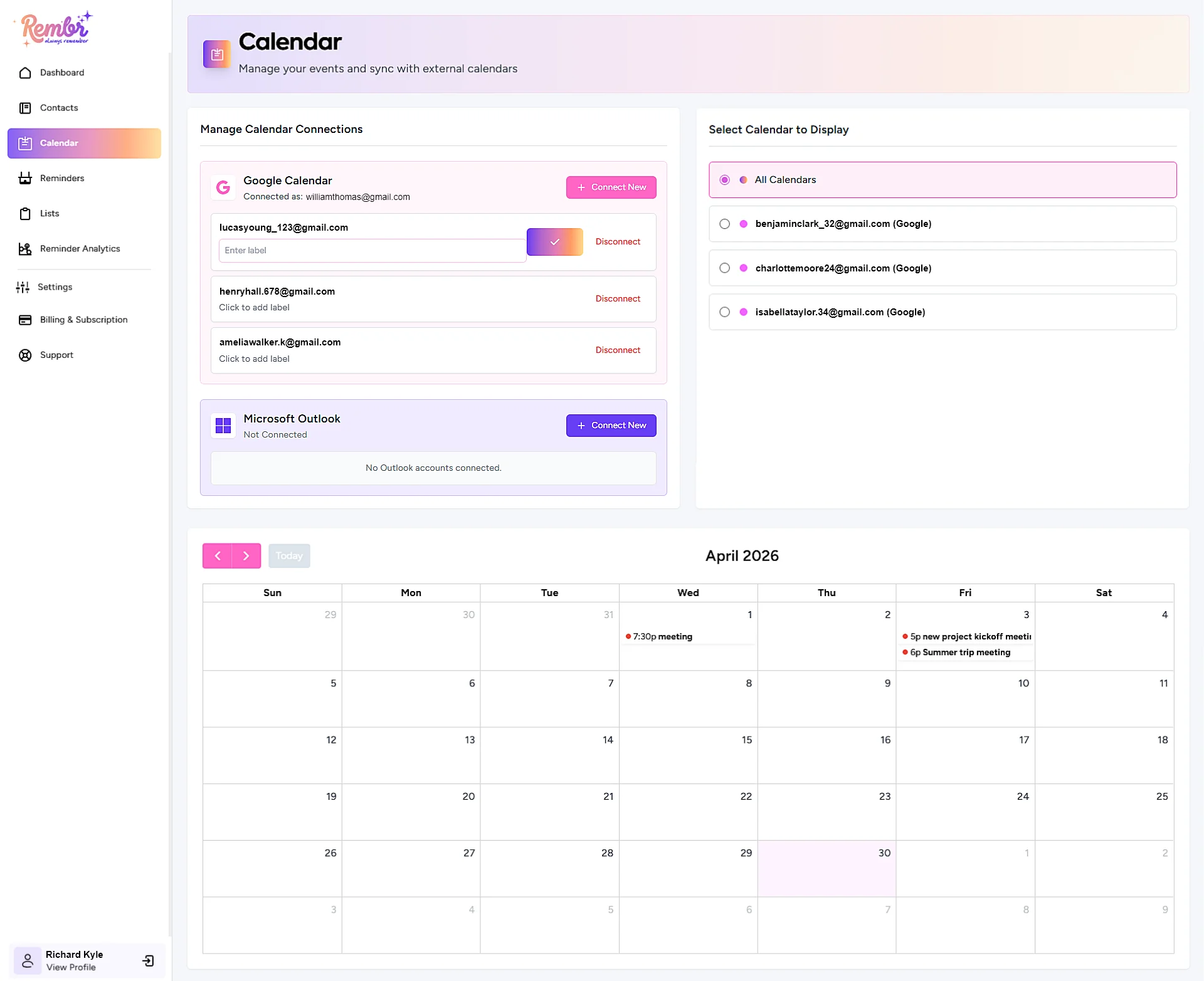
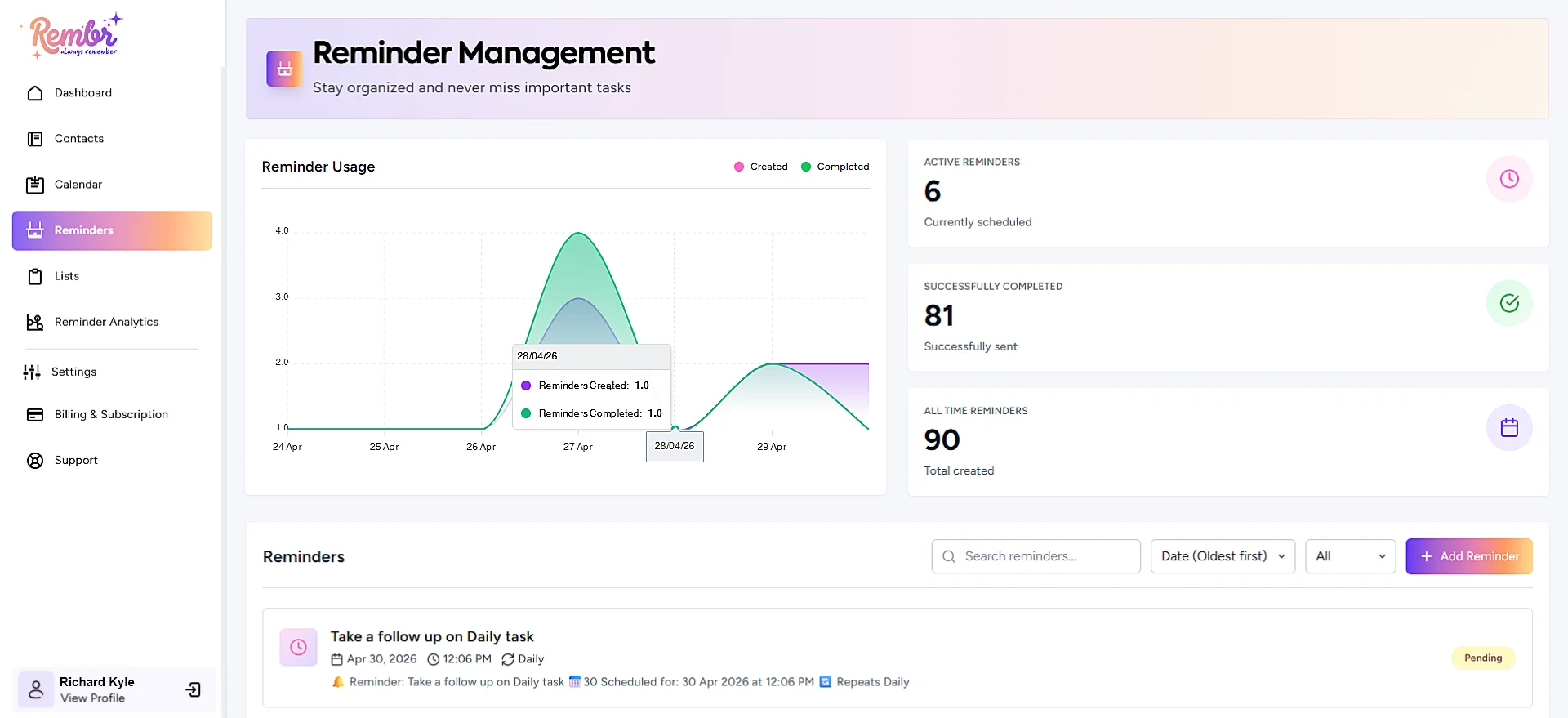
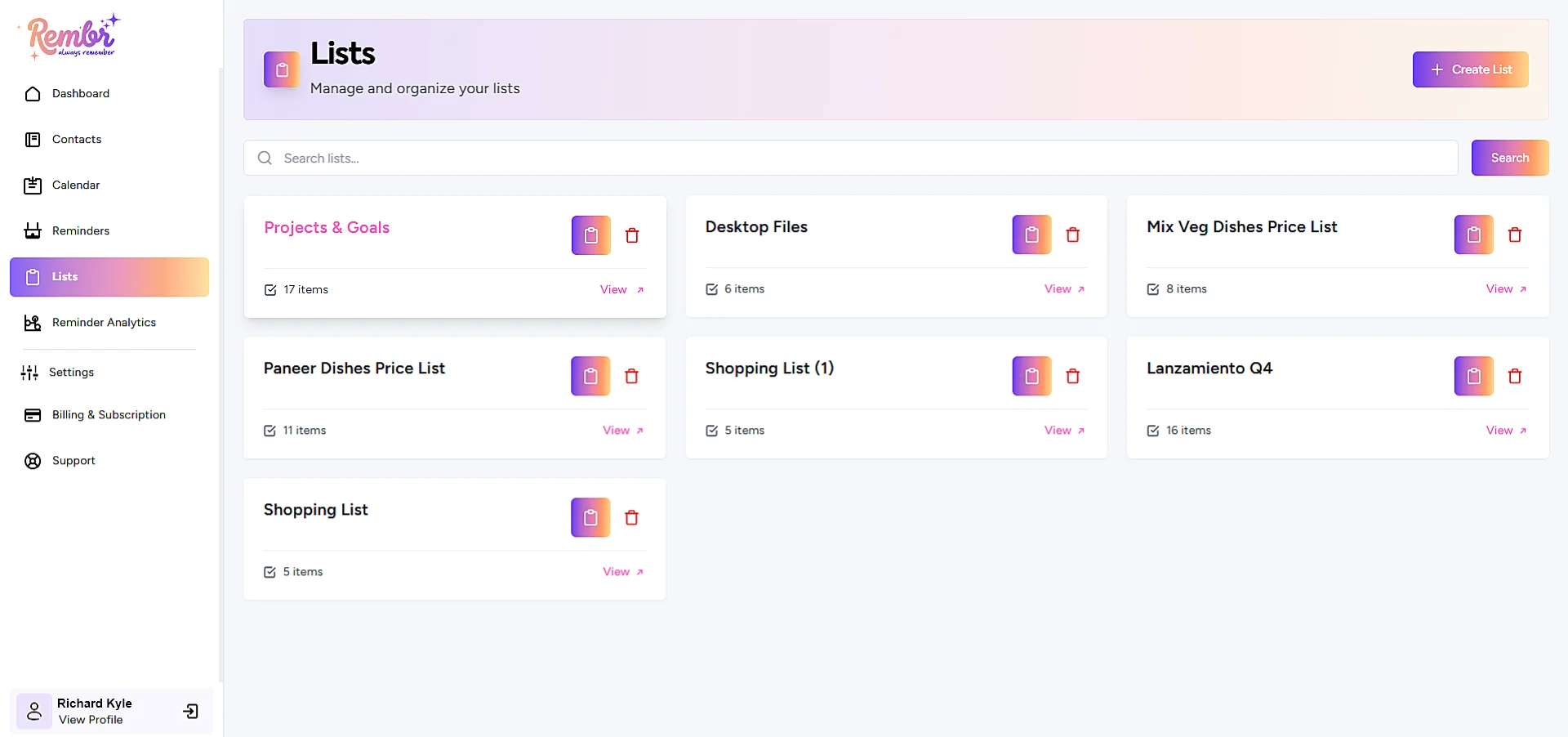
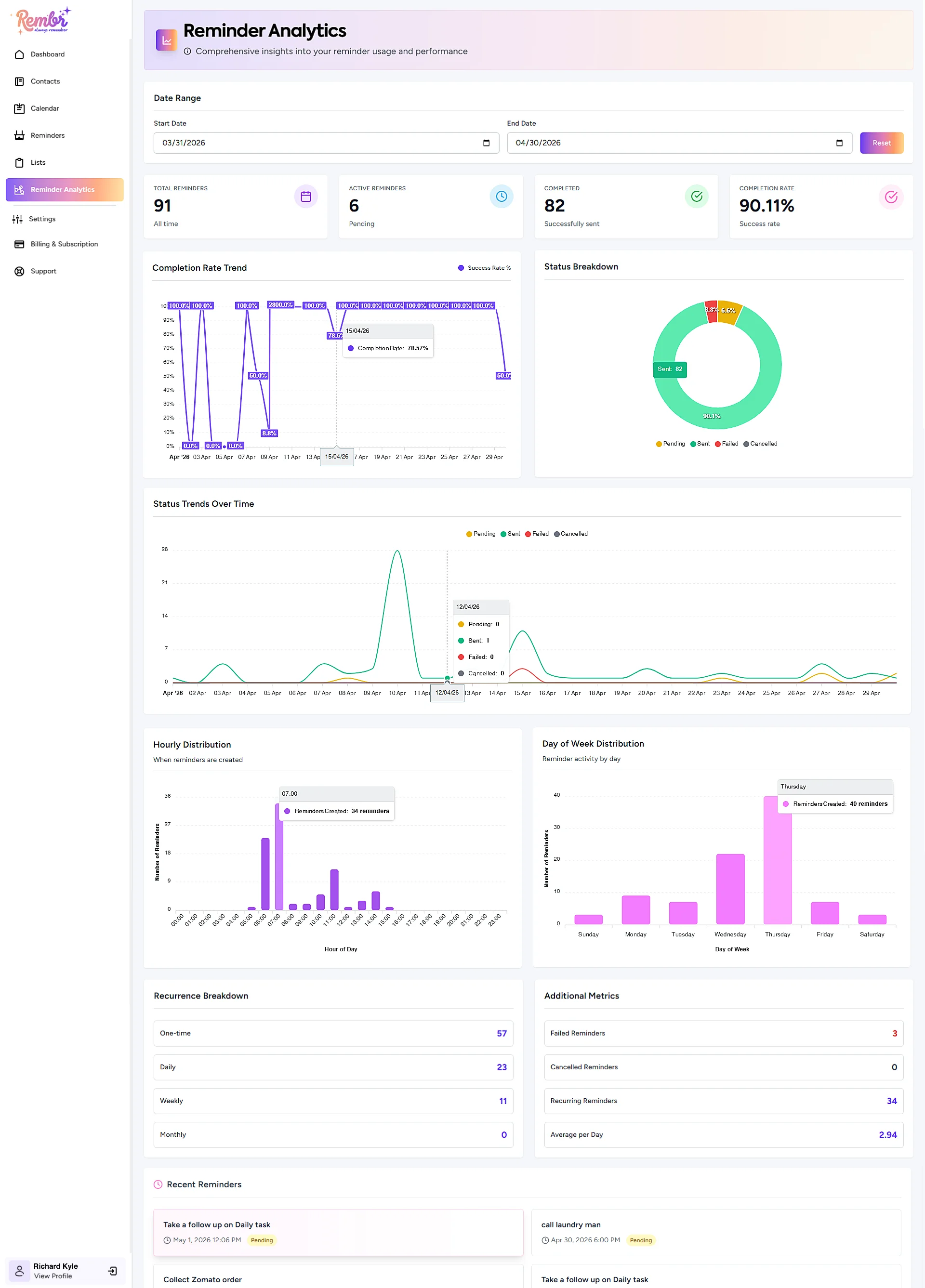
High fidelity designs
Development
We have used the most suitable technologies that would meet the requirements of this product. We have chosen this tech stack on the basis of scalability and efficiency.
 Vue JS
 MySQL
MySQL
 Figma
Figma
 Illustrator
 Photoshop
 Laravel
 AWS
AWS
 Stripe
 OpenAI
 WhatsApp API
The result
RembrAI successfully delivered a unified memory system directly within WhatsApp, transforming how users capture and retrieve information without leaving their everyday conversations. By embedding memory into a familiar interface, the platform enabled seamless capture across chats, voice notes, images, and messages, while introducing context-driven recall without manual organization. Users could simply ask within WhatsApp and instantly retrieve what they needed.
This approach improved workflow continuity by removing the need to switch between apps, keeping information accessible exactly where it was originally shared or discussed. Content remained meaningful over time, as RembrAI preserved context from conversations, making recall more accurate and actionable. The familiar WhatsApp environment also reduced onboarding friction, allowing users to adopt the system naturally as part of their daily communication habits.
Early usage indicated a clear reduction in cognitive load, with users spending less time searching and more time executing tasks. Projected outcomes showed up to 40% faster information retrieval, 30% reduction in tool-switching time, and significantly higher consistency in capturing and reusing information across daily workflows.