
Occupy360 - A Unified Property Management Platform
Occupy360 is a unified property operations platform designed to centralize tenant, maintenance, and portfolio workflows, delivering real-time control and operational clarity for real estate owners and managers.
Book a Demo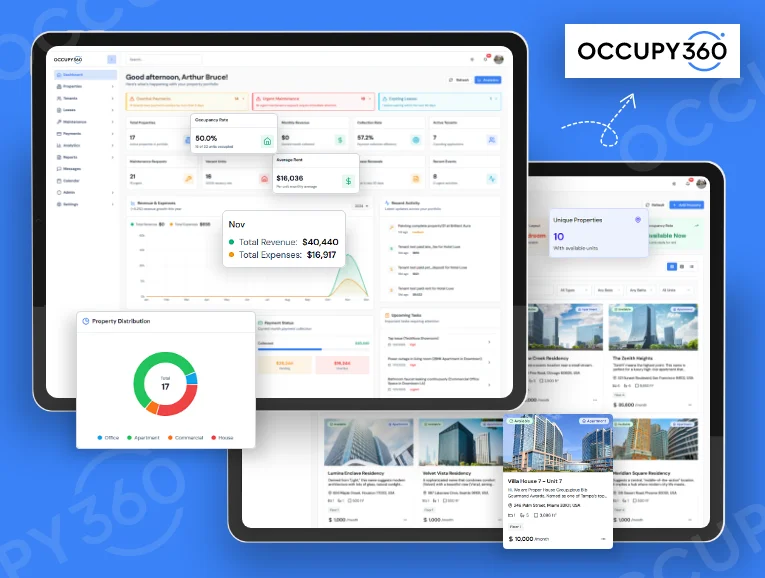
About the project
Occupy360 is a market-ready property operations platform built to simplify and standardize how real estate portfolios are managed at scale. It centralizes tenant interactions, maintenance workflows, financial oversight, and operational visibility into a single system. Designed for property owners, managers, and operations teams, the platform replaces fragmented tools with structured, real-time control. The result is faster operations, clearer accountability, and consistent service delivery across properties.
Challenge
Property management teams continue to rely on fragmented systems, manual coordination, and delayed reporting to run complex portfolios. Existing tools focus narrowly on tenants or maintenance, lacking portfolio-level control. Codiant identified a clear gap for a unified, operations-first platform that delivers real-time visibility, standardized workflows, and scalable governance.
Approach
Codiant’s product, design, and engineering teams collaborated closely to shape Occupy360 into a focused, market-ready platform. The approach emphasized deep workflow analysis, strict feature prioritization, and iterative development. Agile sprints enabled rapid validation of core modules, while continuous feedback ensured the platform remained operationally practical, scalable, and aligned with real-world property management needs.
Discovery phase
Market Research
The Gap
Most property management solutions address isolated functions but fail to provide unified operational control. Occupy360 fills this gap by centralizing tenant, maintenance, financial, and portfolio workflows into a single platform - enabling consistency, visibility, and scalability that fragmented tools cannot deliver.
Audience Struggles
Fragmented Operations: Over 60% of property teams used disconnected systems, slowing reporting and decision-making.
Maintenance Delays: Nearly 45% of maintenance requests closed late due to poor coordination and visibility.
Cash Flow Gaps: Around 38% of operators lacked real-time rent visibility, weakening cash flow control.
Opportunity
Property operators lacked a single system capable of managing tenants, maintenance, and portfolio operations together. Existing tools solved isolated problems, creating inefficiencies and cost overhead. Occupy360 addressed this gap by unifying operational workflows into one scalable, automation-ready platform.
Execution Timeline
1. Research & Discovery
2. Structure & Concept
3 Weeks3. Design & Prototyping
4 Weeks4. Development & Testing
6 WeeksResearch Phase
Codiant conducted structured market and user research to validate operational pain points across property managers and portfolio owners. Analysis focused on workflow fragmentation, adoption resistance, and tooling costs. Findings highlighted demand for a centralized platform that balanced functionality with usability, without increasing operational complexity.
Property Operations Workflow Insights
Real estate operations teams juggle tenants, maintenance, finances, and compliance daily. The table below outlines common operational challenges and how Occupy360 converts them into structured, scalable outcomes across property portfolios.
| Tasks | Emotions | Operational Reality | Challenges | How Occupy360 Helps |
|---|---|---|---|---|
| Tenant Requests & Queries | 😣 Overwhelmed | High volume, repetitive | Requests arrive via calls, emails, and messages with no single tracking system. | Centralized request management captures, tracks, and resolves all tenant issues in one place. |
| Lease Management | 😟 Anxious | Time-sensitive, document-heavy | Manual tracking of renewals and expiries leads to missed deadlines and revenue risk. | Digital lease workflows provide visibility into active, expiring, and renewed leases. |
| Maintenance Coordination | 😤 Frustrated | Reactive, fragmented | Lack of coordination between managers and technicians delays resolution. | Structured maintenance workflows assign, track, and close tasks with real-time updates. |
| Technician Allocation | 😕 Pressured | Resource constrained | Manual assignment results in uneven workload and slower response times. | Role-based assignment logic improves technician utilization and response efficiency. |
| Rent Collection Tracking | 😬 Concerned | Revenue-critical | Limited visibility into dues and payment status weakens cash flow control. | Real-time payment dashboards track collections, overdue amounts, and timelines. |
| Portfolio Oversight | 😓 Stretched | Multi-property complexity | Data spread across systems limits portfolio-level visibility. | Unified dashboards deliver property and portfolio performance insights instantly. |
| Communication Management | 😖 Disconnected | Unstructured, inconsistent | Updates shared across channels cause misalignment and delays. | Built-in messaging and notifications keep all stakeholders aligned in real time. |
| Compliance & Reporting | 😰 Cautious | Audit-driven | Manual reporting increases effort and compliance risk. | Centralized records and reporting simplify audits and operational reviews. |
User Persona Development

Michael Carter
38
Senior Property Manager
Austin, Texas, USA
Persona Snapshot:
A portfolio-focused property manager responsible for maximizing asset performance while maintaining operational efficiency across multiple residential and commercial properties.
Goals:
Improve portfolio-level visibility and operational efficiency.
Reduce issue resolution time without increasing headcount.
Maintain consistent service quality across properties.
Challenges:
Fragmented tools limiting real-time oversight.
Manual coordination between tenants, technicians, and finance teams.
Delayed reporting impacting decision-making.
How Occupy360 Helps:
- Unified portfolio dashboard 💡 → Faster decisions and stronger operational control 📈.
- Structured maintenance workflows 💡 → Reduced downtime and service delays 📈.
- Real-time financial visibility 💡 → Improved cash flow tracking and forecasting 📈.

Sarah Mitchell
42
Director of Asset Management
Chicago, Illinois, USA
Persona Snapshot:
A data-driven asset leader focused on improving portfolio profitability, reducing risk, and maintaining financial control across large multi-property real estate investments.
Goals:
Improve portfolio profitability and cash flow predictability.
Gain real-time visibility into asset performance.
Support scalable growth without operational complexity.
Challenges:
Limited visibility into real-time financial and operational data.
Delayed reporting across properties and teams.
Inconsistent operational standards impacting returns.
How CalCounts Helps:
- Portfolio-wide performance dashboards 💡 → Faster financial and asset-level decisions 📈.
- Centralized collections tracking 💡 → Improved cash flow control and forecasting 📈.
- Standardized operational workflows 💡 → Reduced risk and consistent asset performance 📈.
Ideation
The ideation phase was driven by validated persona insights across property managers, asset owners, and administrators. Each concept focused on reducing operational friction while improving speed, clarity, and decision confidence. Brainstorming centered on real-world scenarios such as handling maintenance volume, tracking renewals, and monitoring portfolio health. Early sketches emphasized task-first navigation and simplified workflows to minimize cognitive load. Every idea was mapped to measurable operational outcomes before moving forward.
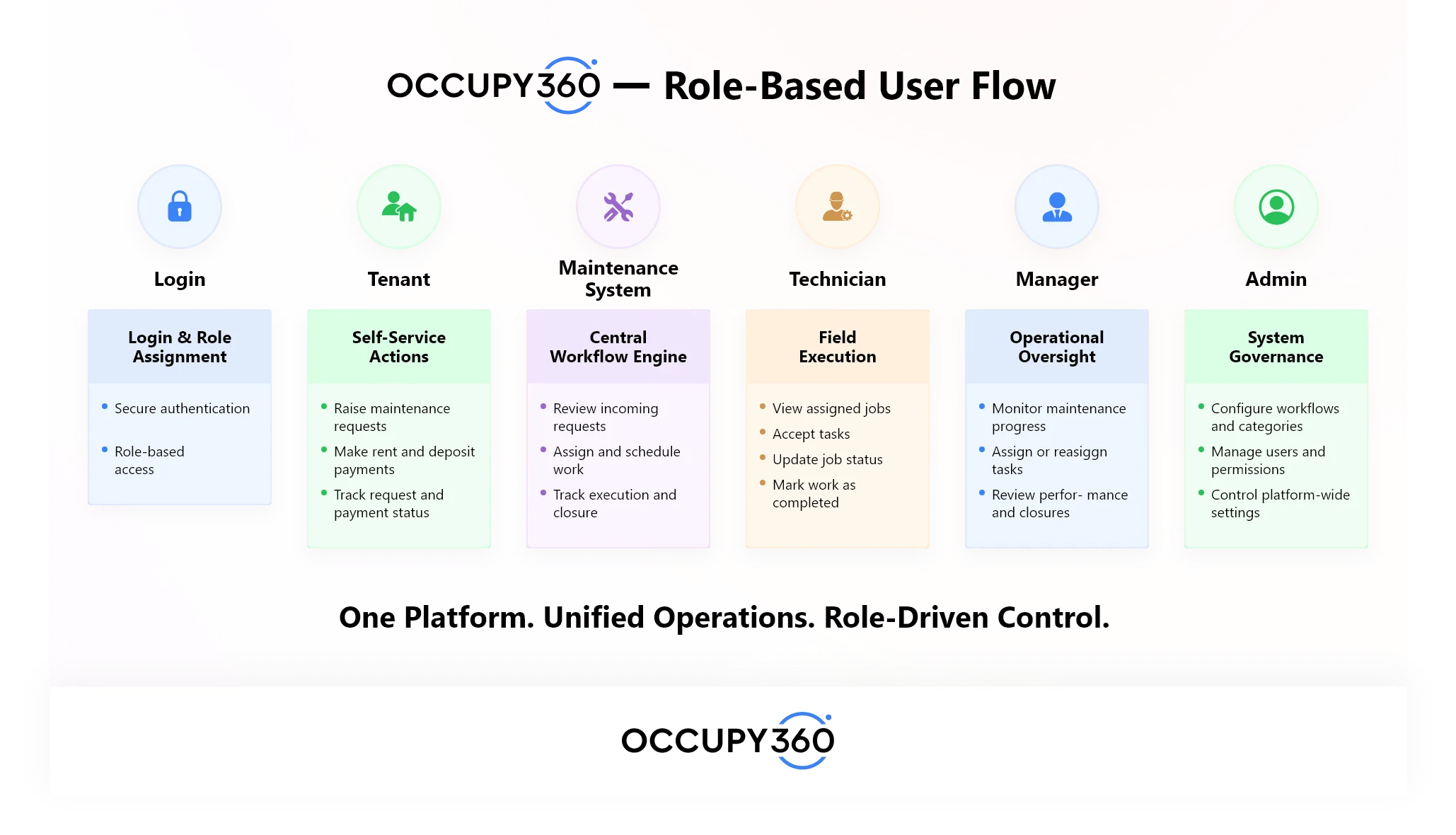
User flow
Wireframing
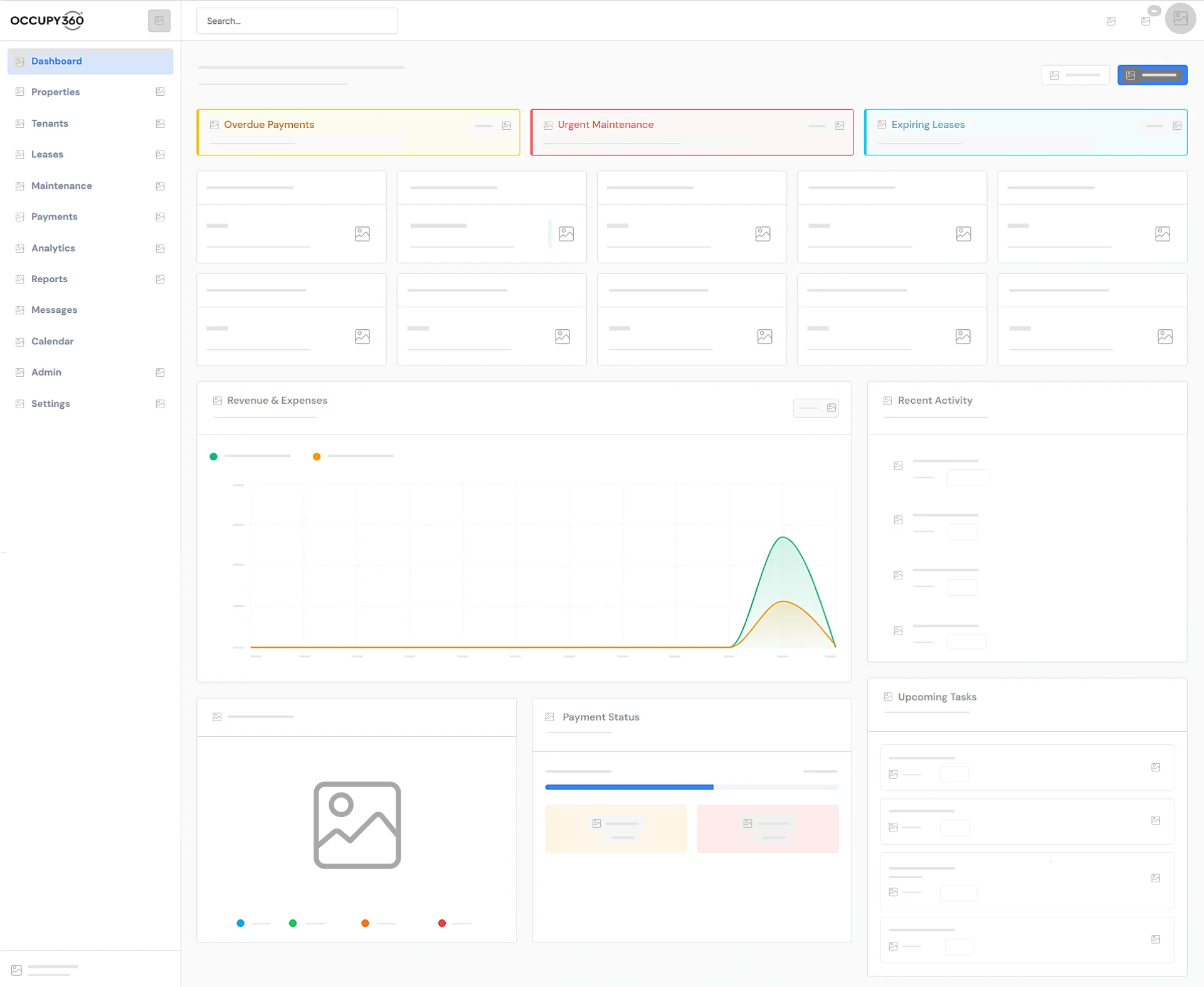
Feature Concepts
1. Tenant Self-Service Portal
Tenants can view lease details, raise maintenance requests, make payments, and receive notifications through web and mobile applications.
2. Maintenance Request & Tracking System
Maintenance requests are logged, categorized, tracked in real time, and closed with status updates and completion records.
3. Technician Job Management
Technicians receive job assignments, update work status, upload completion notes and photos, and maintain job history records.
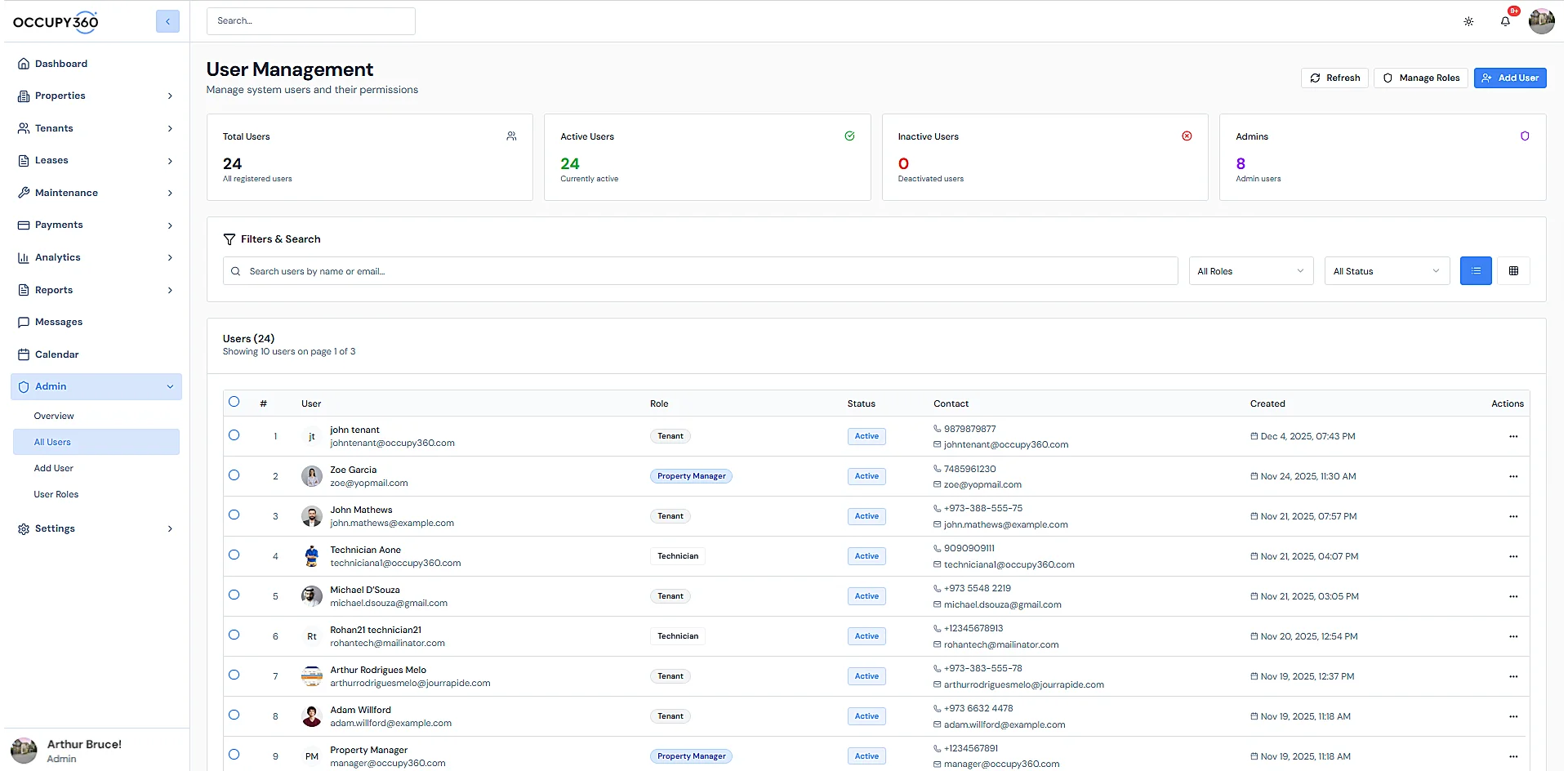
4. Role-Based Access & Dashboards
Separate dashboards exist for tenants, technicians, managers, and administrators based on defined roles and permissions.
5. Property & Unit Management
Managers can create properties, define units, configure unit details, and manage property listings within the system.
6. Lease & Tenancy Management
Lease agreements, tenancy records, renewals, and historical documents are stored and managed digitally.
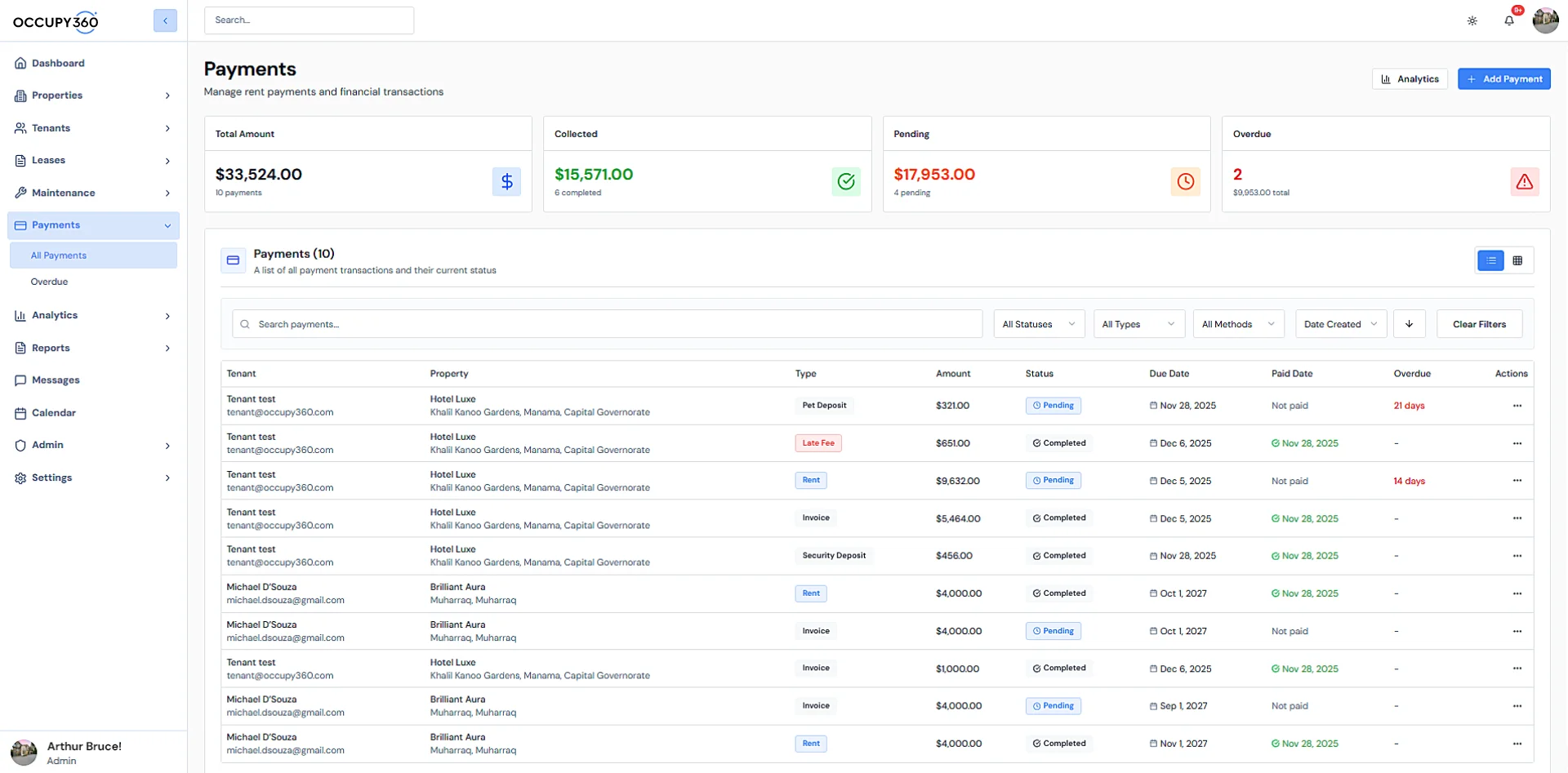
7. Payment & Collection Tracking
The platform tracks rent payments, service charges, overdue amounts, and payment status across properties.
8. Admin Configuration & Governance Controls
Admins manage system settings, users, permissions, workflows, and organization-wide operational rules via web access.
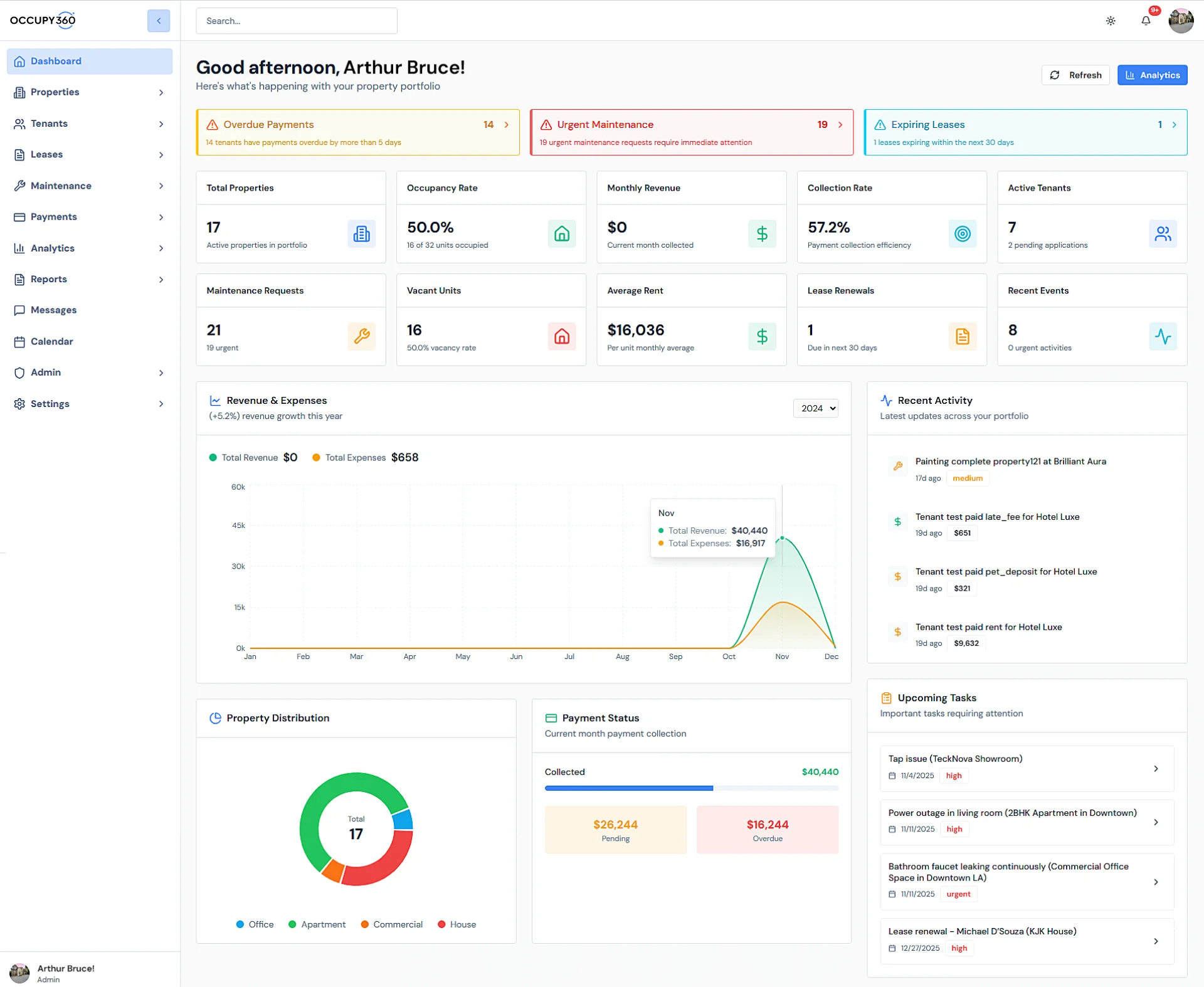
High fidelity designs
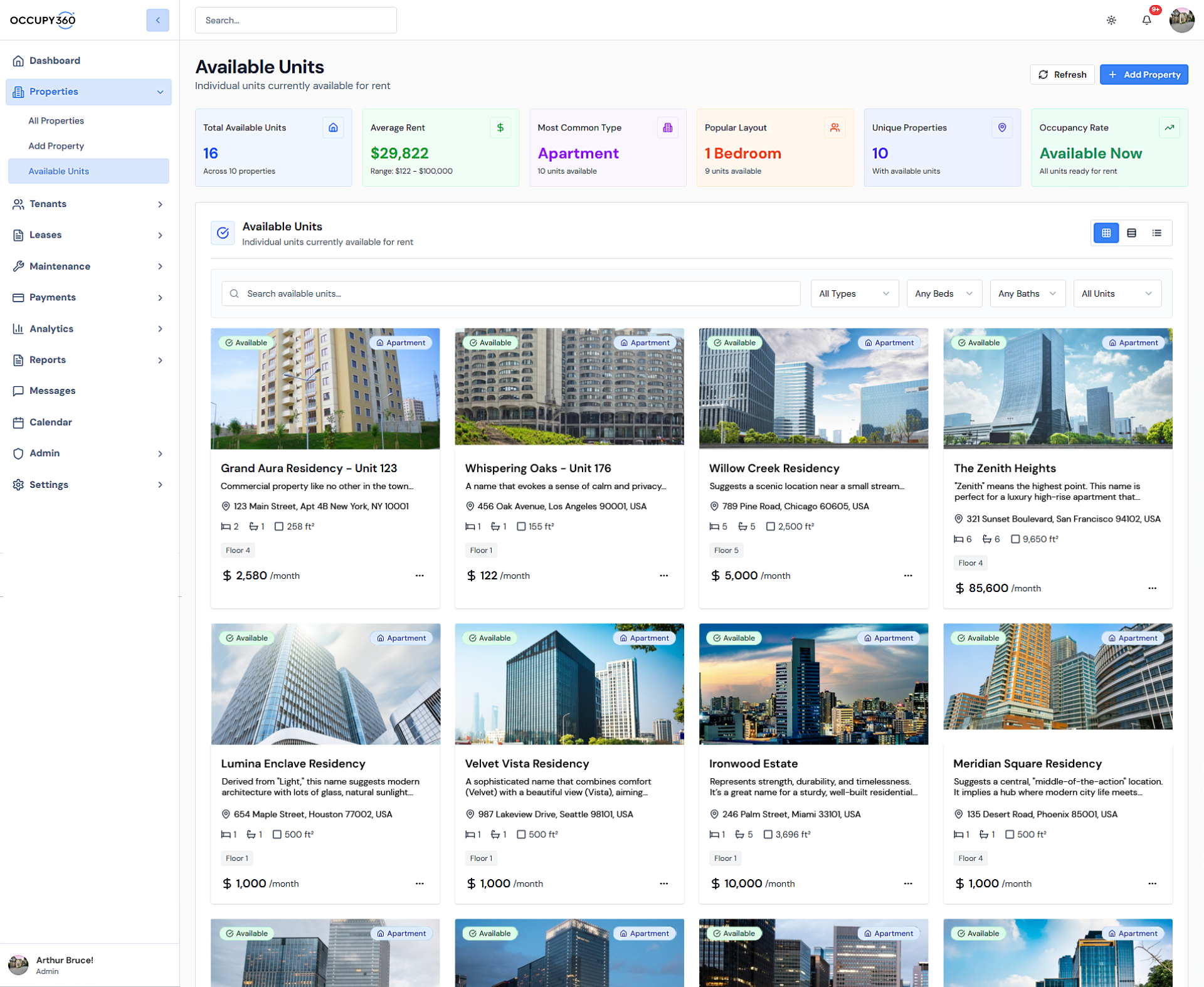
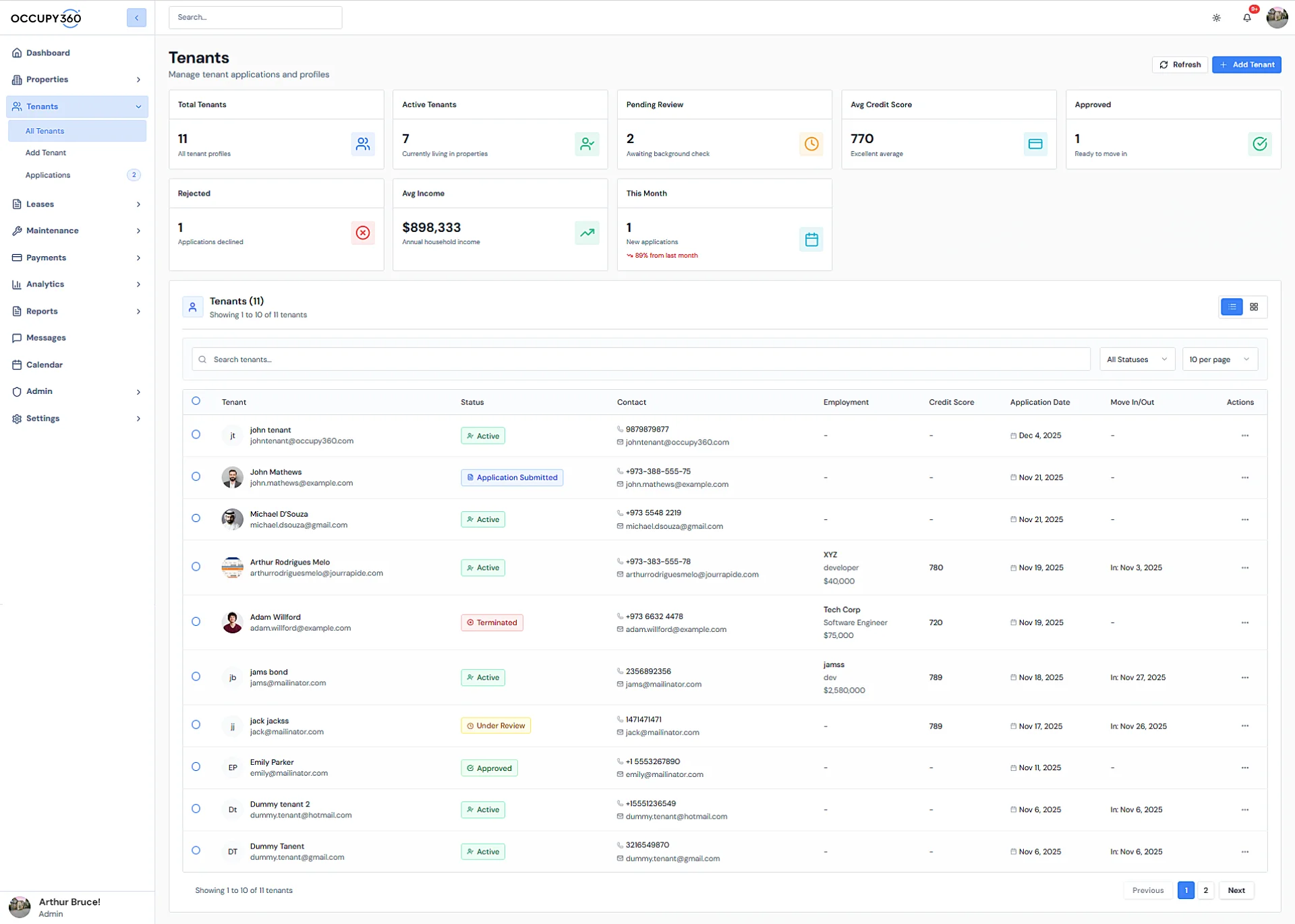
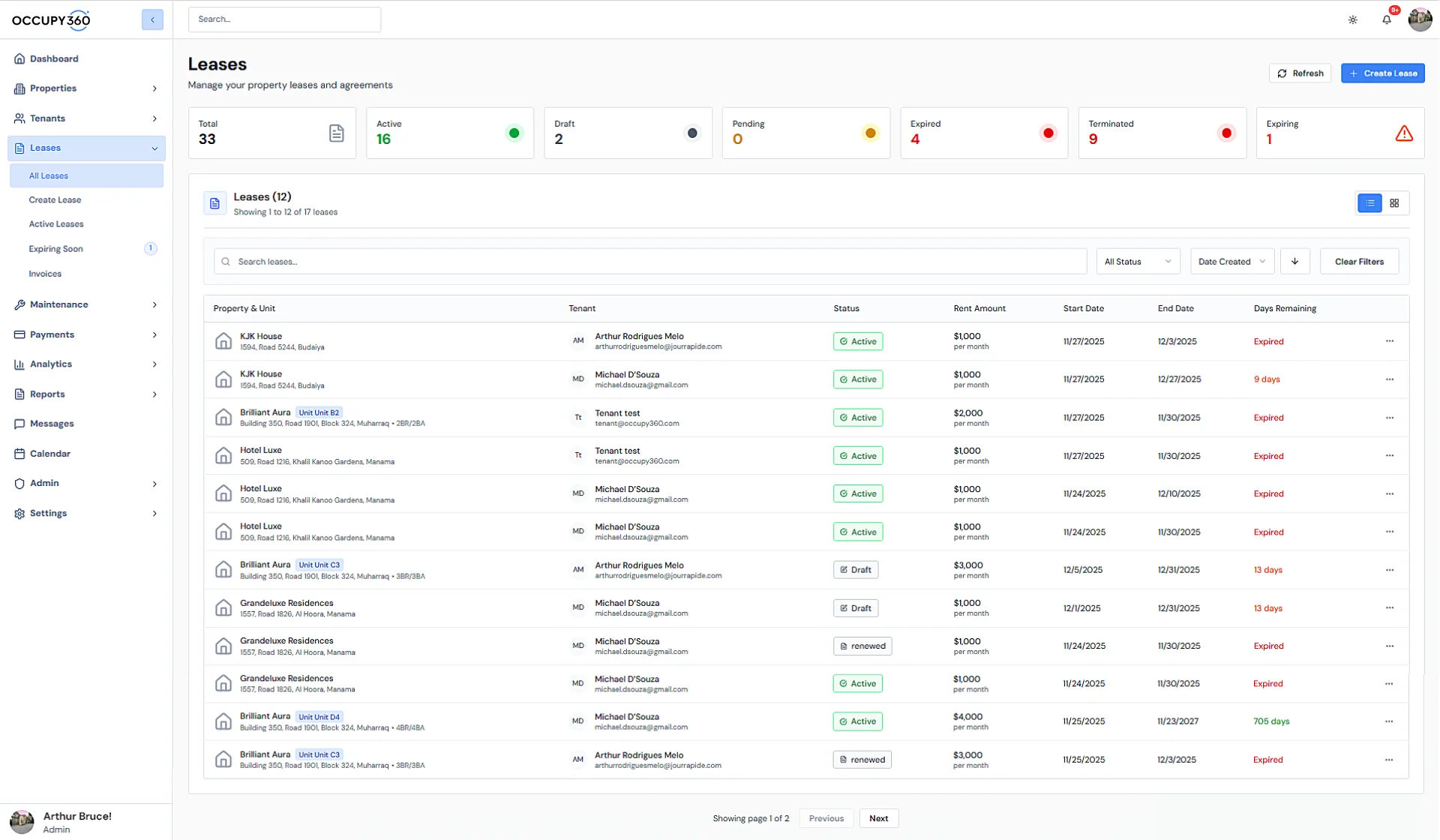
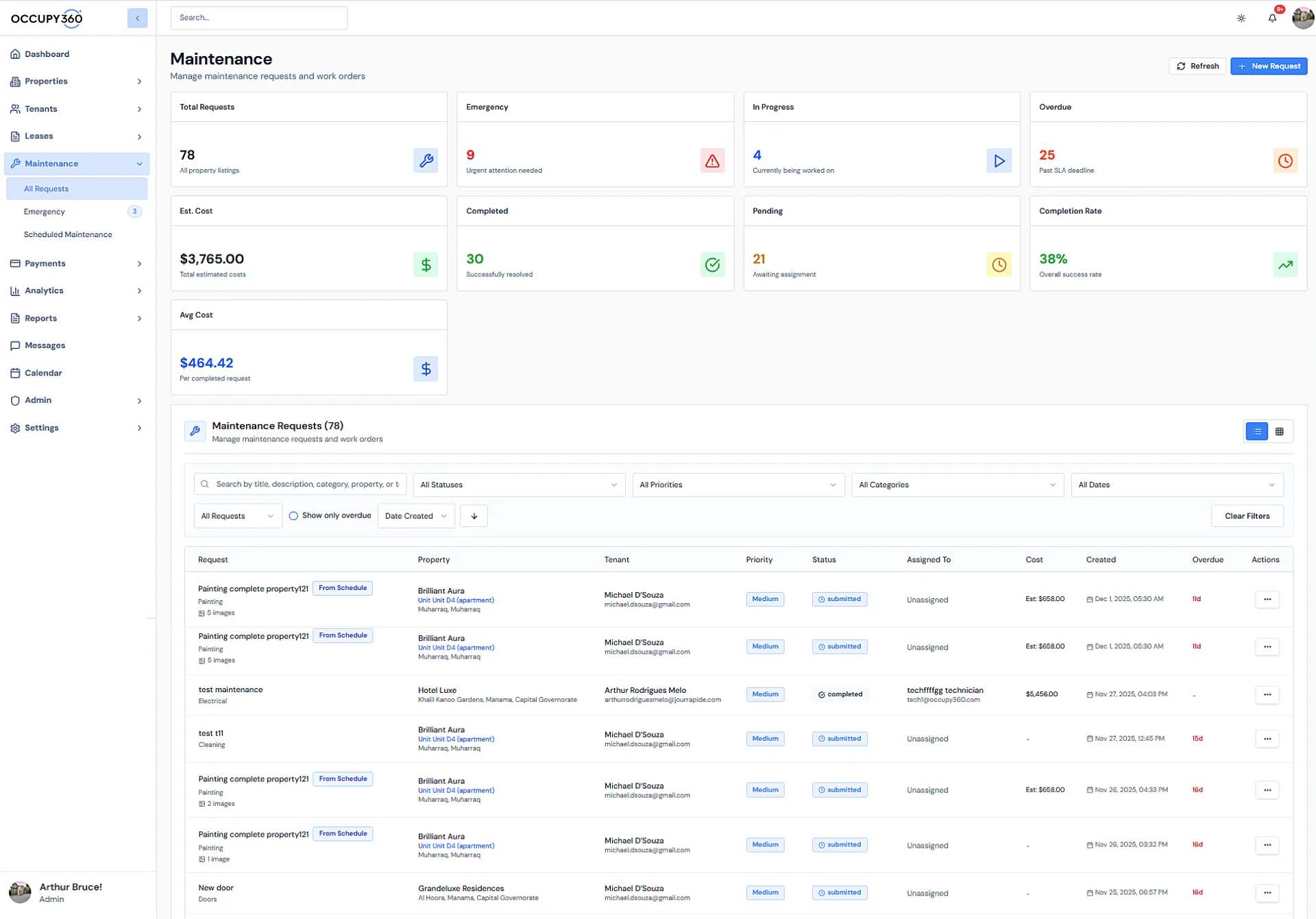
Development
To ensure Occupy360 met the operational demands of modern property management, Codiant’s product and engineering teams built a scalable, modular platform focused on reliability and clarity. The development emphasized centralized data management, real-time operational visibility, and role-based workflows, enabling efficient property, tenant, maintenance, and financial management across growing portfolios.
 Flutter
  HTML5
HTML5 Next.js
  MySQL
MySQL  Linux
Linux  iOS
iOS  Android
 AWS
AWS  Microsoft Teams
  SAP
SAP  Stripe
 AWS SES
 Twilio
 Frontend : Used to build the web-based admin and manager dashboards, enabling fast navigation, responsive layouts, and real-time visibility across properties, tenants, leases, and payments.
Mobile Applications: Powers mobile access for tenants, managers, and technicians, enabling on-the-go maintenance requests, status updates, notifications, and property interactions.
Backend Frameworkt: Handles core business logic, workflow processing, role-based access control, and secure coordination between properties, tenants, leases, maintenance, and payments.
Database: Stores structured operational data including property records, tenant profiles, lease agreements, maintenance requests, payment transactions, and user roles.
Platform Environment: Provides a stable, secure server environment for hosting application services and ensuring consistent system performance.
Cloud Infrastructure: Supports staging and production environments, scalable hosting, data availability, and reliable performance across growing property portfolios.
Third-Party Integrations: Enables enterprise-level financial and operational data synchronization where required by organizational workflows.
Payment Gateway Integration: Facilitates rent payments, security deposits, invoice tracking, and payment status monitoring directly within the platform.
Communication Services: Used for automated emails, alerts, reminders, and SMS notifications related to payments, maintenance updates, lease events, and system communications.
Project Collaboration: Supports internal coordination and project management during development, deployment, and operational support phases.
Results
Occupy360 was successfully delivered as a market-ready, end-to-end property operations platform designed to replace fragmented tools with a single, centralized system.
The solution unified property management, tenant operations, maintenance workflows, payments, and administrative controls into one consistent digital experience.
Post-implementation, property teams gained clearer operational visibility and tighter control across portfolios, reducing day-to-day coordination effort and manual follow-ups.
Routine workflows - such as rent collection, lease tracking, maintenance assignments, and status monitoring - became faster, more predictable, and easier to manage at scale.
From a business impact perspective, Occupy360 enabled up to 30–35% improvement in operational productivity, driven by centralized dashboards and standardized workflows.
Maintenance turnaround times were reduced by 25–40%, while payment tracking and collections became more transparent, improving cash-flow visibility. Onboarding new properties and users required 50% less setup time compared to multi-tool environments.
Most importantly, the platform positioned property owners and managers to scale operations confidently, without increasing administrative overhead.
Occupy360 now serves as a stable digital foundation for efficient portfolio growth, consistent tenant experiences, and data-backed operational decision-making.