GeniusMesh – Building an Intelligent Talent Platform with Dedicated AI Specialists
GeniusMesh hired dedicated AI developers, full-stack engineers, and product designers from Codiant to build an intelligent leadership platform for executive hiring, talent assessment, succession planning, coaching, and workforce intelligence.
Book a Demo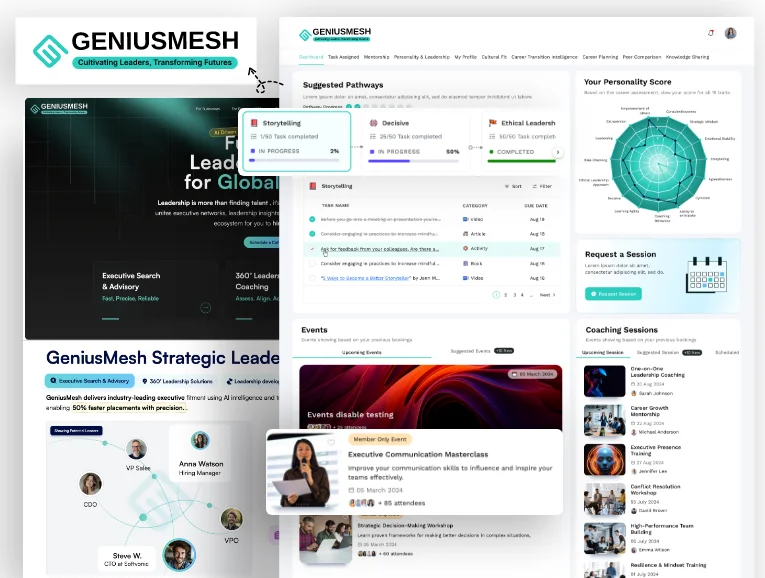
About the project
GeniusMesh is an AI-powered executive leadership and talent intelligence platform created to help enterprises discover, assess, hire, develop, and retain high-impact leaders. The product combines executive search, behavioral intelligence, succession planning, leadership coaching, risk evaluation, and talent analytics within one connected environment.
To turn this vision into a scalable enterprise platform, GeniusMesh required specialists across agentic AI, product design, cloud-native engineering, microservices, data processing, candidate intelligence, and workflow automation.
The company hired dedicated designers and AI developers from Codiant to expand its product team and support the design and engineering of a platform serving enterprises, candidates, leadership professionals, service providers, and internal administrators.
Challenge
GeniusMesh was building a platform around decisions that directly influence organizational performance, leadership continuity, and executive hiring risk. The product needed to process complex candidate information, evaluate leadership attributes, support intelligent talent discovery, coordinate advisory services, and present decision-ready insights to enterprise users.
Delivering these capabilities required more than conventional application development. The platform needed AI engineers who could structure autonomous workflows and intelligent recommendations, product designers who understood data-heavy enterprise experiences, and backend specialists capable of building independently scalable services.
Recruiting each capability internally would have extended the product timeline and increased coordination overhead. GeniusMesh needed an experienced augmentation team that could integrate with its existing stakeholders, understand its leadership-intelligence model, and take responsibility for both user experience and technical execution.
The primary challenge was to establish the right multidisciplinary capacity for building a trustworthy AI-led platform without fragmenting the product across disconnected design, AI, and engineering teams.
Approach
Codiant formed a dedicated product augmentation team comprising UI/UX designers, AI developers, frontend engineers, backend developers, Python specialists, cloud engineers, and quality assurance professionals.
The team worked alongside GeniusMesh’s product stakeholders to understand the platform’s leadership frameworks, candidate journeys, enterprise decision processes, service-provider interactions, and data requirements. Instead of approaching the engagement as isolated feature delivery, the augmented team organized the product around connected talent-intelligence journeys.
Designers translated executive hiring and leadership-development processes into role-specific interfaces. AI developers focused on intelligent recommendations, workflow orchestration, candidate analysis, and decision-support capabilities. Engineering specialists established a microservice-based architecture so candidate management, communication, analytics, service-provider operations, and AI functions could evolve independently.
Regular reviews helped GeniusMesh retain control over product priorities while Codiant’s specialists provided the execution capacity required to move design and development forward.
Discovery phase
The augmented team began by studying how enterprises identify leadership gaps, assess executive suitability, compare candidates, plan succession, engage leadership experts, and monitor talent risks.
Discovery also examined the needs of executives and candidates entering the platform. Their experience required clarity around profile creation, professional information, assessments, opportunities, recommendations, and engagement activity.
The design and engineering teams jointly mapped critical user roles, information dependencies, decision points, and AI-assisted actions. This helped define which experiences required human review, where automation could accelerate work, and how leadership intelligence should be communicated without overwhelming decision-makers.
These findings became the basis for the interface structure, service boundaries, AI workflows, data models, communication mechanisms, and access controls.
Market Research
Executive hiring and leadership planning often depend on information distributed across recruitment systems, assessment platforms, professional networks, coaching providers, spreadsheets, and internal talent records.
This separation makes it difficult for organizations to build a complete view of leadership potential, readiness, risk, and long-term suitability. Executive search may solve an immediate vacancy, while succession planning, coaching, assessment, and retention remain managed through separate processes.
GeniusMesh was envisioned as a connected leadership environment where enterprises could move from talent discovery to assessment, selection, development, and succession planning using consistent intelligence.
Building such a platform required an augmentation partner capable of combining AI engineering, enterprise UX, distributed architecture, cloud deployment, and talent-data management within one coordinated delivery model.
The Gap
Many recruitment products are optimized for high-volume hiring, applicant tracking, or job distribution. They are not designed around the deeper behavioral, strategic, and organizational factors involved in executive leadership decisions.
Leadership assessment tools may provide evaluation data, but they often remain separate from candidate discovery, coaching engagement, succession readiness, and workforce planning. This limits the organization’s ability to connect individual insights with broader leadership strategy.
GeniusMesh identified a product gap for unified leadership intelligence and a resource gap in the specialist capabilities required to build it.
Codiant’s augmented team addressed the second gap by bringing product designers, AI specialists, and full-stack developers into a coordinated engagement aligned with the platform’s long-term vision.
Audience Struggles
Incomplete Leadership Visibility: Enterprises struggle to combine executive profiles, assessments, readiness indicators, performance factors, and organizational requirements into one decision view.
High-Stakes Hiring Decisions: Leadership appointments carry significant operational and financial consequences, yet decision-makers may rely on fragmented evidence and subjective comparisons.
Weak Succession Preparedness: Organizations may identify potential successors but lack structured intelligence around readiness, development needs, and leadership risk.
Development Requirements
Agentic AI Expertise: GeniusMesh required developers capable of designing intelligent workflows, recommendations, and decision-support processes using Microsoft Azure AI.
Enterprise Product Design: Designers needed to simplify complex leadership information, assessments, dashboards, and role-based workflows.
Distributed Engineering Skills: The product required specialists across React.js, Node.js, Python, MongoDB, API gateways, messaging systems, and cloud infrastructure.
Integrated Team Augmentation: Designers and developers had to operate as one extension of the client’s team rather than as disconnected delivery resources.
User Insights
| Tasks | Emotions | Challenges | Opportunities |
|---|---|---|---|
| Executive Talent Discovery | Pressured | Hiring teams must locate relevant leadership candidates across extensive and inconsistent talent sources. | AI-assisted matching can surface candidates aligned with role expectations and organizational priorities. |
| Candidate Comparison | Cautious | Decision-makers need to compare professional history, leadership attributes, assessments, and potential risks objectively. | Structured intelligence views can make candidate evaluation more consistent and transparent. |
| Leadership Assessment | Analytical | Behavioral and performance information may be difficult to interpret without context or consolidated scoring. | Clear assessment dashboards can translate complex evaluation data into actionable insights. |
| Succession Planning | Concerned | Organizations may know who their potential successors are but lack evidence of readiness and development needs. | Readiness indicators can support stronger succession pipelines and targeted development planning. |
| Executive Development | Motivated | Leaders need relevant coaching and development support based on their specific capabilities and career direction. | Personalized recommendations can connect leaders with suitable programs and experts. |
| Leadership Risk Review | Vigilant | Enterprises need to identify potential leadership gaps before they affect continuity or business performance. | Risk intelligence can highlight vulnerabilities, dependencies, and priority actions. |
| Service Engagement | Selective | Organizations and leaders may struggle to identify suitable coaches, advisors, or leadership specialists. | A structured service-provider ecosystem can support more relevant expert engagement. |
| Workforce Intelligence | Strategic | Talent information remains difficult to convert into decisions about hiring, retention, and organizational planning. | Unified analytics can support evidence-based leadership and workforce decisions. |
Opportunity
By augmenting its team with Codiant’s designers and AI developers, GeniusMesh could advance a specialized enterprise product without independently recruiting every required capability.
The engagement provided immediate access to professionals experienced in AI workflows, product interface design, frontend development, microservices, data processing, cloud infrastructure, and system integration. GeniusMesh could continue directing its leadership methodology and commercial priorities while the augmented team translated those requirements into working product experiences.
This created an opportunity to build the platform through a flexible delivery model in which resources could be aligned with evolving design, AI, platform, and deployment priorities.
Execution Timeline
1. Team Onboarding
2. UX Research
Phase 23. Interface Design Prototyping
Phase 34. Agentic AI Development
Phase 45. Integration and Cloud Deployment
Phase 5Research Phase
The augmented team studied the information and actions required by each platform participant.
Enterprise users needed talent discovery, candidate evaluation, leadership assessments, succession visibility, risk intelligence, and organizational reporting. Candidates required clear profile, assessment, opportunity, and engagement journeys. Service providers needed tools to manage their offerings and professional interactions. Administrators required oversight across users, data, workflows, communications, and platform activity.
Codiant’s designers converted these findings into navigation models, dashboard structures, information hierarchies, and role-specific interactions.
In parallel, the engineering team mapped each experience to relevant microservices, databases, APIs, communication events, and AI processes. This joint research approach ensured that interface decisions remained technically practical and that backend services reflected real user journeys.
Visual Research
The GeniusMesh interface needed to communicate sophisticated leadership intelligence without creating a dense or intimidating experience.
Codiant’s designers explored ways to organize candidate information, assessment outputs, recommendations, readiness indicators, and enterprise analytics through clear visual hierarchy. Particular attention was given to dashboard readability, comparison views, contextual actions, status communication, and role-based navigation.
The design system was planned to maintain consistency across enterprise, candidate, service-provider, and administrative experiences while allowing each role to access relevant information efficiently.
Visual decisions were reviewed with developers throughout the process so that components, data states, AI outputs, and service interactions could be implemented reliably within the platform architecture.
User Persona Development
The design and AI development teams used platform requirements to define representative personas that guided workflow design, dashboard priorities, and intelligent product interactions.

Lily Carter
43
Chief Human Resources Officer
New York, USA
Persona Snapshot:
A senior HR leader responsible for strengthening the executive pipeline, reducing leadership hiring risk, and ensuring that critical roles have credible succession options.
Goals:
Identify executive candidates aligned with business and leadership requirements
Compare leadership capabilities using consistent assessment information
Improve succession readiness across strategically important roles
Challenges:
Candidate intelligence is distributed across recruiters, assessment reports, and internal records
Leadership decisions require input from multiple stakeholders
Succession plans may exist without reliable readiness evidence
How GeniusMesh Helps:
- AI-powered discovery supports more focused executive talent identification
- Leadership assessments consolidate behavioral and performance intelligence
- Succession dashboards provide clearer visibility into readiness and pipeline strength

Lucas Hayes
39
Senior Business Leader
Chicago, USA
Persona Snapshot:
An experienced professional exploring executive opportunities while seeking objective insight into leadership strengths, development priorities, and long-term career readiness.
Goals:
Present a complete and credible executive profile
Understand leadership strengths and development opportunities
Access relevant roles, coaching, and professional growth support
Challenges:
Standard professional profiles do not fully represent leadership capability
Assessment results may lack clear developmental context
Coaching and opportunity discovery often happen through separate networks
How GeniusMesh Helps:
- Intelligent profiles bring professional history and leadership information together
- Assessment insights help clarify strengths, risks, and development priorities
- Integrated opportunities and coaching services support continued leadership growth
Ideation
The ideation process centered on a leadership intelligence model rather than a conventional recruitment funnel.
The team explored how candidate data, assessments, recommendations, succession plans, coaching services, and organizational insights could remain connected throughout the user journey. Enterprise users needed to move from a broad leadership need to focused discovery, evidence-based comparison, selection, and continued development.
Candidate journeys were designed around professional identity, assessment participation, opportunity relevance, and leadership growth. Service-provider workflows were aligned with advisory and coaching engagements, while administrative journeys focused on governance and operational control.
This approach allowed each module to contribute to a larger leadership decision system instead of functioning as an independent tool.
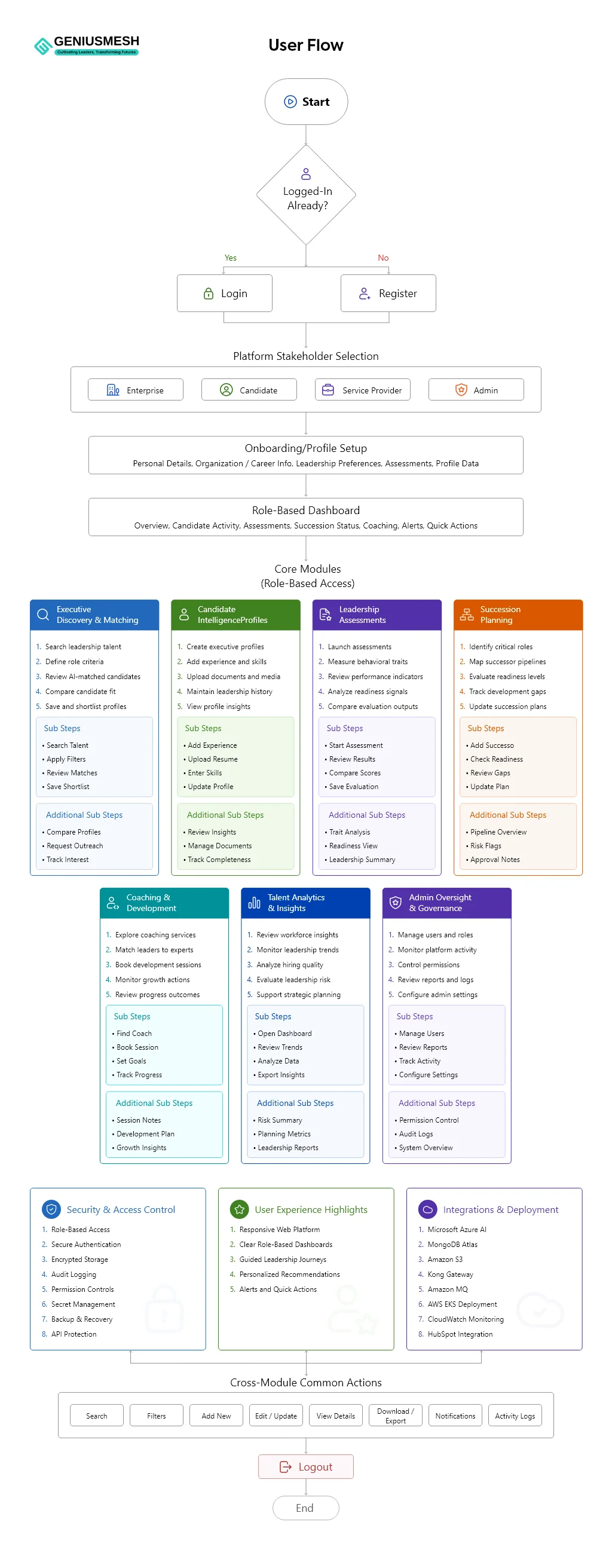
User flow
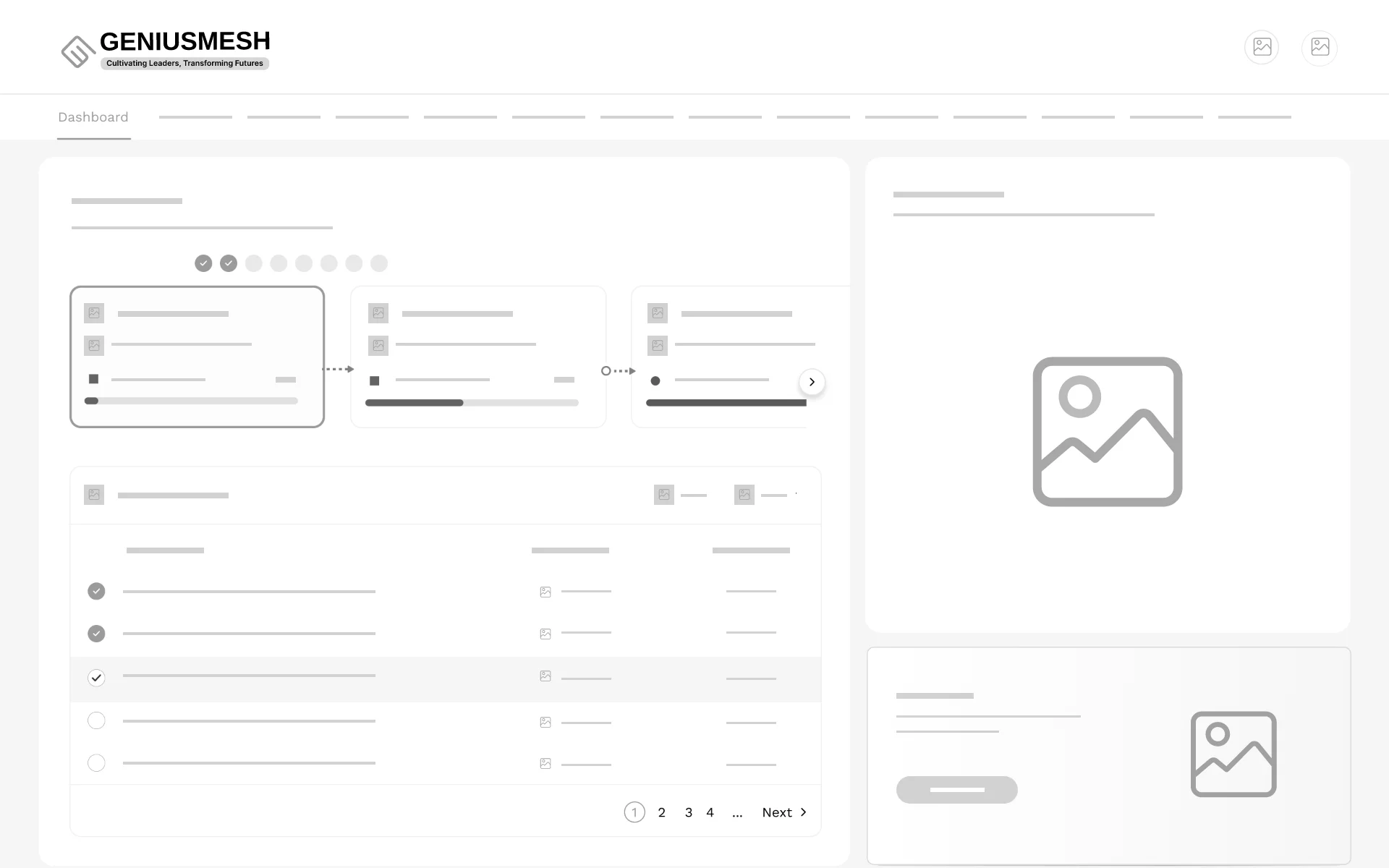
Wireframing
Feature concepts
1. AI-Powered Executive Discovery
Enable enterprises to identify relevant executive talent using intelligent search, profile information, leadership criteria, and recommendation-driven discovery.
2. Candidate Intelligence Profiles
Consolidate executive experience, professional information, leadership data, supporting documents, assessments, and engagement history within structured candidate records.
3. Intelligent Matching
Use AI-supported analysis to connect leadership requirements with candidates whose experience, attributes, and potential align with organizational expectations.
4. Leadership Assessment Management
Support behavioral, performance, and readiness assessments that help enterprises evaluate leadership capability beyond conventional résumé information.
5. Succession Planning Workspace
Allow organizations to identify potential successors, review readiness, recognize development gaps, and maintain stronger leadership pipelines.
6. Leadership Risk Intelligence
Help enterprise users examine leadership vulnerabilities, readiness concerns, concentration risks, and other factors affecting organizational continuity.
7. Executive Coaching and Development
Connect leaders and organizations with relevant coaching, advisory, and development programs based on identified needs and leadership goals.
8. Enterprise Talent Dashboard
Present candidate pipelines, assessment insights, succession indicators, recommendations, and workforce intelligence through a consolidated decision interface.
9. Service-Provider Workspace
Allow leadership coaches, advisors, and professional service providers to manage profiles, offerings, engagements, and platform interactions.
10. Communication and Notification System
Support email communication, alerts, status updates, and asynchronous platform notifications across user and system workflows.
11. Administrative Operations
Provide centralized control over users, permissions, candidates, providers, workflows, content, platform data, and operational monitoring.
12. Talent Analytics
Convert platform activity and leadership information into dashboards that support talent planning, organizational decisions, and executive workforce strategy.
High fidelity designs
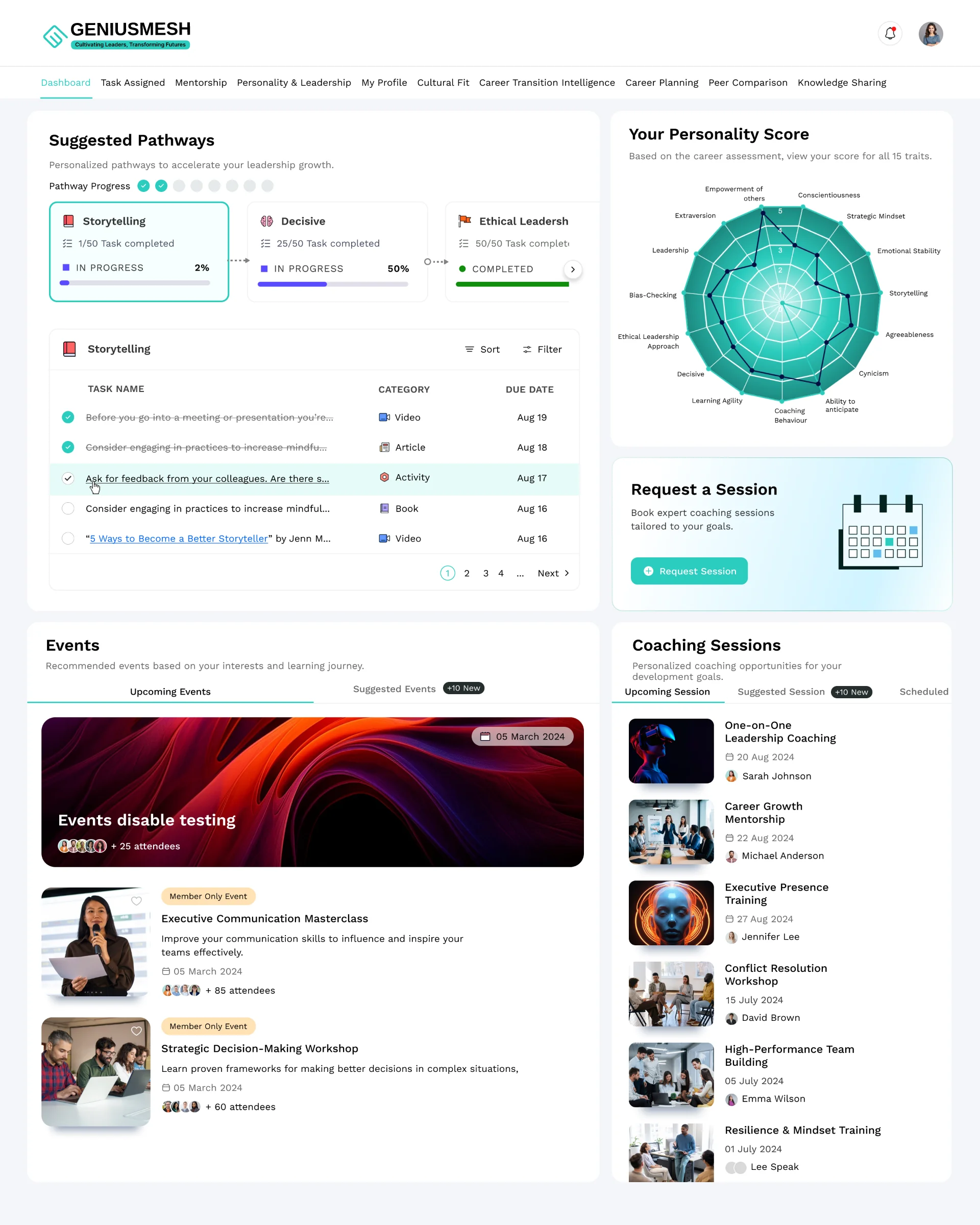
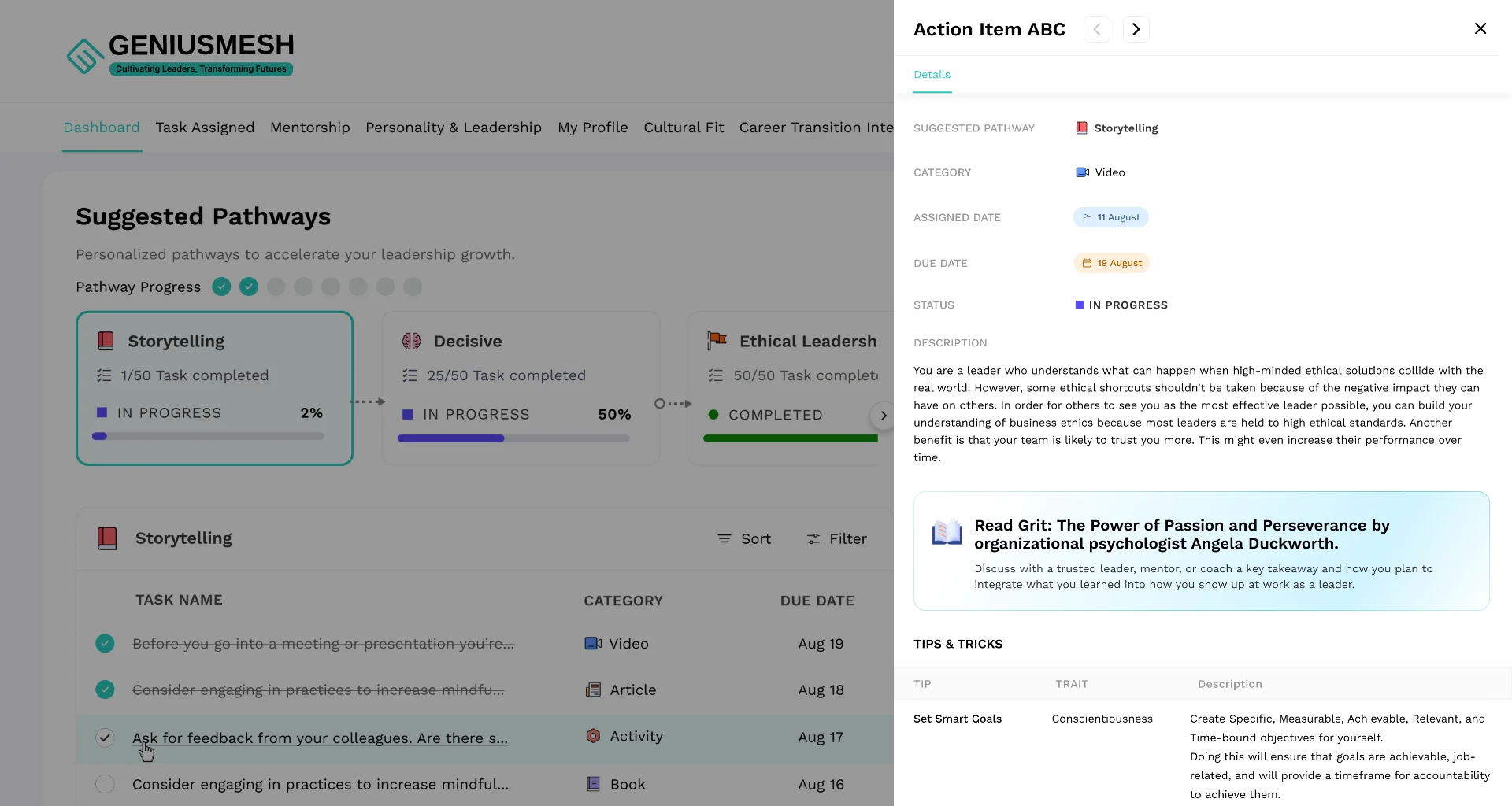
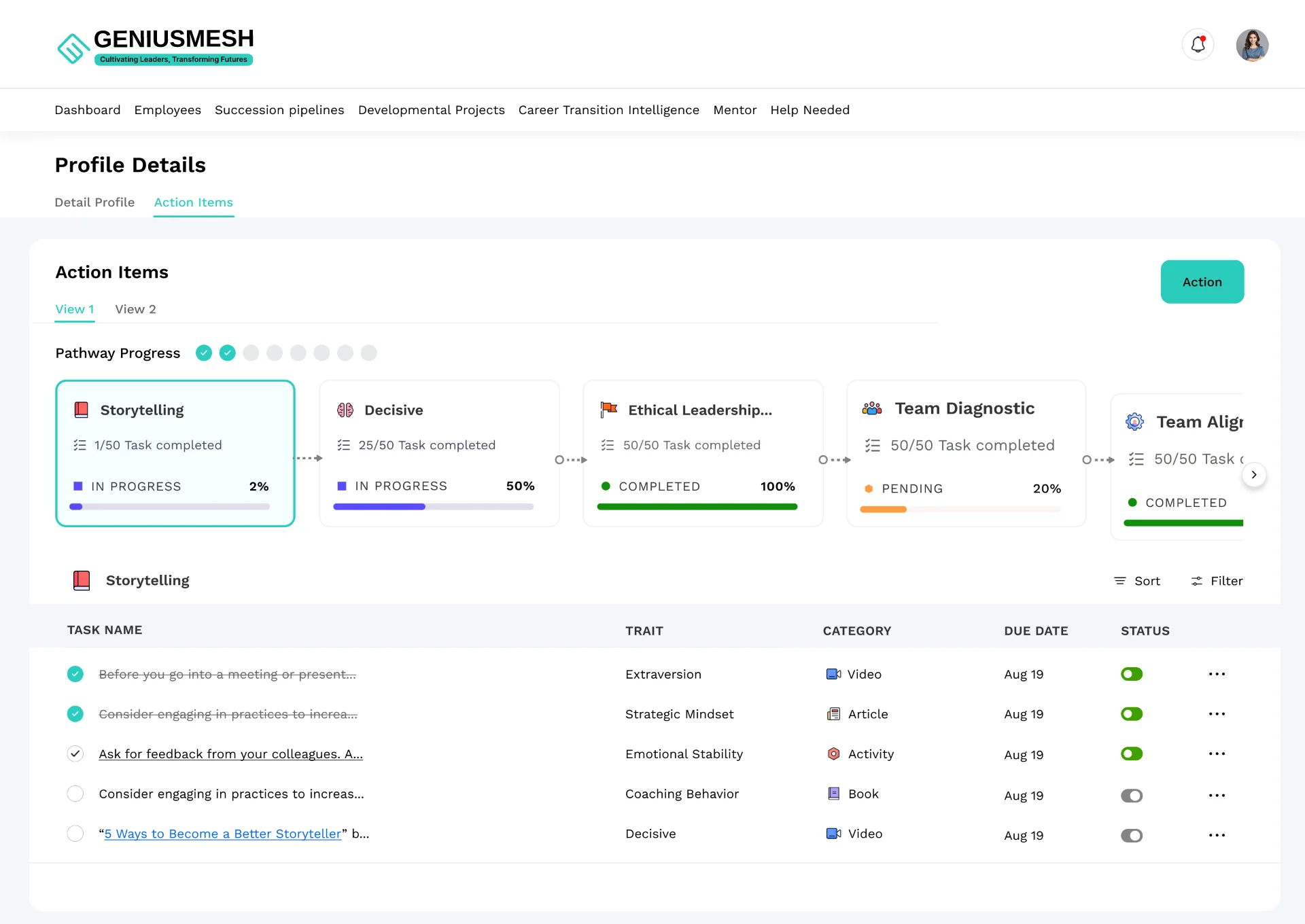
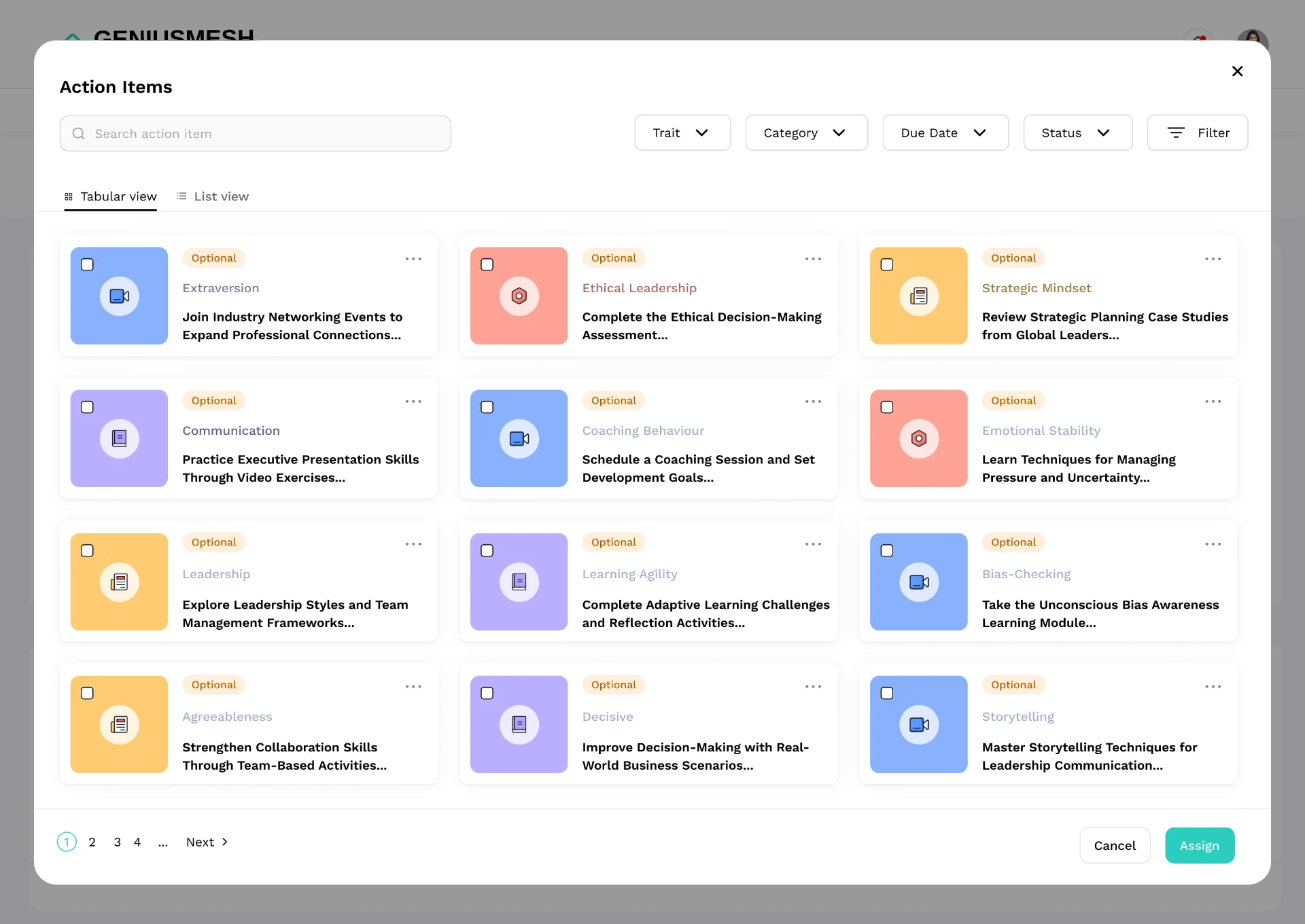
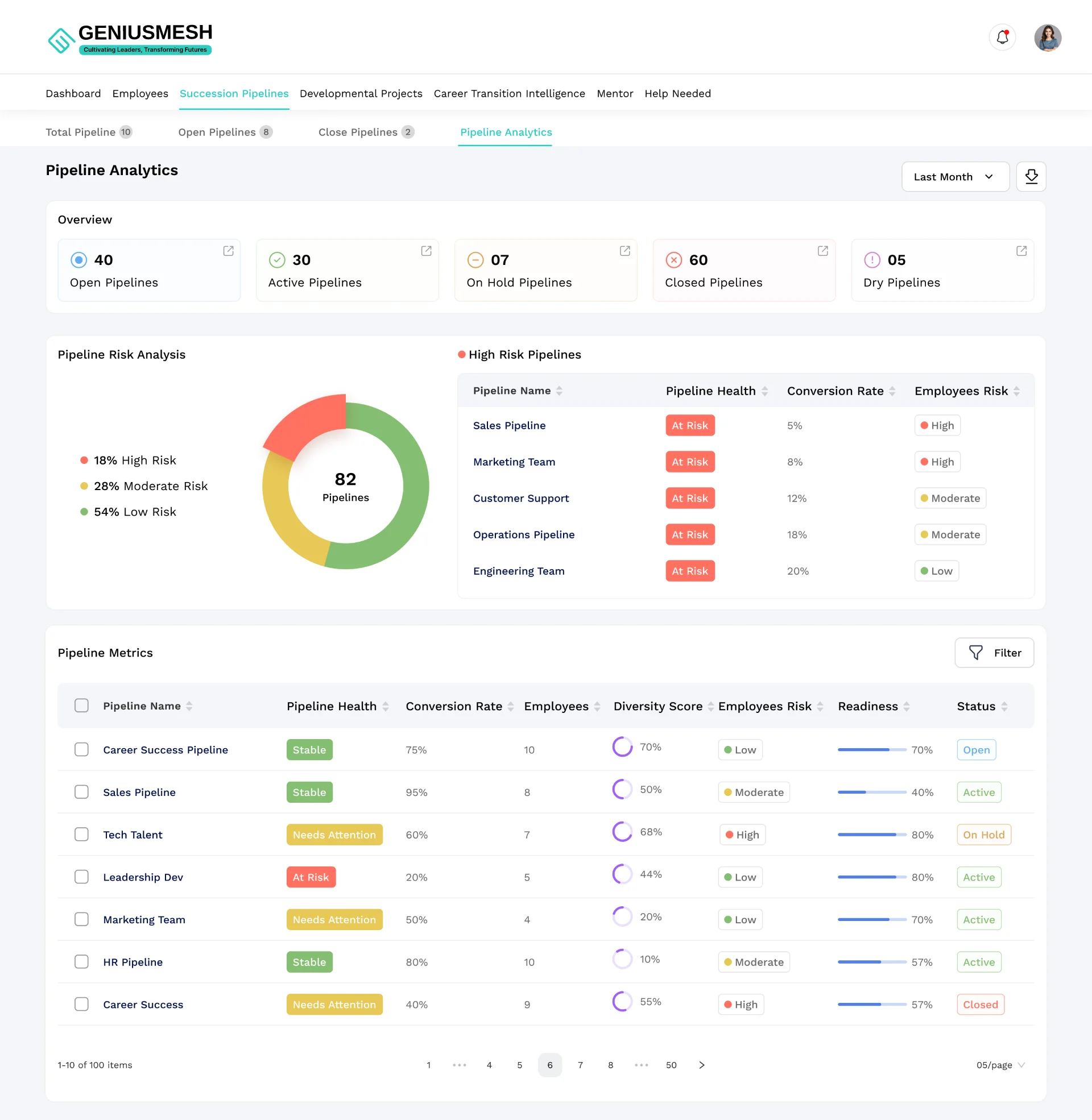
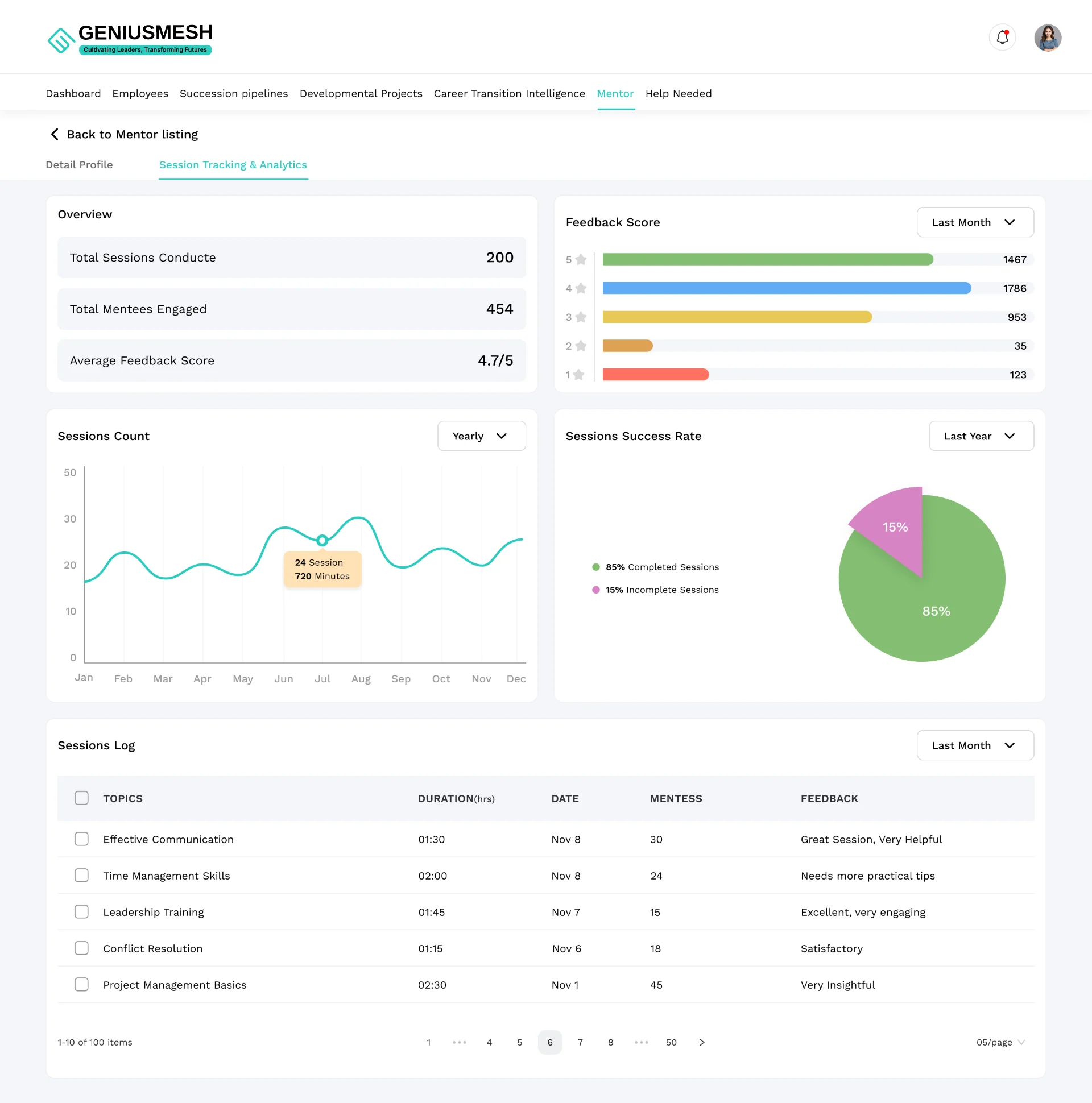
Codiant’s product designers converted validated workflows into detailed interfaces for enterprise users, candidates, service providers, and administrators.
The designs focused on presenting candidate profiles, assessment information, succession insights, AI recommendations, and leadership analytics in an accessible format. Reusable components were created for data cards, filters, comparisons, statuses, navigation, and contextual actions.
Design consistency helped users move between discovery, evaluation, planning, and engagement tasks without relearning interface behavior.
Frontend developers worked closely with the design team to translate these approved experiences into responsive React.js interfaces supported by Nginx.
Prototyping
Interactive prototypes were used to evaluate complex journeys before full development.
The team tested how enterprise users would search for leaders, review recommended candidates, compare intelligence, interpret assessments, and move selected individuals into succession or development workflows. Candidate and service-provider journeys were also validated to confirm that onboarding, profile management, assessment participation, and engagements remained clear.
Developers participated in prototype reviews to verify data availability, service interactions, AI response states, user permissions, and communication dependencies.
This collaborative validation helped reduce the risk of designing interactions that could not be supported effectively by the underlying platform architecture.
Development
To bring GeniusMesh’s AI-powered leadership intelligence vision to life, Codiant’s designers and dedicated AI developers built a scalable platform centered on executive talent discovery and smarter workforce decisions. Development focused on intelligent candidate matching, leadership assessments, succession planning, coaching workflows, risk analysis, and role-based dashboards, giving enterprises, candidates, service providers, and administrators clearer visibility across the complete leadership lifecycle.
 React JS
 MongoDB
 Figma
Figma Illustrator
 Photoshop
 Node.js
 Python
 AWS
AWS Microsoft Azure
 Langgraph
 Kong Gateway (Helm)
The result
GeniusMesh expanded its team with AI developers, designers, engineers, and cloud experts from Codiant.
The staff augmentation model provided specialized expertise without lengthy hiring and onboarding.
Codiant helped build a scalable AI-powered leadership intelligence platform with candidate matching, assessments, succession planning, coaching, and analytics.
Enterprise users gained a centralized platform for executive talent discovery and workforce planning.
Candidates, coaches, service providers, and administrators received dedicated tools to manage profiles, services, workflows, and platform operations.
The cloud-native architecture ensured scalability, security, and reliable performance across AWS and Microsoft Azure.
The engagement gave GeniusMesh the flexibility to scale resources and accelerate product development.