
DineVisuals – An AI Platform for Creating Food Visual Content
DineVisuals is an AI-powered food photography platform designed to enhance visuals, apply professional styling, and create brand-ready images for restaurants, food brands, and creators.
Book a Demo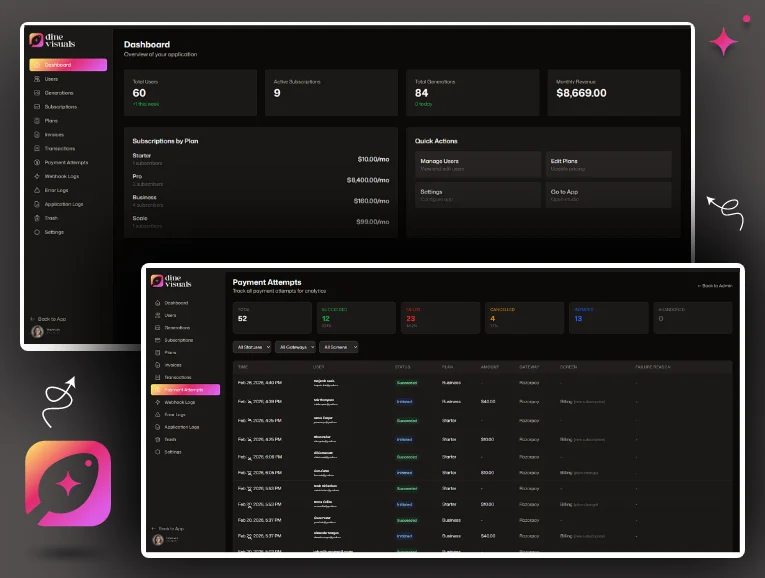
About the project
DineVisuals is an AI-powered food photography platform developed by Codiant to transform everyday food images into professional, brand-ready visuals. It enables restaurants, food brands, and creators to generate high-quality images instantly, improving visual consistency, engagement, and digital presence without requiring traditional photography setups.
Challenge
The food and restaurant industry lacked accessible tools for producing consistent, high-quality visual content at scale. Existing solutions required professional setups, manual editing, or high costs, making them impractical for daily use. Codiant identified a gap in enabling fast, standardized food photography through an automated, scalable approach.
Approach
Codiant’s product, design, and AI teams collaborated to define a focused solution built around simplicity and speed. Through iterative research, key features such as style selection, automated enhancement, and high-resolution output were prioritized. Agile development cycles ensured rapid prototyping, validation, and deployment of a scalable, user-friendly platform.
Discovery phase
The team analyzed restaurant workflows, content creation patterns, and visual requirements across delivery platforms to identify critical usability and consistency gaps.
Market Research
The global foodservice profit sector reached $4.4 trillion in 2023 and is projected to grow to $5.5 trillion by 2028, with visual-first content now a standard research tool for 60% of consumers.
The Gap
Most food businesses lacked a unified solution for generating consistent, high-quality visuals quickly. Existing tools were fragmented and manual. DineVisuals addressed this by offering an AI-driven platform that standardizes food photography, enabling faster creation and consistent brand presentation across channels.
Audience Struggles
Inconsistent Visual Quality: 65% of food businesses struggle to maintain uniform imagery across platforms.
High Production Costs: Professional food photography increases content costs by up to 70%.
Slow Content Turnaround: 58% of teams face delays in updating menus and marketing visuals.
User Insights
| Tasks | Emotions | Challenges | Opportunities |
|---|---|---|---|
| Food Photo Upload | 😐 Doubt | Users are unsure if raw food photos will produce high-quality results. | AI instantly enhances images to deliver consistent, professional-quality outputs. |
| Style Selection | 🤔 Confusion | Choosing the right visual style for branding or platforms feels unclear. | Predefined styles guide users toward visually consistent and brand-aligned outputs. |
| Image Generation | ⏳ Impatience | Slow editing workflows delay content creation and publishing timelines. | Instant AI processing reduces turnaround time from hours to seconds. |
| Visual Consistency | 😟 Frustration | Maintaining the same look across menus, apps, and marketing is difficult. | AI ensures uniform styling across all food images automatically. |
| Content Creation | 😩 Effort | Creating fresh visuals regularly requires time, tools, and creative skills. | Simple workflows eliminate the need for editing or professional expertise. |
| Platform Readiness | 😬 Concern | Images often don’t meet standards for delivery apps or campaigns. | Optimized outputs are ready for menus, ads, and social platforms instantly. |
| Scaling Visuals | 😓 Pressure | Managing visuals across multiple dishes or locations becomes overwhelming. | Bulk generation enables scalable, high-volume image creation effortlessly. |
| Publishing Confidence | 🙂 Relief | Users hesitate to publish due to inconsistent or low-quality visuals. | High-quality outputs boost confidence in sharing and promoting content. |
Opportunity
The food industry lacked scalable solutions for creating consistent, high-quality visual content without relying on costly photography setups. Existing tools were manual. DineVisuals addressed this gap by offering an AI-powered platform that automates food styling, enabling faster, cost-efficient, and standardized visual production.
Execution Timeline
1. Research & Discovery
2. Structure & Concept
2 Weeks3. Design & Prototyping
3 Weeks4. Development & Testing
5 WeeksResearch Phase
Market and user research revealed that food businesses struggled with inconsistent imagery, high production costs, and slow content turnaround. Teams relied on manual editing or external photographers, limiting scalability. Insights showed a strong need for a simple, automated solution that could deliver professional-quality visuals instantly while reducing dependency on technical skills and infrastructure.
User Insights
Competitive analysis highlighted that existing tools required multiple steps and lacked consistency across outputs. Users needed a streamlined workflow with minimal inputs. The design focused on reducing cognitive load through guided styling options and instant previews, ensuring users could quickly generate predictable, high-quality results without complex editing decisions.
User Persona Development
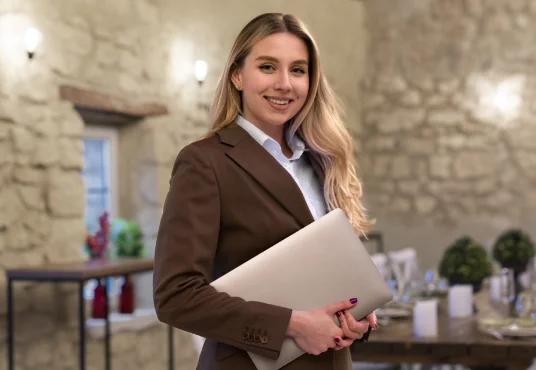
Sophia Bennett
32
Restaurant Marketing Manager
Austin, USA
Persona Snapshot:
A growth-focused marketer aiming to improve visual quality and increase online orders with limited resources.
Goals:
Improve food presentation to increase conversions
Reduce time spent on content creation
Maintain consistent brand visuals across platforms
Challenges:
Dependence on photographers and editing tools
Inconsistent image quality across channels
Delays in updating menus and campaigns
How DineVisuals Helps:
- AI styling automates enhancements leading to faster content creation and reduced production costs
- Consistent visual outputs create stronger brand identity and improved customer trust
- Instant image generation leads to quicker campaign launches and menu updates
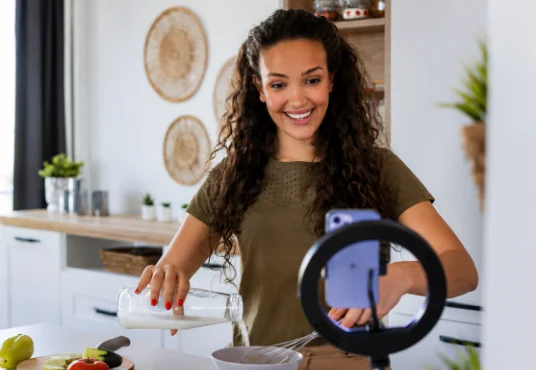
Ava Patel
28
Food Content Creator
San Francisco, USA
Persona Snapshot:
A content-driven creator focused on producing high-quality food visuals consistently to grow audience engagement and brand collaborations.
Goals:
Create visually appealing content to increase engagement
Maintain a consistent aesthetic across social platforms
Reduce time spent on editing and retakes
Challenges:
Limited access to professional photography setups
Inconsistent lighting and presentation in home shoots
Time-consuming editing workflows
How DineVisuals Helps:
- AI styling enhances visuals instantly to improve content quality and drive higher engagement
- Predefined style options helps in creating stronger personal brand identity
- Quick image generation reduces effort, faster posting, and content turnaround
Ideation
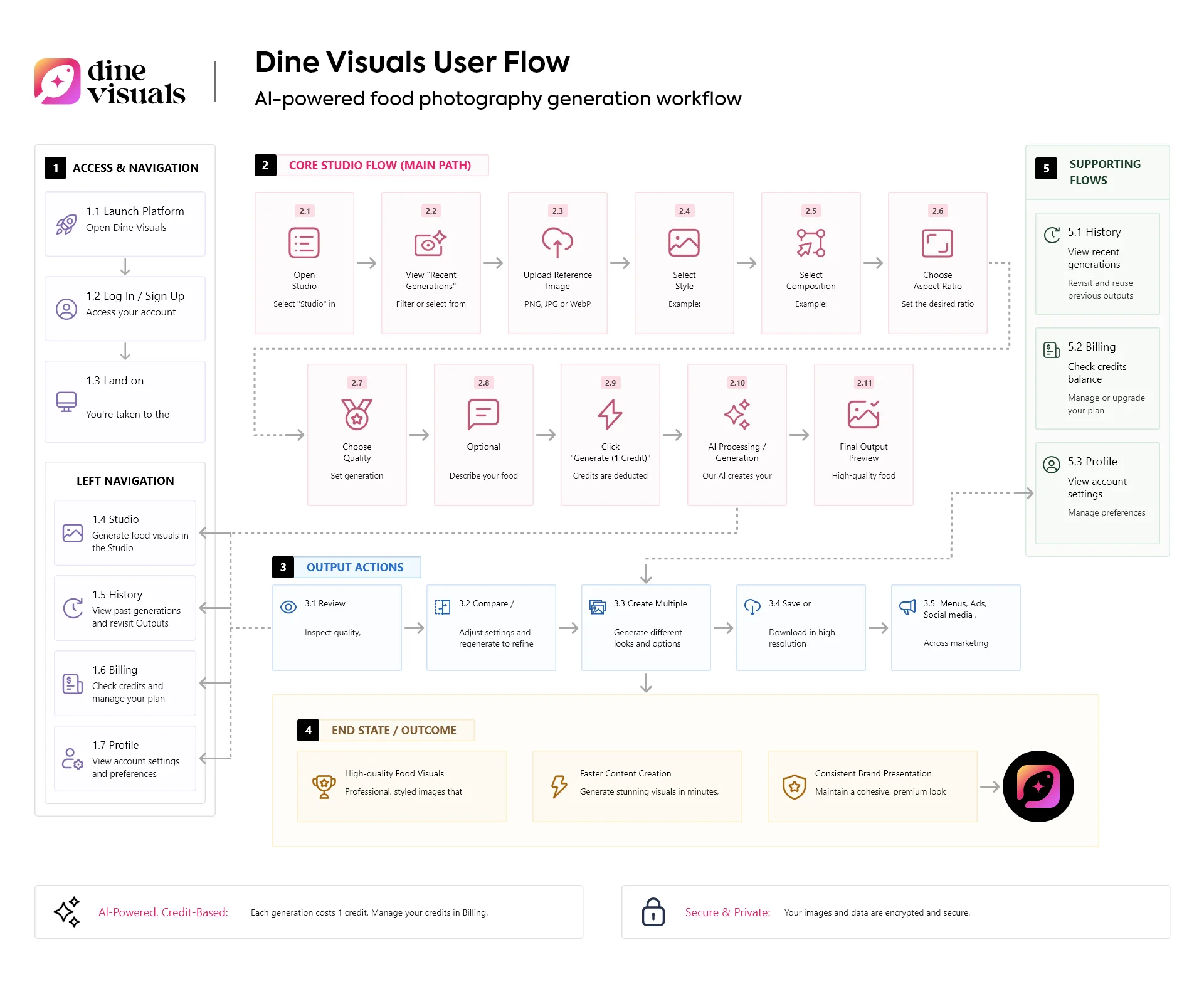
The ideation phase was driven by persona insights highlighting the need for speed and simplicity in content creation. Concepts focused on minimizing user effort while maximizing output quality. Early workflows prioritized a three-step journey upload, style, and generate ensuring clarity and efficiency. Each idea was validated against real-world use cases to ensure practical adoption and measurable business value.
User flow
Wireframing
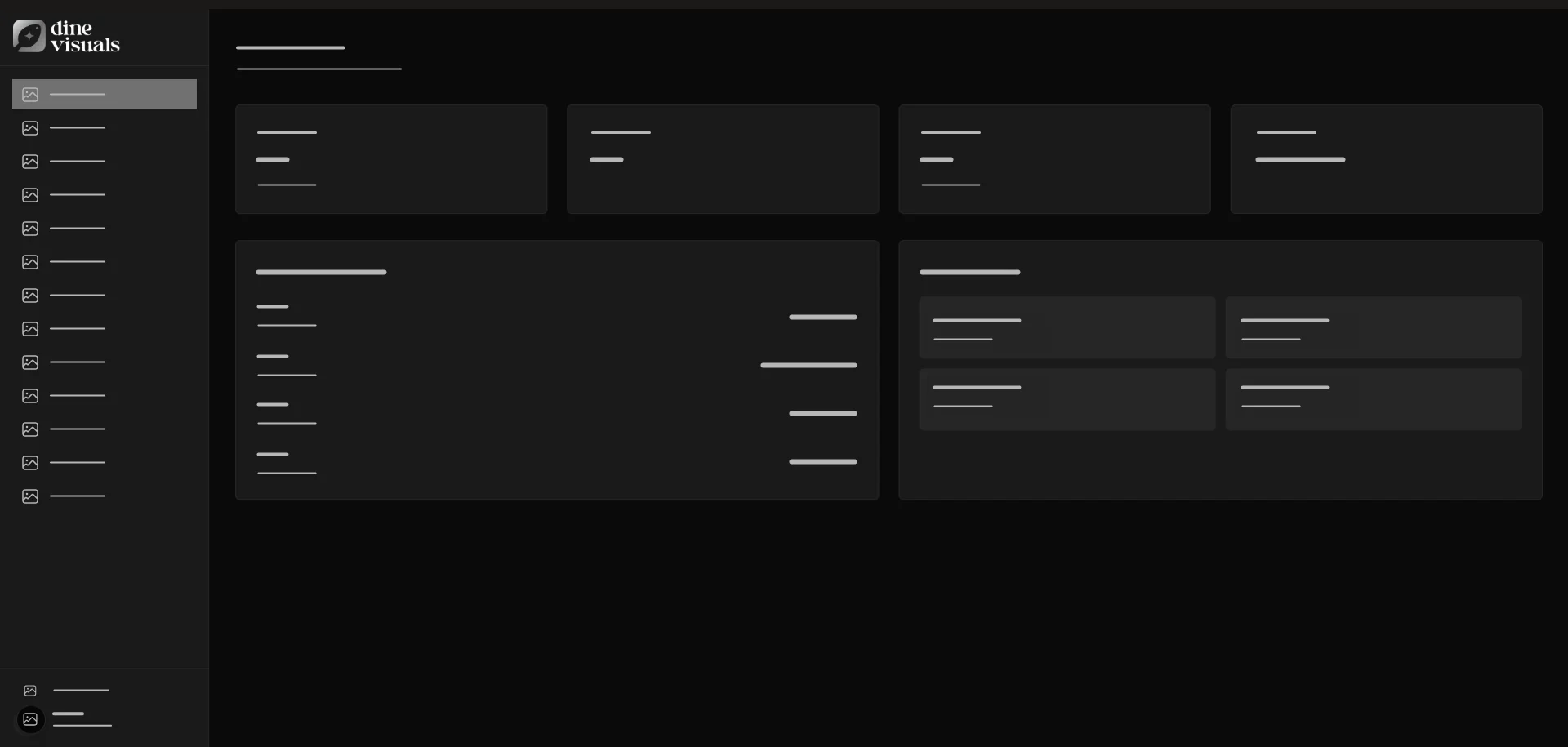
Feature concepts
1. Photo Upload
Upload food images directly from your device to begin the visual styling process.
2. Style Selection Options
Choose from available visual styles to define how the final food image should appear.
3. AI-Based Image Styling
AI applies styling changes to transform the uploaded food image into enhanced visuals.
4. Before and After Comparison
Compare original and AI-generated images side-by-side to review visual improvements clearly.
5. Instant Image Generation
Generate styled food visuals quickly without waiting for manual editing or processing steps.
6. Visual Preview Interface
Preview generated images within the interface before downloading or using them externally.
7. Single-Click Image Generation
Trigger the image creation process using a simple action within the platform interface.
8. Download Generated Images
Download the final styled food visuals for use in menus or digital platforms.
9. Multiple Image Variations
View different styled outputs of the same dish based on selected visual styles.
10. Mobile-Friendly Workflow
Use the platform seamlessly on mobile devices for quick food photo creation and styling.
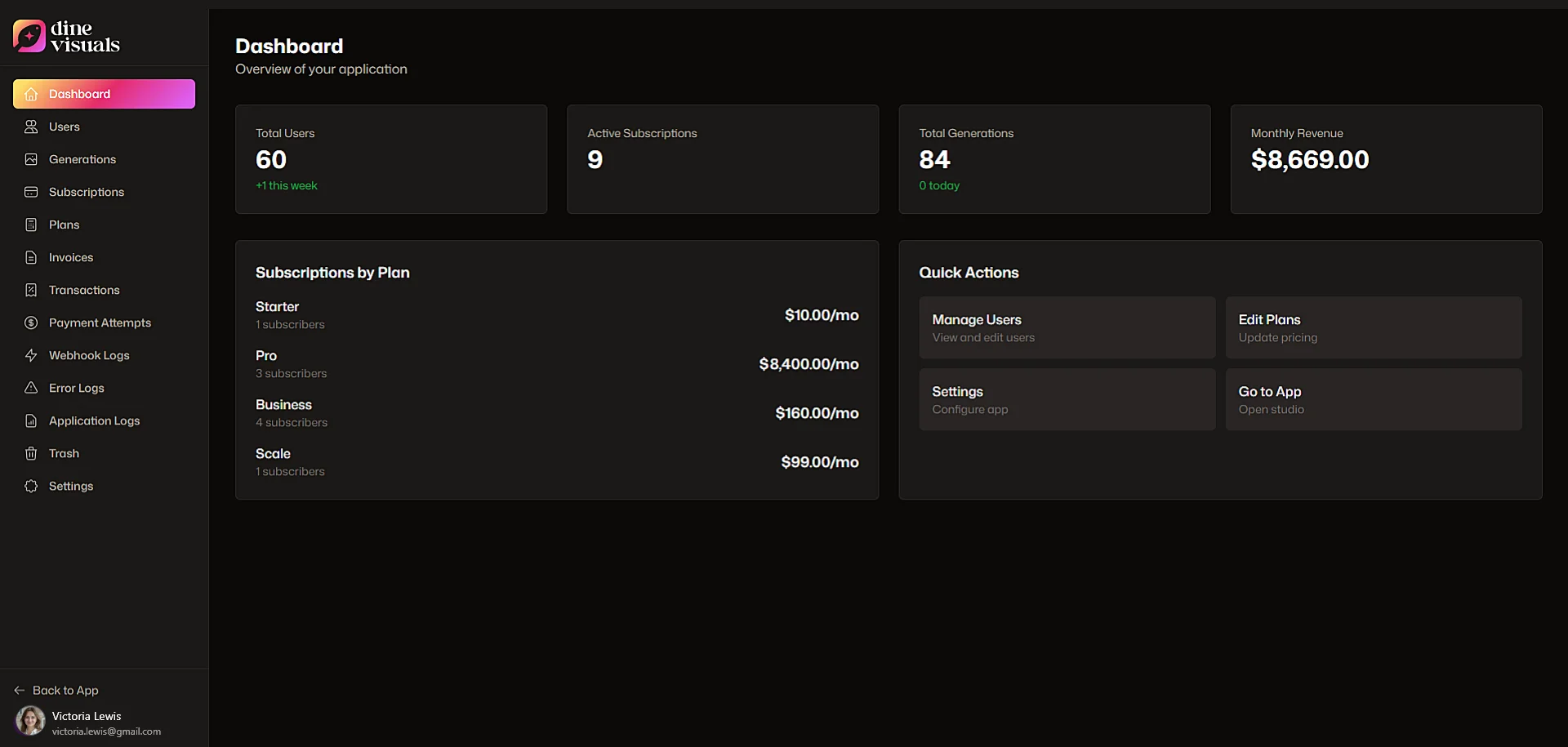
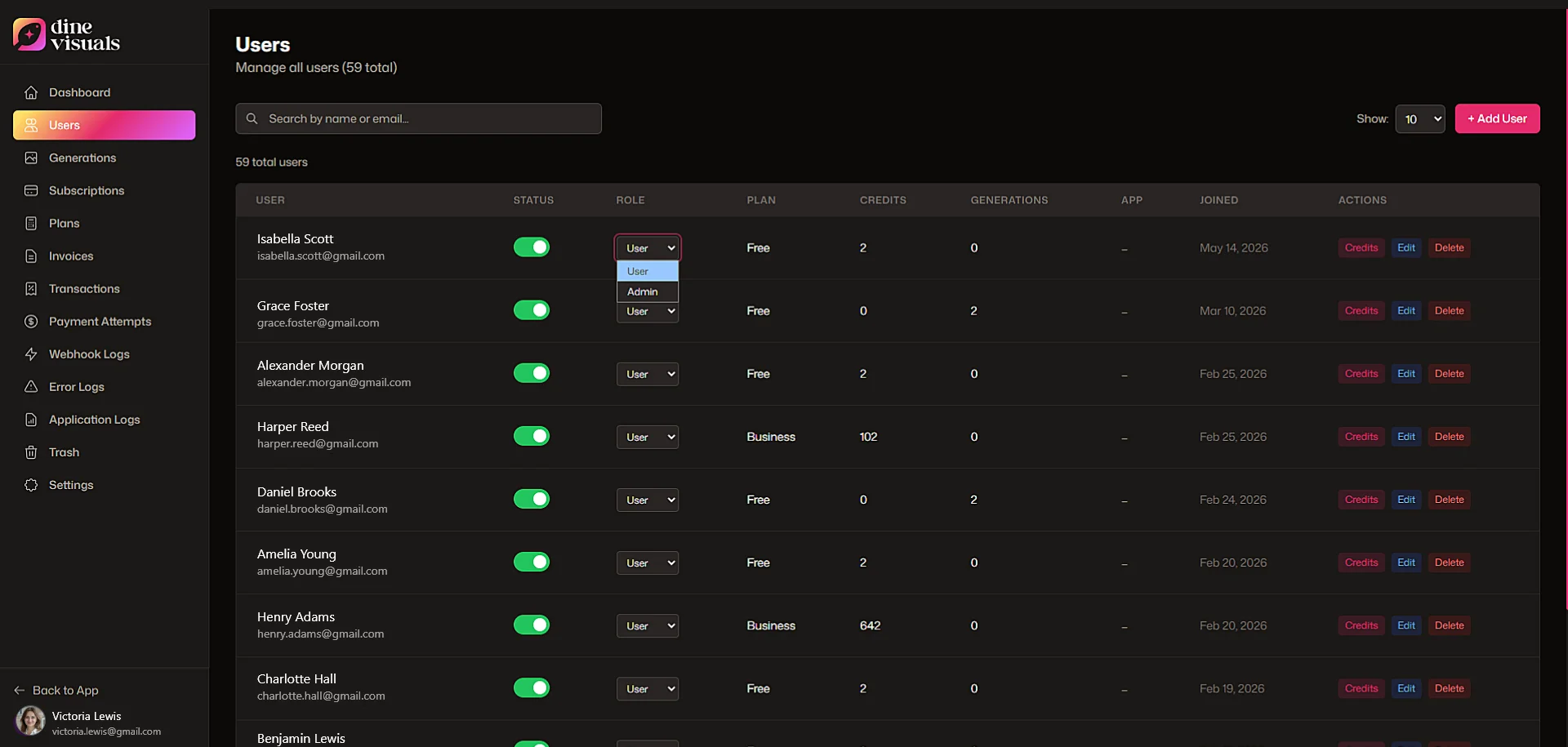
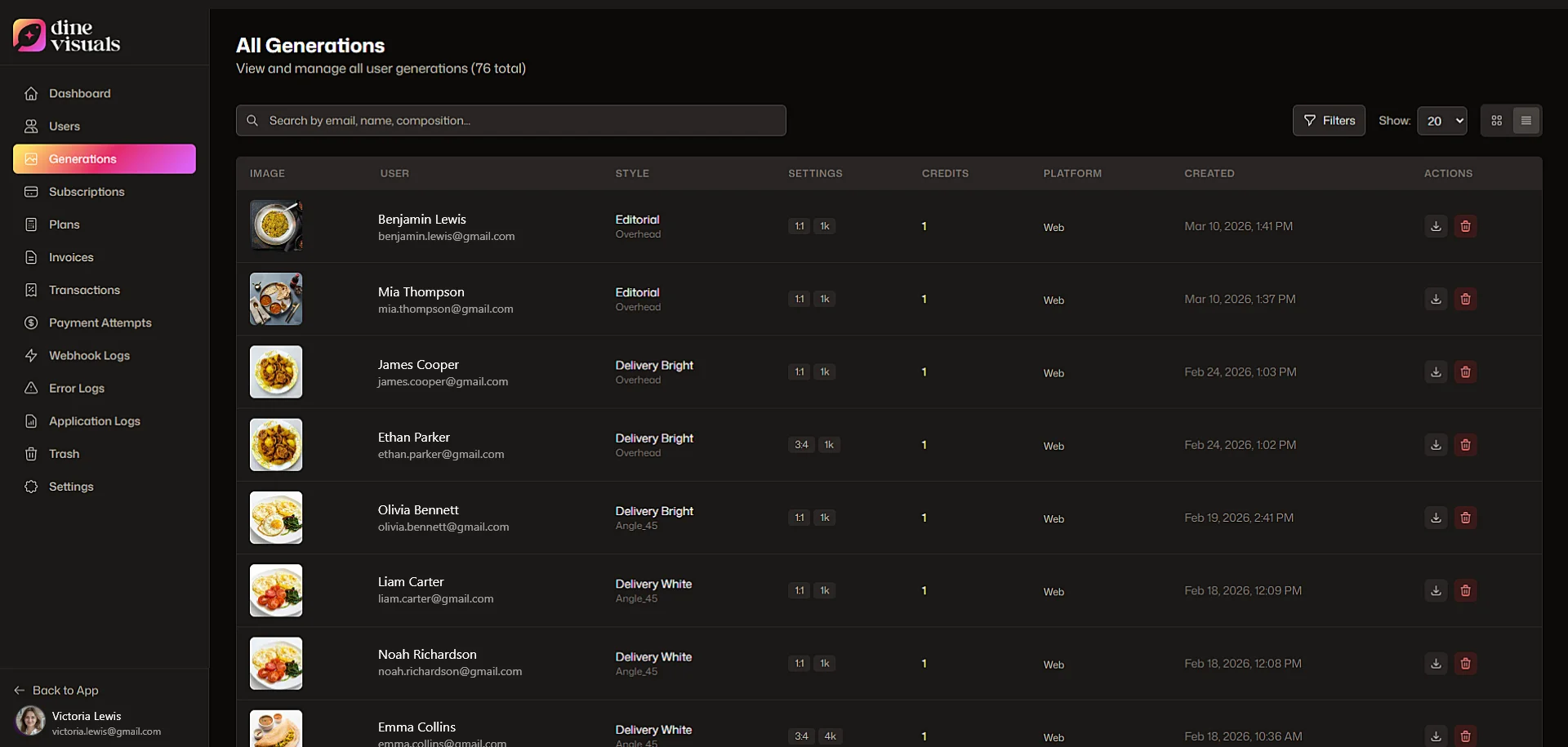
High fidelity designs
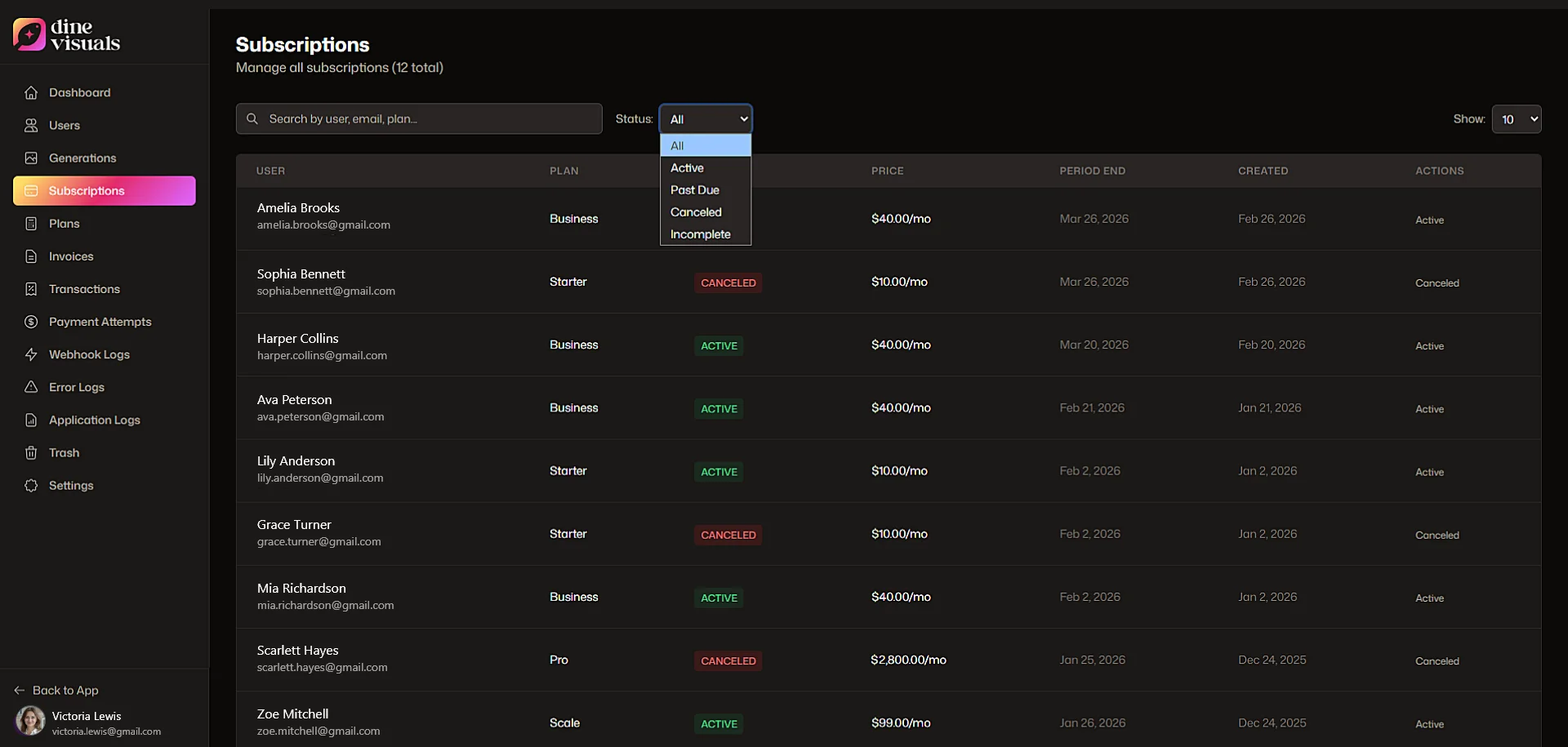
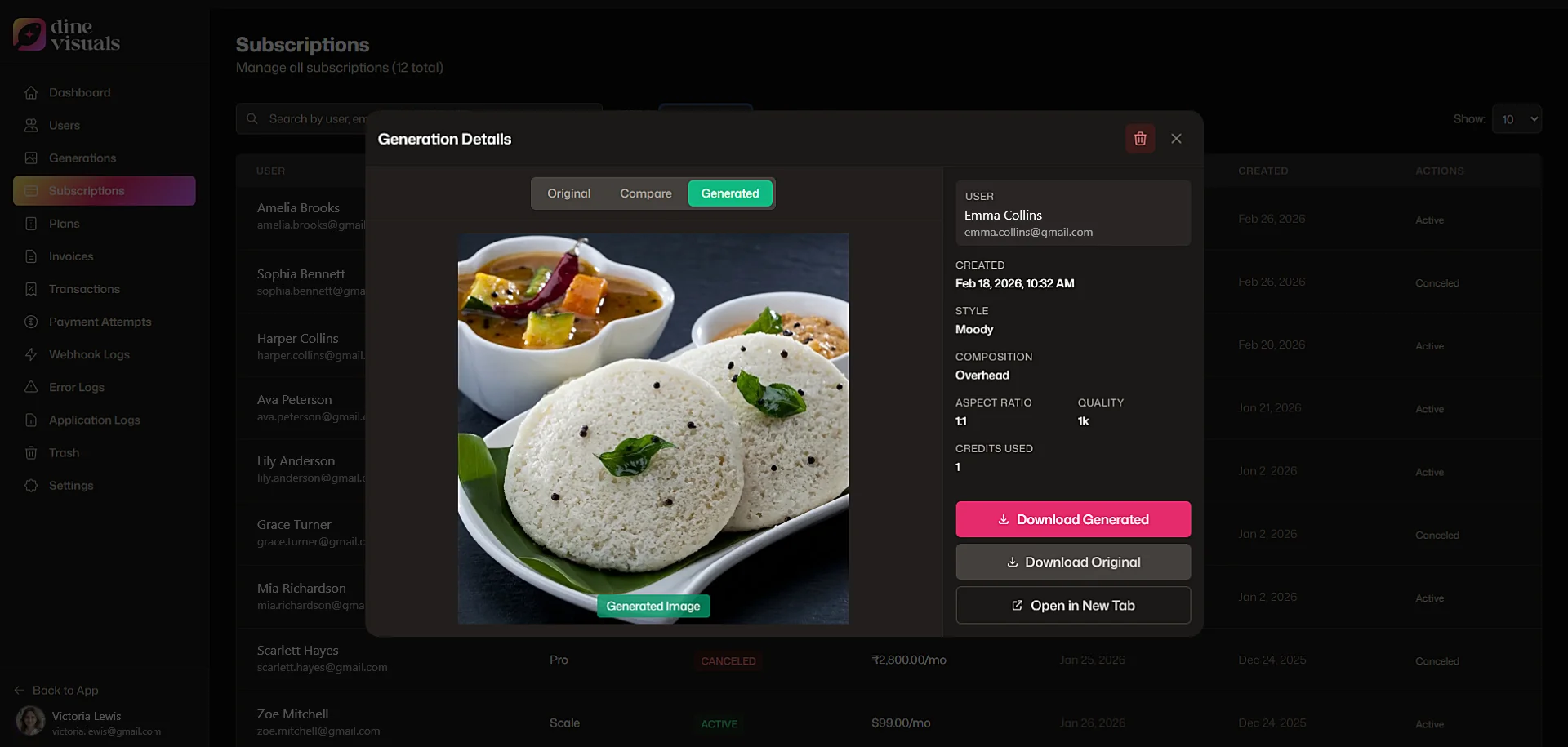
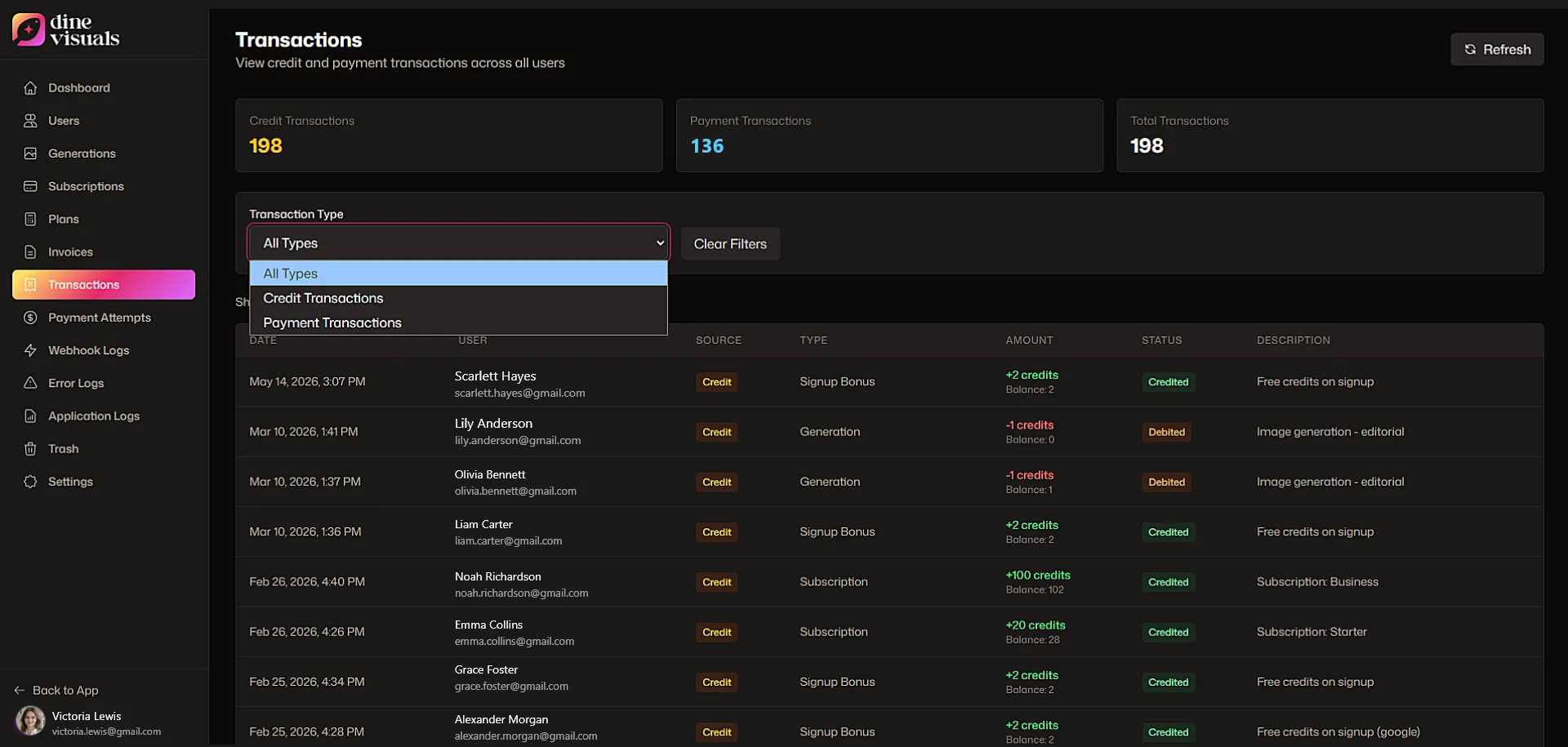
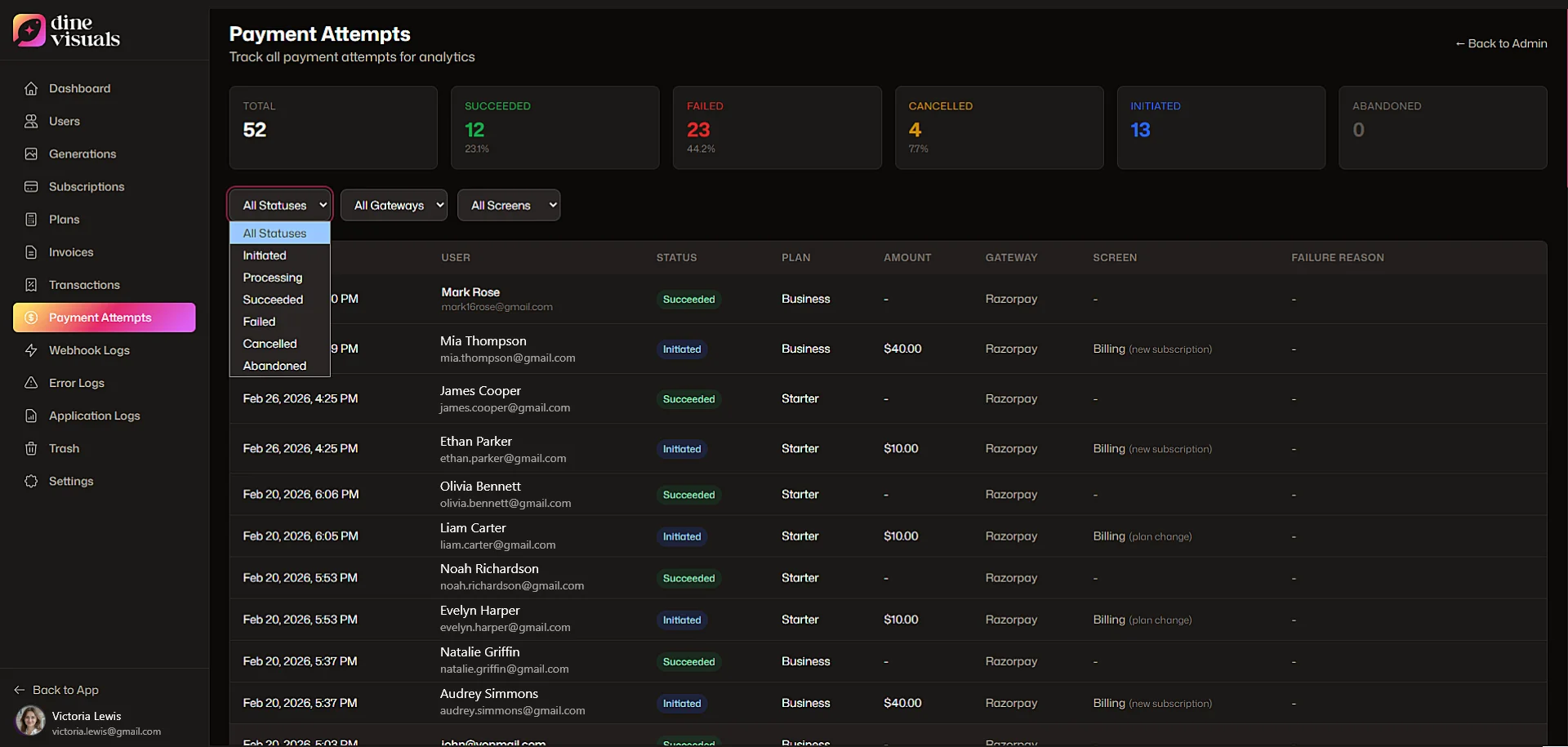
Development
We have used the most suitable technologies that would meet the requirements of this product. We have chosen this tech stack on the basis of scalability and efficiency.
 React JS
 Next.js
 PostgreSQL
 Figma
Figma
 Illustrator
 Photoshop
 Node.js
 AWS
AWS
 Google Gemini
 Razorpay
 SendGrid
The result
DineVisuals delivered a streamlined, AI-driven solution that transformed how food businesses create visual content. By replacing manual photography and editing workflows with an automated styling process, the platform significantly reduced time, cost, and dependency on external resources. Teams were able to generate consistent, high-quality food visuals within seconds, enabling faster content updates across menus, delivery platforms, and marketing channels.
The solution improved operational efficiency by minimizing repetitive design efforts and simplifying the overall workflow. Businesses experienced quicker turnaround times for campaigns and menu updates, resulting in more agile marketing execution and improved visual consistency across touchpoints.
In early adoption scenarios, users achieved up to 70% reduction in content production time, 50% lower visual production costs, and 2x faster campaign readiness. Additionally, consistent, high-quality visuals contributed to improved engagement and stronger brand perception across digital platforms.
DineVisuals successfully positioned itself as a practical, scalable alternative to traditional food photography, enabling businesses to create and deploy professional visuals with speed, accuracy, and confidence.