Top 15 Logistics App Development Companies in 2026
Table of Contents
Subscribe To Our Newsletter
Summarize with AI
Not enough time? get the key points instantly.
In a Nutshell
- Logistics apps enable real-time shipment tracking, improving transparency and operational efficiency across supply chains.
- Businesses partner with logistics app development companies to build scalable digital transportation platforms.
- AI-powered logistics systems optimize route planning, delivery scheduling, and demand forecasting operations.
- Modern logistics platforms integrate technologies like IoT, GPS tracking, cloud computing, and blockchain.
- Logistics app development costs vary depending on features, integrations, platform complexity, and scalability.
- Most logistics applications take four to seven months for development, testing, and launch.
- Advanced logistics apps include fleet management systems, automated dispatch tools, and analytics dashboards.
- Choosing an experienced logistics software development company ensures scalable platforms supporting long-term growth.
Consider the last package you tracked online.
You could see exactly where it was, when it would arrive and occasionally even the driver’s route in real time.
A decade ago, we could not have that level of transparency.
Today the logistics firms are heavily dependent on digital platforms to manage deliveries, fleets, warehouses & supply chains. Technology has revolutionized logistics operations enabling everything from route optimization to real-time shipment tracking.
The increasing demand has resulted in a spike in logistics app development companies as businesses look to build intelligent transportation platforms, automate supply chains & enhance the delivery efficiency across worldwide markets.
In this blog, we have listed the leading 15 logistics app development agencies in 2026 that are enabling businesses to create intelligent, speedy and agile logistics platforms.
Logistics Companies Are Investing in Mobile Apps
Logistics used to be a paperwork-heavy industry.
Dispatchers managed deliveries through spreadsheets. Drivers communicated through phone calls. Shipment tracking often depended on manual updates.
That model simply doesn’t work anymore.
Customers now expect Amazon-level delivery transparency, and businesses need real-time visibility into their supply chains.
This is why logistics companies are investing heavily in custom logistics platforms and mobile apps.
Modern logistics mobile app developers are building systems that allow companies to track shipments, monitor vehicles, automate dispatch operations & optimize delivery routes in real time.
Instead of reacting to problems after they occur, logistics companies can now predict delays, reroute drivers & manage operations proactively.
This digital transformation is especially important for industries like:
- Freight and transportation companies
- eCommerce delivery networks
- Manufacturing supply chains
- Third-party logistics providers
- On-demand delivery platforms
These businesses rely on logistics technology companies in 2026 to build solutions that improve operational efficiency and reduce costs.
Simply put, logistics apps are no longer optional.
They are becoming the core infrastructure of modern supply chains.
15 Best Logistics App Development Companies in 2026
When developing a logistics platform, selecting the best technology partner is imperative. An experienced development firm can assist organizations design for scalability, integrate real-time tracking technologies and automate complicated logistics workflows.
Here are some of the best logistics app development agencies in 2026 supporting businesses for developing modern transportation platforms, freight management systems and supply chain automation solutions.
1. Codiant Software Technologies
Established: 2006
Headquarters: India / USA
Projects Delivered: 1200+ digital products
Codiant is one of the leading logistics app development companies helping enterprises and startups build intelligent transportation platforms. The company specializes in developing logistics mobile apps, fleet management systems and supply chain automation platforms.
With strong expertise in AI, IoT, cloud computing and enterprise software, Codiant helps logistics companies streamline operations, automate dispatch workflows and improve delivery visibility. Their development teams focus on building scalable logistics ecosystems that integrate fleet tracking, freight management, warehouse coordination and predictive analytics.
Key Strengths
- AI-powered logistics automation
- Fleet and transportation management systems
- Enterprise supply chain platforms
- Strong experience with global startups and enterprises
Businesses looking for supply chain app development services often choose Codiant for its experience in building enterprise-grade logistics software solutions.
Launch Your Logistics App in 2026
Build modern logistics platforms with real-time tracking, fleet automation, and scalable supply chain technology.
2. Computools
Established: 2013
Headquarters: UK
Projects Delivered: 300+ software products
Computools is a global software engineering company known for building enterprise logistics platforms and transportation management systems. The company provides custom development services for freight tracking, route optimization and supply chain analytics.
Computools focuses on digital transformation for logistics companies that need scalable infrastructure and automation capabilities.
Key Strengths
- Enterprise logistics platforms
- Advanced analytics solutions
- Custom transportation management systems
3. Intellias
Established: 2002
Headquarters: Ukraine
Projects Delivered: 500+ global technology projects
Intellias is widely recognized for its work in mobility and transportation technology. The company develops software solutions that help logistics companies manage connected fleets, optimize delivery networks and improve supply chain visibility.
Its engineering teams specialize in building intelligent transportation platforms powered by real-time data analytics.
Key Strengths
- Mobility and transportation technology expertise
- Connected fleet solutions
- Enterprise logistics software platforms
4. Sigma Software
Established: 2002
Headquarters: Sweden / Ukraine
Projects Delivered: 1000+ global software projects
Sigma Software develops enterprise logistics systems designed to manage complex transportation operations. Their solutions include fleet management tools, delivery tracking systems & logistics analytics platforms.
The company has strong experience working with global logistics and transportation organizations.
Key Strengths
- Enterprise logistics software development
- Supply chain digitalization
- Large-scale transportation systems
5. COAX Software
Established: 2010
Headquarters: Ukraine
Projects Delivered: 200+ digital platforms
COAX Software builds custom logistics platforms for startups and enterprises looking to digitize transportation workflows. Their solutions include delivery management systems, warehouse automation tools & logistics SaaS platforms.
COAX is known for building scalable software solutions for logistics startups and fast-growing delivery businesses.
Key Strengths
- Logistics SaaS platforms
- Delivery management software
- Warehouse automation systems
6. Stfalcon
Established: 2009
Headquarters: Ukraine
Projects Delivered: 250+ mobile and web applications
Stfalcon specializes in building mobile logistics applications and transportation management platforms. The company develops driver apps, route optimization systems & logistics dashboards that help companies manage delivery networks more efficiently.
Key Strengths
- Mobile-first logistics solutions
- Driver and dispatcher apps
- Route optimization software
7. Innowise
Established: 2007
Headquarters: Poland
Projects Delivered: 600+ digital solutions
Innowise develops advanced logistics software solutions focused on automation and predictive analytics. The company builds freight management platforms, warehouse management systems & AI-powered supply chain tools.
Their engineering teams specialize in building scalable enterprise logistics software for global companies.
Key Strengths
- AI-driven logistics platforms
- Freight management systems
- Supply chain automation tools
8. Saritasa
Established: 2005
Headquarters: USA
Projects Delivered: 250+ software solutions
Saritasa provides custom logistics application development services for transportation businesses. The company builds fleet tracking systems, logistics dashboards & delivery management platforms that provide real-time operational visibility.
Key Strengths
- Fleet management solutions
- Enterprise logistics software
- Real-time logistics dashboards
9. Fingent
Established: 2003
Headquarters: USA
Projects Delivered: 800+ digital products
Fingent builds enterprise logistics platforms that help organizations optimize supply chains and automate freight operations. As a logistics app development company, they deliver scalable solutions that streamline delivery workflows and improve operational efficiency.
Key Strengths
- Logistics ERP systems
- Freight automation platforms
- Supply chain optimization solutions
10 Softeq
Established: 1997
Headquarters: USA
Projects Delivered: 1000+ engineering projects
Softeq is known for developing IoT-driven logistics platforms that help businesses monitor vehicles, track cargo conditions & optimize fleet operations through connected technologies.
Key Strengths
- IoT-powered logistics systems
- Connected fleet monitoring
- Vehicle telematics platforms
11. Mind Studios
Established: 2013
Headquarters: Ukraine
Projects Delivered: 150+ digital products
Mind Studios focuses on building logistics apps for startups and growing transportation companies. Their platforms typically include delivery tracking tools, driver management apps & route optimization systems.
Key Strengths
- Logistics startup solutions
- Delivery management apps
- Route optimization platforms
12. Agile Infoways
Established: 2006
Headquarters: India
Projects Delivered: 350+ software projects
Agile Infoways helps logistics companies modernize operations through custom digital logistics platforms. The company develops transportation management systems, freight automation software & fleet analytics platforms.
Key Strengths
- Custom logistics software development
- Freight automation platforms
- Transportation management systems
13. AllRide Apps
Established: 2018
Headquarters: USA
Projects Delivered: 100+ mobility platforms
AllRide Apps develops transportation and fleet management solutions that support dispatch automation, driver management & vehicle tracking across large logistics networks.
The company focuses primarily on ride-sharing, fleet mobility & logistics automation platforms.
Key Strengths
- Fleet mobility platforms
- Dispatch automation systems
- Transportation SaaS solutions
14. Netguru
Established: 2008
Headquarters: Poland
Projects Delivered: 600+ digital products
Netguru is a global technology consulting company known for building scalable digital platforms across industries, including logistics and transportation technology solutions.
The company works with startups and enterprise businesses to develop modern logistics platforms and supply chain solutions.
Key Strengths
- Digital logistics platforms
- SaaS logistics software
- Enterprise product development
15. Hyperlink InfoSystem
Established: 2011
Headquarters: India
Projects Delivered: 4000+ mobile and web applications
Hyperlink InfoSystem develops logistics mobile applications and delivery management platforms for businesses looking to improve operational efficiency and customer delivery experiences.
The company has experience building mobile-first logistics applications for startups and SMEs.
Key Strengths
- Mobile logistics applications
- Delivery management platforms
- Fleet tracking systems
How Much Does Logistics App Development Cost?
One of the frequently asked questions businesses want to know about is How much does it cost to develop a logistics platform? In addition, the price also relies on different factors based such as platform complexity, integrations with other systems, real-time tracking features, and how many users your system needs to accommodate.
Basic logistics applications often focused on fundamental functionalities like shipment tracking and driver management, whereas enterprise platforms included turnkey AI-powered route optimization, warehouse integrations, and supply chain analytics.
The product development timelines will significantly change based on the complexity and integrations & scalability of the system.
Here is a rough guide on the estimated cost of logistics app development services.
General Logistics App Development Cost Breakdown
| App Type | Estimated Cost | Key Features Included | Typical Development Time |
| Basic Logistics App | $20,000 – $40,000 | Shipment tracking, driver dashboard, basic fleet monitoring, simple admin panel | 3 – 4 months |
| Mid-Level Logistics Platform | $40,000 – $120,000 | Route optimization, automated dispatch, real-time tracking, driver management, analytics dashboard | 4 – 6 months |
| Enterprise Logistics System | $120,000 – $350,000+ | AI route optimization, warehouse integrations, predictive analytics, multi-user roles, fleet automation | 6 – 9 months |
Feature-Wise Logistics App Development Cost Breakdown
| Feature | Description | Estimated Cost |
| AI Delivery Time Prediction | Machine learning models that predict delivery time based on traffic conditions, distance, weather, and historical logistics data | $7,000 – $18,000 |
| AI Demand Forecasting | Predict shipment demand, delivery volumes, and logistics workload using historical supply chain data and AI forecasting models | $10,000 – $22,000 |
| AI Route Optimization & Traffic Intelligence | AI-powered route planning that dynamically adjusts delivery routes based on real-time traffic and road conditions | $12,000 – $28,000 |
| AI Driver Behavior Monitoring | AI analyzes driving patterns, safety behavior, and vehicle performance to improve fleet efficiency and reduce risks | $6,000 – $15,000 |
| AI Logistics Analytics Engine | AI-powered dashboards that identify operational bottlenecks, optimize delivery costs, and improve logistics decision-making | $10,000 – $25,000 |
| AI Chatbot for Logistics Support | AI-powered chatbot that helps customers track shipments, receive delivery updates, and resolve logistics queries | $5,000 – $12,000 |
| User Registration & Authentication | Secure login for drivers, admins, and logistics managers with role-based access control | $2,000 – $5,000 |
| Shipment Tracking System | GPS-based shipment tracking with live location updates and delivery status notifications | $6,000 – $15,000 |
| Fleet Management Dashboard | Monitor vehicle location, fuel usage, driver performance, and maintenance alerts | $8,000 – $20,000 |
| Route Optimization Engine | Automated route planning system that reduces delivery time and fuel costs | $10,000 – $25,000 |
| Automated Dispatch System | Assign deliveries automatically based on location, vehicle availability, and delivery priority | $6,000 – $15,000 |
| Driver Mobile Application | Mobile interface for drivers to accept deliveries, navigate routes, and upload delivery proof | $8,000 – $18,000 |
| Delivery Proof System | Digital signatures, photo verification, and delivery confirmation | $3,000 – $8,000 |
| Notifications & Alerts | Push notifications for delivery updates, route changes, and shipment delays | $2,000 – $5,000 |
| Analytics & Reporting Dashboard | Data insights on delivery performance, fleet efficiency, and operational costs | $6,000 – $15,000 |
Estimated Total Cost for a Complete Logistics Platform
A full-featured logistics application with AI automation, fleet management & real-time tracking capabilities typically costs between $80,000 and $350,000+, depending on integrations, scalability & system complexity.
Key Factors That Affect Logistics App Development Cost
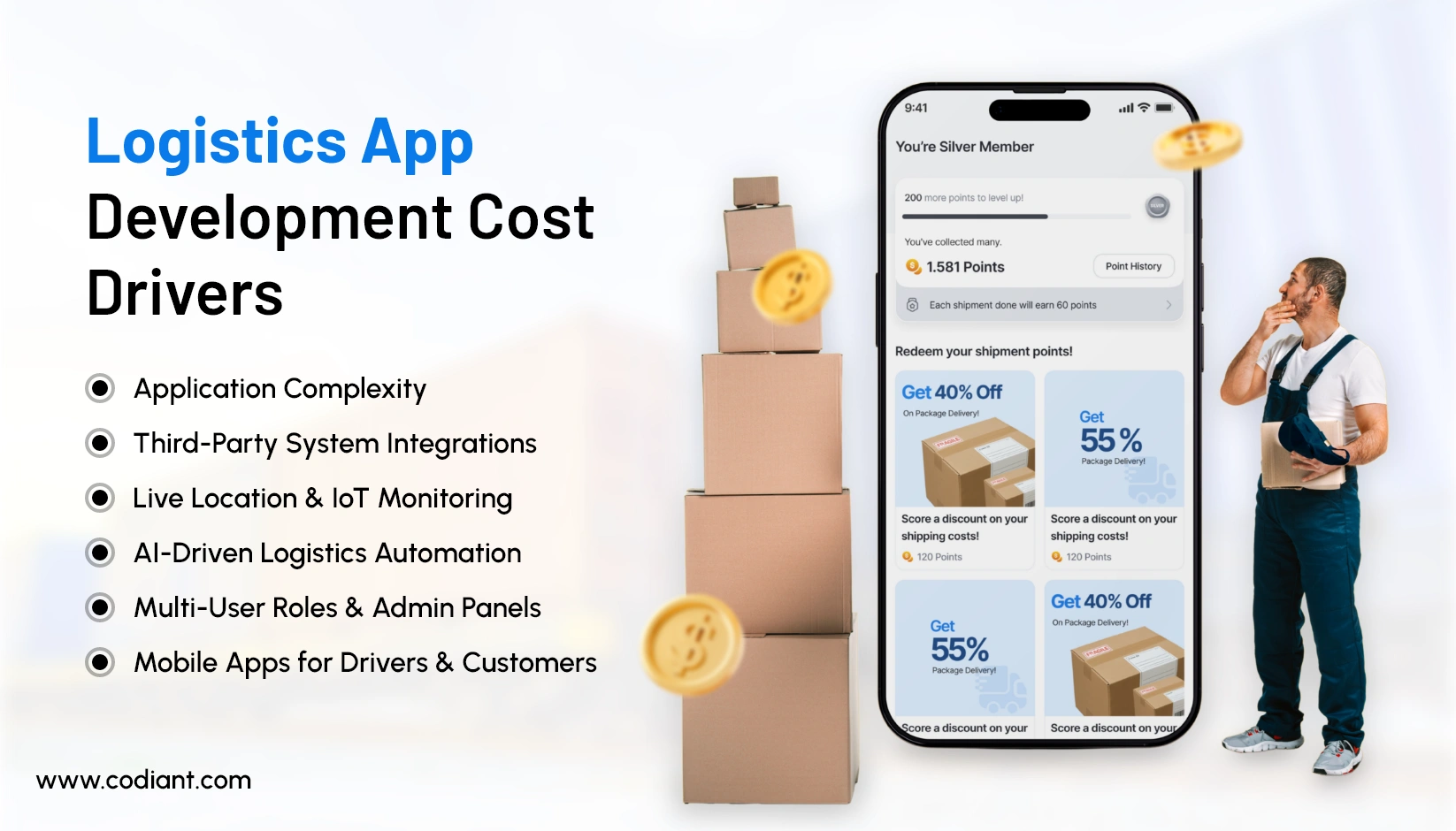
Several factors influence the overall cost of building a logistics platform-
- Platform complexity (basic tracking vs full logistics ecosystem)
- Number of integrations with external systems such as ERP or warehouse software
- Real-time GPS and IoT tracking features
- AI-powered logistics automation tools
- Number of user roles and dashboards
- Mobile apps for drivers, dispatchers, and customers
Because of these variables, businesses often partner with experienced logistics software development companies that can design scalable logistics platforms tailored to operational requirements.
Logistics App Development Timeline
Building a logistics application involves several stages including planning, design, development, testing, and deployment. The timeline varies depending on platform complexity, integrations & real-time tracking capabilities. However, most logistics platforms follow a structured development process.
| Development Phase | Activities Included | Estimated Timeline |
| Discovery & Planning | Requirement analysis, business goals, feature planning, system architecture, and technology selection | 3 – 4 weeks |
| UI/UX Design | Wireframing, user journey mapping, interface design, and prototype creation | 3 – 5 weeks |
| App Development | Backend development, mobile app development, API integrations, GPS tracking implementation, and core platform features | 3 – 5 months |
| Testing & Launch | Quality assurance testing, performance optimization, bug fixes, and production deployment | 4 – 6 weeks |
Total Estimated Timeline
Most logistics mobile applications take around 4–7 months to design, develop, test & launch depending on the complexity of the logistics platform and integrations required.
Transform Your Supply Chain with AI
Automate logistics operations, optimize routes, and improve delivery efficiency with AI-powered logistics software solutions.
Key Features of a Modern Logistics Mobile App
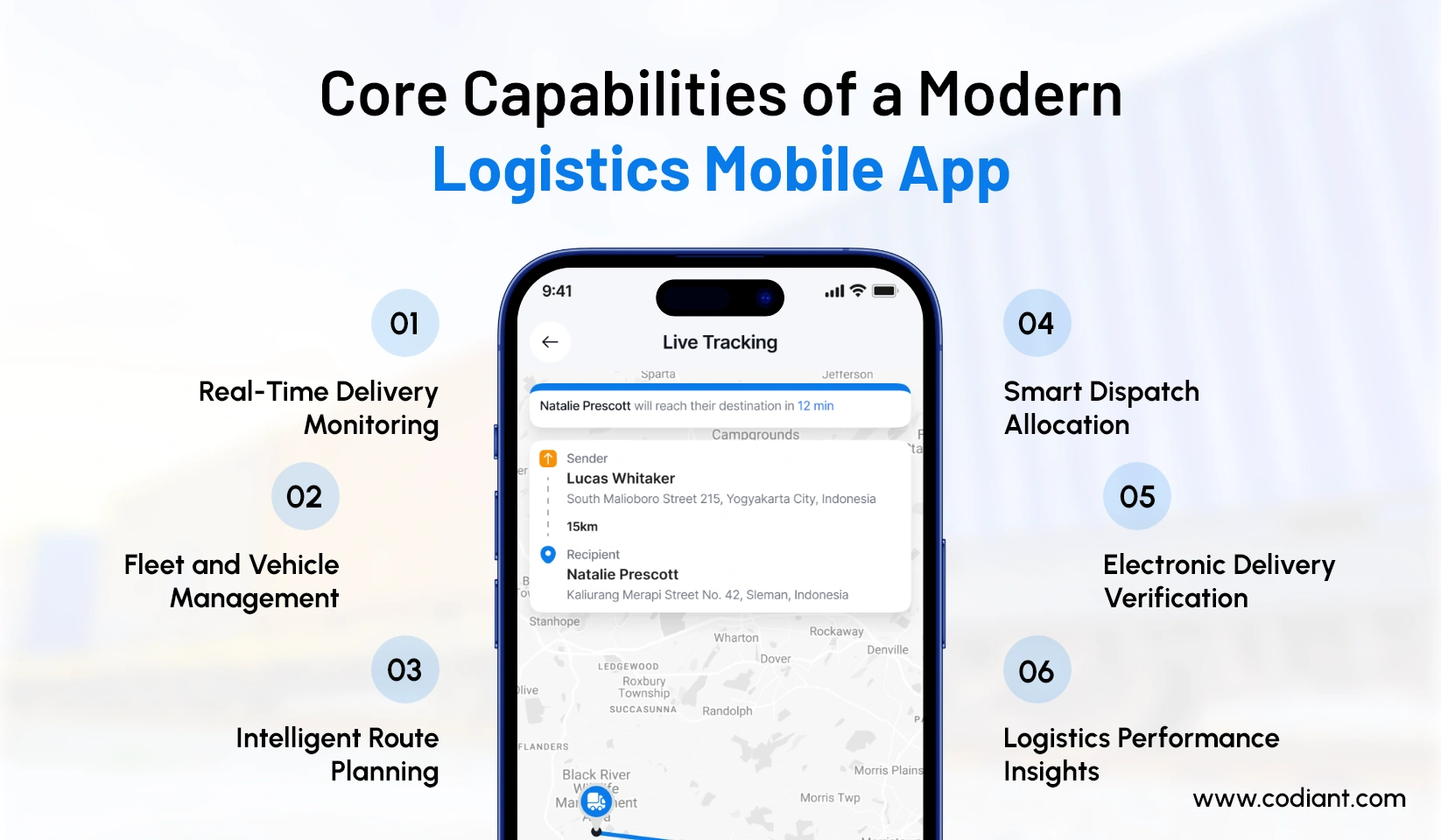
A logistics app is much more than a shipment tracking tool.
Today’s platforms combine multiple technologies to manage every part of the logistics ecosystem from fleet operations to warehouse coordination.
The best logistics software development companies typically build apps that include several critical capabilities.
- Real-Time Shipment Tracking: GPS tracking allows businesses and customers to monitor deliveries as they move through the supply chain.
- Fleet Management: Companies can track vehicle locations, driver behavior & fuel efficiency through centralized dashboards.
- Route Optimization: AI-driven algorithms help drivers choose the fastest and most efficient delivery routes.
- Automated Dispatch Systems: Dispatchers can assign deliveries automatically based on vehicle availability, route efficiency & driver schedules.
- Delivery Proof and Documentation: Drivers can capture digital signatures, photos & delivery confirmations through mobile devices.
- Data Analytics and Reporting: Advanced dashboards provide insights into delivery performance, operational costs & fleet productivity.
These features help businesses build scalable logistics platforms while improving transparency across supply chains.
Technologies Powering Modern Logistics Platforms
Modern logistics platforms rely on a combination of advanced software technologies, data systems, and automation tools to manage transportation, inventory, fleet operations, and supply chain coordination efficiently. These technologies help logistics companies improve delivery speed, visibility & operational efficiency.
Here are the key technologies powering modern logistics platforms:
1. Artificial Intelligence (AI) and Machine Learning
AI solutions helps logistics companies automate complex decision-making processes and improve operational efficiency.
Key applications include:
- Predictive demand forecasting
- Route optimization
- Smart delivery scheduling
- Automated warehouse operations
- Fraud detection and risk analysis
AI models analyze historical shipment data, traffic patterns & demand trends to recommend optimal logistics strategies.
2. Internet of Things (IoT)
IoT devices play a major role in real-time tracking and monitoring of logistics assets.
Examples include:
- GPS-enabled fleet tracking
- Smart sensors for shipment condition monitoring
- Temperature tracking for cold chain logistics
- Vehicle performance monitoring
IoT helps logistics companies gain real-time visibility into goods movement and fleet operations.
3. Cloud Computing
Modern logistics platforms are built on cloud infrastructure to ensure scalability, reliability & global accessibility.
Benefits include:
- Centralized data management
- Real-time shipment tracking dashboards
- Integration with third-party systems
- On-demand scalability during peak demand
Popular cloud platforms used in logistics include AWS, Microsoft Azure & Google Cloud.
4. Big Data Analytics
Logistics platforms generate massive volumes of operational data. Big data analytics tools help organizations extract valuable insights from this data.
Use cases include:
- Supply chain optimization
- Delivery performance analysis
- Demand forecasting
- Cost optimization
- Risk management
Analytics dashboards enable logistics managers to make data-driven decisions.
5. Blockchain
Blockchain technology solutions helps improve transparency and security in supply chain operations.
Applications include:
- Shipment tracking with immutable records
- Smart contracts for freight agreements
- Document verification
- Secure cross-border logistics transactions
Blockchain reduces disputes and improves trust among logistics partners.
6. GPS and Geolocation Technology
GPS technology enables real-time location tracking of vehicles and shipments.
Key capabilities:
- Fleet tracking
- Route optimization
- Delivery time estimation
- Geofencing alerts
This technology helps companies monitor delivery operations and improve customer communication.
7. Robotic Process Automation (RPA)
RPA helps automate repetitive logistics tasks that traditionally required manual intervention.
Examples include:
- Order processing
- Invoice generation
- Shipment documentation
- Inventory updates
Automation improves efficiency while reducing operational errors.
8. Warehouse Automation and Robotics
Modern warehouses increasingly rely on robotics and automated storage systems to handle large order volumes.
Technologies include:
- Automated guided vehicles (AGVs)
- Robotic picking systems
- Smart conveyor systems
- Automated sorting solutions
These technologies significantly increase warehouse throughput and order accuracy.
9. API Integrations
Modern logistics platforms connect multiple systems through APIs (Application Programming Interfaces).
Common integrations include:
- Payment gateways
- Warehouse management systems (WMS)
- Transportation management systems (TMS)
- ERP platforms
- Third-party shipping carriers
API-driven architectures enable seamless data exchange across supply chain systems.
10. Mobile Applications
Mobile apps allow drivers, warehouse staff, and logistics managers to access operational tools from anywhere.
Typical mobile features include:
- Driver route navigation
- Delivery confirmation
- Proof of delivery capture
- Real-time shipment updates
- Inventory scanning
Mobile-first logistics platforms help companies manage distributed logistics operations efficiently.
How Logistics Apps Improve Supply Chain Efficiency?
Logistics apps significantly improve supply chain performance by providing real-time operational visibility.
Businesses can monitor shipments, track vehicles, and analyse logistics performance through centralized dashboards.
Route optimization algorithms help drivers avoid traffic delays and reduce fuel costs.
Automated dispatch systems improve delivery coordination while reducing manual workload.
Data analytics tools allow companies to identify inefficiencies and improve logistics planning.
These capabilities make logistics platforms essential for businesses looking to scale operations and improve delivery performance.
Read more: Top Healthcare Software Development Companies in the USA for 2026
The Future of Logistics Technology
The logistics industry is entering a new era of intelligent automation. Artificial intelligence will increasingly be used to predict delivery delays, optimize routes, and automate dispatch operations.
Autonomous delivery vehicles and drones are transforming last-mile logistics by enabling faster deliveries, reducing costs, and improving operational efficiency. A transportation app development company helps businesses build smart logistics solutions with features like real-time tracking, route optimization, and fleet management.
Additionally, blockchain technology improves supply chain transparency by creating secure, tamper-proof shipment records, enhancing traceability, accuracy, and customer trust.
As these innovations continue to evolve, logistics businesses will rely heavily on logistics technology companies in 2026 to build the next generation of intelligent supply chain platforms.
Conclusion
Digital transformation is reshaping the logistics industry.
Companies that adopt modern logistics platforms gain better visibility, faster deliveries, and improved operational efficiency.
Choosing the right development partner plays a critical role in building scalable logistics systems that support long-term growth.
The companies listed above represent some of the most experienced logistics app development companies helping businesses modernize supply chains and build intelligent transportation platforms for the future.
Build Your Logistics Platform Faster
Turn your logistics idea into a powerful digital platform with expert developers and scalable technology solutions.
The Author

Frequently Asked Questions
Modern logistics apps typically include shipment tracking, route optimization, fleet monitoring, driver management, delivery proof systems & real-time analytics dashboards.
Logistics apps improve efficiency by providing real-time shipment visibility, optimizing delivery routes, automating dispatch operations & enabling data-driven decision-making.
Industries such as eCommerce, freight transportation, manufacturing supply chains, courier services & delivery startups benefit significantly from logistics platforms.
Most logistics apps use GPS tracking and IoT sensors to monitor vehicle locations and shipment movement while displaying real-time updates through centralized dashboards.
Modern logistics platforms use technologies like artificial intelligence, cloud computing, IoT sensors, GPS tracking, big data analytics & blockchain systems to optimize supply chain operations.
Featured Blogs
Read our thoughts and insights on the latest tech and business trends
How Much Does It Cost to Build an MVP in 2026? A Complete Pricing Guide
- September 10, 2026
- Digital Transformation
MVP development cost typically ranges from $5,000 for a basic web-based product to $150,000 or more for a complex, cross-platform solution. A custom MVP with user accounts, a backend, essential integrations and a polished interface... Read more

How Much Does It Cost to Hire a Dedicated AI/LLM Developer in 2026?
- September 8, 2026
- Artificial Intelligence Staff Augmentation
Hiring a dedicated AI or large language model (LLM) developer typically costs $35–$60 per hour for general AI engineering and $50–$200 per hour for specialised machine learning work, with enterprise pricing rising for advanced RAG,... Read more

HIPAA-Compliant App Development in 2026: How to Build Securely and Avoid Preventable Fines
- September 4, 2026
- Mobile App Development
HIPAA-compliant app development in 2026 requires six foundations: complete ePHI mapping, documented risk analysis, role-based access, encryption, signed business associate agreements, and continuous security monitoring. This matters most to healthcare CTOs, product leaders, and compliance... Read more