How Much Does Web Design & Development Cost in 2026?
Table of Contents
Subscribe To Our Newsletter

Summarize with AI
Not enough time? get the key points instantly.
In 2026 it’s not enough to throw a few pages on the web and call it done. Your website is your sales engine, marketing hub and customer experience all in one place. And here’s the key question some businesses ask before diving in: how much does it actually cost to build a website today?
The reality is, there isn’t one answer. A basic startup site might run a few thousand dollars whereas an enterprise-level custom platform can run into the hundreds of thousands.
Well, it all comes down to design complexity, features, integrations and technology choices. That’s why in this guide, we will break down the web design and development costs for 2026 to help you coordinate your website budget accordingly.
Average Website Development Cost in 2026
Website development costs vary based on factors such as website type, complexity, features, integrations, design, and customization. Understanding the average cost to build a website 2026 helps businesses plan their development budget and select the right technology, features, and development approach for their specific goals.
Website Development Cost Snapshot (2026)
| Website Type | Estimated Cost Range | Typical Use Case |
|---|---|---|
| Small Business Website | $3,000 – $10,000 | Local businesses, freelancers, early startups |
| Professional Business Website | $10,000 – $40,000 | Growing companies, service brands, B2B businesses |
| Custom Web Applications | $40,000 – $120,000+ | SaaS platforms, portals, dashboards |
| Enterprise Website Platforms | $120,000 – $500,000+ | Large enterprises, marketplaces, complex systems |
Below is a deeper breakdown of what businesses typically receive within each pricing range when working with a professional website development company.
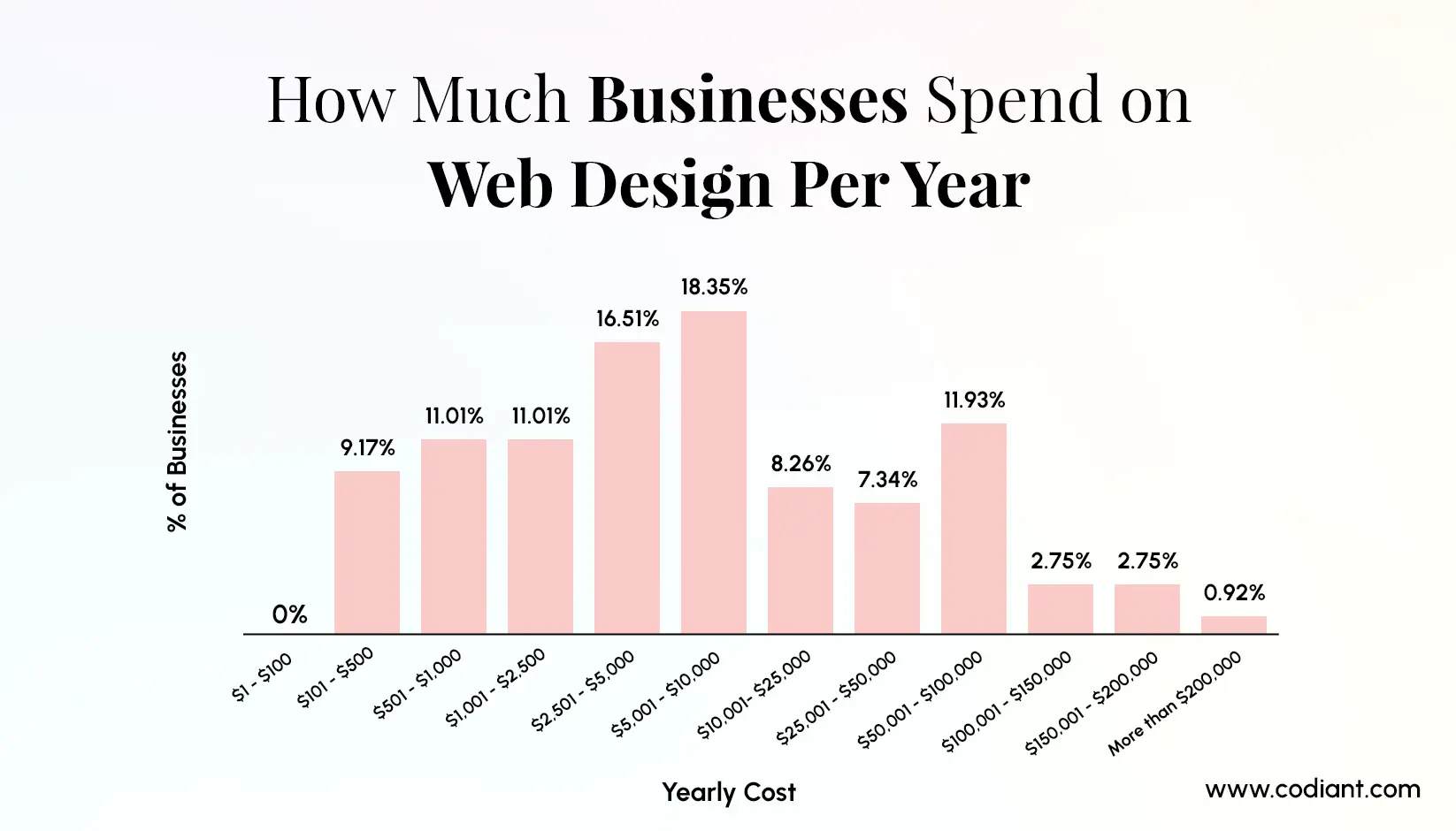
1. Small Business Website
Estimated Cost: $3,000-$10,000
Small business websites are designed for companies that primarily need a professional online presence without complex functionality. These websites typically include:
- 5–10 core pages such as Home, About, Services & Contact
- standard UI templates with responsive design
- basic contact forms or inquiry submission features
- CMS integration, commonly using WordPress
These websites are ideal for local service providers, consultants, restaurants, and early-stage startups that want to establish credibility online without investing heavily in custom development.
2. Professional Business Website
Estimated Cost: $10,000-$40,000
Most modern companies fall into this category when planning a new website. Professional business websites are designed to support marketing, branding and customer acquisition.
Typical features include:
- custom UI/UX design development tailored to the brand
- responsive layouts optimized for mobile devices
- advanced CMS capabilities for content management
- analytics integrations for marketing insights
- SEO-friendly architecture
This range represents the typical business website development cost for organizations that want a scalable and performance-focused digital presence.
3. Custom Web Applications
Estimated Cost: $40,000-$120,000+
When websites begin functioning more like software platforms, costs increase due to more complex development requirements.
Custom web applications often include:
- user dashboards and account management
- advanced authentication systems
- API integrations with external services
- automated workflows and data processing
- custom backend systems and databases
At this stage, companies move away from template websites and shift toward custom website development pricing, where solutions are tailored specifically to business processes.
4. Enterprise Website Platforms
Estimated Cost: $120,000-$500,000+
Enterprise-level websites operate at a much larger scale and often serve thousands or millions of users simultaneously.
These platforms typically require:
- high-performance architecture capable of handling heavy traffic
- complex integrations with multiple enterprise systems
- advanced security frameworks and compliance standards
- scalable cloud infrastructure for reliability and performance
For large organizations, the enterprise website development cost reflects the technical infrastructure required to support mission-critical digital operations.
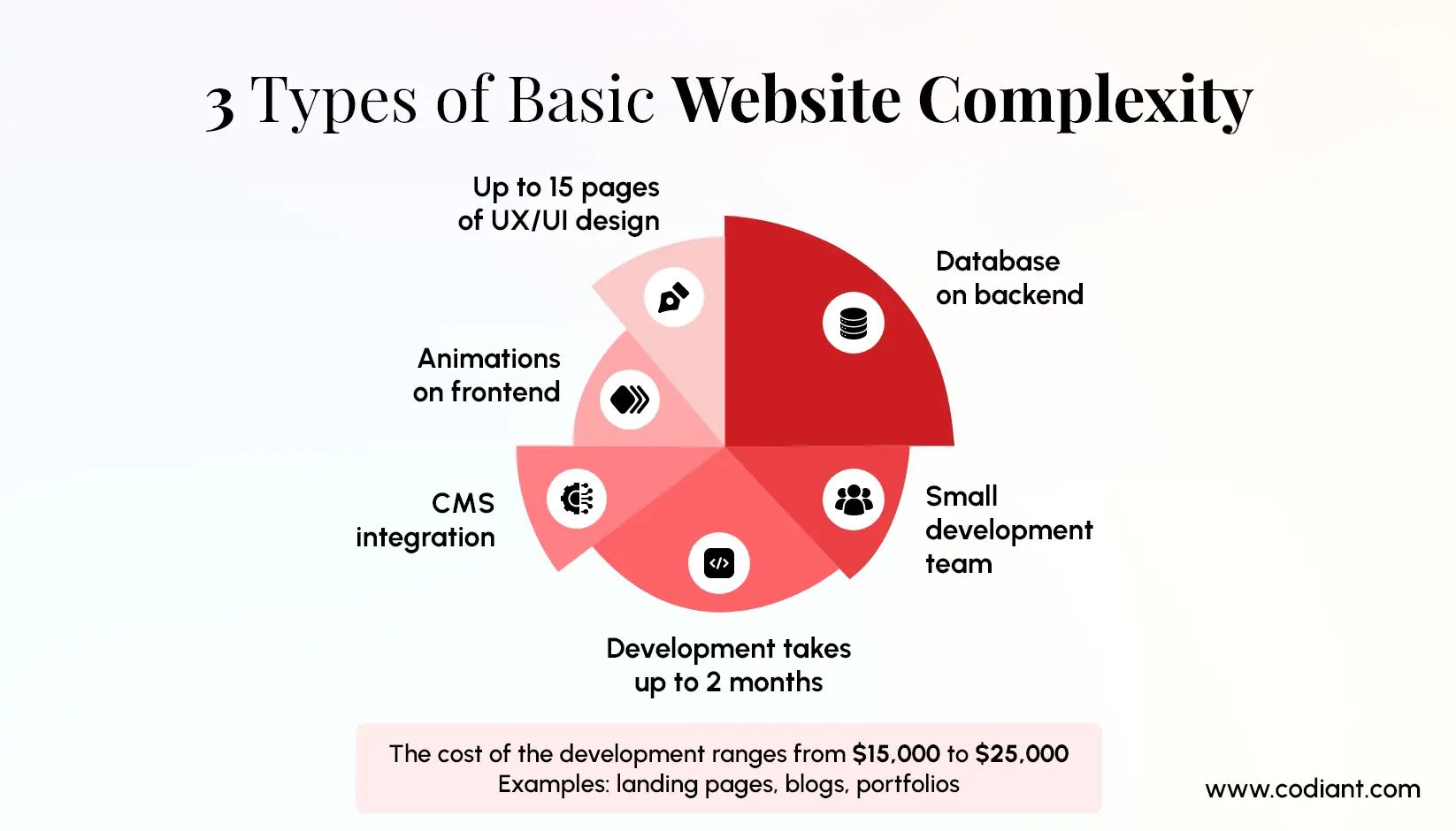
Website Design Cost Breakdown in the USA
Understanding how website budgets are distributed helps businesses plan projects realistically and evaluate proposals from development agencies more effectively.
Website Development Cost Breakdown (USA)
| Development Phase | Typical Cost Range | What This Includes |
|---|---|---|
| UX Research & Strategy | $2,000 – $10,000 | Competitor analysis, user research, wireframes, user journey mapping |
| UI Design | $3,000 – $15,000 | Page layouts, typography, color systems, visual design elements |
| Frontend Development | $5,000 – $25,000 | Converting UI designs into responsive interactive web interfaces |
| Backend Development | $10,000 – $50,000+ | Databases, APIs, authentication systems, integrations |
| Quality Assurance & Testing | $2,000 – $10,000 | Cross-device testing, browser compatibility, bug fixing |
| Hosting & Infrastructure | $50 – $1,000 / month | Cloud hosting, servers, deployment, performance monitoring |
1. UX Research and Strategy
Estimated Cost- $2,000 -$10,000
Prior to design and development this stage is focused on how users use the website. It usually comprises of competitor research user behavior analysis, wireframe creation, and mapping the overall user journey. However, without strategic UX planning throughout the website design and development process the final site architecture might not fulfill business objectives, streamlining navigation or providing effortless user-experience.
2. UI Design
Estimated Cost- $3,000 -$15,000
UI designers deal with the look and feel of the website. Here we define page structure, typography hierarchy, color palettes, icons, and design systems used across the site. A well-built UI design provides businesses with brand consistency and improves user experience by making the website more intuitive and visually engaging for visitors.
3. Frontend Development
Estimated Cost- $5,000 -$25,000
Frontend engineers transform design layouts into fully functional web interfaces. Using modern frameworks and coding standards they ensure the website is responsive, interactive & optimized for performance across devices and browsers.
4. Backend Development
Estimated Cost- $10,000 -$50,000+
Backend development powers the logic behind the website. Engineers build databases, authentication systems, APIs, and integrations that support features such as user accounts, dashboards & content management systems.
5. Quality Assurance and Testing
Estimated Cost- $2,000 -$10,000
Testing ensures the website performs reliably before launch. QA teams verify functionality across different devices, browsers, and screen sizes while identifying bugs or usability issues that need to be resolved.
6. Hosting and Infrastructure
Estimated Cost- $50 -$1,000 per month
Once development is complete, websites must be deployed on secure and scalable infrastructure. Cloud providers such as AWS, Google Cloud, and Microsoft Azure support hosting, server management & performance monitoring for modern web platforms.
Enterprise Website Development Cost
Large enterprises operate at a completely different level of digital complexity.
Their platforms must support-
- thousands of users
- large databases
- complex integrations
- high-traffic environments
Because of this, enterprise website development cost can range from $120,000 to $500,000 or more.
Enterprise systems often require-
- microservices architecture
- enterprise CMS platforms
- cloud scaling infrastructure
- advanced security layers
- role-based user permissions
Industries that commonly invest in enterprise websites include-
- fintech companies
- healthcare organizations
- SaaS platforms
- global ecommerce marketplaces
For organizations managing large digital ecosystems, the cost of building a custom website reflects the technical architecture required to support long-term scalability.
Feature: Wise Website Development Cost Breakdown in 2026
Understanding overall pricing is useful but businesses often want to know how specific features contribute to the total cost of building a website.
Modern websites now include advanced capabilities such as automation, personalization, and AI-powered services and tools that improve user experience and business efficiency.
The table below shows an approximate feature-wise website development cost breakdown in 2026 helping businesses estimate budgets based on functionality and technology requirements.
| Website Feature | Estimated Cost Range | What It Includes |
|---|---|---|
| Custom UI/UX Design | $3,000 – $15,000 | Wireframes, user journey mapping, responsive interface design, brand-aligned layouts |
| CMS Integration | $2,000 – $8,000 | WordPress, headless CMS, content publishing and editing workflows |
| User Login & Authentication | $2,000 – $6,000 | Secure login systems, account management, password protection |
| User Dashboard | $5,000 – $20,000 | Personalized dashboards, activity tracking, data visualization |
| AI Chatbots & Virtual Assistants | $5,000 – $25,000 | AI-powered customer support bots, conversational interfaces, automated assistance |
| AI Personalization Engines | $8,000 – $30,000 | Dynamic content recommendations, personalized product suggestions, behavior-based delivery |
| AI Smart Search & Recommendations | $10,000 – $40,000 | AI-driven product discovery, predictive search, recommendation engines |
| AI Automation Workflows | $10,000 – $50,000 | Automated workflows, smart notifications, AI-driven business process automation |
| Payment Gateway Integration | $3,000 – $10,000 | Stripe, PayPal, subscription billing, checkout systems |
| Ecommerce Product System | $8,000 – $40,000 | Product catalogs, inventory systems, shopping cart, order management |
| API Integrations | $3,000 – $15,000 | CRM integrations, marketing tools, analytics platforms |
| Advanced Search Functionality | $2,000 – $8,000 | Smart filtering, keyword search, indexing systems |
| Analytics & Reporting | $3,000 – $12,000 | Data dashboards, business insights, performance tracking |
| Security & Compliance Features | $4,000 – $20,000 | Encryption systems, role-based access control, compliance frameworks |
| Mobile Optimization | $2,000 – $8,000 | Responsive design, cross-device performance improvements |
| Performance Optimization | $2,000 – $10,000 | Speed optimization, caching, server performance improvements |
As websites become more intelligent and automated AI-powered capabilities such as chatbots, personalization engines, predictive search & workflow automation are increasingly influencing the website development cost in 2026. Businesses building advanced digital platforms often combine several of these features which directly impacts the final cost of building a custom website.
Not sure what your website will cost?
Tell us what you’re building, we’ll break down real costs, timelines, and smarter options for you.
Cost to Build a Website for Different Business Types
Website requirements vary widely across industries. The cost to build a website for business depends on the platform type, feature complexity, integrations, and scalability requirements. Below is a snapshot of typical website development cost ranges in 2026 across different business models.
Website Cost Snapshot by Business Type
| Business Type | Typical Cost Range | Key Features Included | Typical Timeline |
|---|---|---|---|
| Startup Website | $5,000 – $15,000 | Landing pages, product information pages, contact forms, lead capture tools | 4–6 weeks |
| Small Business Website | $8,000 – $25,000 | Service pages, CMS, blog, SEO setup, contact systems | 6–8 weeks |
| Ecommerce Website | $20,000 – $150,000 | Product catalog, payment gateway, inventory management, order tracking | 8–16 weeks |
| SaaS Platform Website | $40,000 – $200,000+ | User dashboards, subscription systems, role-based permissions, API integrations | 3–6 months |
| Marketplace Platform | $80,000 – $400,000+ | Buyer and seller accounts, payment processing, transaction systems, review management | 4–8 months |
| Enterprise Website | $120,000 – $500,000+ | Advanced integrations, high traffic architecture, security compliance, role-based systems | 6–12 months |
| AI-Powered Platform | $100,000 – $600,000+ | AI models, recommendation engines, automation workflows, data analytics | 6–12 months |
| Content Platform / Media Portal | $30,000 – $120,000 | CMS architecture, editorial workflows, search optimization, ad integrations | 3–5 months |
1. Startup Websites
Estimated Cost: $5,000-$15,000
Startup websites are designed to launch quickly and communicate a product or service clearly. They usually focus on marketing rather than complex functionality.
Typical features include:
- landing pages
- product or service pages
- contact forms
- lead capture tools
These websites help startups validate ideas, attract early customers, and begin digital marketing efforts without large development investments.
2. Small Business Websites
Estimated Cost: $8,000-$25,000
Small businesses often require more structured websites compared to startups.
Typical features include:
- service pages
- blog or CMS system
- SEO-optimized structure
- booking or inquiry forms
These websites are designed to support local marketing, customer inquiries & brand credibility.
3. Ecommerce Websites
Estimated Cost: $20,000-$150,000
Ecommerce platforms require significantly more functionality.
Typical features include:
- product catalogs
- payment gateways
- inventory management
- order tracking systems
- customer accounts
The complexity of ecommerce platforms increases the business website development cost because they require secure payment systems and scalable product management tools.
4. SaaS Platforms
Estimated Cost: $40,000-$200,000+
SaaS platforms combine website infrastructure with full product development.
Common features include:
- user dashboards
- subscription systems
- role-based permissions
- API integrations
These platforms require extensive backend architecture and secure data handling.
5. Marketplace Platforms
Estimated Cost: $80,000-$400,000+
Marketplace websites connect multiple user groups such as buyers, sellers, or service providers.
Key features include:
- multi-vendor accounts
- payment processing systems
- transaction management
- rating and review systems
Because these platforms manage complex workflows and financial transactions, they significantly influence the website development cost in 2026.
6. Enterprise Websites
Estimated Cost: $120,000-$500,000+
Enterprise websites are built for large organizations handling high traffic and complex operations.
They typically include:
- enterprise CMS platforms
- multi-system integrations
- advanced security frameworks
- cloud infrastructure scaling
Enterprise platforms require large development teams and extensive planning.
7. AI-Powered Platforms
Estimated Cost: $100,000-$600,000+
AI-powered platforms are becoming increasingly common in 2026.
They often include:
- AI chatbots solutions
- recommendation engines
- predictive analytics systems
- automated workflows
Building AI-enabled systems requires machine learning infrastructure and specialized development expertise, which increases the cost of building a custom website.
8. Content Platforms & Media Websites
Estimated Cost: $30,000-$120,000
Media portals and content platforms focus on publishing, audience engagement & monetization.
Typical features include:
- advanced CMS systems
- content categorization
- search and recommendation systems
- advertising integrations
These platforms must handle large content volumes and high traffic.
Website Development Timeline in 2026
Modern website development service timelines vary based on project complexity, required features, integrations, and the overall scale of the digital platform.
| Website Type | Typical Timeline | What It Includes |
| Basic Website | 2–6 weeks | Simple informational websites with limited pages, standard layouts, contact forms & basic CMS integration. |
| Professional Business Website | 8–12 weeks | Custom design, responsive layouts, CMS setup, analytics integrations, SEO structure & multiple content pages. |
| SaaS Platform | 4–6 months | User dashboards, authentication systems, API integrations, subscription systems & complex backend development. |
| Enterprise Platforms | 6–12 months | Scalable architecture, enterprise security frameworks, cloud infrastructure, large databases & complex system integrations. |
Another common question businesses ask is how long it takes to launch a website. Development timelines depend on scope, features, and the size of the development team.
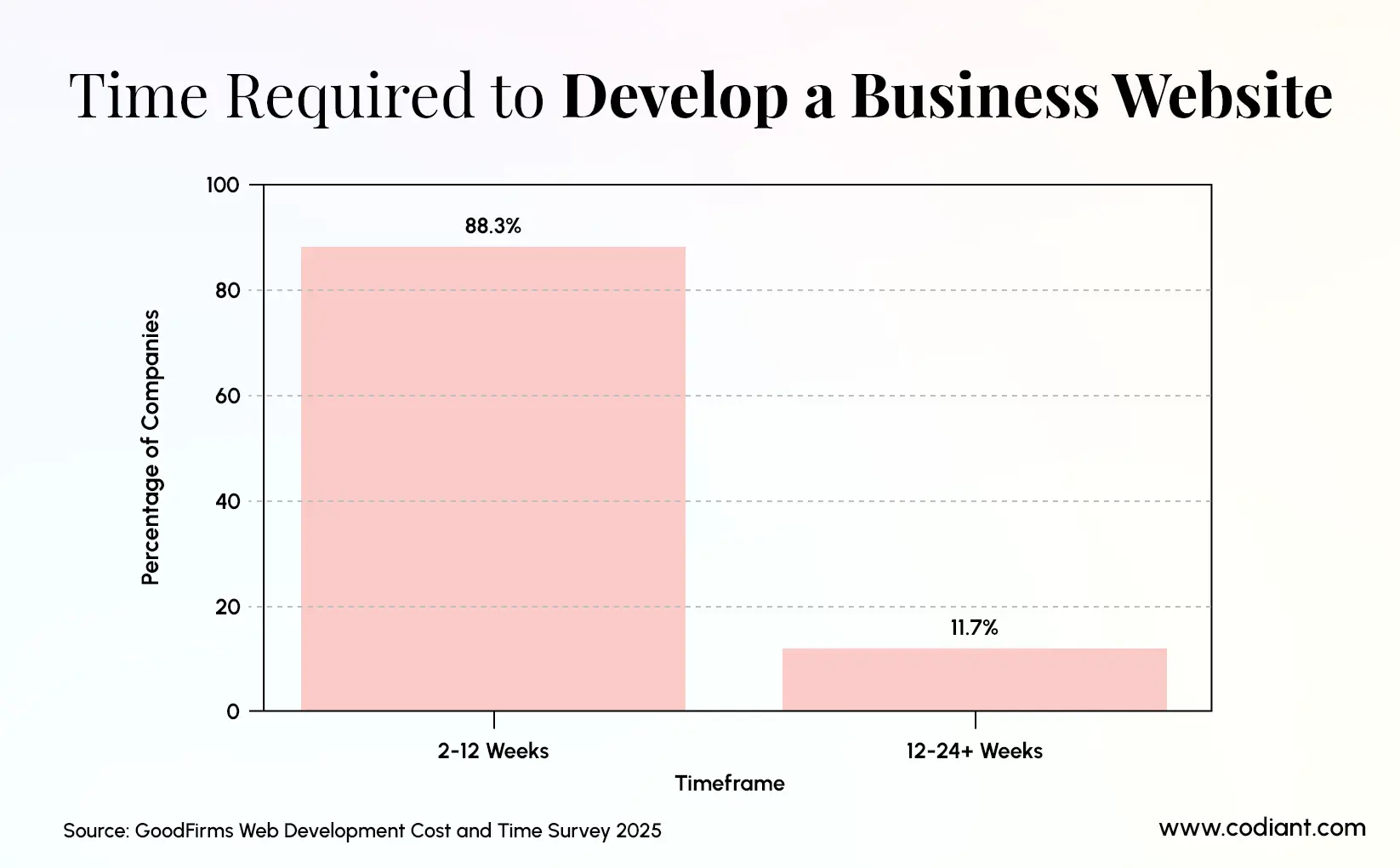
1. Basic Website
Timeline: 4–6 weeks
Small websites with limited pages can be developed quickly.
2. Professional Business Website
Timeline: 8–12 weeks
These websites involve custom design, integrations & testing.
3. SaaS Platform
Timeline: 4–6 months
Building a SaaS platform involves extensive backend architecture and product development.
4. Enterprise Platforms
Timeline: 6–12 months
Enterprise systems require extensive planning, security frameworks & scalability architecture.
The timeline directly impacts how much it costs to create a website, as longer projects require larger development teams.
Key Factors That Affect Website Development Cost
One of the biggest reasons pricing varies so widely is that no two websites are built the same. Several technical and strategic factors influence the cost of building a custom website.
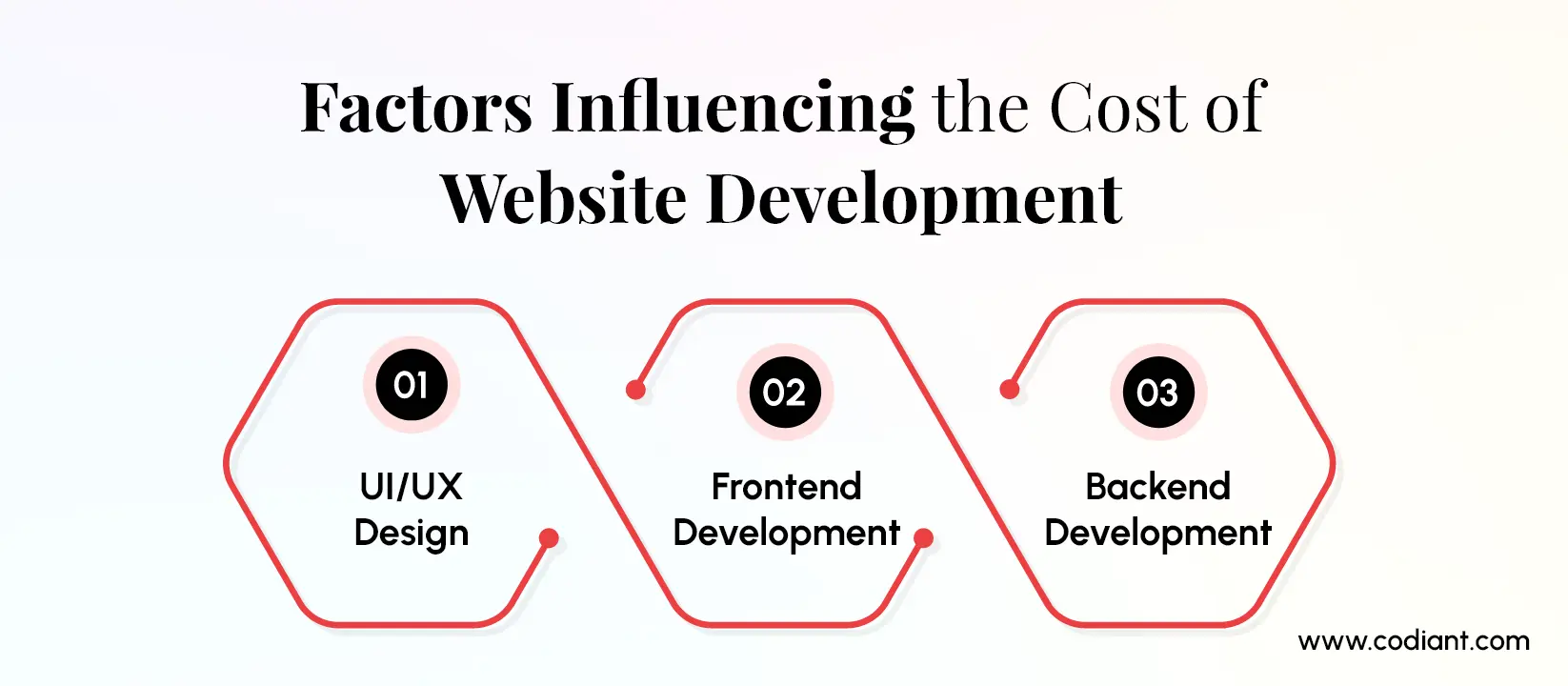
1. Website Size and Complexity
The number of pages and features significantly impacts cost.
A simple brochure website might include-
- homepage
- services pages
- contact page
But a complex platform may require-
- user dashboards
- booking systems
- analytics panels
- multiple user roles
The more workflows and features involved, the higher the website development company pricing.
2. Custom Design vs Templates
Template-based websites are faster and cheaper to build.
However, many businesses choose custom UI/UX design to-
- strengthen brand identity
- improve user experience
- differentiate from competitors
Custom design work typically increases website design cost USA and global pricing ranges.
3. Frontend Development
Frontend development solutions involves translating visual designs into functional user interfaces using technologies like-
- HTML
- CSS
- JavaScript
- React or Next.js
Modern frontend frameworks offer better performance but may require specialized expertise, which affects pricing.
4. Backend Development
Backend systems power the functionality behind a website.
They manage-
- databases
- authentication systems
- application logic
- integrations with other platforms
More complex backend systems naturally increase the cost to develop a website.
5. Third-Party Integrations
Many modern websites integrate external systems such as-
- payment gateways
- CRM platforms
- marketing automation tools
- analytics platforms
- AI tools
These integrations add development effort and influence website development company pricing.
6. Security and Compliance
For industries like healthcare, finance, or insurance, websites must comply with strict regulations.
Security features may include-
- encrypted databases
- secure authentication systems
- compliance frameworks
These requirements can significantly impact the cost of building a custom website.
Web Design vs Web Development: Understanding the Difference
Many people use the terms interchangeably, but web design and web development represent two distinct parts of the website creation process.
Understanding this difference helps businesses better evaluate the web design and development cost in 2026.
What is Web Design?
Web design focuses on the visual and user experience aspects of a website.
Design work includes-
- layout creation
- typography selection
- color schemes
- user interface design
- user journey mapping
Professional UX design ensures users can easily navigate the site and complete actions such as purchases or inquiries.
What is Web Development?
Web development transforms the design into a working digital product.
Developers write code to implement-
- website functionality
- database interactions
- server communication
- API integrations
Both design and development contribute to the total website design cost USA and global development pricing.
Is Custom Website Development Worth the Investment?
Many businesses debate whether custom development is worth the investment compared to template-based solutions.
The answer depends on long-term goals.
Custom websites offer several advantages-
- complete control over design and functionality
- better scalability
- stronger brand identity
- improved performance and speed
- seamless integration with internal systems
Although custom website development pricing is typically higher upfront, understanding the cost of custom web development in 2026 can help businesses make informed investment decisions. A custom website often delivers stronger long-term value through improved performance, scalability, and flexibility.
Businesses that rely heavily on digital platforms usually find that investing in a custom website pays off over time by enhancing user experience, streamlining operations, and improving overall business efficiency.
Technologies That Influence Website Development Pricing
The technology stack used to build a website can significantly affect development costs.
Modern web platforms rely on a combination of frontend frameworks, backend technologies, and cloud infrastructure.
1. Frontend Technologies
Common frontend frameworks include-
- React
- Next.js
- Vue.js
These frameworks enable fast, interactive web experiences but require skilled developers.
2. Backend Technologies
Backend systems may be built using-
- Node.js
- Python
- .NET
- Java
Each technology has different development ecosystems and complexity levels.
3. Cloud Infrastructure
Most modern websites deploy on cloud platforms such as-
- Amazon Web Services
- Microsoft Azure
- Google Cloud Platform
Infrastructure decisions affect both development costs and long-term operational expenses.
How Businesses Can Reduce Website Development Costs?
While building a professional website requires investment, businesses can still optimize costs with smart planning.
- Clearly Define Project Requirements: Well-defined project scopes prevent unnecessary revisions and development delays.
- Focus on MVP Features: Launching with a minimum viable product allows businesses to start small and expand features later.
- Choose the Right Development Partner: A reliable development partner helps businesses avoid costly technical mistakes and inefficient architectures.
- Use Scalable Technologies: Choosing modern frameworks ensures the website can grow without major redevelopment.
- Consider Global Development Teams: Many businesses reduce costs by working with offshore development teams that offer high-quality engineering at competitive rates.
Final Thoughts: Planning Your Website Budget in 2026
The web design and development cost in 2026 varies widely depending on the type of website being built.
Small business websites may cost a few thousand dollars, while complex enterprise platforms can require six-figure investments.
Key factors that influence the website development cost 2026 include:
- Design complexity
- Platform functionality
- Integrations
- Security requirements
- Technology stack
Businesses planning to invest in a website should focus not only on initial costs but also on long-term value.
A well-designed website serves as a powerful digital asset that supports marketing, sales. and customer engagement for years to come.
Understanding the cost to build a website for business helps organizations make informed decisions and invest in platforms that truly support growth.
Don’t overpay for your website
We help you plan the right features, avoid waste, and build something that actually drives results.
The Author

Frequently Asked Questions
Several factors affect website development pricing, including project complexity, custom design requirements, integrations, backend architecture & security needs. Larger platforms with advanced functionality typically require more development time and specialized expertise, which increases overall project cost.
Enterprise website development cost typically ranges from $120,000 to $500,000 or more, depending on system complexity, integrations, security requirements & scalability needs.
Frontend frameworks like React and Next.js, backend technologies such as Node.js or Python, and cloud infrastructure platforms like AWS all influence development effort and overall pricing.
Businesses can reduce costs by defining clear requirements, launching with an MVP version, selecting scalable technologies & working with experienced development partners who can optimize architecture and development workflows.
Development timelines vary depending on project complexity. Basic websites may take 4–6 weeks, while complex SaaS platforms or enterprise systems can take 6–12 months to design and develop fully.
Featured Blogs
Read our thoughts and insights on the latest tech and business trends

How Much Does It Cost to Build an MVP in 2026? A Complete Pricing Guide
- September 10, 2026
- Digital Transformation
MVP development cost typically ranges from $5,000 for a basic web-based product to $150,000 or more for a complex, cross-platform solution. A custom MVP with user accounts, a backend, essential integrations and a polished interface... Read more

How Much Does It Cost to Hire a Dedicated AI/LLM Developer in 2026?
- September 8, 2026
- Artificial Intelligence Staff Augmentation
Hiring a dedicated AI or large language model (LLM) developer typically costs $35–$60 per hour for general AI engineering and $50–$200 per hour for specialised machine learning work, with enterprise pricing rising for advanced RAG,... Read more

HIPAA-Compliant App Development in 2026: How to Build Securely and Avoid Preventable Fines
- September 4, 2026
- Mobile App Development
HIPAA-compliant app development in 2026 requires six foundations: complete ePHI mapping, documented risk analysis, role-based access, encryption, signed business associate agreements, and continuous security monitoring. This matters most to healthcare CTOs, product leaders, and compliance... Read more