
CareDento - AI Powered Dental Clinic Management Platform
CareDento is an AI-powered dental clinic platform designed to manage patient data, streamline clinical workflows, and deliver intelligent diagnostic insights for modern dental practices.
Book a Demo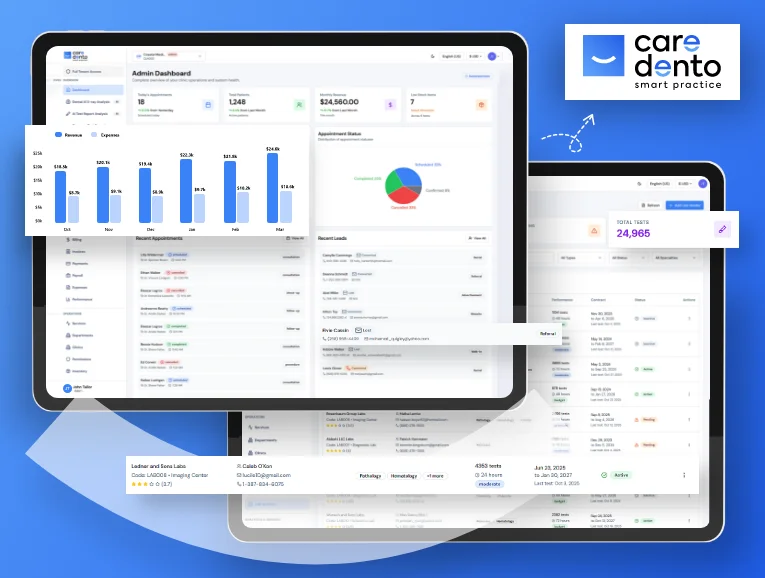
About the project
CareDento is an AI-powered dental clinic management platform built to streamline clinical operations, centralize patient data, and enhance diagnostic accuracy. It enables dental professionals to manage workflows, records, and treatments through a unified system, improving operational efficiency and decision-making across modern dental practices.
A key strength of CareDento lies in its AI-assisted diagnostic capabilities. The platform supports AI-powered X-ray analysis and test report evaluation, helping dentists identify patterns, detect issues earlier, and enhance treatment accuracy. This not only supports clinical decision-making but also builds greater trust with patients through data-backed insights and visual explanations.
Challenge
Dental clinics relied on fragmented systems for patient records, diagnostics, scheduling, and billing, creating operational inefficiencies and data silos. Existing solutions lacked AI-driven clinical support and real-time insights. Codiant identified the need for a unified platform to streamline workflows, reduce manual dependency, and enhance diagnostic accuracy through intelligent assistance.
Approach
Codiant’s product, design, and AI engineering teams collaborated to translate industry challenges into a scalable platform. Extensive workflow mapping and feature prioritization ensured alignment with real clinic operations. Agile development cycles enabled rapid iterations, integrating AI capabilities with core practice management modules while maintaining usability, performance, and data consistency across the system.
Discovery phase
Conducted stakeholder interviews, mapped clinical workflows, and analyzed operational bottlenecks across patient management, diagnostics, and administrative processes to define a focused, high-impact solution framework.
Market Research
The global dental practice management software market is projected to reach $6.2 billion by 2030, driven by increasing digital adoption.
The Gap
Most platforms handled operations but lacked integrated AI-driven clinical support and unified workflows. CareDento addressed this by combining practice management, diagnostics, and intelligent insights into a single, structured system.
Audience Struggles
Diagnostic Delays: 54% clinics face slower diagnosis due to manual X-ray interpretation workflows.
Revenue Leakage: 47% practices lose billable revenue due to untracked treatments and fragmented billing systems.
Patient Drop-offs: 39% clinics report missed follow-ups due to inefficient scheduling and reminder systems.
User Insights
| Tasks | Emotions | Challenges | Opportunities |
|---|---|---|---|
| Patient Registration | 😕 Frustration | Manual data entry leads to incomplete or inconsistent patient records. | Digital onboarding captures structured patient data instantly with minimal manual effort. |
| Appointment Scheduling | 😣 Overload | Managing multiple appointments manually causes overlaps and missed bookings. | Smart scheduling optimizes calendar slots and reduces conflicts automatically. |
| X-ray Analysis | 😟 Uncertainty | Interpreting dental scans manually can delay diagnosis and reduce accuracy. | AI-powered analysis highlights key findings for faster and more reliable diagnosis. |
| Test Report Review | 😓 Cognitive Load | Extracting insights from reports takes time and risks missing critical indicators. | AI-driven summaries surface important insights instantly for quicker decisions. |
| Treatment Planning | 🤔 Complexity | Lack of structured data makes planning treatments inconsistent and time-consuming. | Integrated charting provides clear visual records for precise treatment planning. |
| Billing & Insurance | 😤 Confusion | Manual billing and claim handling often leads to errors and delayed payments. | Automated billing and insurance workflows ensure accuracy and faster processing. |
| Staff Coordination | 😩 Disorganization | Poor visibility across roles leads to communication gaps and workflow delays. | Role-based access centralizes tasks and improves coordination across clinic teams. |
| Patient Follow-ups | 😟 Concern | Missed follow-ups reduce treatment continuity and patient retention rates. | Automated reminders ensure timely follow-ups and better patient engagement. |
Opportunity
Dental clinics operated across disconnected systems, limiting efficiency and visibility. Existing tools lacked integrated clinical intelligence and automation. CareDento introduced a unified platform combining AI-driven diagnostics, workflow management, and data centralization, enabling faster decisions, reduced manual effort, and scalable clinic operations.
Execution Timeline
1. Research & Discovery
2. Structure & Concept
3 Weeks3. Design & Prototyping
4 Weeks4. Development & Testing
7 WeeksResearch Phase
Codiant conducted in-depth research across dental practices to understand operational inefficiencies and adoption barriers. Insights revealed heavy reliance on manual workflows, fragmented patient data, and limited use of digital tools in diagnostics. Clinics prioritized ease of use, minimal training requirements, and faster turnaround in clinical and administrative tasks, shaping the platform’s usability-first approach.
Visual Research
Competitive analysis showed most systems were feature-heavy but difficult to navigate, increasing cognitive load for clinicians. Simplifying workflows, reducing screen transitions, and structuring patient data visually became key priorities. The design focused on clarity, intuitive navigation, and quick access to critical information without disrupting clinical flow.
User Persona Development
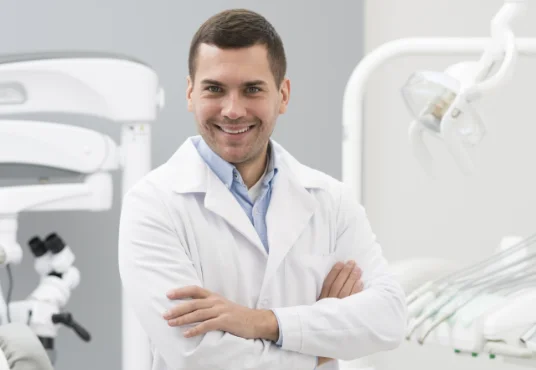
Dr. Ryan Whitaker
39
Multi-Clinic Dental Practitioner
Denver, USA
Persona Snapshot:
A growth-focused dental practitioner managing multiple clinics, aiming to standardize operations and improve clinical efficiency across locations.
Goals:
Streamline workflows across clinics to ensure consistent patient experience
Reduce time spent on administrative tasks and manual coordination
Improve diagnostic accuracy and treatment turnaround time
Challenges:
Inconsistent systems across clinics causing operational inefficiencies
Limited visibility into patient data across different locations
High dependency on manual processes slowing down clinic operations
How CareDento Helps:
- Centralized platform unifies multi-clinic data for better control and operational consistency
- AI-driven insights support diagnosis for faster treatment planning and improved outcomes
- Automated workflows reduce manual dependency, increases efficiency and scale operations
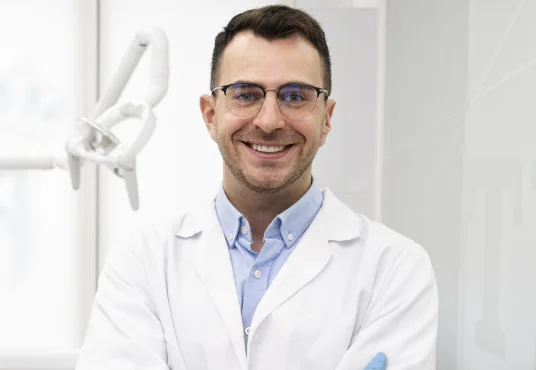
Dr. Maxwell Reed
47
Senior Dental Surgeon & Clinic Director
San Diego, USA
Persona Snapshot:
An experienced clinic director focused on improving treatment accuracy while maintaining operational control across a high-volume dental practice.
Goals:
Enhance diagnostic precision to improve patient outcomes and treatment success rates
Optimize clinic workflows to handle higher patient volumes efficiently
Maintain consistency in operations and reporting across departments
Challenges:
Delays in diagnosis due to manual interpretation of clinical data
Managing large patient volumes without compromising care quality
Limited real-time visibility into clinic performance and operational metrics
How CareDento Helps:
- AI-powered diagnostics support clinical decisions, improve accuracy and faster treatment outcomes
- Structured EMR centralizes patient data leading to better accessibility and reduced information gaps
- Automated workflows streamline operations, higher patient throughput and operational efficiency
Ideation
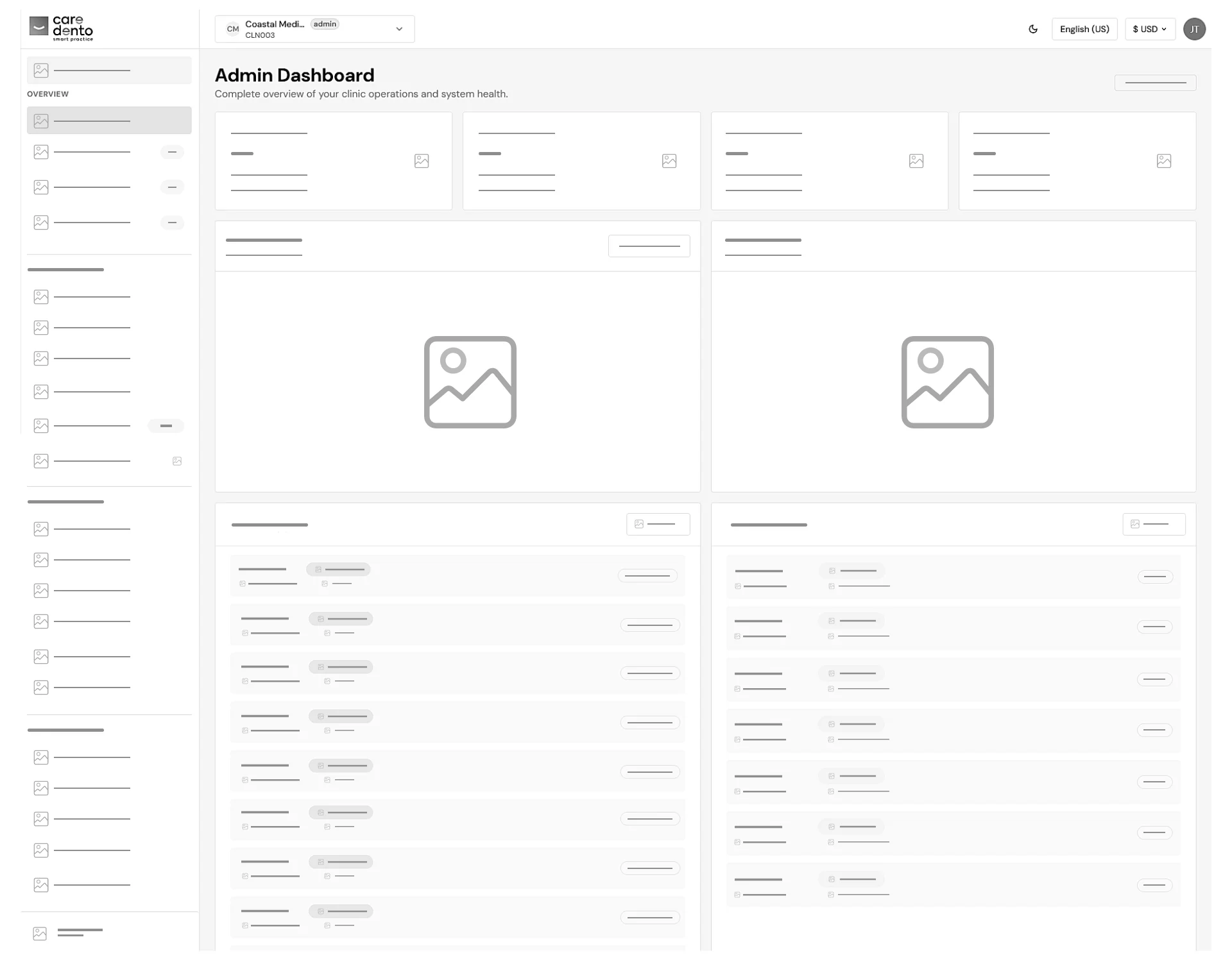
Persona insights from dental practitioners and clinic administrators shaped the foundation of CareDento’s concept. The focus was on simplifying fragmented workflows while enabling faster, data-driven clinical decisions. Core UX goals centered around clarity, speed, and minimal cognitive load during high-pressure clinical tasks. Early concepts were tested against real scenarios like patient onboarding, diagnosis, and treatment planning. Each iteration prioritized reducing manual effort and ensuring seamless transitions across clinical and administrative workflows.
User flow
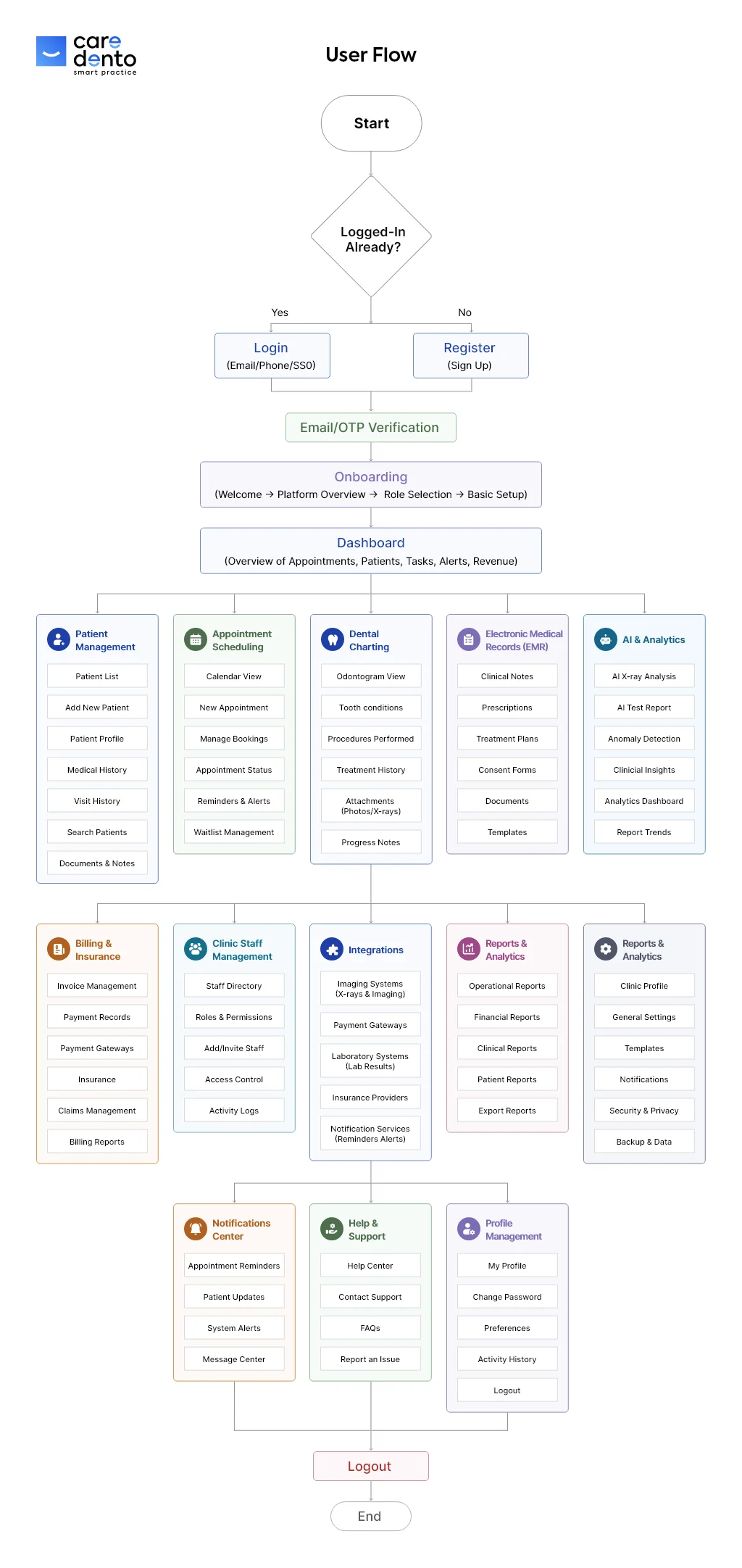
Wireframing
Feature concepts
1. AI X-Ray Analysis
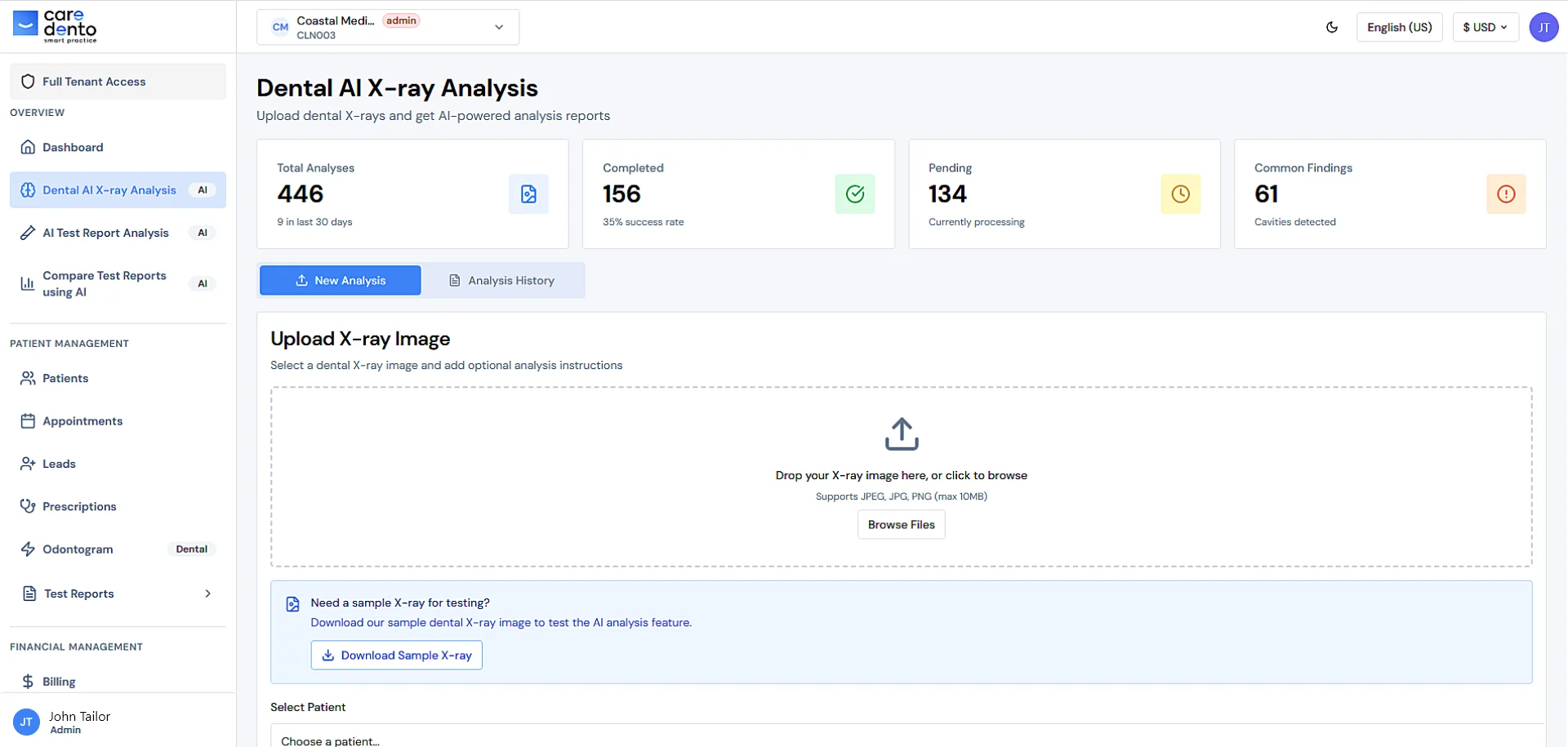
AI analyzes dental X-rays to support faster, more accurate diagnosis decisions.
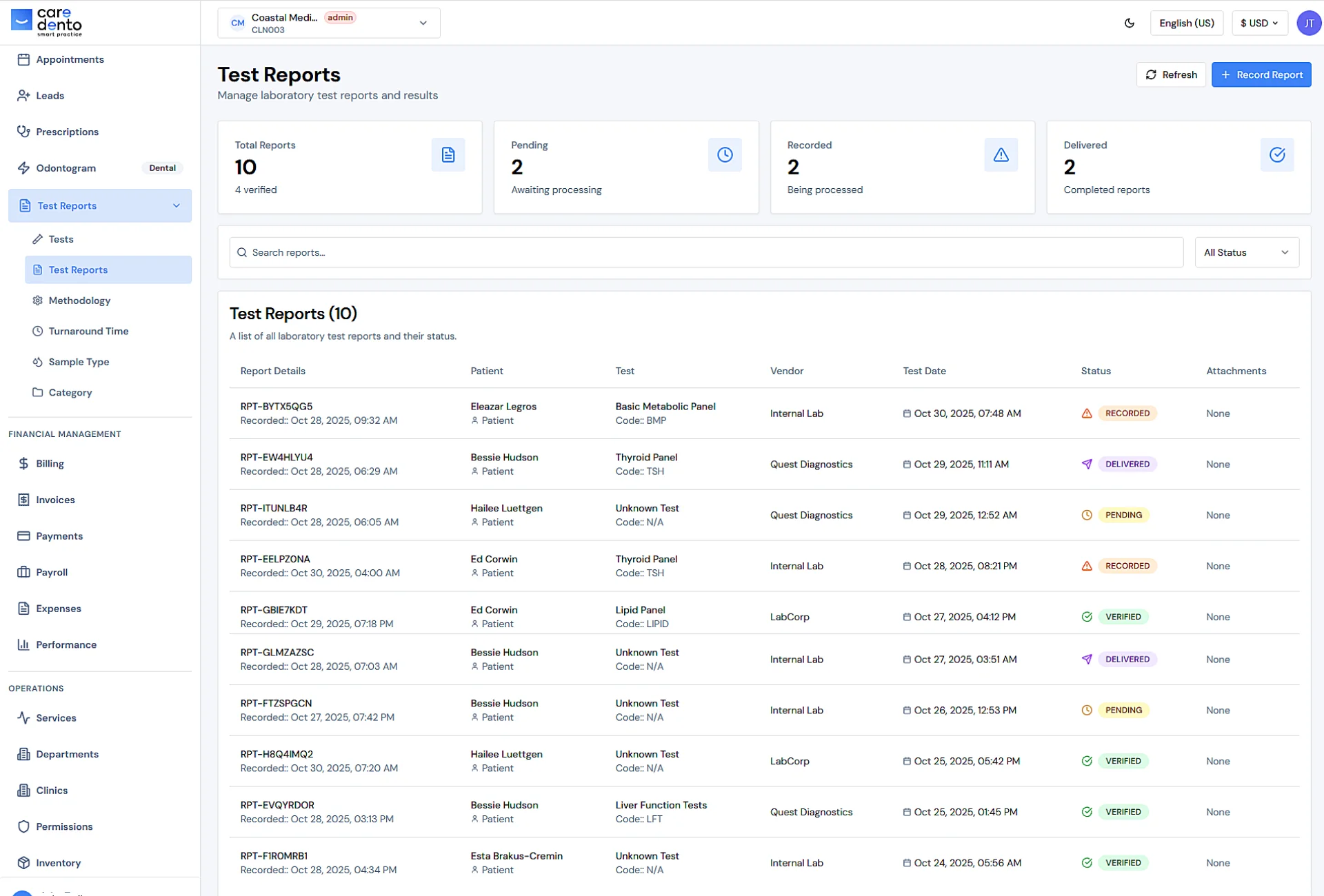
2. AI Test Report Analysis
AI extracts key insights from reports, reducing manual review effort significantly.
3. Patient Management System
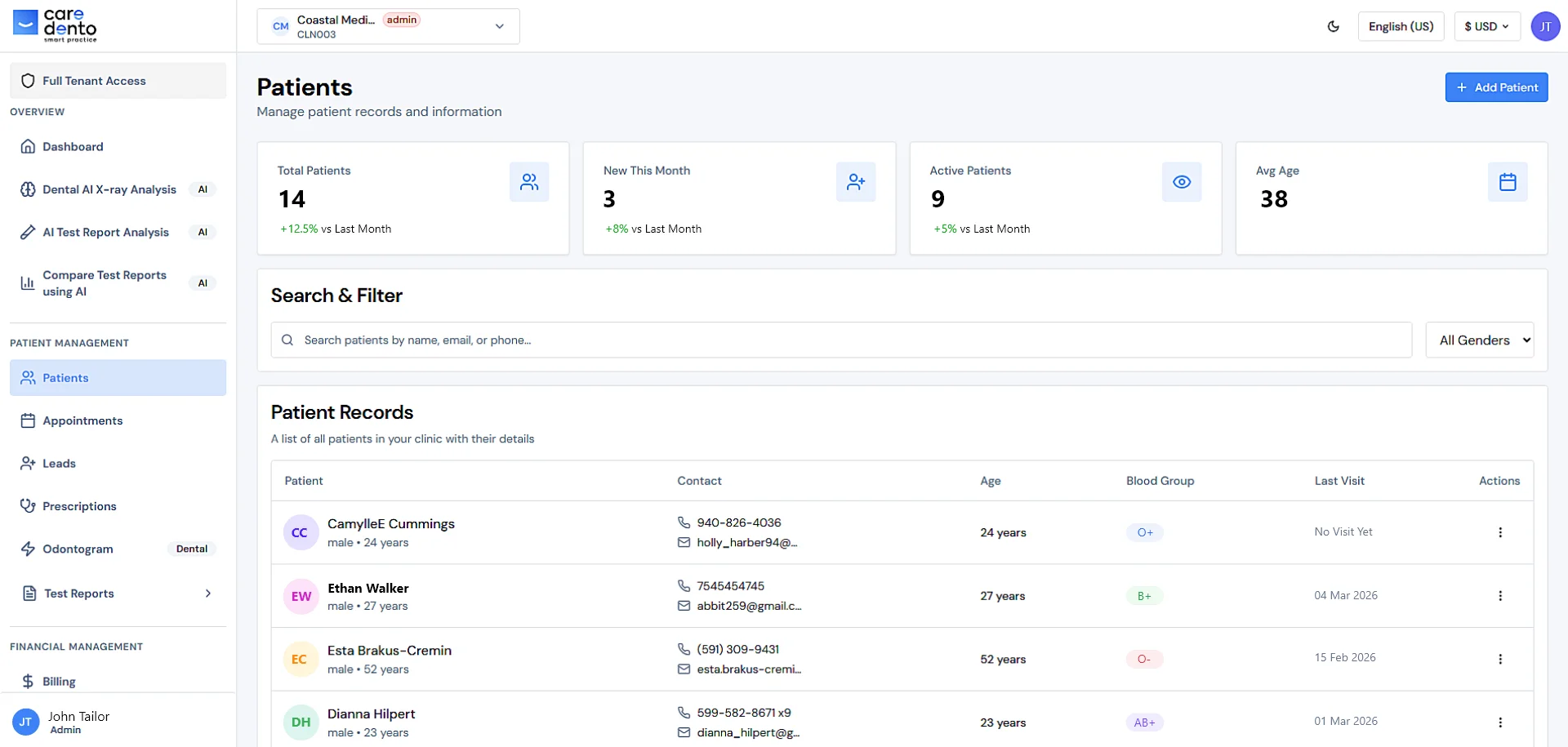
Manage complete patient profiles including history, treatments, and medical records digitally.
4. Electronic Medical Records (EMR)
Structured digital records ensure easy access to patient data across visits.
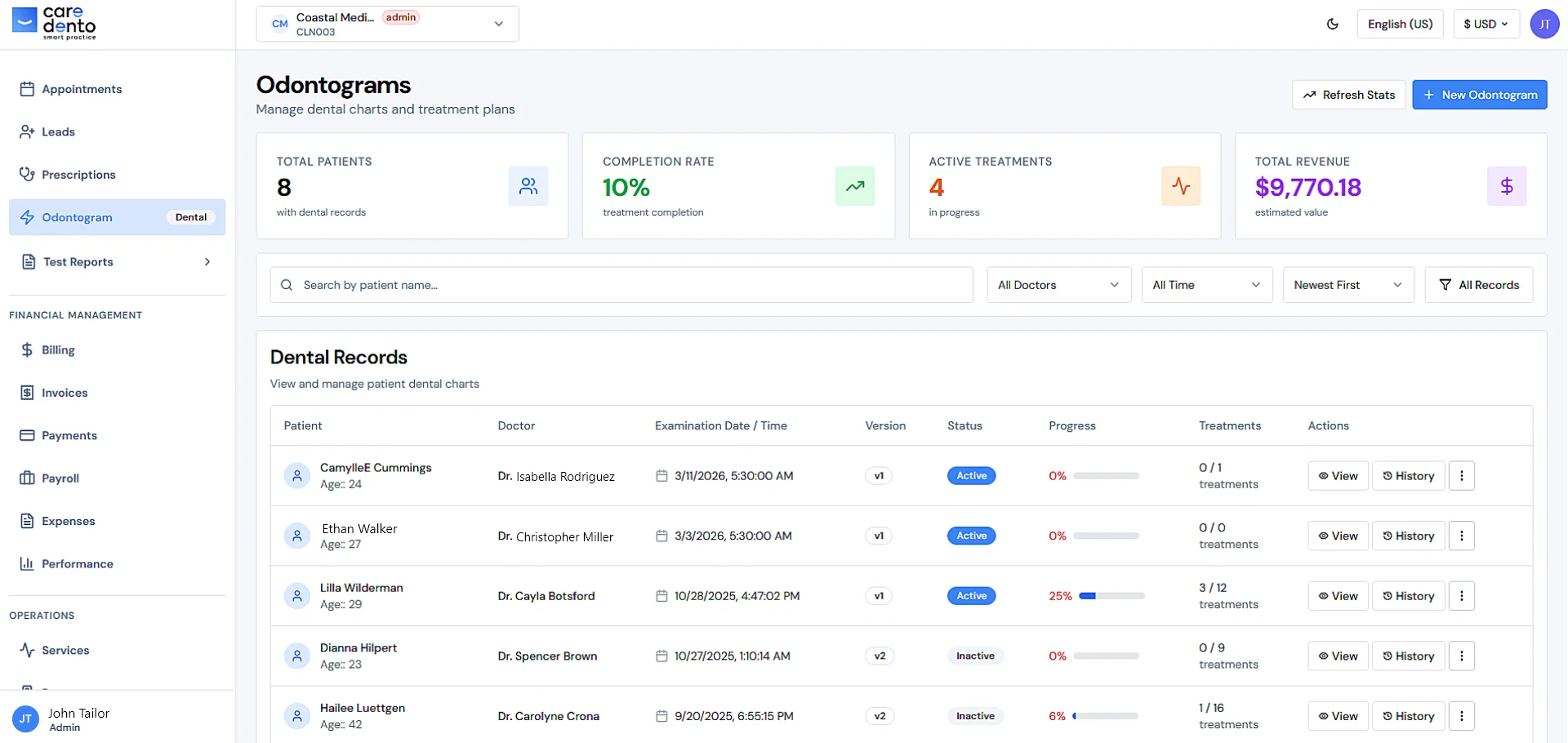
5. Dental Charting
Visual dental charts help document conditions and plan treatments with precision.
6. Appointment Scheduling
Schedule appointments efficiently with calendar-based system to avoid conflicts and delays.
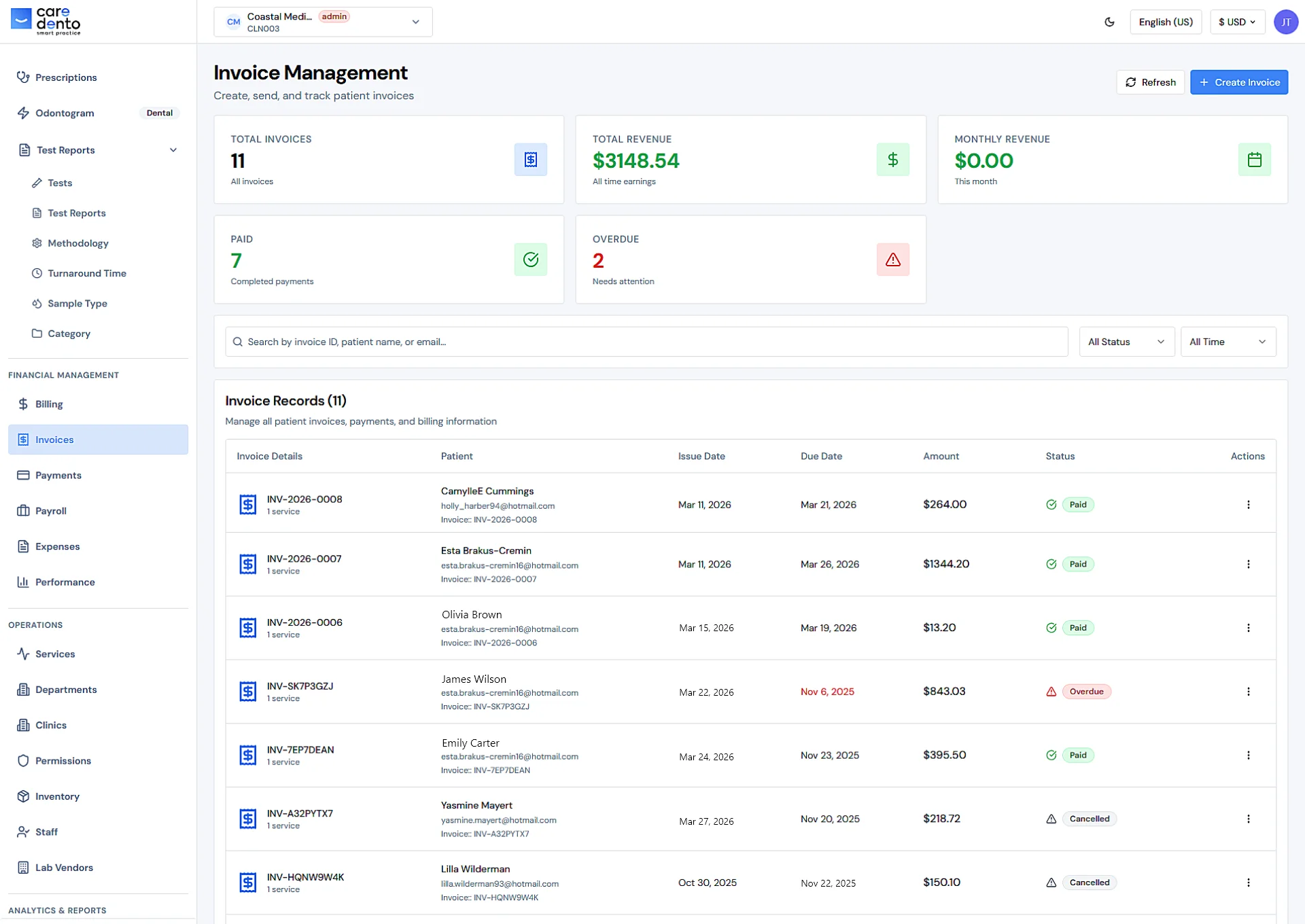
7. Billing & Invoicing System
Generate invoices, track payments, and manage billing operations from one system.
8. Insurance Management
Handle insurance eligibility, claims processing, and reimbursement tracking within platform easily.
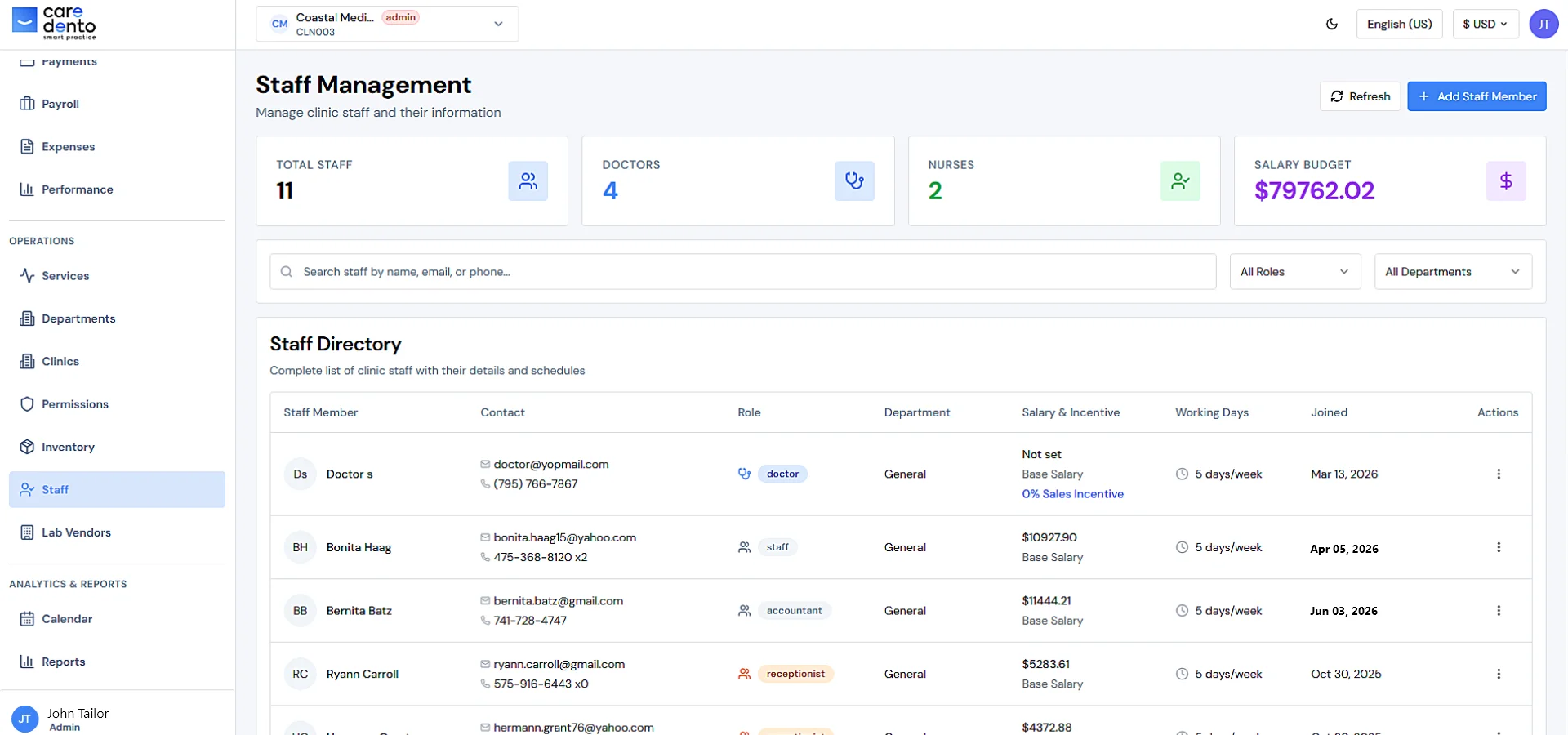
9. Clinic Staff Management
Manage staff roles, permissions, and tasks with controlled access across system.
10. Integration Systems
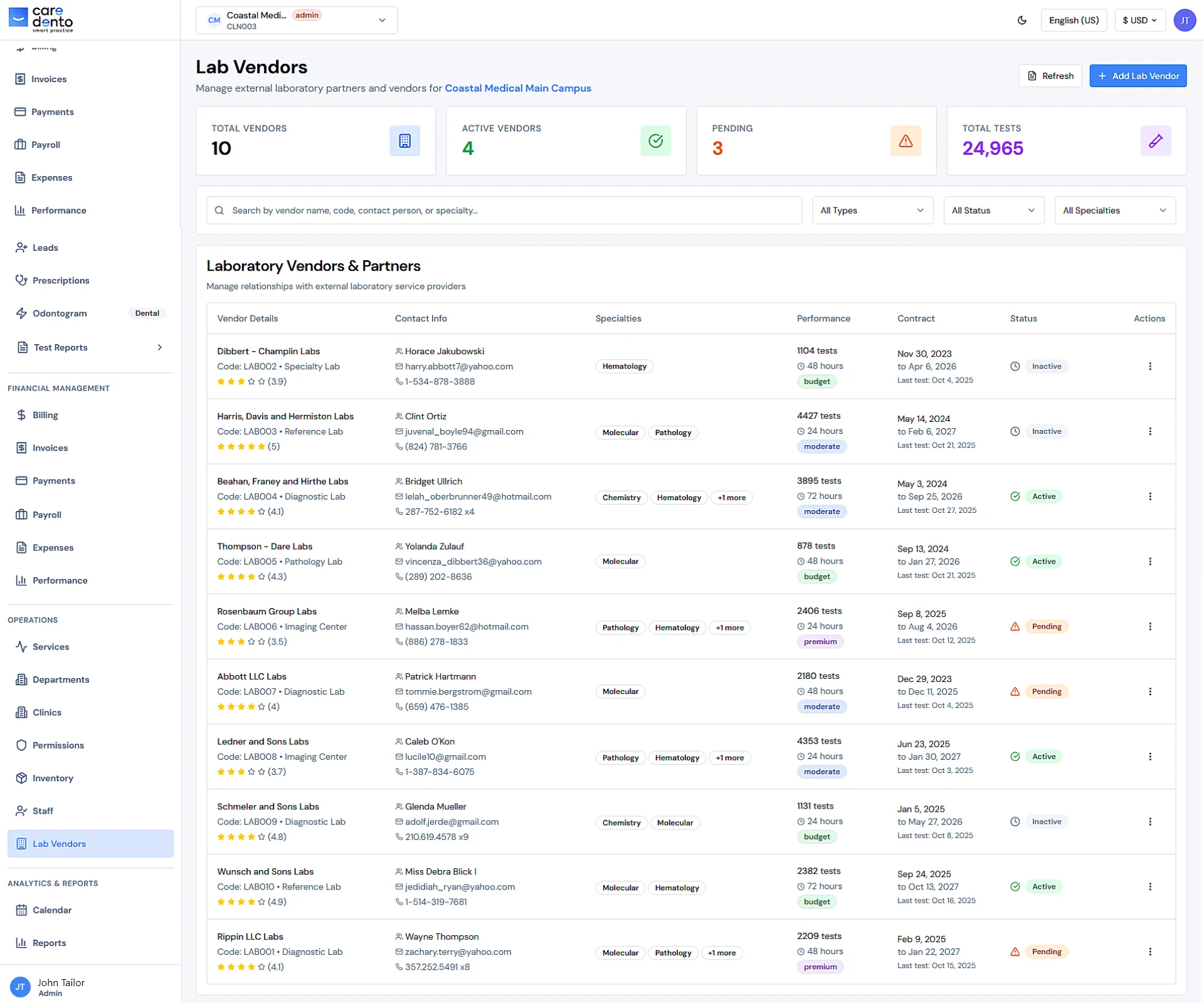
Connect imaging, labs, payments, and insurance systems for unified workflow management.
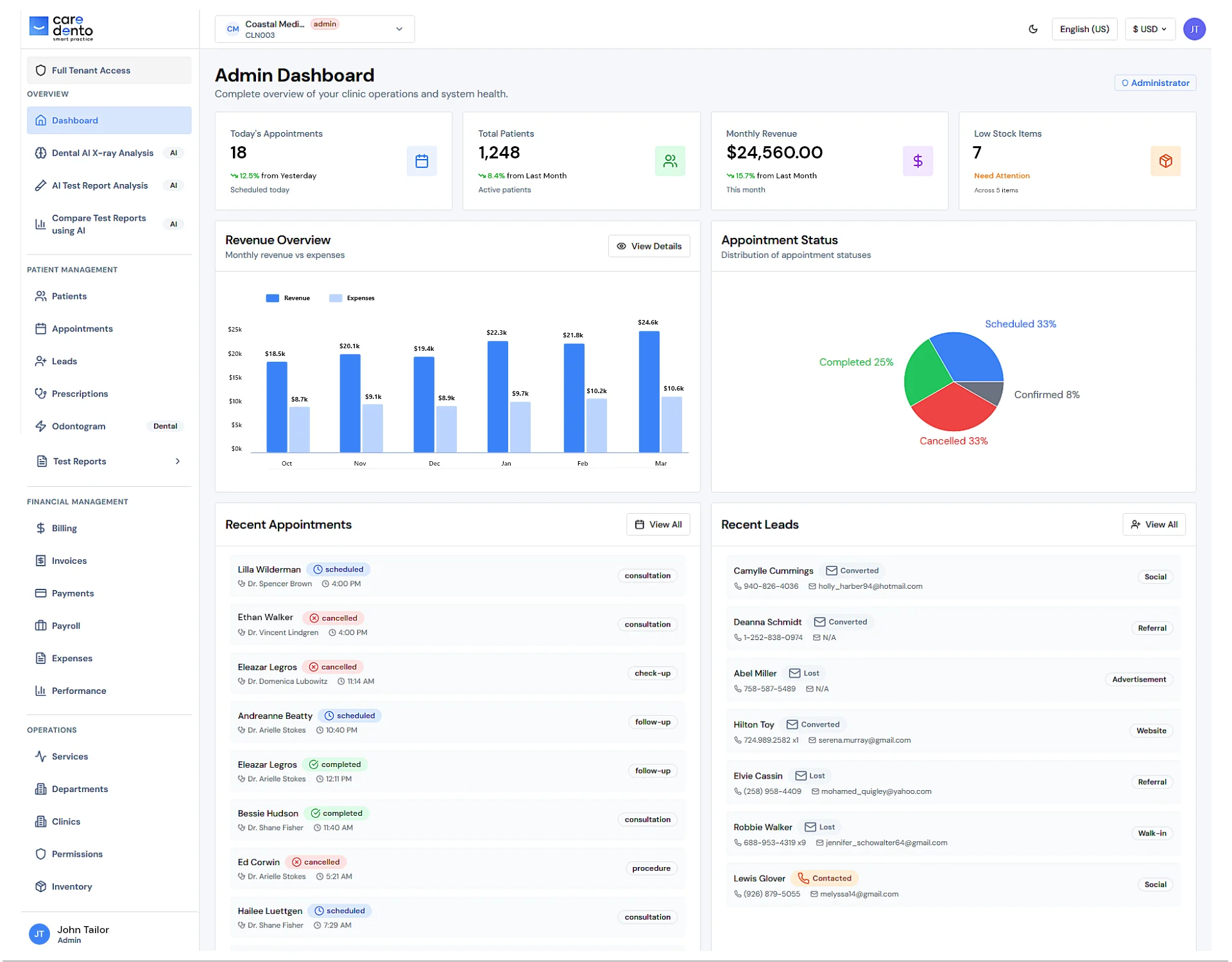
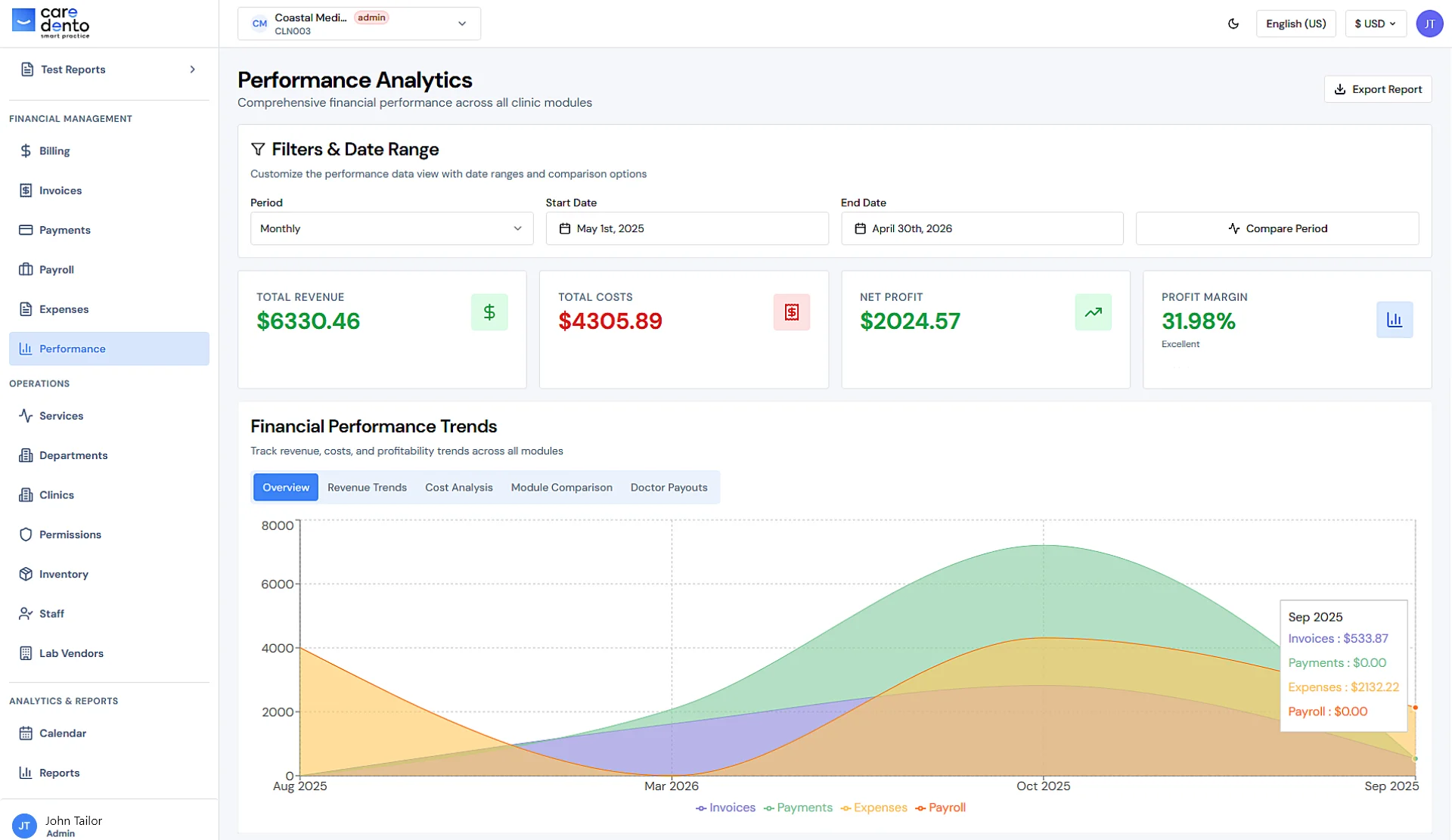
High fidelity designs
Development
We have used the most suitable technologies that would meet the requirements of this product. We have chosen this tech stack on the basis of scalability and efficiency.
 React JS
 MongoDB
 Figma
Figma
 Illustrator
 Photoshop
 Node.js
 AWS
AWS
 Google Gemini
 Stripe
The result
CareDento was delivered as a fully integrated dental clinic management platform, combining clinical workflows, patient data management, and AI-assisted diagnostics into a single system. The solution replaced fragmented tools with a structured, centralized environment, enabling clinics to operate with greater consistency, accuracy, and control across daily operations.
Clinics experienced improved efficiency in patient handling, with faster onboarding and reduced dependency on manual processes. AI-assisted analysis supported quicker diagnostic decisions, helping practitioners reduce interpretation time and improve treatment turnaround. Administrative workflows such as scheduling, billing, and insurance processing became more streamlined, minimizing operational delays and errors.
The platform also enhanced data accessibility, allowing practitioners to retrieve patient history and treatment details instantly, improving decision-making and continuity of care.
As a result, clinics reported up to 35% improvement in operational efficiency, 2x faster access to patient records, and 30% reduction in administrative workload enabling teams to focus more on patient care while maintaining scalable, data-driven clinic operations.